


Hawaii runs on a different set of rules than the mainland. Some of them make perfect sense once you hear the reasoning. Others sound made up until you see the fine amount.
I’ve watched tourists get warned by lifeguards, cited by DLNR officers, and pulled aside by park rangers for things they had no idea were illegal. The fines aren’t small. A few of these carry five-figure penalties. Here’s what you need to know before you go.
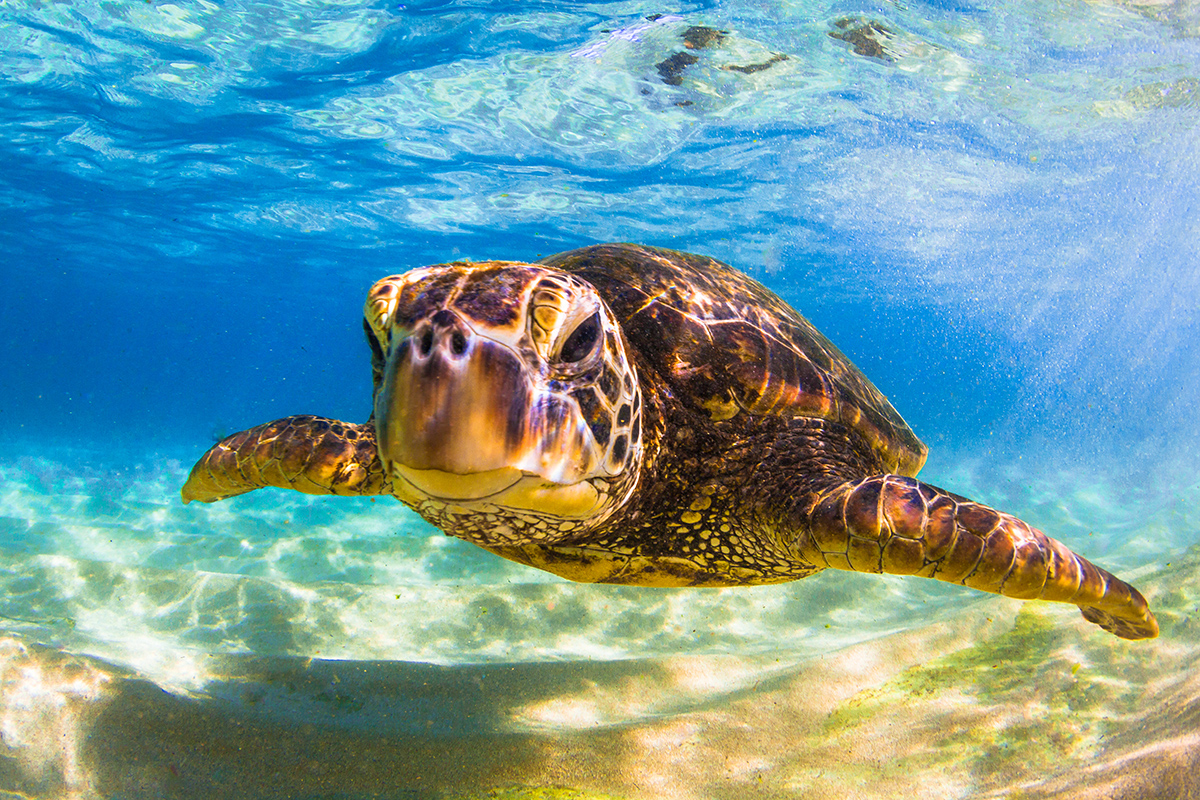
Don't Touch the Sea Turtles. Seriously.
Green sea turtles (honu) are everywhere in Hawaii. They haul out on beaches to rest, they float in shallow water near shore, and they look incredibly approachable. Touch one and you’re looking at a federal fine up to $25,000 under the Endangered Species Act. Hawaii state law (HRS §195D) adds another layer with fines up to $50,000.
The rule is simple: stay at least 10 feet away. No touching, no chasing, no riding (yes, people have tried), no feeding. This applies on land and in the water. If a turtle swims toward you while snorkeling, hold still and let it pass. Getting a selfie with a honu is fine from a respectful distance. Putting your hand on one is a federal offense.
Hawaiian Monk Seals Get a 50-Foot Bubble
About 1,600 Hawaiian monk seals exist on the planet. That’s it. Fewer than the capacity of a mid-size concert venue. When one hauls out on a beach to rest — which happens regularly on Kauai and Oahu — NOAA guidelines require you stay at least 50 feet away on land and 150 feet away in the water near pupping areas.
Volunteers often rope off the area around a resting seal. Respect the ropes. Harassment of a monk seal under the Marine Mammal Protection Act carries fines up to $50,000 and up to one year in prison. Rangers and NOAA enforcement officers patrol actively. They’ve seen every excuse.
You Can't Swim with Spinner Dolphins Anymore
Since October 2021, federal law prohibits swimming within 50 yards of Hawaiian spinner dolphins in waters within two nautical miles of the coast. Spinner dolphins feed offshore at night and rest in shallow bays during the day. Years of tour boats dumping snorkelers into their resting areas disrupted their sleep cycles and stressed the populations.
The rule effectively ended most “swim with wild dolphins” tour operations. Some operators rebranded as “dolphin watch” tours (viewing from the boat, no jumping in). If a tour still promises you’ll swim alongside wild spinners, they’re either breaking the law or misleading you. Civil fines run up to $11,000 per violation under the Marine Mammal Protection Act. Criminal penalties go higher.
Drinking on the Beach Is Illegal on Every Island
This one surprises almost everyone. All four Hawaii counties ban open containers of alcohol on public beaches and in county parks:
- Oahu: Revised Ordinances of Honolulu §10-1.2 — $500 fine
- Maui County: Maui County Code §13.04
- Big Island: Hawaiʻi County Code §22-6
- Kauai: Kauaʻi County Code §19-4.3
Enforcement varies. A quiet beer at a less-trafficked beach might go unnoticed. A group with a cooler full of White Claw at a popular beach park will attract attention. Lifeguards and park officers do issue citations. The safest move: drink at your hotel pool, at a beach bar, or on private property.
No Taking Lava Rocks from National Parks
You’ve probably heard of Pele’s curse — the idea that anyone who takes lava rocks from Hawaii will suffer terrible luck. It’s a modern myth, not an ancient Hawaiian belief. Most historians trace it to a park ranger’s invention in the 1940s or 1950s as a deterrent.
The actual law is simpler and more enforceable. Under 36 CFR §2.1, removing any natural feature from a National Park — rocks, sand, plants, shells, minerals — is a federal offense. Fines go up to $5,000 and six months in prison. This covers Hawaiʻi Volcanoes National Park and Haleakalā National Park specifically.
The NPS receives thousands of pounds of returned lava rocks every year, many with apology letters from people convinced their bad luck started when they pocketed a souvenir. Curse or no curse, leave the rocks where they are.
It's Illegal to Remove Sand from Beaches
Those little bottles of colored sand from Hawaii’s beaches? If someone filled them from the actual beach, that sand was taken illegally. DLNR rules prohibit removing beach sand from Hawaii. The law exists because Hawaii’s beaches are actively eroding — roughly 70% of Hawaii’s shorelines are losing sand, and the state has been working to protect what remains.
Same goes for coral. Taking live or dead coral carries fines starting at $500 under HAR §13-95. Shells are a gray area: empty shells from non-protected areas in small quantities are generally fine. Shells with living creatures inside are always illegal to take. In marine preserves like Hanauma Bay, removing anything — even an empty shell — is prohibited.
Drones Are Banned Almost Everywhere Good
If you packed a drone hoping to film the Na Pali Coast from above or buzz Haleakalā crater, you’re out of luck.
- All Hawaii State Parks: Drones are banned outright. No permit system exists for recreational use.
- All National Parks: Banned under NPS policy and 36 CFR §1.5. That covers Hawaiʻi Volcanoes NP, Haleakalā NP, and all NPS sites.
- All Honolulu City Parks: Banned under ROH §10-1.2(a)(18).
- FAA restricted zones around airports, military installations, and other sensitive areas.
That eliminates most of the places you’d want to fly. Some private land and unrestricted airspace along certain coastlines still work, but you need to research specific locations. FAA violations carry fines up to $55,000.
Reef-Safe Sunscreen Is the Law
Hawaii became the first place in the world to ban sunscreens containing oxybenzone and octinoxate when Act 104 took effect January 1, 2021. These chemicals accelerate coral bleaching. Stores in Hawaii cannot legally sell sunscreens containing these ingredients.
Maui County went further. Ordinance 5765 (effective October 2023) also bans avobenzone. The penalties target retailers ($500 per violation), not individual tourists. But if you bring a non-reef-safe sunscreen from home, you’re contributing to the problem the law was designed to fix. Mineral sunscreens with zinc oxide or titanium dioxide work fine and are sold everywhere on the islands. Switch before you arrive.
Honolulu Will Fine You for Texting While Crossing the Street
Honolulu was the first major U.S. city to ban looking at electronic devices while crossing a street in a crosswalk. The “Distracted Walking Law” (HRS §291C-148) carries fines of $15 to $99. Police do enforce it, especially in Waikiki and downtown Honolulu.
Texting while driving is a separate offense under HRS §291C-137 with fines starting at $250 for a first offense, climbing to $500 for a third. Hawaii also bans holding a mobile device while driving, period. Use a dashboard mount or keep your phone in your pocket.
Smoking and Vaping on Beaches Is Banned
Hawaii was the first state to raise the smoking and vaping age to 21. Smoking and vaping are also banned on all public beaches and in state parks under HRS §328J. That includes traditional cigarettes, vapes, and e-cigarettes.
The no-smoking zone extends 20 feet from any building entrance, window, or ventilation intake. Bars, restaurants, hotel lobbies — all smoke-free. Fines start at $50 for a first offense and climb to $500 for repeat violations.
Closed Trails Are Closed for a Reason
The Haiku Stairs (“Stairway to Heaven”) on Oahu — once the most famous illegal hike in Hawaii — were demolished in 2024. Before removal, trespassing to access them carried $1,000 fines. The city spent $2.6 million to tear them down rather than continue dealing with trespassers.
Other closed trails aren’t tourist attractions waiting to be discovered. They’re closed because of rockfall danger, flash flood risk, or landslides. Hawaii averages roughly 15 hiking-related rescues per month on Oahu alone. Trespassing on private property or entering closed areas is a petty misdemeanor under HRS §708-814 — up to $1,000 fine and 30 days in jail. Rescue operations cost taxpayers real money, and search-and-rescue teams are stretched thin.
No Billboards. Anywhere.
This one isn’t a penalty risk — it’s just genuinely weird until you understand it. Hawaii has banned billboards since 1927 under HRS §264-72. It’s one of only four states (with Vermont, Maine, and Alaska) to do so.
Drive around any island and you’ll notice something feels different from the mainland. That feeling is the total absence of roadside advertising. No fast food signs towering over the highway. No personal injury lawyer billboards. Just mountains, ocean, and sky. It’s one of those laws that quietly makes Hawaii feel like Hawaii.
All Beaches Are Public — Yes, Even That Resort's Beach
The Hawaii Constitution (Article XI, Section 1) and HRS §115-4 guarantee public access to all beaches up to the high water mark. There is no such thing as a private beach in Hawaii below the vegetation line.
That means the beach in front of a $1,000-a-night resort is your beach too. Hotels cannot block public access to the shoreline. If a security guard tells you a beach is “for guests only,” they’re wrong — or at least wrong about the sandy part. The hotel’s pool deck and lounge chairs are private. The sand and ocean are not.
This is one of Hawaii’s best laws from a visitor perspective. Some of the most beautiful beaches in the state sit in front of luxury resorts. Walk right on.
Campfires on Beaches Are Mostly Illegal
Beach bonfires look great in movies. In Hawaii, open fires on beaches and in most state parks are prohibited by DLNR unless a designated fire pit exists (rare). After the devastating Lahaina wildfire in August 2023 that killed 102 people, fire restrictions have tightened across all islands. During dry conditions, DLNR issues complete fire bans for state lands. Fines run up to $2,500, plus liability for suppression costs if your fire spreads.
The Quick Reference: What'll Cost You
| Violation | Maximum Fine |
|---|---|
| Touching a sea turtle | $25,000 (federal) |
| Harassing a monk seal | $50,000 (federal) |
| Swimming near spinner dolphins | $11,000 (civil) |
| Taking rocks from a national park | $5,000 + 6 months jail |
| Flying a drone in state/national park | $55,000 (FAA) |
| Drinking on a beach | ~$500 |
| Taking coral | Starting at $500 |
| Trespassing on closed trails | $1,000 + 30 days jail |
| Texting while crossing street (Honolulu) | $15–$99 |
| Smoking on a beach | $50–$500 |
These laws protect the reef you snorkeled this morning, the turtle you photographed at lunch, and the beach you’re sitting on right now. A rental car, some common sense, and a willingness to stay 10 feet from the turtles will get you to every legal, jaw-dropping spot on any island.
More Hawaii Planning Essentials
Know before you go — these guides cover the practical side of visiting Hawaii.