

Endangered Hawaiian Green Sea Turtle
Hawaii Flora & Fauna
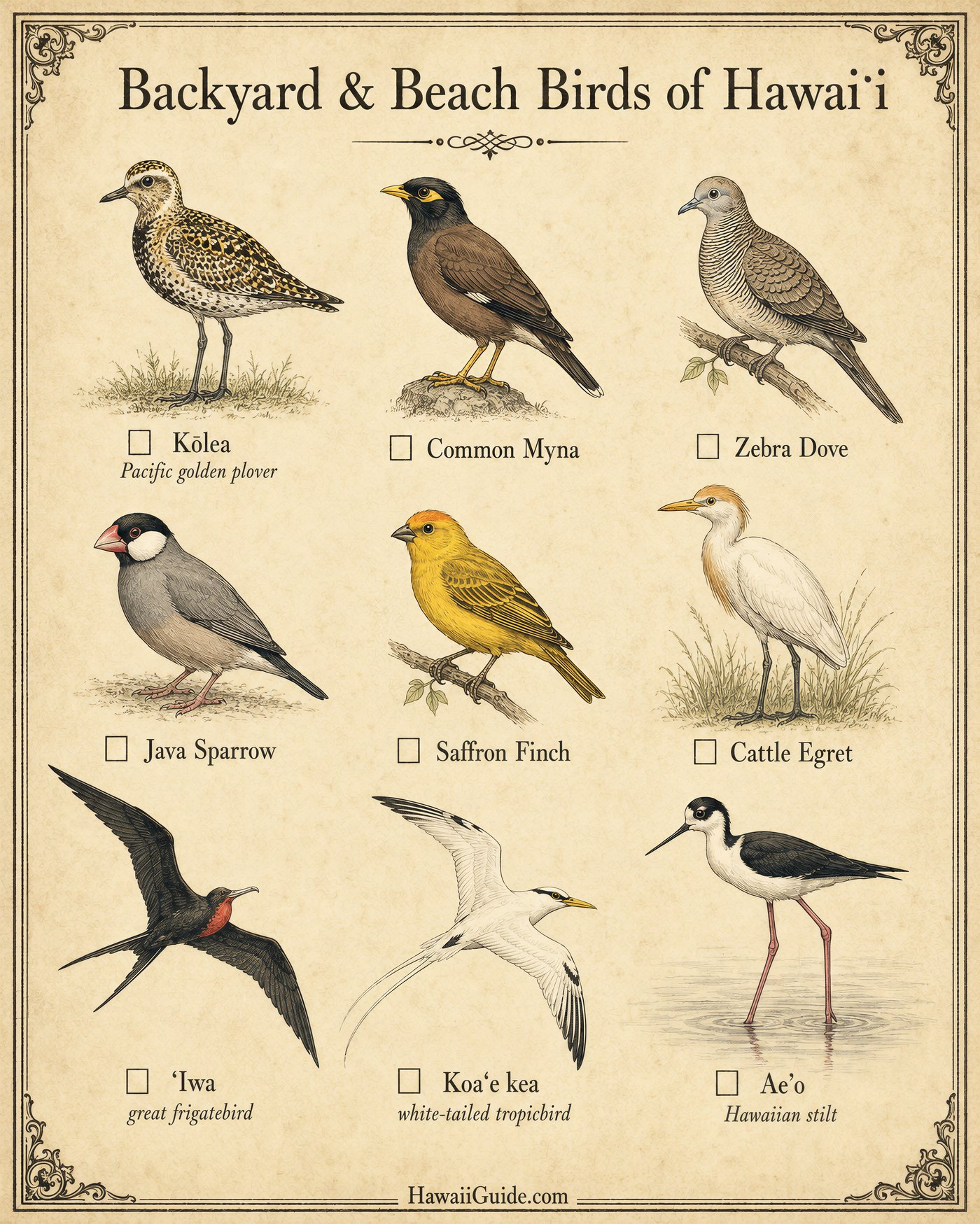
Thousand of miles from the nearest continent the volcanic mountains of Hawai'i stood somber and alone in the Pacific, void of nearly all life. Lifeless they would remain if not for the birds, the currents, and the wind. Seeds were carried by the tides that washed across the shores. Storms brought more seeds with their howling winds and rains. The birds, like the small golden plover, brought the rest, crossing thousands of miles of open ocean.
Eventually the Hawaiian islands would be covered with extensive forest habitats, shrubbery, and grasslands. Soil and precipitation differences around the islands would cater to all kinds of plant-life. In time, the foreign species would become unique to all the world, found only in Hawai'i.

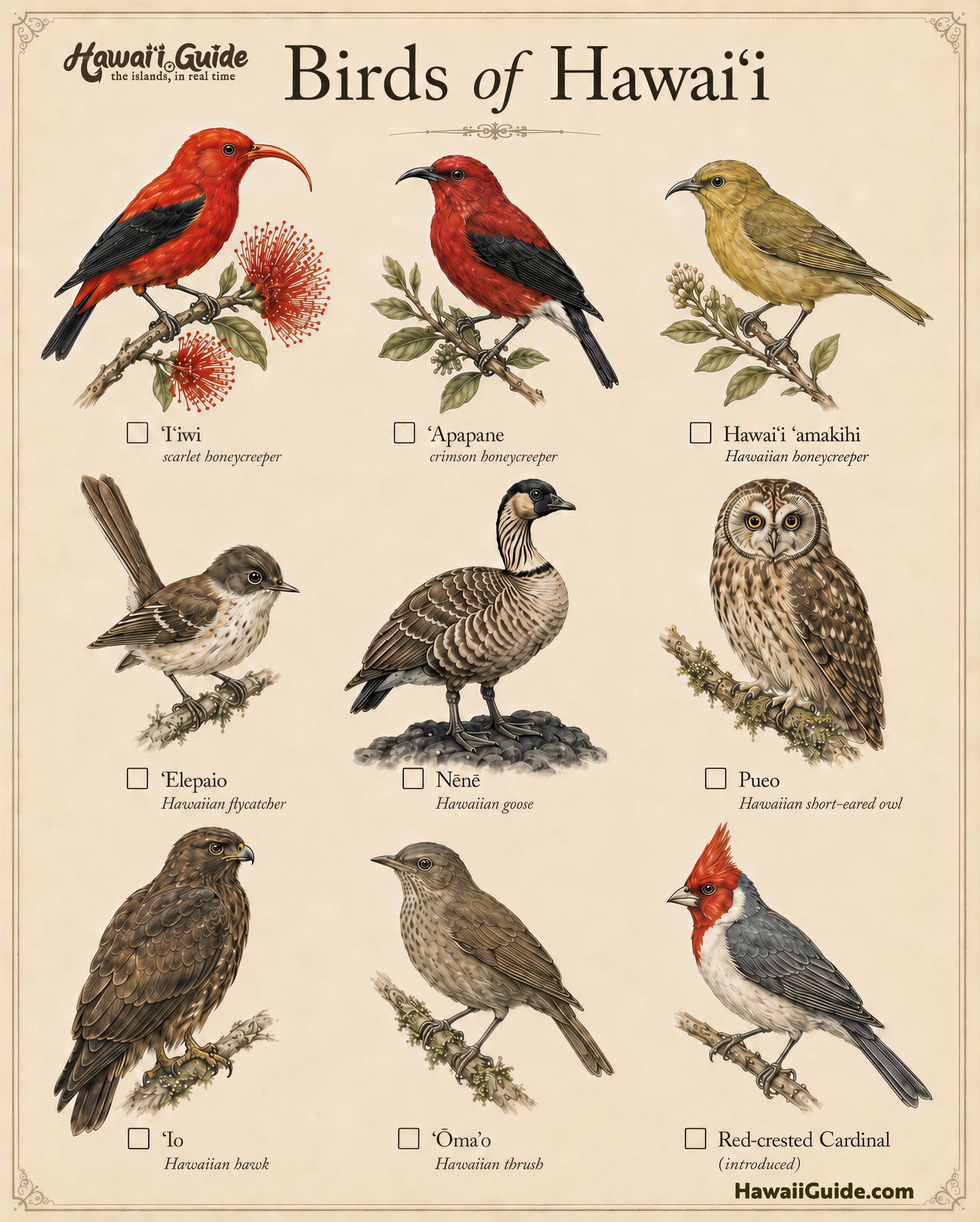
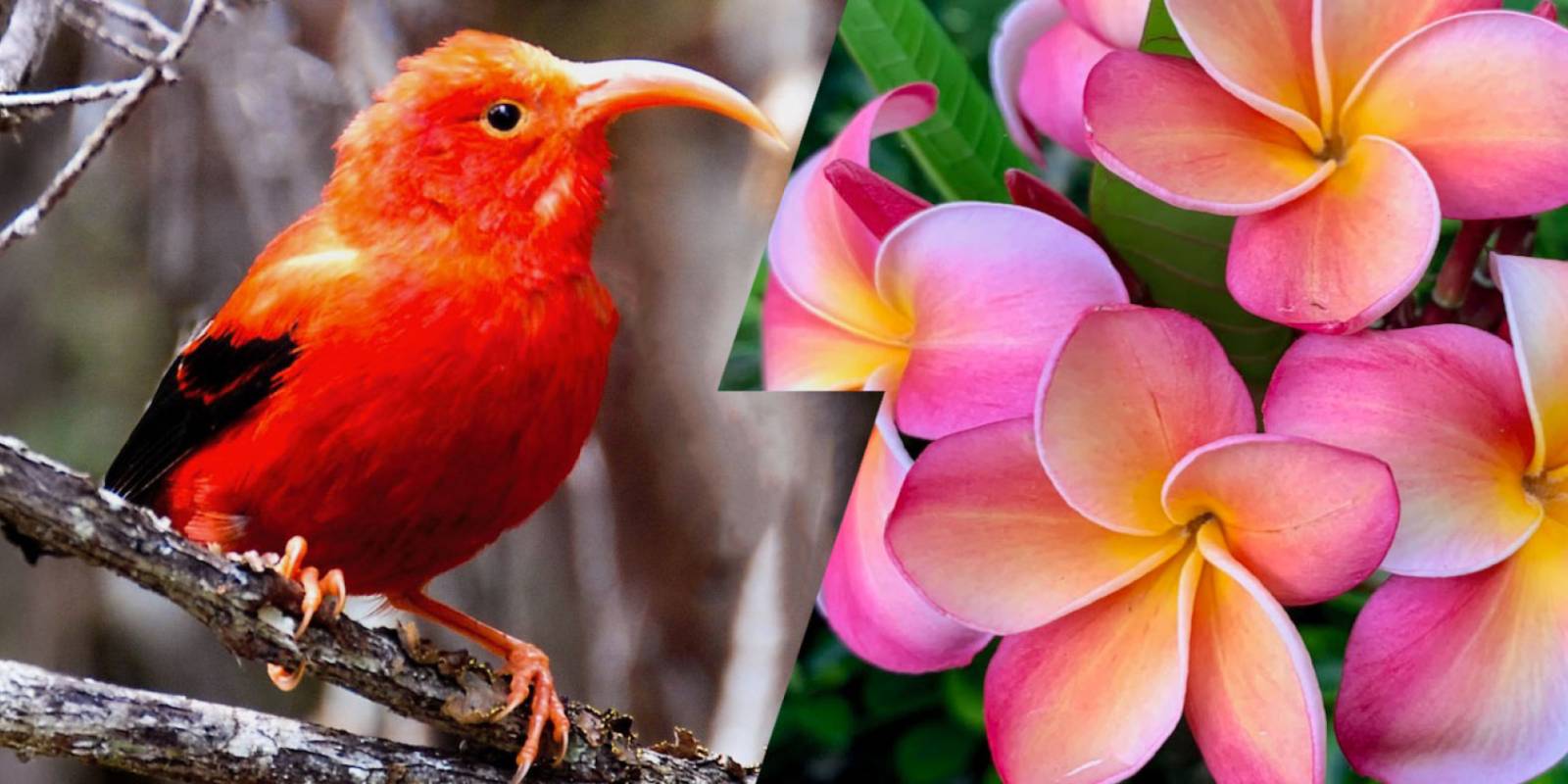
I'iwi in Hawaii
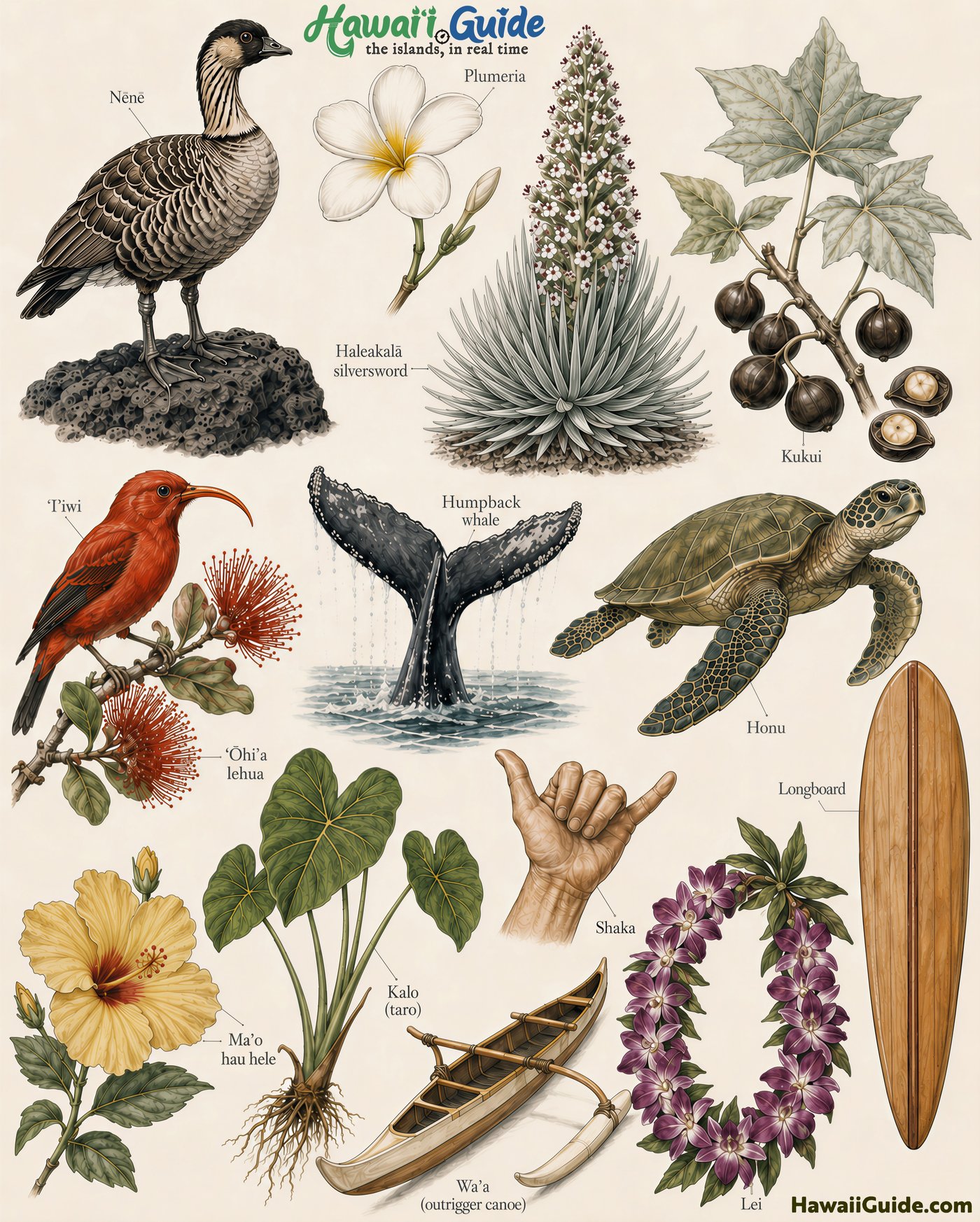
Today, we call them endemic Hawaiian species like the Nene (Hawaiian goose) and silversword (which is actually a relative of the sunflower). You will find them nowhere else on the planet. These species had thousands, if not millions, of years to develop into unique flora and fauna.
For thousands and thousands of years, they were undisturbed by the ways of humans. Today, many of these species are not so lucky. The 'Akiapola'au (a rare endangered bird found on the Big Island of Hawai'i) is just one example of a species that still depends on protected native forest habitat.

It is easy to forget that Hawai'i is much more than just the major islands in the eastern portion of the chain. The Hawaiian archipelago stretches roughly 1,500 miles to the north and west, and the Northwestern Hawaiian Islands are home to thousands of species of birds (especially sea birds), fish and marine mammals, at least a quarter of which are unique to Hawai'i. In 2006, the President officially designated the Northwestern Hawaiian Islands a Marine National Monument, creating what was then the largest marine protected area in the world.
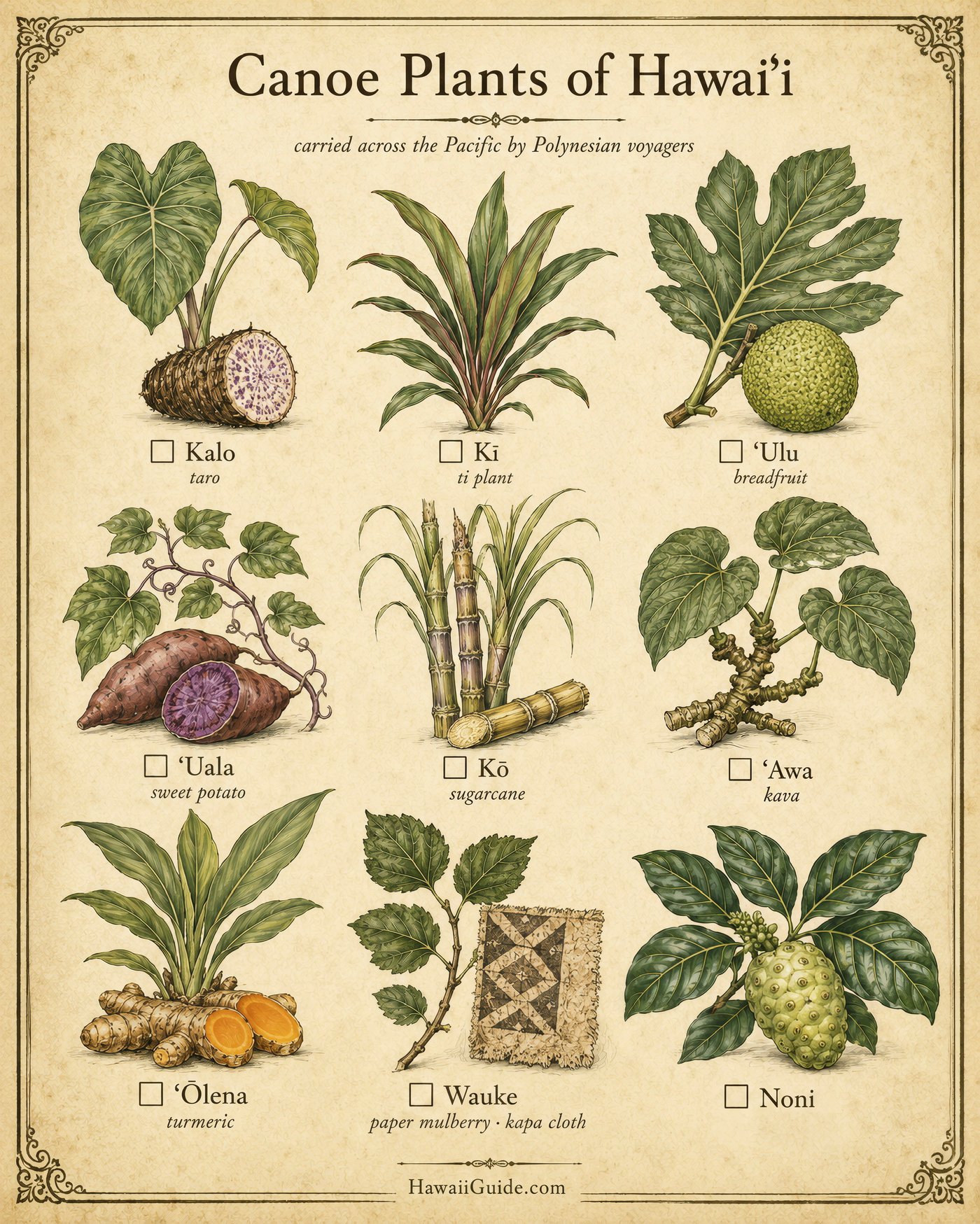
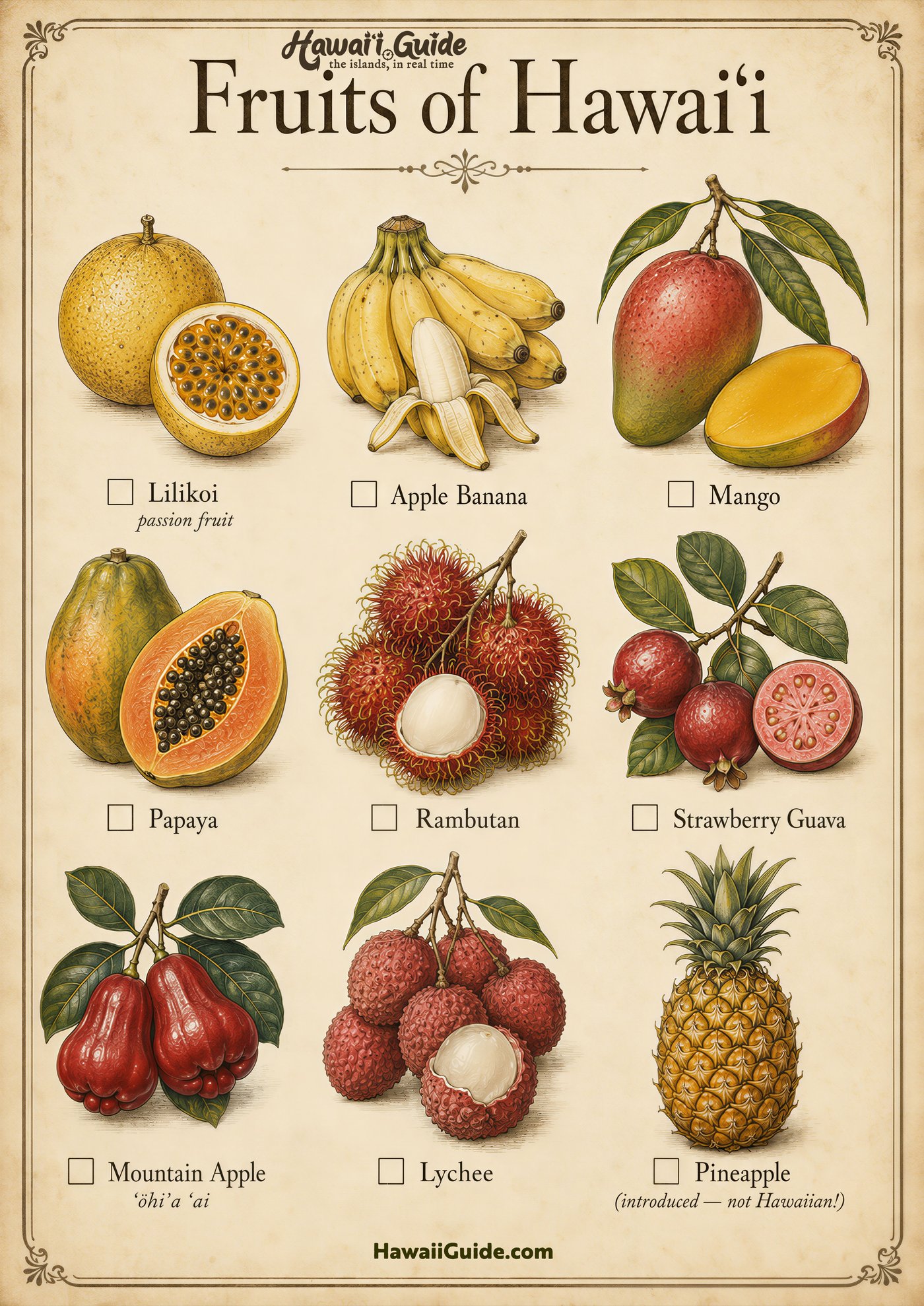
Food plants grown commercially (or in backyards for home consumption) in Hawai'i include sugarcane, pineapples, papayas, bananas, mangoes, guavas, lichee, coconuts, avocados, breadfruit, macadamia nuts, limes, passion fruit, taro (for poi), and tamarinds.
Get Your Free Hawai'i Guide
Instant access — opens immediately
- Beaches, activities & top spots
- Restaurant & dining recommendations
- Maps, itineraries & insider tips
Want the full offline version? Get the Complete Hawai'i Guidebook →
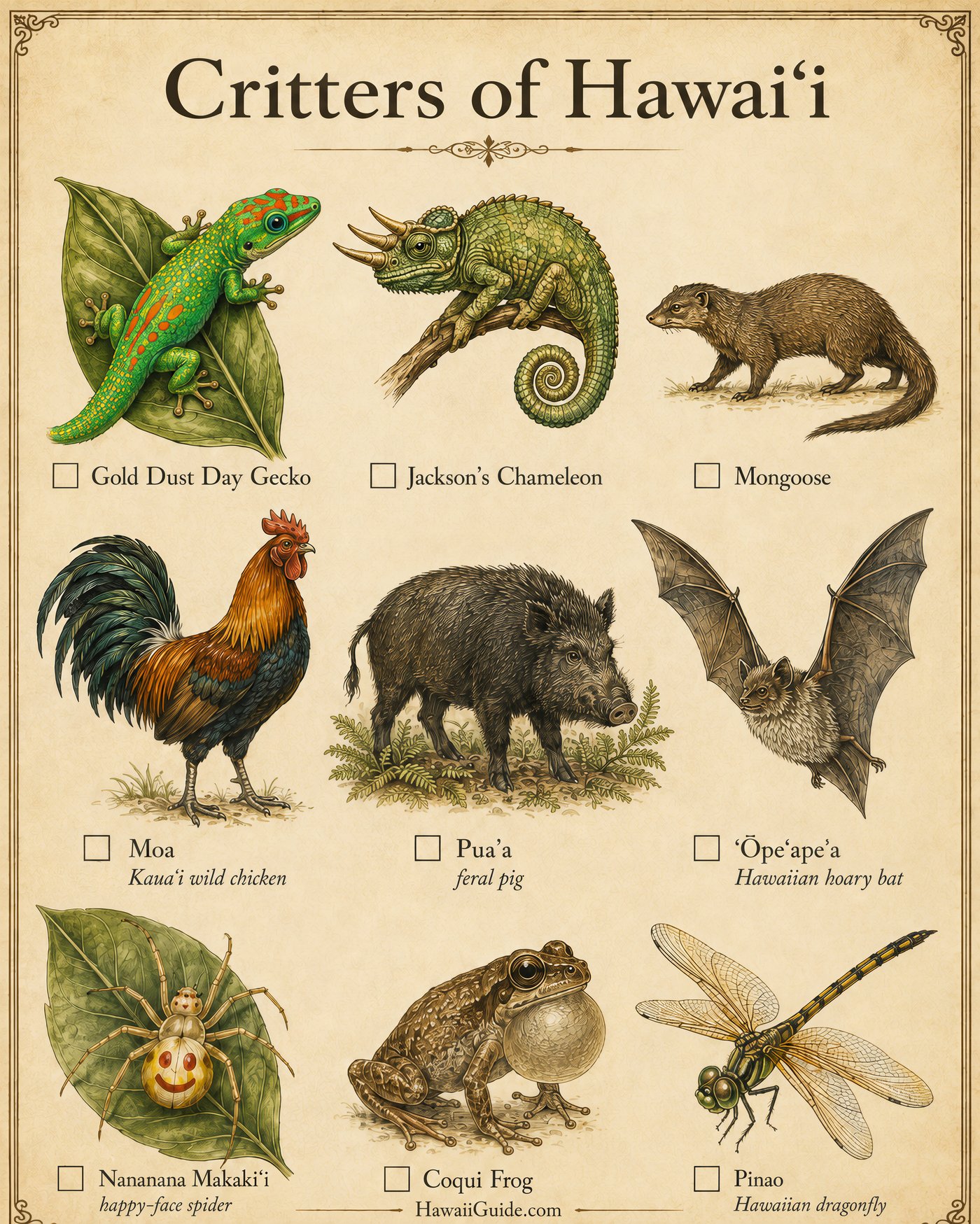
Wild animal life in Hawai'i includes mongooses (yes that's plural), rats, frogs, toads, and, in the more remote regions of some of the islands, deer, sheep, pigs (boar), donkeys, and goats. On the Big Island, even wild horses roam freely in Waipi'o Valley.
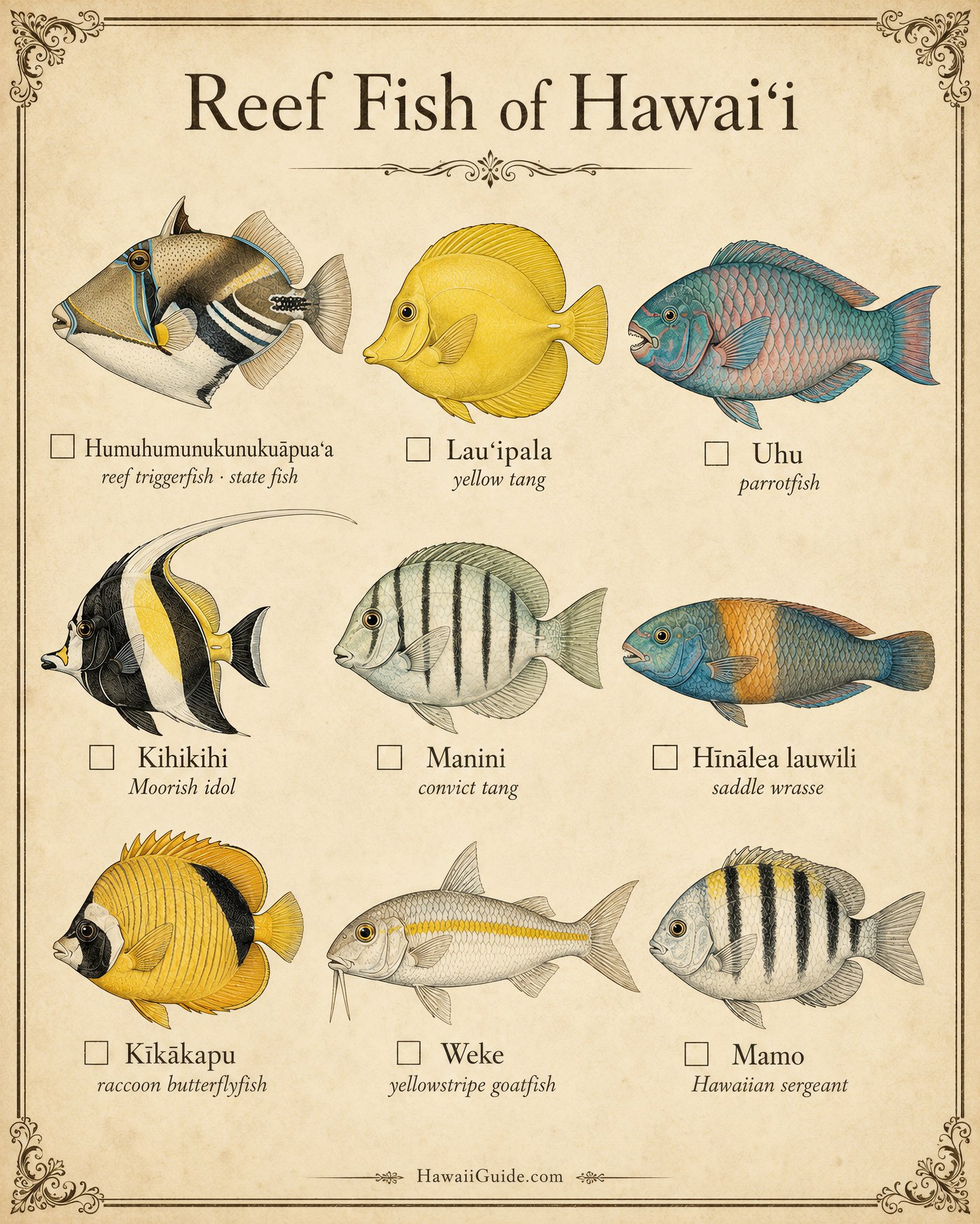
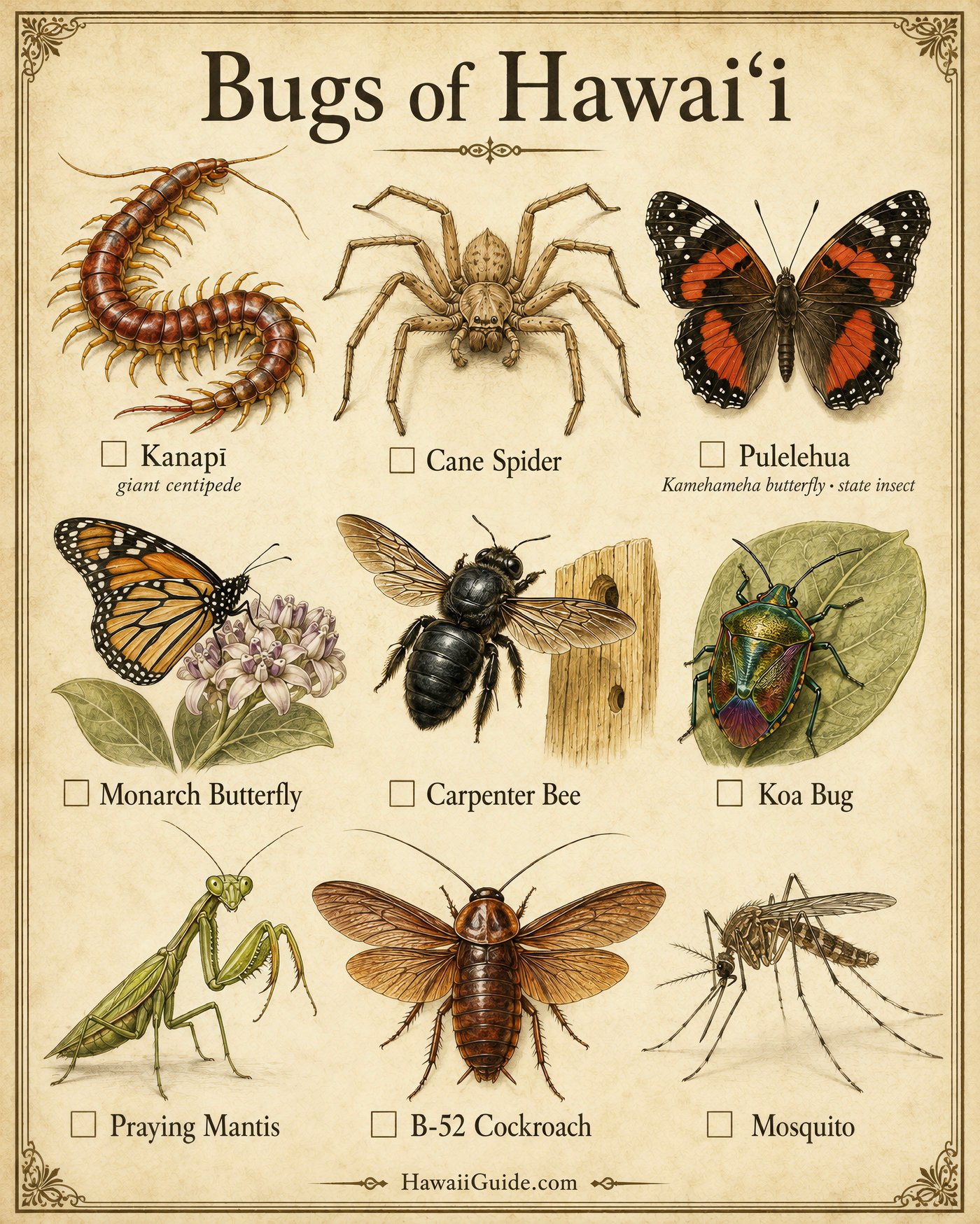
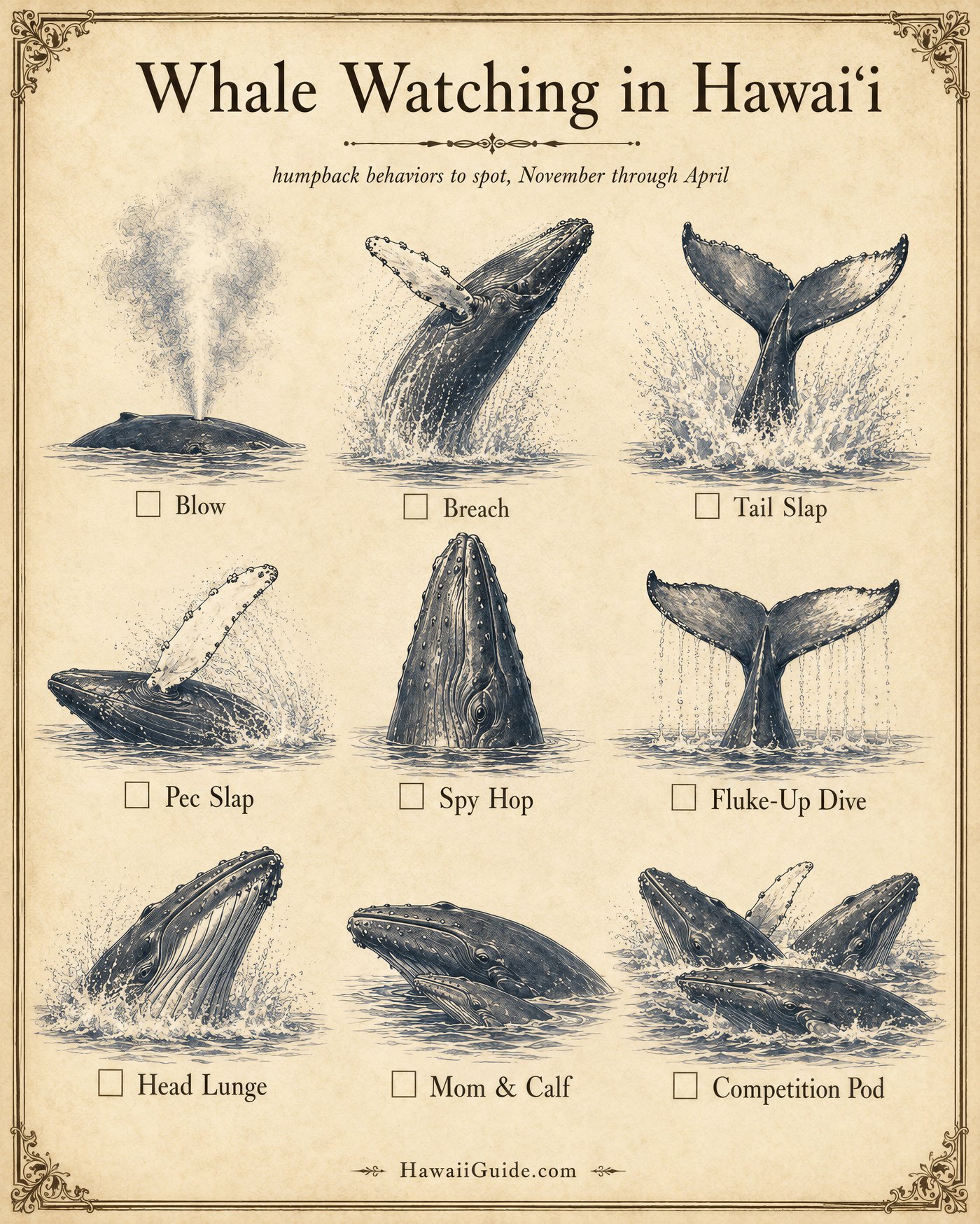
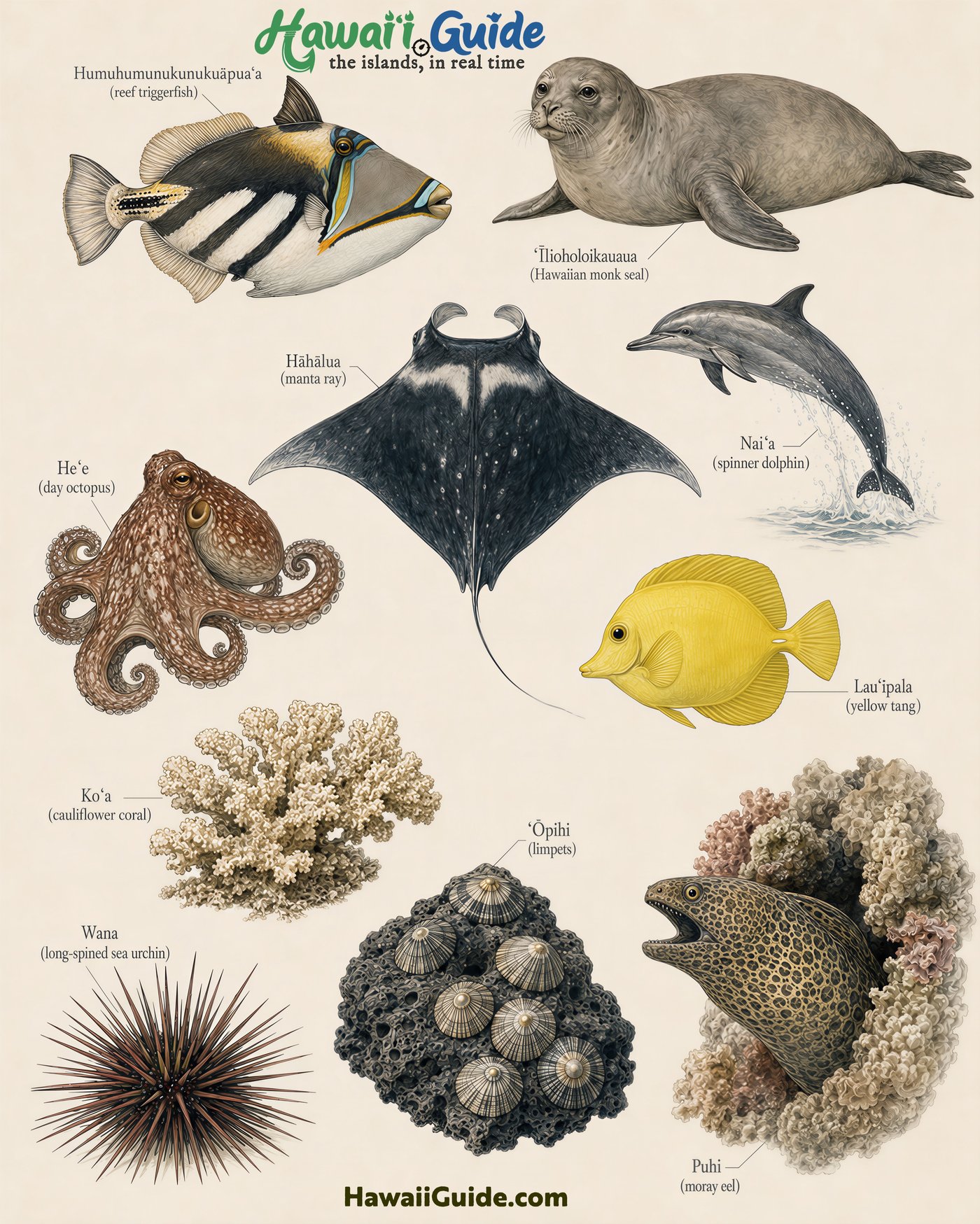
The insect population is multitudinous, and marine life abounds in Hawaiian waters.
Hawai'i also struggles with the many invasive species which have been brought to the islands over the years. This primarily involves plant life, but is most noticeable in the animal populations. The coqui on the Big Island, brought accidentally from Puerto Rico, are literally driving many residents out of their minds. The over population of jungle fowl (also known as Chickens) on Kaua'i is definitely noticeable, as is Kauai's lack of mongoose. Mongoose eat eggs of ground nesters, controlling moa (fowl) population. Kauaii never got their mongoose. Legend has it that a mongoose bit a dock worker, got thrown off the dock, and never made it to the island. Mongoose are established on several other major Hawaiian islands, as are the rats (also non-native) that the mongoose were imported to kill. One can see how things quickly get out of hand when animals are introduced to a new environment like Hawai'i.
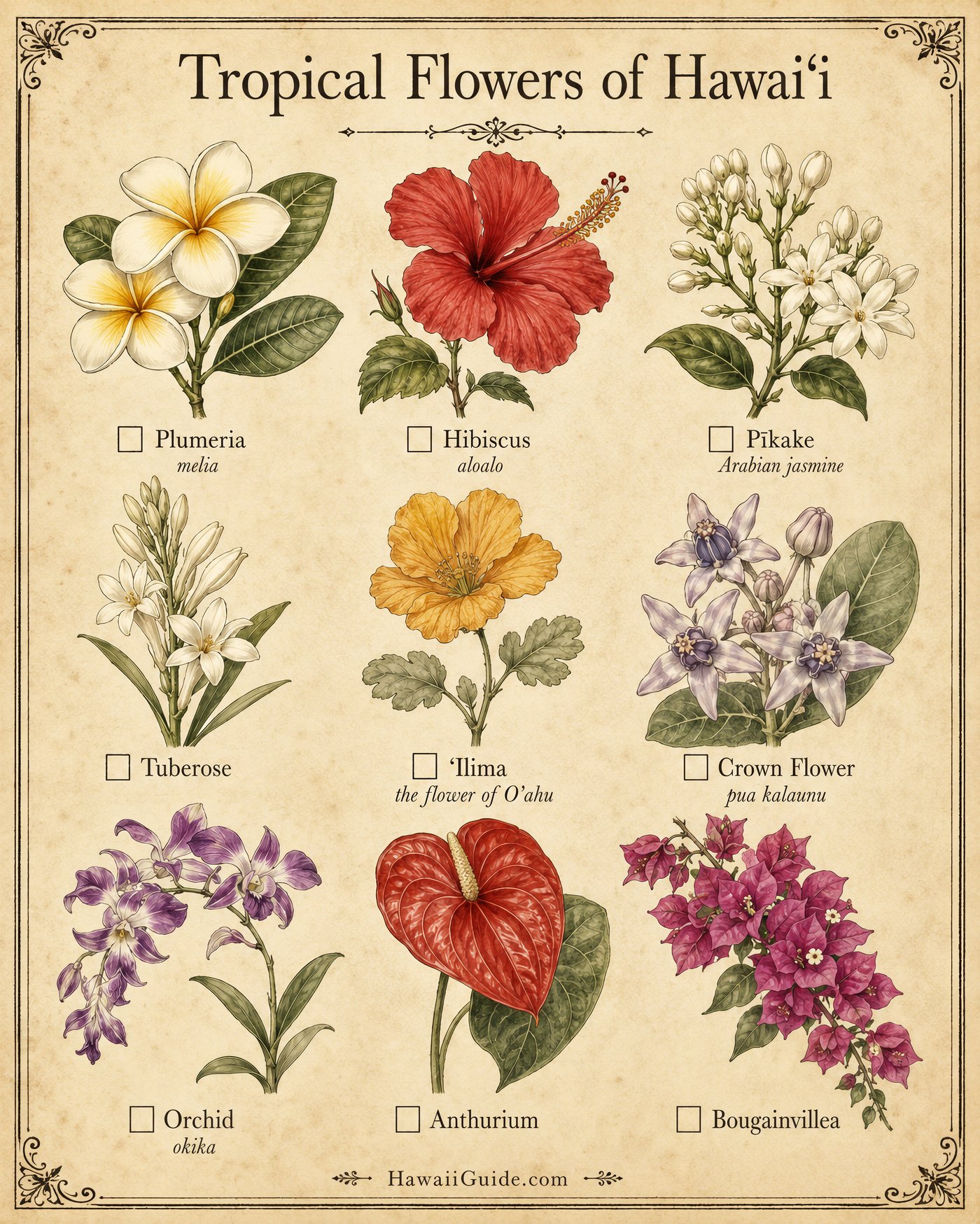
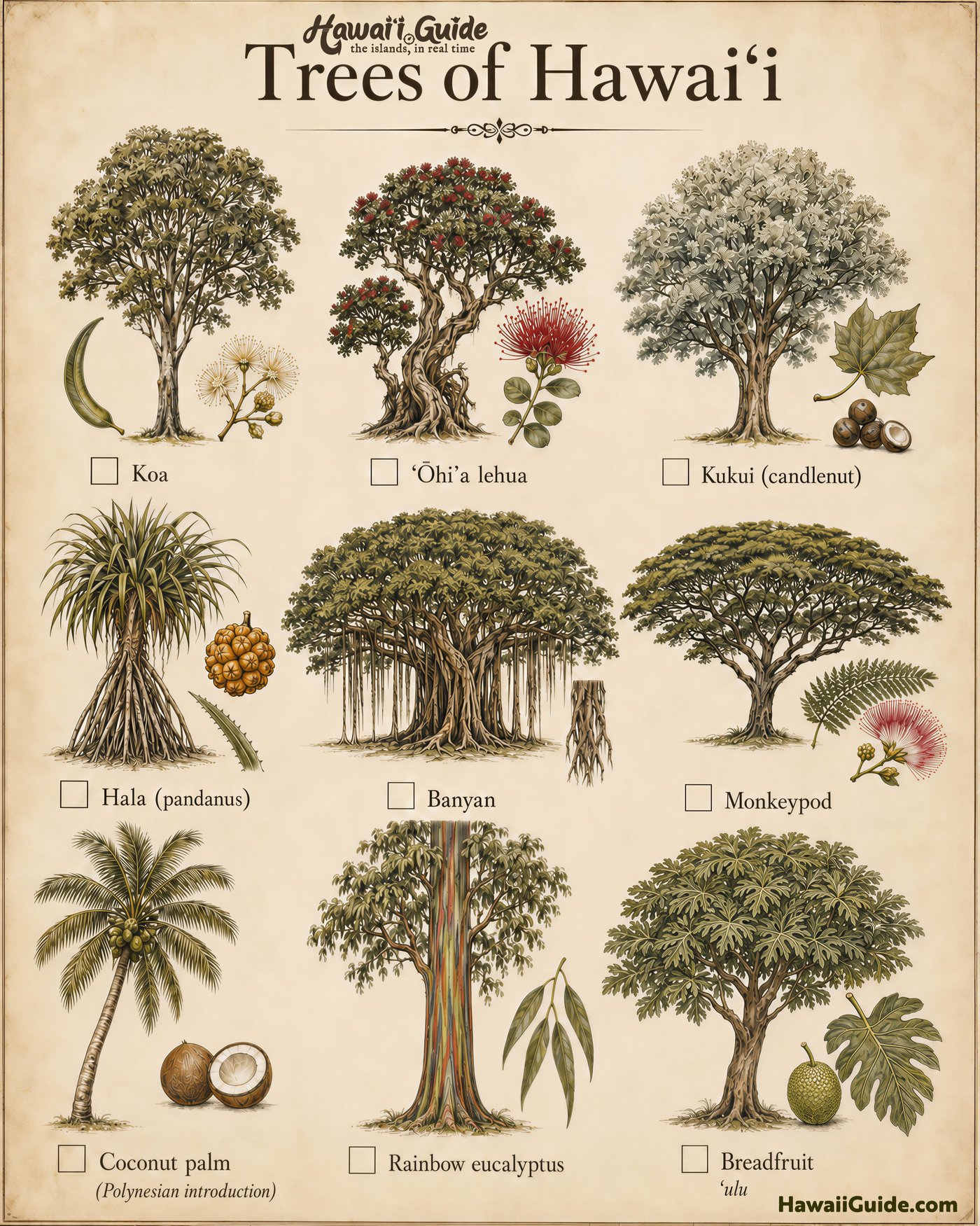
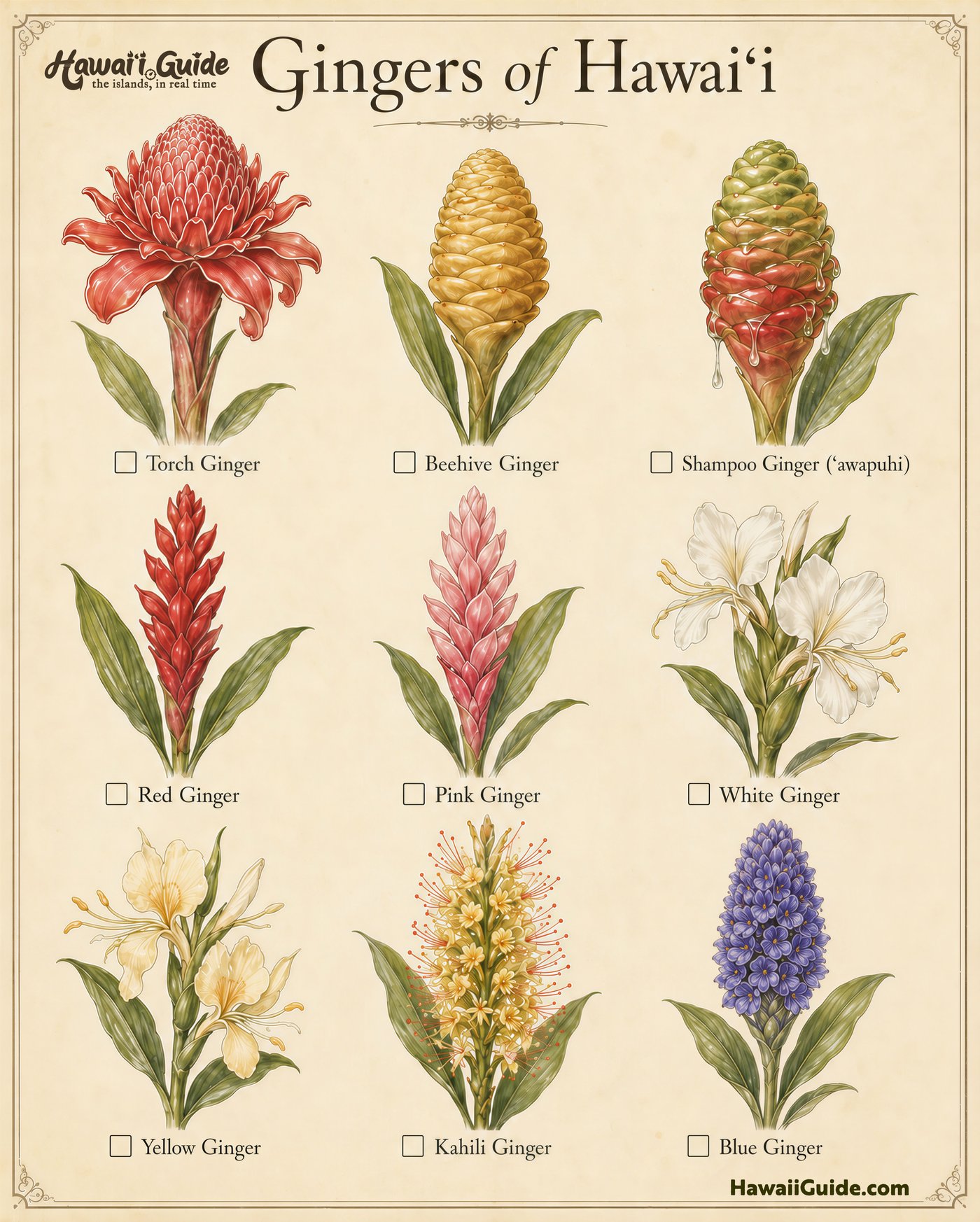
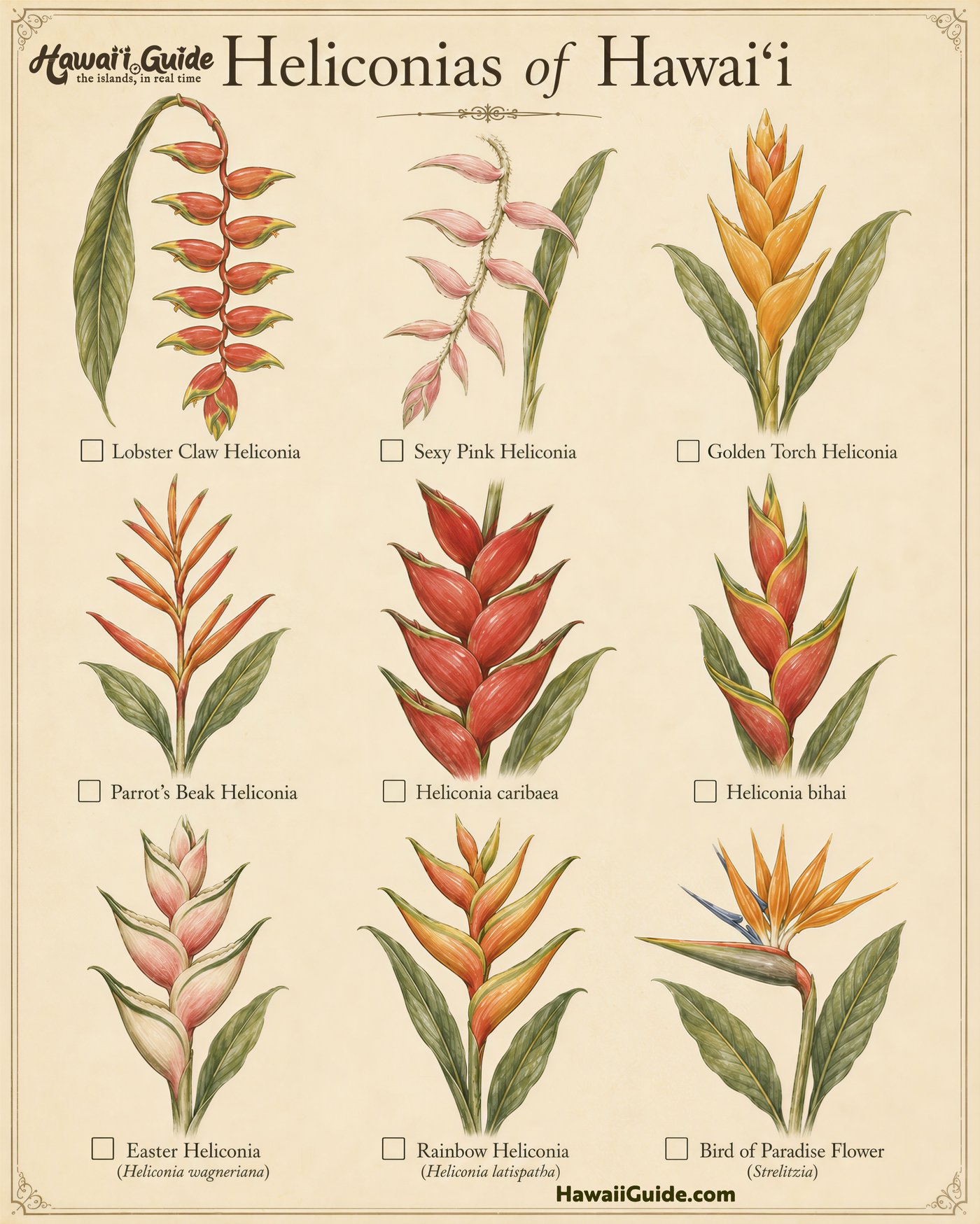
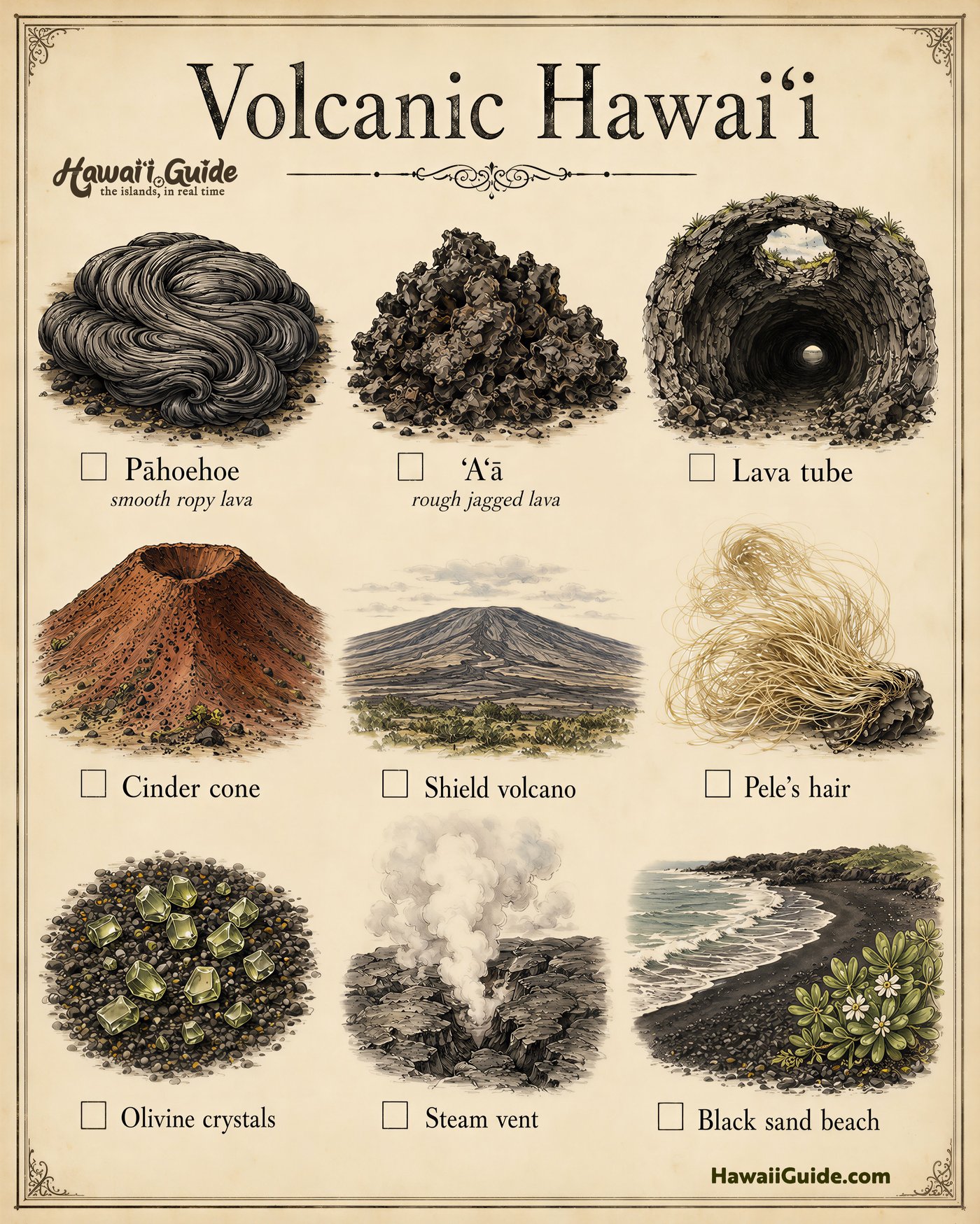
Illustrated Nature Field Guides
A visual set for Hawaiʻi wildlife, plants, land icons, and ocean icons. Tap any guide to view it larger or download the print-ready PDF.