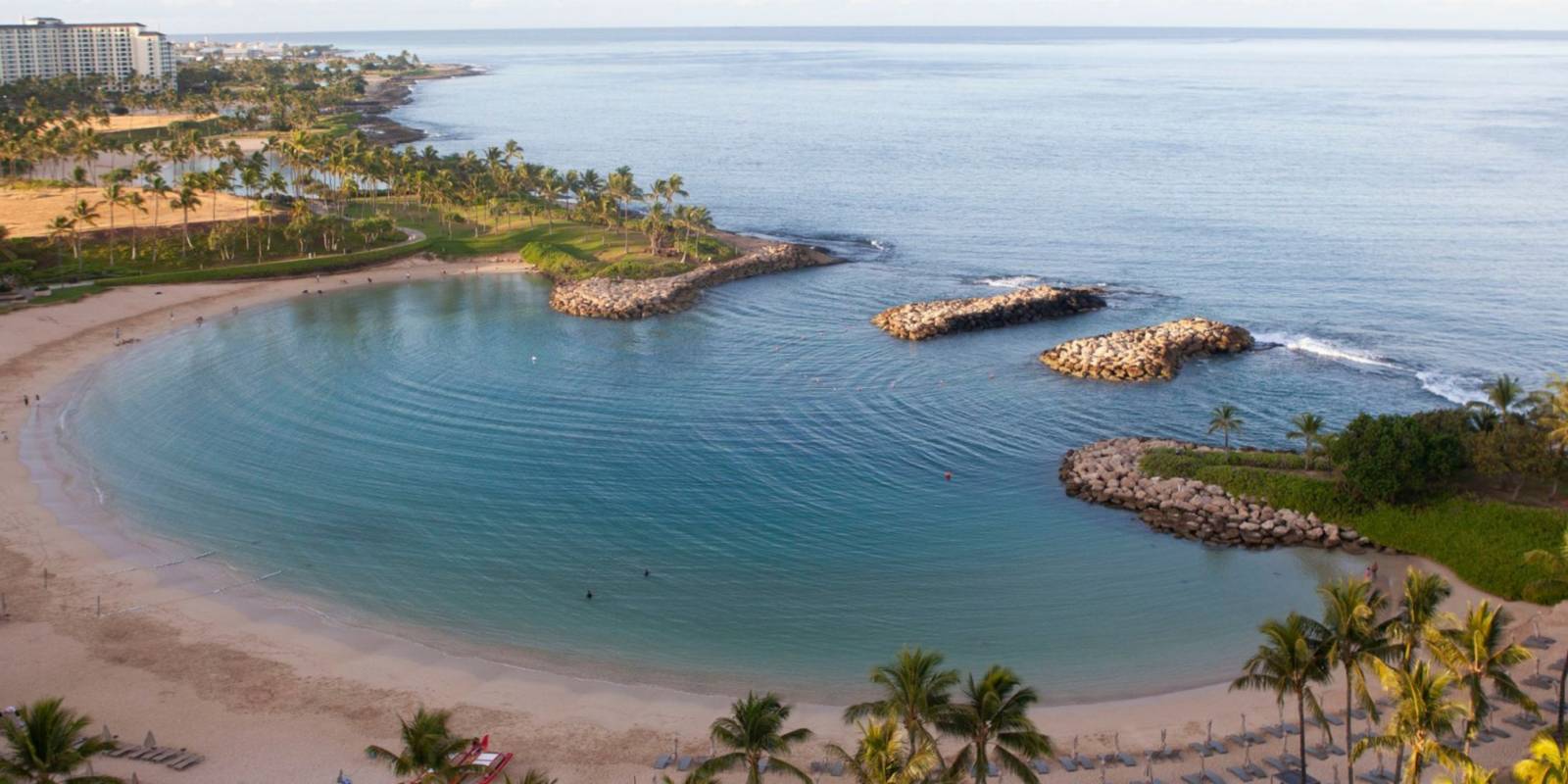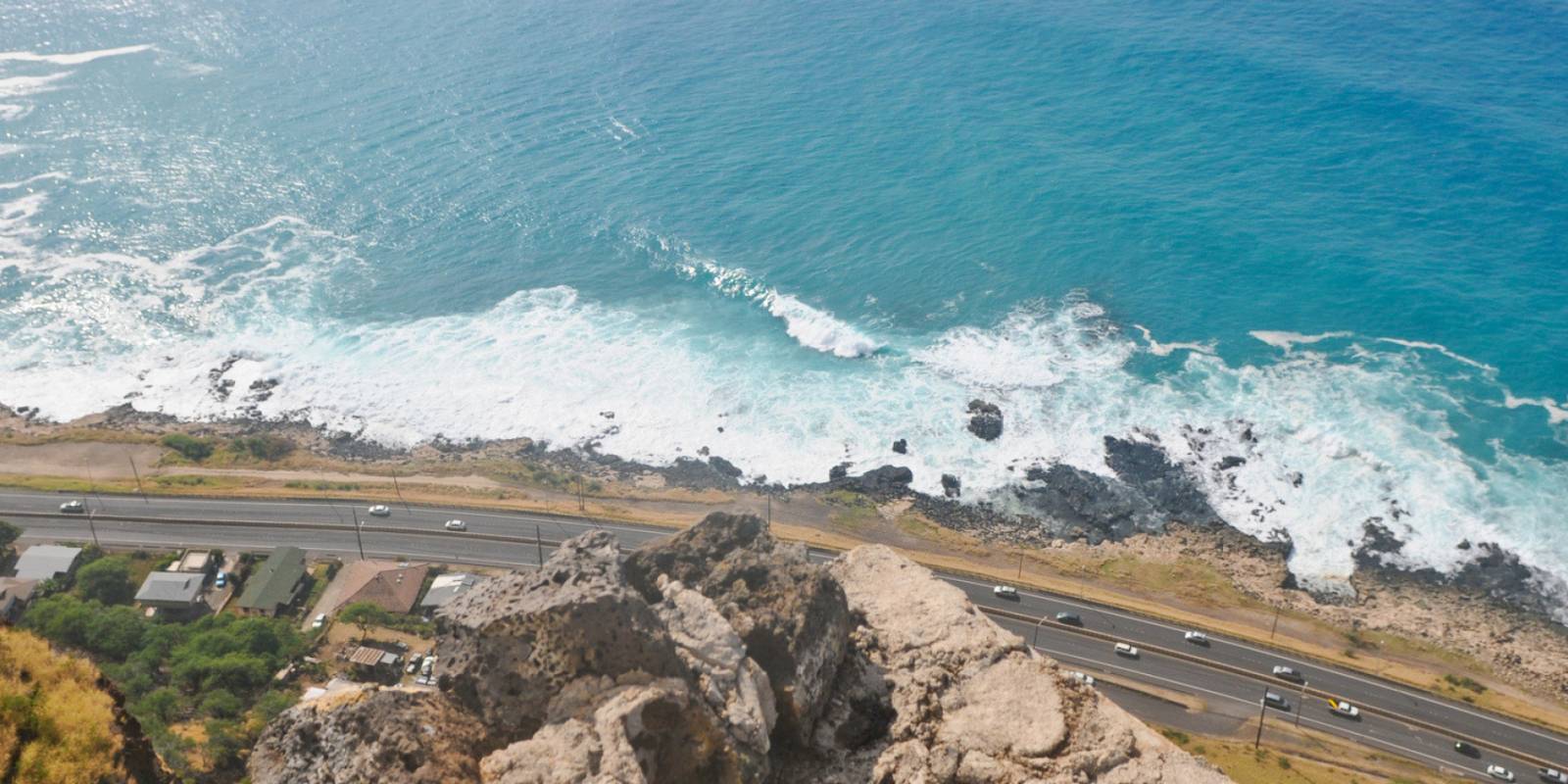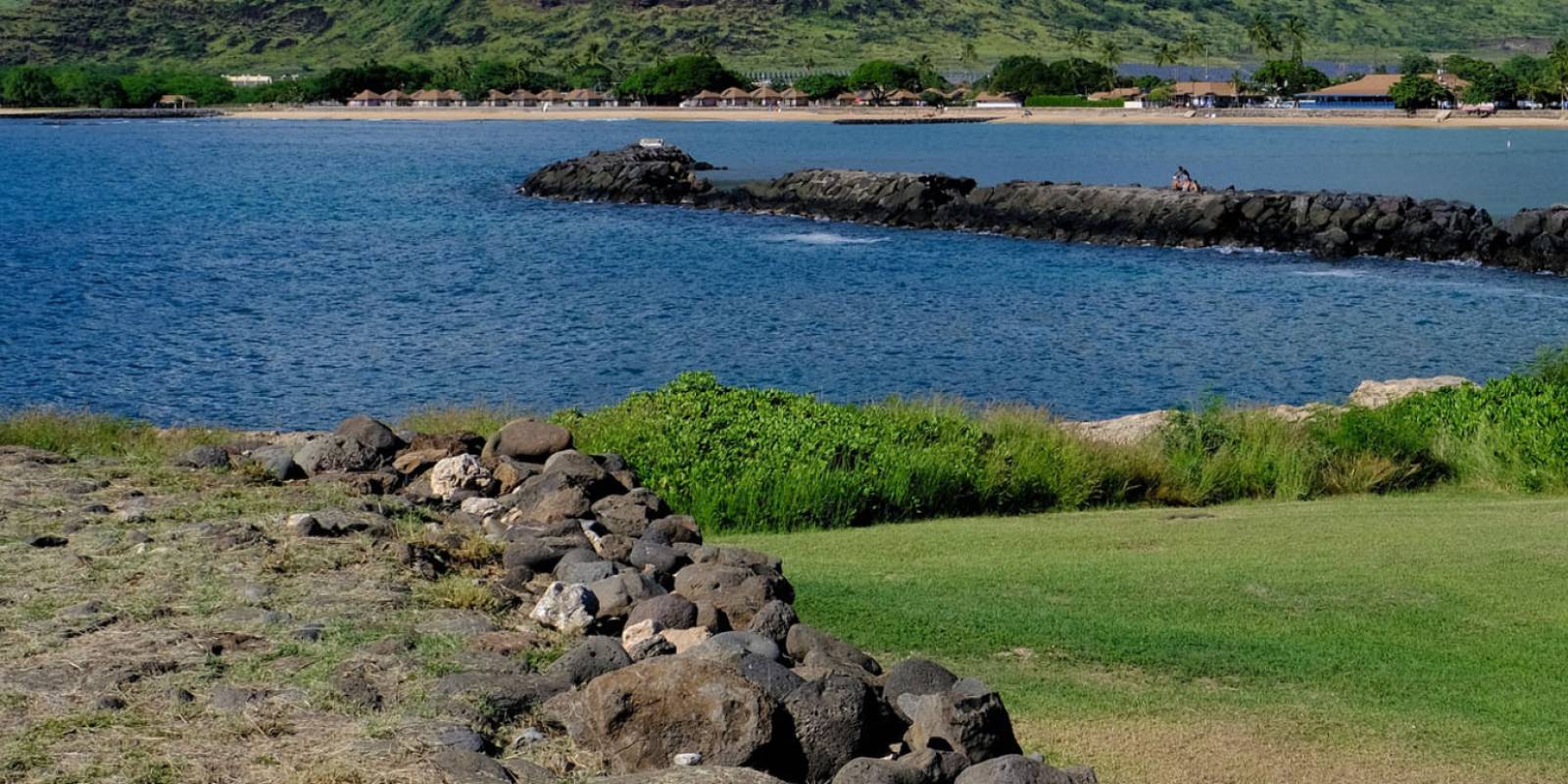
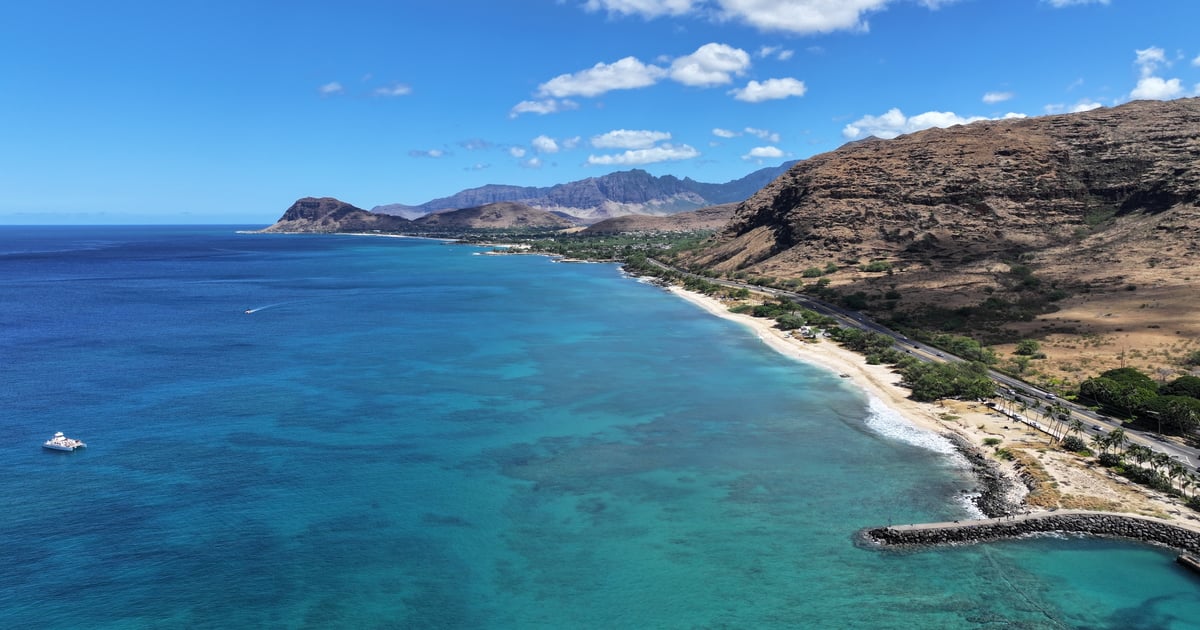

Electric Beach is the local name for Kahe Point Beach Park, a small county park on Oahu's leeward (west) coast directly across Farrington Highway from the Kahe Generating Station. The power plant draws cooling water from the ocean and returns it warmer through outflow pipes a short swim offshore. The warm plume attracts a startling concentration of marine life — schools of fish so dense they look like underwater clouds, plus turtles, occasional spinner dolphin pods, and (rarely) reef sharks and pelagic fish that don't normally come this close to shore.
It is also one of Oahu's most demanding shore snorkels. The entry is over rocks and broken coral, the swim out to the pipes is roughly 50–70 yards through often-choppy water, and currents along this stretch of coast can move fast. This is not a spot for first-timers or for kids.
What You'll See
The warm-water plume from the outflow pipes acts as a year-round fish magnet. On a typical morning expect:
- Massive fish schools — yellow tang, goatfish, surgeonfish, and convict tang, often hundreds of individuals at once around the pipe openings.
- Green sea turtles — common, especially near the pipe outflows where the warm water concentrates algae.
- Spinner dolphins — pods rest in the protected waters off the leeward coast and occasionally swim through Kahe in the morning. Federal law (the Marine Mammal Protection Act) requires staying at least 50 yards away — observe, don't pursue.
- Reef sharks and rays — uncommon but documented, particularly at the deep edge of the reef beyond the pipes.
Visibility is typically 30–40 feet on calm mornings, dropping after rain or wind. The reef itself is relatively sparse compared to spots like Hanauma Bay — the appeal here is the sheer density of fish drawn to the warm water, not coral diversity.
Skill Level + Why First-Timers Should Skip
Electric Beach is rated intermediate-to-advanced for three reasons:
1. Rocky entry. No sandy beach. You wade in over barnacle-covered lava rocks. Water shoes are mandatory.
2. Open-water swim to the highlight. The outflow pipes — where the marine life concentrates — sit a meaningful distance offshore (different sources put it anywhere from 50 yards to several hundred feet). It's not a long swim for a confident swimmer, but it's well past the comfort zone of someone learning to snorkel.
3. Currents. The leeward coast generally has a longshore current that runs north toward Yokohama Bay. Most days it's mild; on bigger days or with a south swell it can pull a tired swimmer well off course before they realize it. The standard precaution: enter, swim out, look back, identify your exit landmark, and don't drift past it.
If you're a first-time snorkeler or traveling with kids, take them to Hanauma Bay or Lanikai instead. Electric Beach rewards experience.
How to Get There + Parking
From Waikiki, take H-1 west toward Kapolei, then merge onto Farrington Highway (Hwy 93). Continue past Ko Olina; Kahe Point Beach Park is on the makai (ocean) side of the highway, immediately south of the Kahe Generating Station's distinctive smokestacks. Roughly 30–40 minutes from Waikiki without traffic.
The parking lot is small and fills early on weekends. There is no overflow lot. Arrive before 9 AM or be prepared to circle.
The park has a small pavilion, picnic tables, restrooms, and outdoor showers. There is no drinking water on site, so bring your own.
Safety + Conditions
The City and County of Honolulu installed a lifeguard tower at Kahe Point in 2023, and lifeguards are now on duty during posted daytime hours. That's a recent and welcome change — older guides describe Kahe as unguarded, but as of 2025 it isn't. Even with a lifeguard on the sand, the snorkel zone is well offshore, so the buddy system and a surface-marker float remain the right call.
Check the surf and current forecast before you go. South swells (summer) push waves up the leeward coast and can make the entry zone unworkable. Trade-wind chop creates surface noise that obscures visibility but rarely creates real danger inside the snorkel zone.
Sharks are present but interactions are extremely rare. The Hawaii DLNR shark incident database lists no fatal incidents at Electric Beach on record. Standard ocean-safety rules apply: don't snorkel at dawn or dusk, don't snorkel alone, stay out if there's blood in the water, and respect local advisories.
What to Bring
- Mask, snorkel, fins (no rental shop nearby — bring your own)
- Water shoes (rocky entry; barnacles will tear up bare feet)
- Reef-safe sunscreen with zinc oxide
- Drinking water — there is none on site
- Surface buoy or dive flag if you're planning to swim past the inner reef line
Quick Facts
Cost: Free.
Hours: Park closed 10 PM to 5 AM (City & County of Honolulu posted hours).
Reservation: None required.
Lifeguard: On duty since 2023.
Best months: Year-round, but calmest in winter (Nov–Apr) when south swells are quiet.
Best time of day: Early morning before the trade winds pick up.
Parking: Free, very limited.
Facilities: Restrooms, outdoor showers, picnic tables, pavilion. No drinking water.
Related on Hawaii-Guide.com
Related reading: Best Snorkeling Locations on Oahu · Ko Olina Lagoons · Yokohama Bay · Hawaii Snorkel Finder Quiz