

Hawaii's white sand beaches and beautiful blue oceans attract tourists from all over the world. While many beaches are safe for people of all ages and experience levels, some pose risks to inexperienced swimmers. Regardless of where you plan to spend your Hawaii vacation, make your stay more enjoyable and problem-free by following these Hawaii ocean safety tips:
The mindset behind the checklist: In Hawaii Doesn't Know You're on Vacation, John explains why beautiful conditions can lower a visitor's guard—and why paying attention is respect, not fear.

Lifeguards can be Helpful.
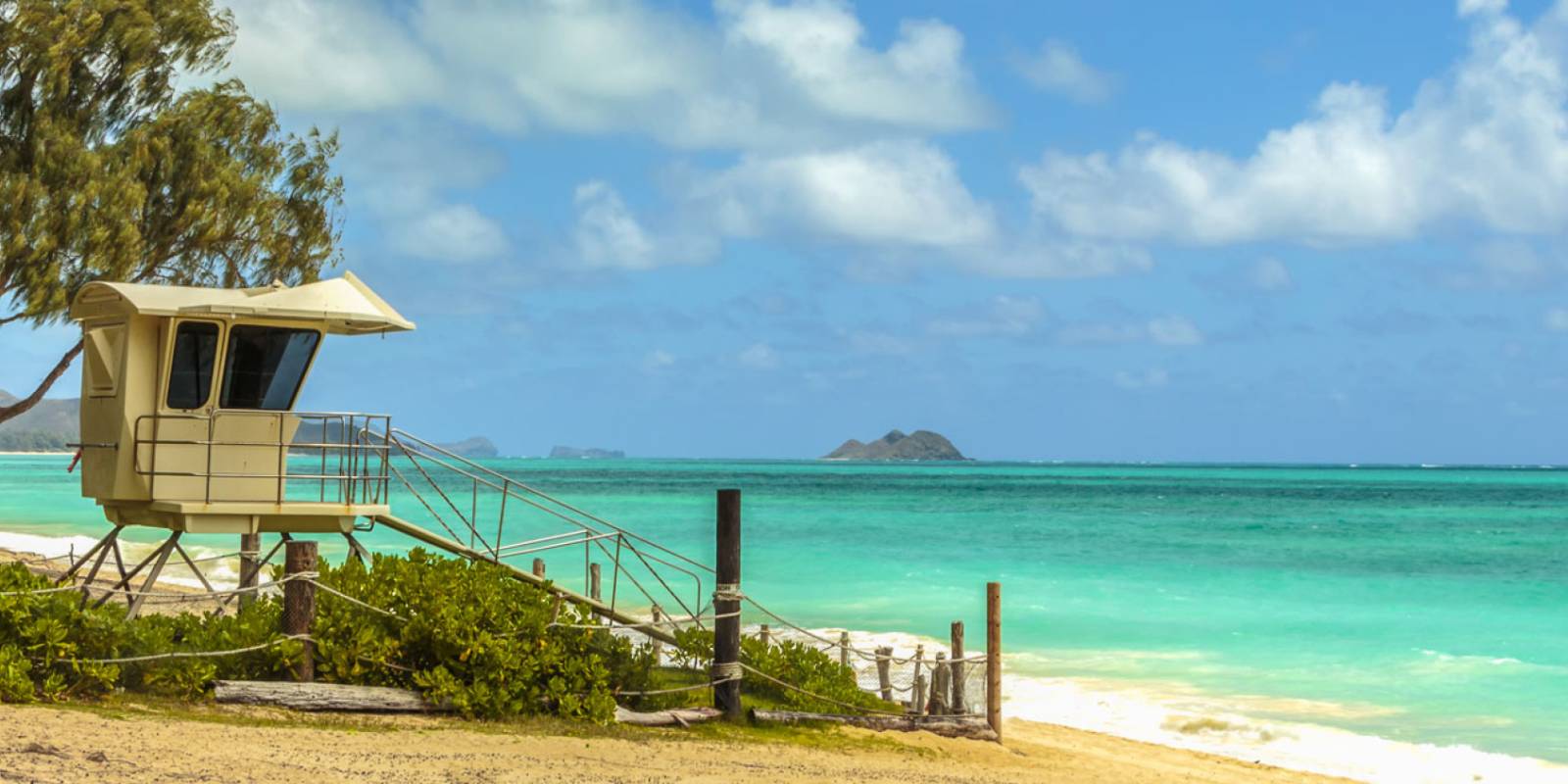
One of the most important things to do when you first arrive is to ask a lifeguard about the water's current condition. Pay special attention to any information regarding rip currents, high surf, and potentially dangerous rocks that are hidden due to high tide.
It's also a good idea to track where the lifeguard is. Always pick a spot to swim that's within clear sight of the lifeguard tower.
The Buddy System
The buddy system can be beneficial during emergencies. Always swim with a buddy, regardless of how dangerous the current conditions are. Children should never swim alone, and an adult should always be close to the water to monitor their behavior.
Use caution in the Winter months
During the winter months, certain areas in Hawaii can become dangerous for swimming or snorkeling due to powerful ocean currents, particularly on the north-facing shores of the islands. The large swells are driven by winter storms in the northern Pacific, creating strong waves and rip currents. This is especially true on islands like Oahu, Kauai, and Maui, where beaches like Waimea Bay or Hanalei Bay can have hazardous conditions. It’s crucial to pay attention to local weather and surf reports, follow lifeguard warnings, and stick to safer, calmer areas like sheltered coves or lagoons if you’re visiting during the winter season.
Hydration and Sun Protection
Stay hydrated and wear sunscreen, as Hawaii’s sun is extremely intense, with a high UV index. A stronger SPF may be necessary—be sure to choose a reef-safe option. Dehydration or sunburn can impair both your judgment and physical ability while in the water.

Warning Signs: Pay Attention!
Pay attention to ocean and beach warning signage, placards, and labels while visiting Hawaii - they are there for your protection and may save your life. If a warning has been placed for a beach or snorkeling spot saying it's not safe that day, it's NOT safe that day!
At lifeguarded beaches, the fastest read on the day's conditions is the color-coded warning flag flying at the tower — green, yellow, red, double red, and purple each change what you should do before getting in. Our Hawaii beach flag warnings guide walks through every color, plus how to judge conditions at the many beaches with no flags at all.
Rip Currents: What to Do
Rip currents can be potentially life-threatening if you don't how to escape from them. Once you notice that you've been caught in a rip current, swim parallel to the beach to escape it and then swim to shore once you have cleared the current. If you cannot swim or are having difficulty escaping the current, it's best to stay as still as possible and wave or yell for help. Panicking will only cause you to become tired, and you may be swept further away from the beach.
Check for Shorebreaks
Shorebreaks can be especially dangerous for unsuspecting beachgoers. These are waves that break directly onto the shore, often with great force, and can knock swimmers off their feet or cause injury. Avoid swimming or bodyboarding in areas with strong shorebreaks, especially at beaches like Sandy Beach on Oahu.
Stay Aware of Tide Changes
Tide shifts can drastically alter beach conditions, creating stronger currents or exposing sharp rocks. Check tide charts and know that rising tides can make previously safe swimming areas hazardous.
Get Your Free Hawai'i Guide
Instant access — opens immediately
- Beaches, activities & top spots
- Restaurant & dining recommendations
- Maps, itineraries & insider tips
Want the full offline version? Get the Complete Hawai'i Guidebook →

Watch for Creatures
Hawaii is famous for its variety of ocean life, many of which can be viewed while snorkeling only a few meters from the beach.
Check the jellyfish warning calendars. Box jellyfish typically come to shore eight to ten days after a full moon on south-facing Oahu beaches — full species, first aid, and severity guide further down this page. Other marine animals, like sea urchins, can also cause painful injuries, so water shoes are a good idea in rocky areas.
While it may be tempting to touch everything, it's best to keep your hands to yourself. Creatures such as eels, sea urchins, etc. are harmless unless threatened. If one happens to get too close to you, just let it swim by without sticking your hands too close to it.
Many types of coral have sharp edges. Because of this, always watch where you step. Hawaii's ocean waters are usually clear enough that it is relatively easy to see what's beneath your feet.
Avoid Snorkeling Right After Flying
After air travel, some experts recommend waiting before snorkeling, as recent flights may be a factor in Rapid Onset Pulmonary Edema (ROPE), a condition where fluid accumulates in the lungs and makes it hard to breathe. There is no single official wait time, so be conservative on arrival day, avoid pushing past fatigue, and skip the water if you feel short of breath. This has been addressed in the news quite a bit recently.
Jellyfish & Portuguese Man-o'-War — What to Know
Box jellyfish and Portuguese man-o'-war can both affect Hawaii beach days. A lunar watch window is a planning aid, not confirmation of jellyfish at a particular beach. Check posted warnings, ask a lifeguard about conditions, and read the sting first-aid guidance below before heading out.
The Two Species You'll Actually See
Hawaiian box jellyfish (Alatina alata): small, translucent, roughly cube-shaped with four corners — typically two to three inches across the bell, with thin tentacles trailing several inches behind. Adults spawn offshore at night about a week after each full moon, then drift inshore on a tide-driven schedule. They turn up most predictably on Oahu's south-facing beaches (Waikiki, Ala Moana, Hanauma Bay), and can also affect south and leeward beaches on other islands. The Waikiki Aquarium publishes a yearly prediction calendar; our jellyfish calendar tool calculates the warning window for any date.
Pacific Portuguese man-o'-war (Physalia utriculus): not actually a jellyfish — a siphonophore, which is a colony of organisms working together — but most beachgoers call it one anyway. Easy to spot: a bright blue-purple gas-filled float, usually a few inches long, with a single long tentacle trailing underneath. The Pacific man-o'-war is smaller than its Atlantic cousin but still delivers a serious sting. They don't follow a lunar cycle. They follow the wind. Strong onshore trade winds push them onto windward beaches: Lanikai, Kailua, and Waimanalo on Oahu; the Hana coast on Maui; the Hilo side on the Big Island.
Dead floats on the sand still sting. A man-o'-war washed up on the beach can fire its nematocysts (stinging cells) for hours after death. Don't touch them, don't let kids poke at them, don't try to move them with your hands.
The Lunar Window — South-Shore Oahu
Use the jellyfish calendar to plan, not to decide whether the water is safe. Predicted arrival dates are estimates, and jellyfish may be present outside a watch window. Check current beach alerts, posted warnings, and the lifeguard's advice at the beach you are visiting.
Sting First Aid — Get Help
Get out of the water and seek a lifeguard or medical help. Hawaii Ocean Safety advises seeking assistance after a jellyfish or man-o'-war sting. Follow the responder's local protocol; this guide is not a substitute for medical care.
The 2024 American Heart Association and American Red Cross first-aid guidance recommends the following for jellyfish stings.
- Watch for a serious reaction. Call 911 for trouble breathing, signs of shock, or severe pain.
- Avoid bare-skin contact with tentacles. The guidelines recommend lifting or pulling remaining tentacles; their evidence review favors pulling with tweezers over scraping.
- After tentacles are removed, use nonscalding warmth for pain relief. Hot-water soaking or a warm pack can help; avoid burns and follow the lifeguard or clinician's instructions.
The Red Cross's public first-aid guide also advises getting out of the water and not rubbing the affected area.
What about vinegar? University of Hawaii research found benefits for man-o'-war stings; it does not support a blanket claim that vinegar makes those stings worse. Broader first-aid guidelines note limited evidence and differences between species. Follow the lifeguard or clinician's treatment instructions.
When to Call 911
Call 911 for difficulty breathing, signs of shock, or severe pain. If the person becomes unresponsive, call immediately and follow the dispatcher's instructions, including any CPR directions. Stay with the person until trained help arrives, as long as it is safe to do so.
Take Hawaii Stings Seriously
Hawaii Ocean Safety warns that box jellyfish stings can cause severe injury and scarring. Do not assume that a sting is minor because it happened in Hawaii, or wait for an online species identification before seeking help.
How to Avoid Getting Stung
- Check the jellyfish calendar as a planning aid, but do not treat a date outside the watch window as an all-clear.
- Look at the sand before you swim. Blue-purple floats mean man-o'-war on the beach (and almost certainly in the water).
- Watch for purple warning flags at lifeguarded beaches. A purple flag means dangerous marine life — jellyfish, man-o'-war, or occasionally sharks. It flies alongside the conditions flag.
- If lifeguards are posting signs, take it seriously. They see what the calendar can't predict.
- The ocean report aggregates current conditions across Hawaii's beaches.
Aside from these Hawaii ocean safety tips, it's always best to double-check for, re-read all signs, and avoid the water if a lifeguard is not on duty or if you think the conditions are too dangerous. And remember, due to rogue waves, never turn your back to the ocean while in the water or near shore.
Our Other Recommendations
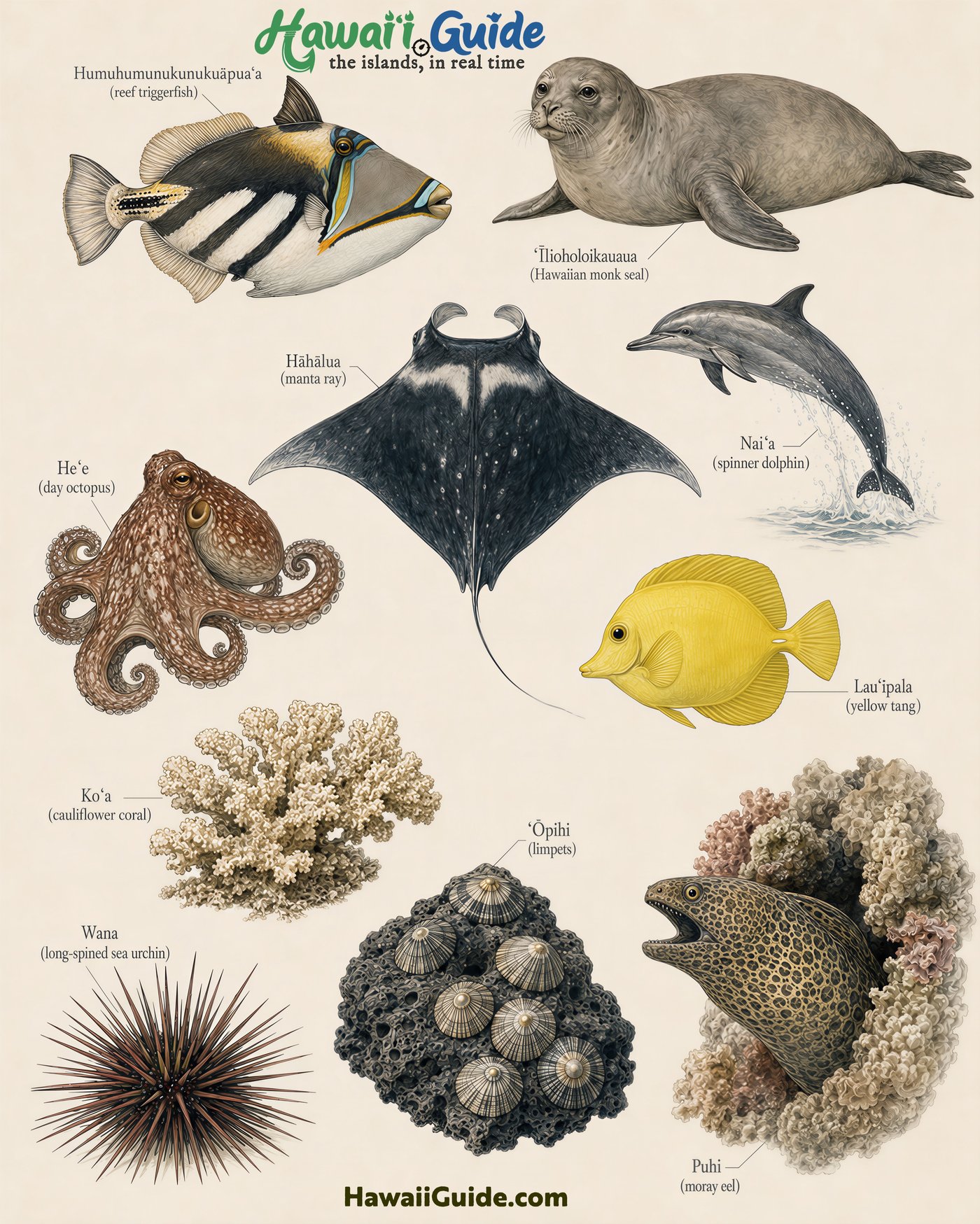
Illustrated Kai Field Guide
Use this visual guide as a quick ocean companion after reviewing the safety basics. Tap to zoom in or download a full-size copy.