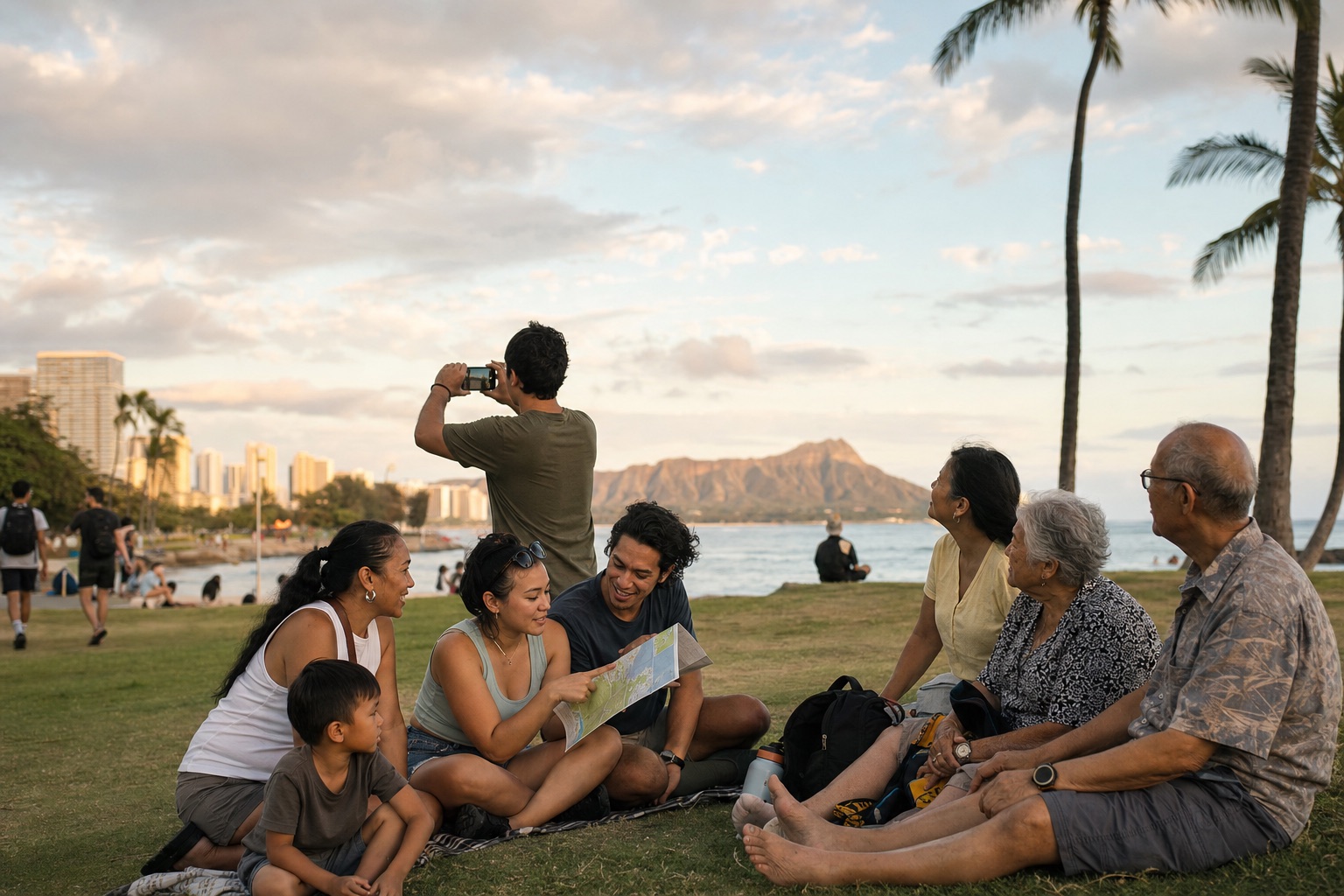



A multigenerational family planning a Hawaii day together at an Oahu oceanfront park

One Hawaii. Every generation.

Hawaii for
Every Generation

Choose your generation—or the group you are planning for—and find the pace, priorities, and Hawaii Guide resources that fit.

Choose your view

Start with a point of view

Your age does not decide your trip.
Your priorities do.

A generation can be a useful starting point, but it is not a personality test. Choose the group that sounds most like the trip you are planning, then keep the advice that fits and leave the rest.

Use this as a shortcut, not a label. A Gen Z traveler may want quiet mornings. A Boomer may want the hardest hike on the island. The useful advice is the advice that sounds like you.

Pick a generation

See Hawaii through your trip

Every selection has its own shareable link.

Swipe to see all generations

Hawaii with Gen Beta

Let the smallest traveler set the rhythm

For babies and toddlers, Hawaii works best when naps, feeding, shade, and familiar routines shape the day. Choose a forgiving home base, keep the travel radius small, and let one easy outing be enough.

This fits if naps, feeding, gear, and low-effort days shape the plan.
01

What may matter most

Protect the daily rhythm

Put one short outing between the routines your child already knows instead of rebuilding the schedule around sightseeing.

Make the room work

A refrigerator, simple food setup, laundry access, and a confirmed sleep space can matter more than an elaborate resort itinerary.

Shrink the travel radius

Keep the airport transfer, groceries, pharmacy stops, and easiest activities close enough that every need does not become an excursion.

02

Build the trip around this

  1. 1

    Choose the island and neighborhood around short transfers and easy access to everyday supplies.

  2. 2

    Confirm the car seat, crib or pack-and-play, stroller, and other essential gear before arrival.

  3. 3

    Plan one flexible morning outing, return for the normal rest window, and treat the pool or a calm beach as a complete afternoon.

Our take

The win is not how much of Hawaii the adults cover. It is whether the family has enough margin to enjoy where they are.

Traveling with Gen Alpha

Give curiosity room to lead

For children and young teens, Hawaii works best when the day has one memorable anchor and enough open space to notice the small things: reef fish, lava rock, shave ice, rainbows, and a beach they can enjoy safely.

This fits if you are planning around school-age children or young teens.
01

What may matter most

Shorter, clearer days

Build around one main outing, then leave room for food, a pool, or an early night.

Easy access matters

Restrooms, shade, parking, lifeguards, and a manageable walk can matter more than a famous name.

Turn places into stories

Junior Ranger programs, wildlife spotting, and cultural context give children something to carry home.

02

Build the trip around this

  1. 1

    Pick a home base that keeps everyday meals and the easiest activities close.

  2. 2

    Let each child choose one trip priority so the itinerary feels shared.

  3. 3

    Keep an indoor or low-effort backup for rain, heat, tired legs, or changing ocean conditions.

Our take

A successful family day is not the day with the most stops. It is the day everyone still likes one another at dinner.

Hawaii for Gen Z

Spend deliberately, keep the trip flexible

Your best Hawaii trip may mix one or two must-do experiences with inexpensive beaches, food trucks, neighborhood wandering, and plans that can change when the weather or the group changes.

This fits if flexibility, shared experiences, and controlling the total cost matter most.
01

What may matter most

Price the whole trip

Flights are only the opening number. Compare lodging, transportation, food, parking, reservations, and activities together.

Decide on transportation early

A car-free stay can work in the right place; other itineraries become frustrating without a vehicle.

Reserve the scarce pieces

Keep the itinerary loose, but secure the parks, tours, and timed entries that can genuinely sell out.

02

Build the trip around this

  1. 1

    Choose the island and neighborhood before chasing individual attractions.

  2. 2

    Agree on a shared budget and which experiences are worth a splurge.

  3. 3

    Save the plan in one place so screenshots and group messages do not become the itinerary.

Our take

Flexibility works best after the expensive and capacity-limited decisions are settled.

Hawaii for Millennials / Gen Y

Build a trip with range, not just a checklist

A good fit may need to satisfy several versions of the same traveler: food lover, beach person, hiker, parent, partner, remote worker, or friend organizing the group. The key is choosing a base and rhythm that can hold that range.

This fits if you are balancing experience, comfort, cost, and several people’s priorities.
01

What may matter most

The right region beats the longest list

Where you stay controls daily driving, restaurant access, beach time, and how spontaneous the trip can feel.

Choose where quality matters

Spend more on the experiences or comforts you will remember and simplify the rest.

Plan for the actual group

Couples, friends, young families, and mixed groups need different room layouts and different amounts of together time.

02

Build the trip around this

  1. 1

    Match the island and stay region to the trip style before choosing a hotel.

  2. 2

    Alternate active days with slower days instead of making every day compete.

  3. 3

    Put the shared itinerary, saved places, and reservations where everyone can find them.

Our take

The most satisfying itinerary has contrast: a strong experience, a good meal, and enough margin to enjoy both.

Hawaii for Gen X

Protect the time you worked hard to take

When vacation time carries a lot of responsibility, the best plan reduces avoidable friction without scheduling every hour. This may also be the trip where you are coordinating teenagers, adult children, parents, or friends at once.

This fits if you are the organizer, have limited vacation time, or are coordinating more than one age group.
01

What may matter most

Remove preventable surprises

Confirm reservations, driving times, check-in realities, and the activities that require advance planning.

Respect the map

Hawaii distances can look short while the actual day becomes long. Group nearby experiences and avoid needless backtracking.

Schedule less than you could

A deliberate empty block can rescue a delayed arrival, a weather shift, or a group that simply needs a slower morning.

02

Build the trip around this

  1. 1

    Build the trip around two or three non-negotiable experiences, not twenty possible stops.

  2. 2

    Give the group visibility into the plan instead of making one person carry every detail.

  3. 3

    Protect the first and last day from unnecessary island crossings or ambitious drives.

Our take

The premium is not always luxury. Often it is fewer logistical decisions once the trip begins.

Hawaii for Baby Boomers

Choose comfort without shrinking the experience

A comfortable trip can still hold remarkable scenery, culture, food, wildlife, and time on the water. The useful question is not whether an activity is “for seniors,” but whether its pace, access, and logistics fit the travelers going.

This fits if comfort, a sensible pace, or clear access details shape the plan.
01

What may matter most

Make the home base work harder

A convenient location, dependable room setup, nearby meals, and fewer lodging changes can improve every day.

Leave recovery room

One meaningful outing a day can deliver more enjoyment than a sequence of rushed reservations.

Confirm the exact experience

Ask about walking distance, stairs, boarding, seating, shade, restrooms, and cancellation terms before paying.

02

Build the trip around this

  1. 1

    Choose the island and region according to driving tolerance and the experiences that matter most.

  2. 2

    Put the most important outing on a day with room around it.

  3. 3

    Carry printed essentials if that feels easier than depending on several apps or a weak signal.

Our take

Comfort is not a lesser version of Hawaii. It is the structure that lets the meaningful parts come through.

Hawaii for the Silent Generation

Make every transition easier

Hawaii can be deeply rewarding at a gentle pace. The strongest plan minimizes unnecessary transfers, confirms access details directly, and keeps help, seating, shade, medication, and rest within easy reach when they are needed.

This fits if walking distance, transfers, stamina, or hands-on travel support deserve special attention.
01

What may matter most

Plan the airport journey

Request needed assistance ahead of time and make the path from arrival to lodging as simple as possible.

Verify, do not assume

Ask about the specific room, route, vehicle, vessel, restroom, and seating arrangement you will use.

Keep essentials close

Carry medication, health information, contacts, and the day’s plan where they remain easy to reach.

02

Build the trip around this

  1. 1

    Favor one island, one lodging base, and direct transportation whenever practical.

  2. 2

    Pair each outing with reliable seating, food, shade, and restroom options.

  3. 3

    Let the travel companion or service provider know exactly where assistance is useful.

Our take

The right support should make the trip feel more independent, not more complicated.

Bringing more than one generation?

Plan the overlap,
not the compromise.

A multigenerational trip does not need one activity that pleases everyone every minute. It needs a comfortable shared structure, permission to split up, and a few experiences everyone will remember together.

Build the shared trip
1

Choose one forgiving home base

Keep meals, an easy beach or pool, and the most common needs close enough that every outing is not an expedition.

2

Give each day one shared anchor

A luau, garden, scenic drive, boat trip, or meal can hold the day together without controlling every hour around it.

3

Split by energy, reunite by ritual

Let one group hike while another explores town, then reconnect for sunset, dinner, or the same morning coffee spot.

4

Make the plan visible to everyone

Share addresses, reservation times, transportation details, and the fallback plan so no one person becomes the trip’s help desk.

Across every generation

Four things make almost every Hawaii trip better

Your generation is only the beginning

Now match the rest of the trip to you.

Answer a few quick questions and find the Hawaii Guide tools that matter for where you are in planning.

Start with TripStart