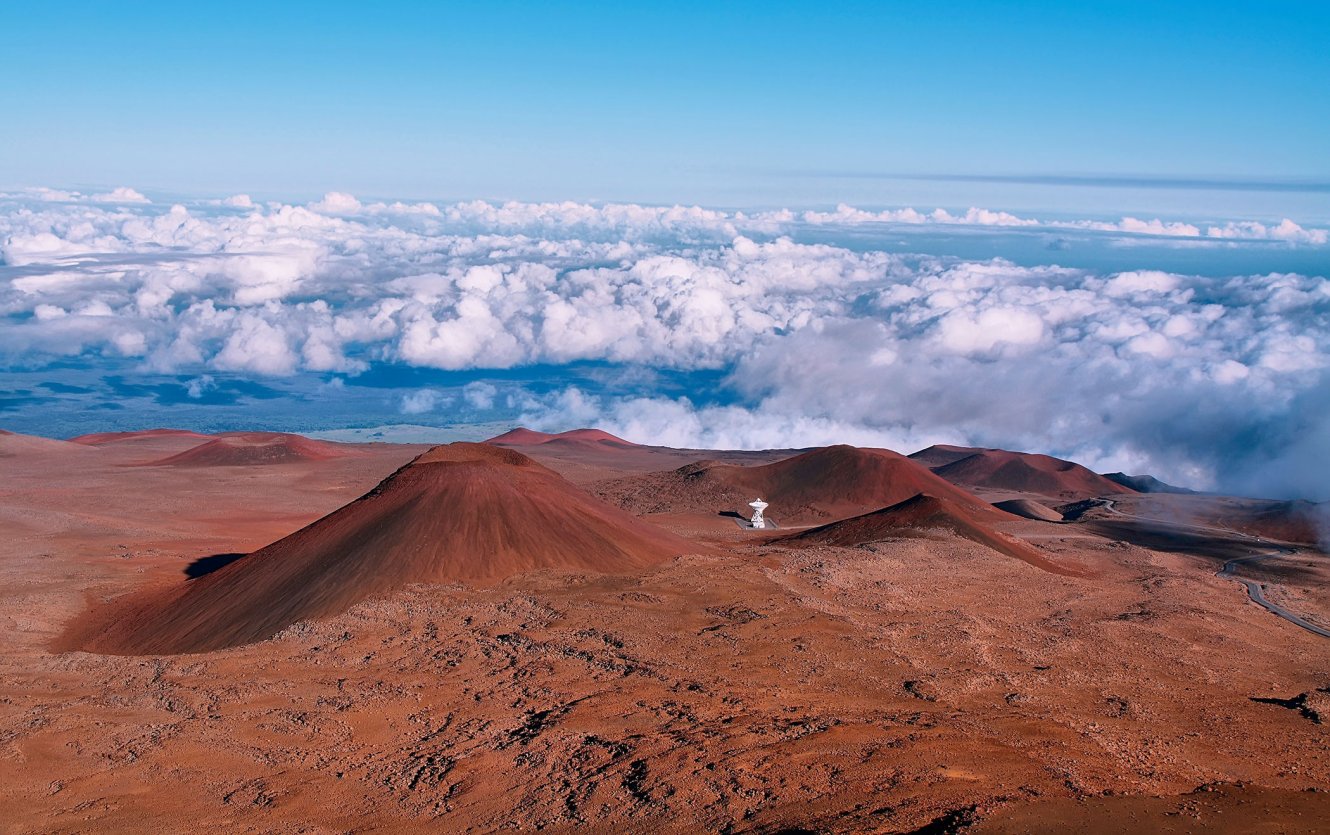


In Hawaiʻi, altitude sickness can catch you off guard because the drive starts at a beach hotel and ends high above the clouds. The road makes the ascent feel ordinary. Your body does not read pavement as acclimatization. Haleakalā reaches 10,023 feet. Maunakea rises to roughly 13,800 feet, and its Visitor Information Station (VIS) is already at 9,200 feet. We do not ask whether everyone in the car can tolerate the summit. We ask whether everyone will turn around when one person cannot. We set the summit-day rule before leaving the hotel: if anyone develops possible altitude-illness symptoms, stop going higher. If symptoms worsen or build together, descend. The CDC’s altitude-illness guidance supports descent for worsening symptoms and immediate descent for severe illness. No sunrise, sunset, reservation, or paid tour is worth negotiating with those signs.
Start with the person, not the summit
The CDC’s high-altitude guidance treats unacclimatized travelers going to 8,000 feet or higher as at risk. We do not use fitness as a shield. A strong runner can feel sick while a less athletic companion feels fine, and a good result on a prior mountain does not guarantee the next one. People with heart or respiratory conditions should speak with a clinician before the trip. Haleakalā National Park’s safety guidance specifically tells pregnant visitors and people with heart or respiratory conditions to consult a doctor before visiting. Maunakea has stricter mountain-specific guidance. The official Maunakea health and safety page says not to travel above the VIS if you are under 13, pregnant, within 24 hours of scuba diving, or dealing with high blood pressure or a heart or respiratory condition. We treat that list as a stop, not a waiver to improvise around.
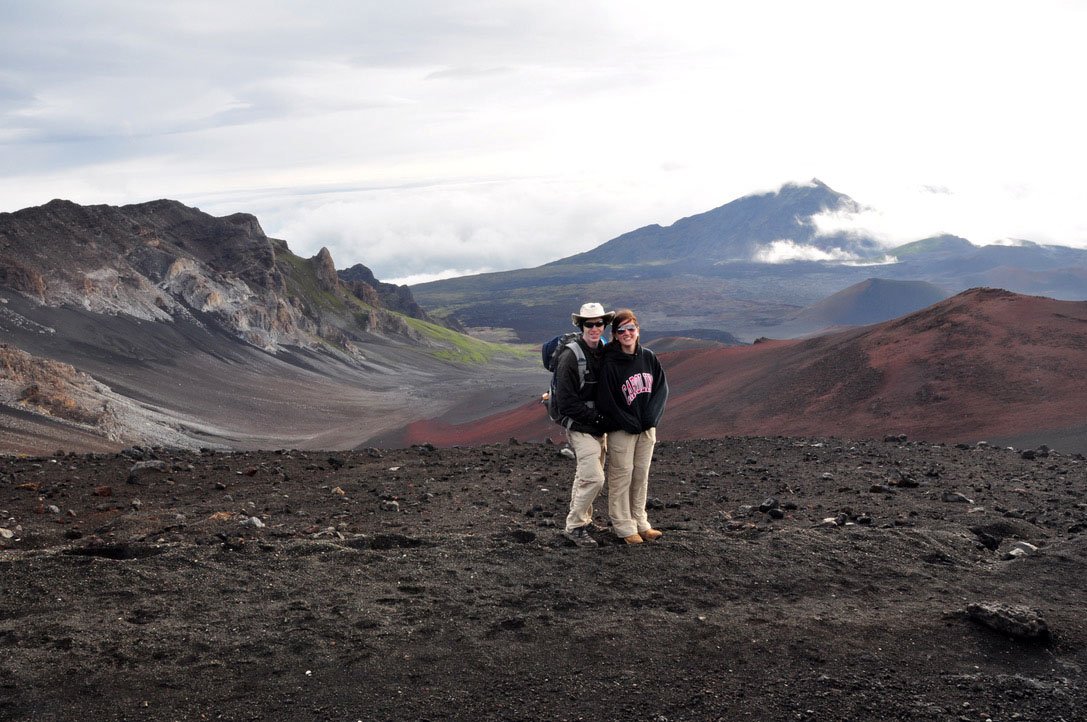
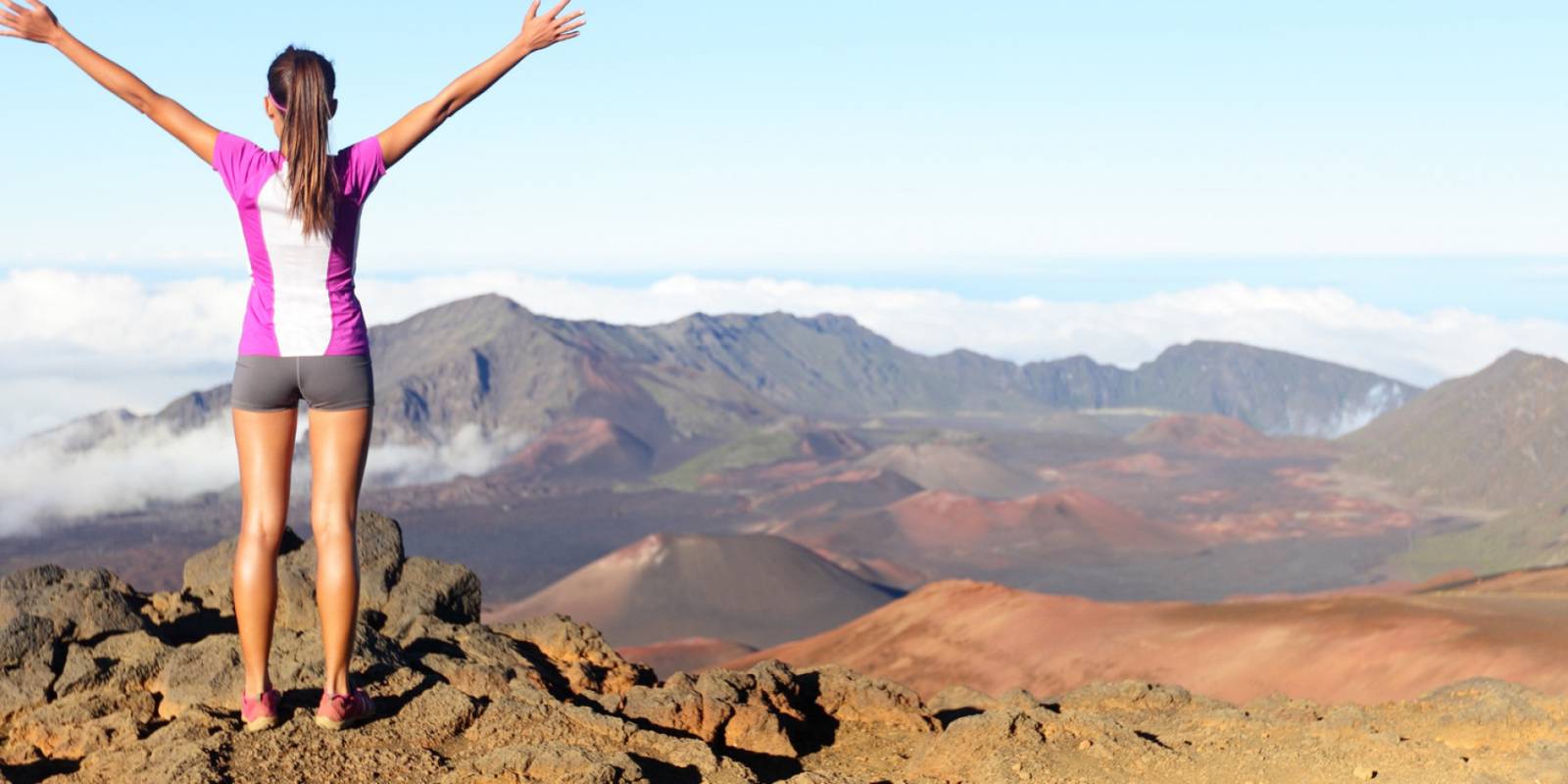
John and Tori inside Haleakalā. On our visit, the cinder landscape made a short walk feel like enough before we considered a trail.
A summit stop and a summit hike are different days
A short viewpoint stop keeps exertion low and lets you leave as soon as someone feels worse. A crater hike spends more time at elevation and adds a climb back to the road. We plan those as different days. The Haleakalā hiking page warns that Summit Area trails are strenuous because every breath carries less oxygen. It lists nausea, headache, dizziness, and shortness of breath as symptoms to watch. Keoneheʻeheʻe (Sliding Sands) begins downhill, which can hide the work required to return. The park’s Summit District trail guidance warns that climbing out takes longer than walking down. Leave extra time for the return. Build one decision before the trailhead: viewpoint only, short walk, or real hike. Do not let a clear sky turn a viewpoint plan into an unprepared crater hike. Our Haleakalā National Park guide covers the destination. Use this guide to decide whether your group should continue at elevation.
Maunakea: use the VIS as a real checkpoint
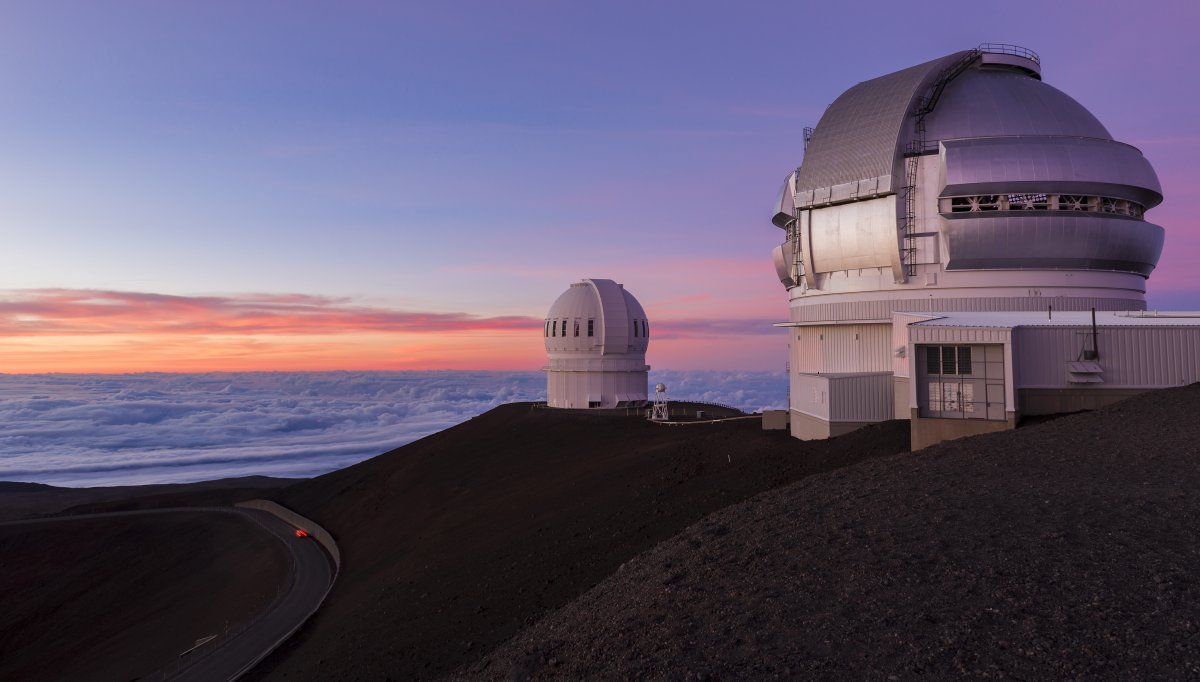
We treat the VIS as a checkpoint, not a scenic formality. It sits at 9,200 feet, already above the elevation where altitude illness can occur. Maunakea’s official health and safety guidance calls for at least 30 minutes there before continuing. Use the pause to check the road report, speak with staff, and notice how each person feels while walking around. If someone feels wrong at the VIS, the summit is off. Staying another 20 minutes to bargain with a headache is not acclimatization. The CDC notes that acclimatization can take 3–5 days, not one parking-lot stop. The VIS pause slows the ascent and gives symptoms a chance to declare themselves; it does not make the upper mountain safe for everyone. Road access is a separate gate. The official Maunakea road guidance requires a dependable 4WD vehicle above the VIS and does not permit 2WD vehicles. Check your rental contract before making this plan. A guide can handle the vehicle and driving, but not the altitude decision.
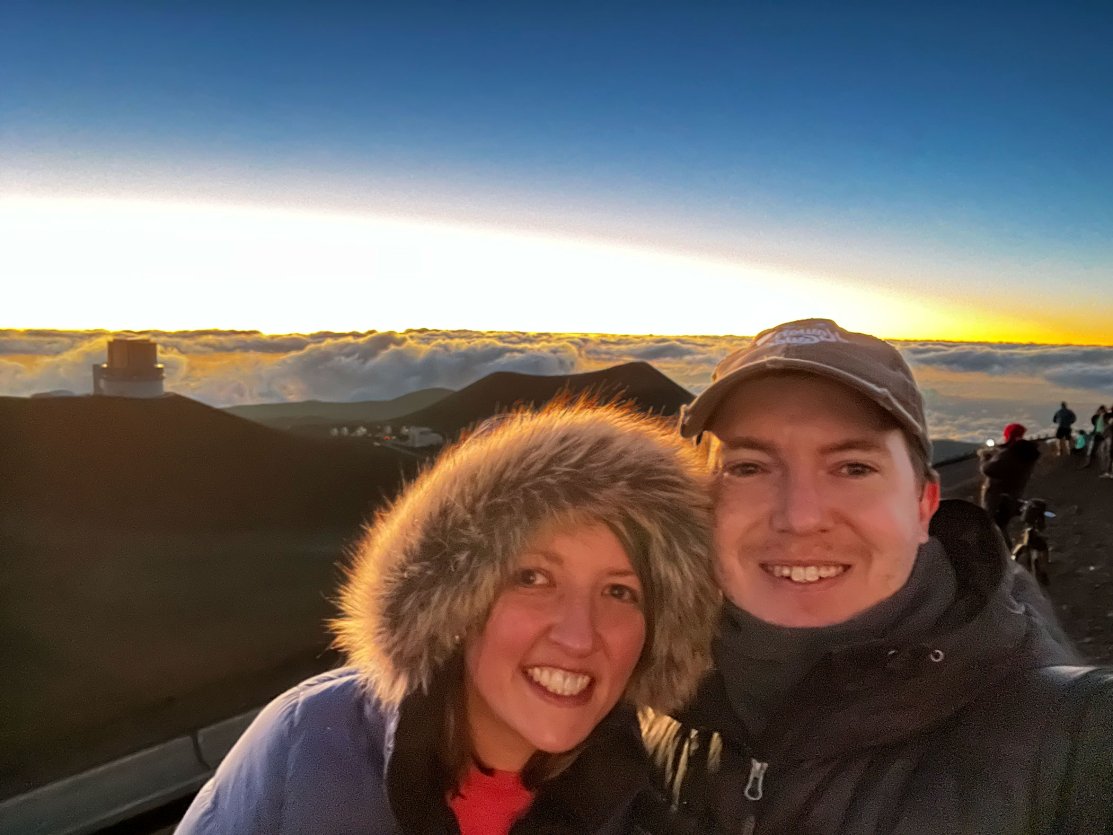
Warm clothing helps manage the cold. It does not address altitude symptoms, so keep the turnaround decision separate from the weather checklist.
Haleakalā: the easy road hides the hard part
Haleakalā has a paved park road and no mountain checkpoint comparable to Maunakea’s VIS. That makes the summit easier to reach, not lower. A visitor can leave a South Maui hotel near sea level and arrive near 10,000 feet in one drive. We keep the first stop small. Step out, put on layers, and walk at the pace of the slowest person. If the plan includes a trail, reassess after the viewpoint instead of assuming the whole group is ready because nobody complained in the car. The park’s Summit District guidance warns that temperatures can drop below freezing and that the summit is remote. Bring warm and wet-weather layers, water, food, sun protection, and sturdy shoes. Those supplies handle normal summit conditions. They are not a reason to stay when symptoms are getting worse.
Use one symptom ladder for the whole group
We use the same threshold for everyone. New headache, nausea, dizziness, unusual fatigue, or shortness of breath that does not match the effort means stop going higher. Sit somewhere safe, reduce exertion, and watch whether the symptoms improve or build. The CDC’s altitude-illness guidance explains the symptoms and treatment of acute mountain sickness. Worsening symptoms, several symptoms developing together, or an inability to continue normally mean descend. The CDC advises descent when symptoms worsen. Confusion, stumbling or loss of coordination, severe drowsiness, blue lips or fingernails, breathing difficulty at rest, or a worsening cough are emergency signs. The CDC identifies these as possible signs of severe altitude illness that require immediate descent and medical evaluation. Call 911 when it is safe to do so and follow ranger direction. Do not ask the sick person to drive downhill. Keep the group together and stop at a safe lower-elevation location if symptoms do not ease. If you cannot tell whether a symptom is altitude, cold, dehydration, medication, or another problem, descending is still the useful direction.
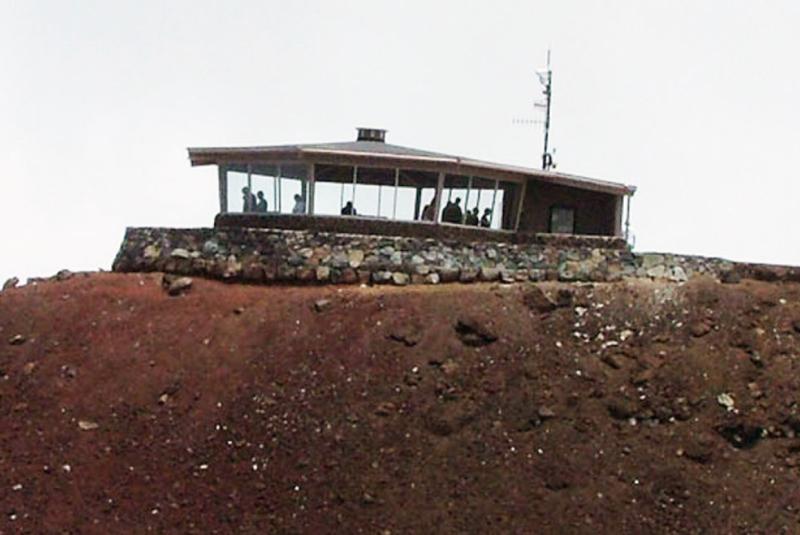
Puʻu ʻUlaʻula looks close from the parking area. At summit elevation, even short climbs deserve a slower pace.
Build a summit day with an exit
We put the summit on a light day. Avoid stacking a long summit hike with a demanding afternoon. For Maunakea, keep scuba diving at least 24 hours away from any plan above the VIS, as the official safety guidance requires. Skip alcohol before the ascent, eat normally, and do not treat extra water as a cure for thin air. The CDC’s altitude guidance covers prevention and acclimatization. Save the official safety pages and the lower-elevation backup before you leave reliable service. On Maunakea, the VIS can be the destination. On Maui, an Upcountry stop can replace a Haleakalā summit that no longer fits the group. A backup is not a consolation prize. It makes the turnaround decision easy when the mountain changes the plan. If every person in your group still fits the summit plan, a permitted commercial guide can handle the Maunakea vehicle requirement. Start with our Maunakea stargazing tour guide to compare summit and lower-elevation formats before choosing. The summit-day test is simple: Can everyone go up safely, can everyone leave without argument, and is there a good day below the clouds if the answer changes? If all three are true, the mountain stays an experience instead of becoming an endurance test.