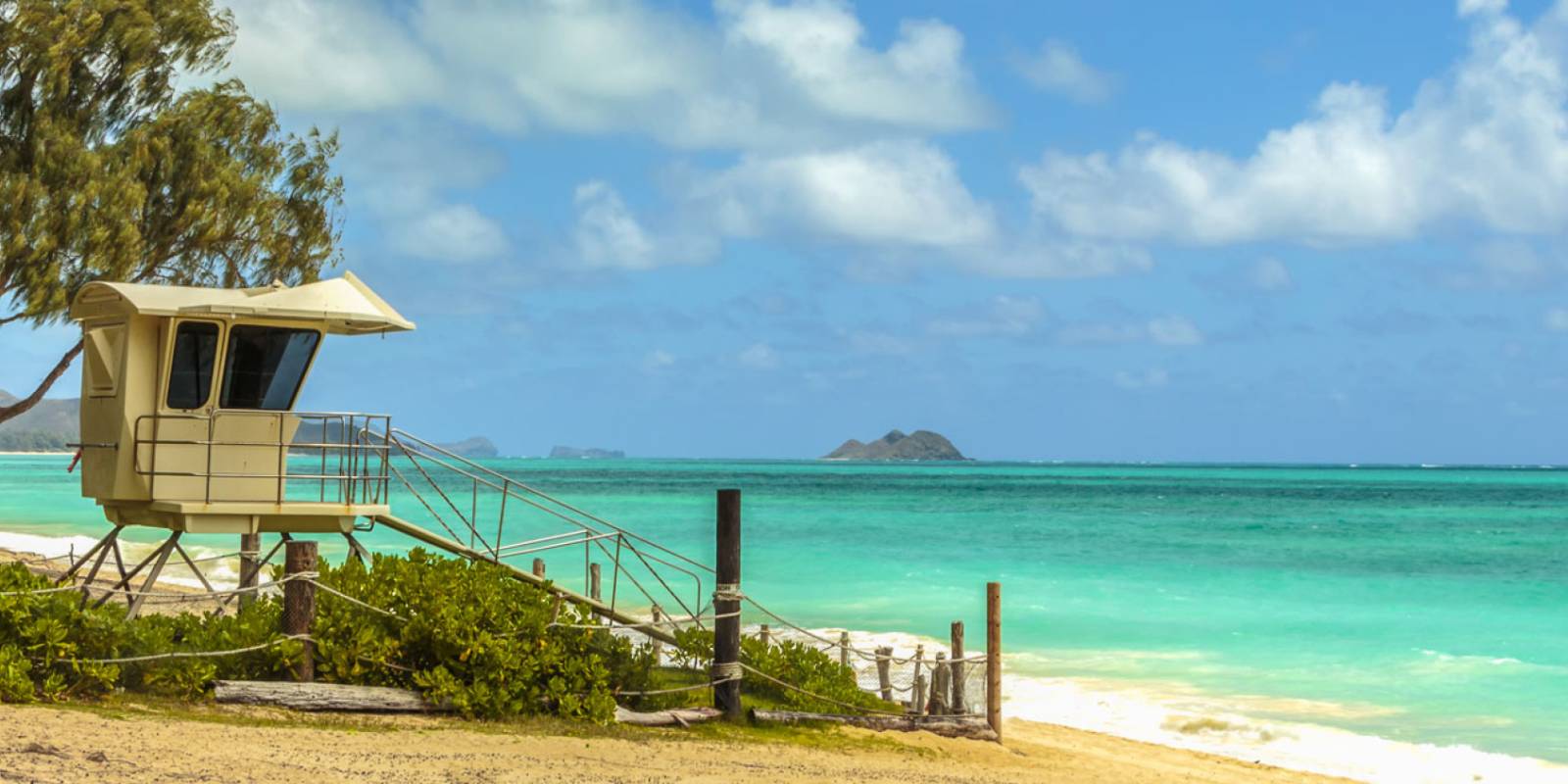
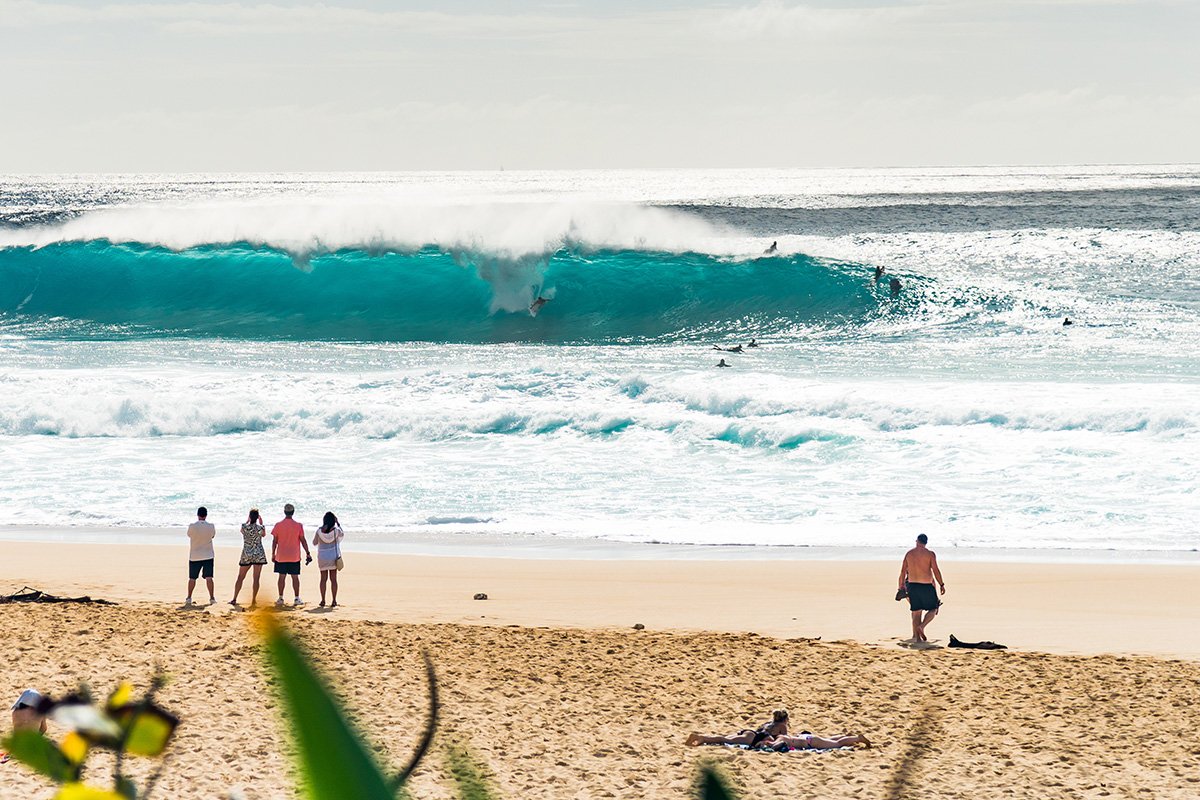


Hawaii beach flag warnings can change by the hour, and so can the ocean they describe. Some mornings the water is a calm pool you could read a book in. Some afternoons the same beach is closed by lifeguards because the surf shifted overnight and the rip pulling out at the river mouth could carry strong swimmers far offshore. The flags and signs are how lifeguards tell you which day it is. They are not decoration. They change, sometimes hour to hour. If you’ve never seen them before, here’s how to read them, plus what to do at the many Hawaii beaches that don’t have lifeguards at all.
The Flag Colors and What They Mean
Hawaii lifeguards use the same color system most U.S. coastal states use, set out by the United States Lifesaving Association. Each Hawaii county runs its own ocean safety department — Honolulu Ocean Safety covers Oʻahu, with parallel teams on Maui, Hawaiʻi Island, and Kauaʻi — but they all fly the same colors. The Hawaii DLNR flag chart covers the full set.
Green Flag — Calm Conditions
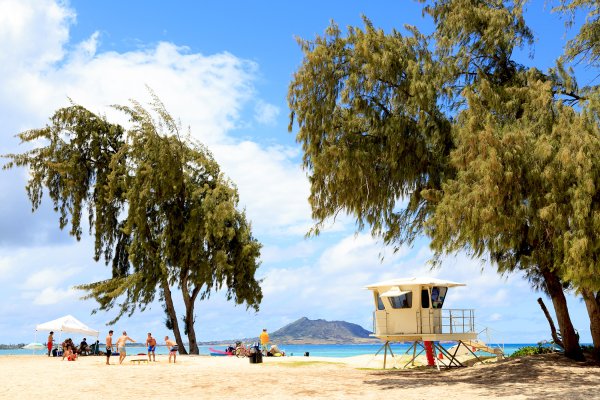
The water is doing what most visitors picture when they think of Hawaii: gentle, swimmable, low risk. Green doesn’t mean zero risk. It means the lifeguards on duty have looked at it and decided most people in average shape can be in there safely. Watch your kids. Stay where you can see the lifeguard tower.
Yellow Flag — Moderate Hazard
Something specific is going on: a building swell, gusty offshore wind, a stronger rip than usual, or surf big enough to surprise a kid in shallow water. Yellow is where most visitors get into trouble, because it’s the color where a vacation mindset says “fine, I’m a strong swimmer” and the ocean disagrees. If you see yellow and you’re not a confident open-water swimmer, stay knee-deep or lower. Don’t go past the break.
Red Flag — High Hazard
Lifeguards are telling you the surf or current has gotten serious enough that they expect to be making rescues. People still go in. People still get pulled out. Red is the line where “experienced” stops meaning what you think it means. Every winter on Oʻahu’s North Shore, on big-surf days, locals with 30 years in the water sit on the sand and watch.
Double Red Flag — Water Closed to Public
Get out, stay out. This is rare and almost always tied to extreme conditions or an active emergency: a search, a confirmed shark attack in the area, or a major bacterial advisory. It is a closure, not a warning, and it is not optional.
Purple Flag — Dangerous Marine Life
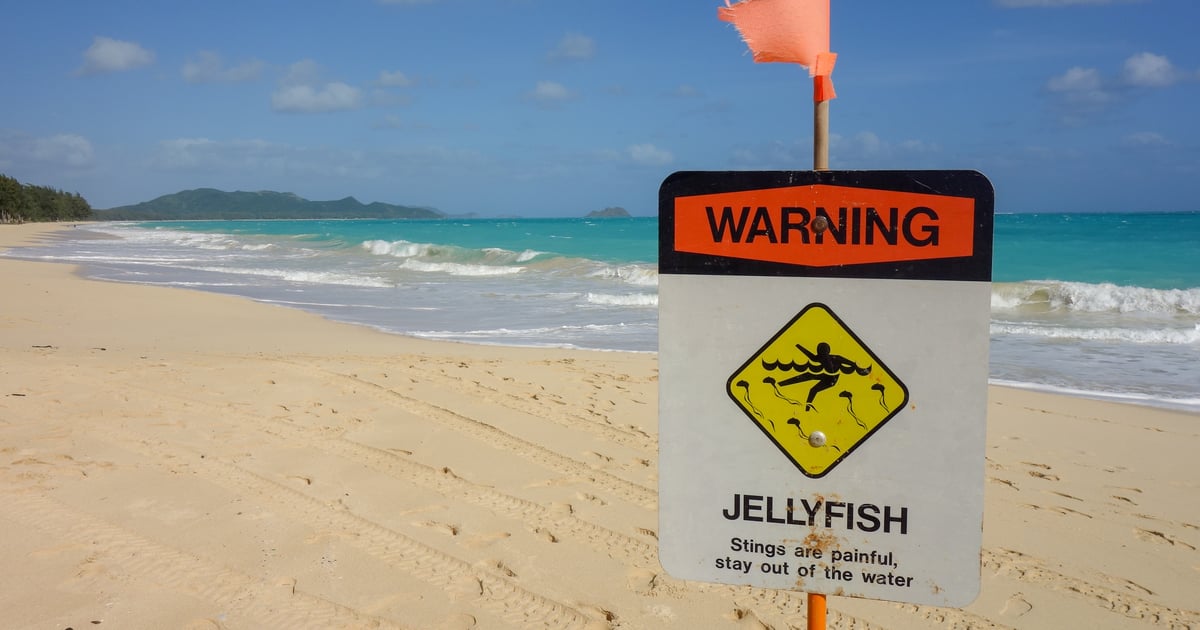
Box jellyfish on Oʻahu’s south shores about eight to ten days after a full moon. Portuguese man-o-war when trade winds blow them onto windward-facing shores. A purple flag is a hazard advisory — the water is open, but you should know what’s been spotted before you go in. A confirmed shark attack or aggressive shark encounter usually triggers a temporary closure (double red), not a purple flag. When in doubt, ask the lifeguard on duty and follow the posted instruction.
Other Flags You'll See
Some Maui and Hawaiʻi Island beaches also fly a black-and-white checkered flag to mark a no-surfing zone next to a designated swim area, and a red-over-yellow split flag to mark the patrolled section of a guarded beach. If you see the red-over-yellow flags, swim between them. That’s where the lifeguards are watching most closely.
Most Hawaii Beaches Don't Have Lifeguards
Hawaii has hundreds of named public beaches across the four counties. The patrolled list is much shorter. The Hawaii Beach Safety project — a partnership between the four county ocean safety agencies, the state Department of Health, and the University of Hawaiʻi Sea Grant Program — maps the patrolled beaches by island, and the dots are sparse on every map. For exact locations and posted hours, check each county directly: Honolulu Ocean Safety, Maui County Ocean Safety, Hawaiʻi County Ocean Safety, and Kauaʻi Ocean Safety. Most towers run during daylight hours — Kauaʻi extended its tower hours to 8:00 a.m. to 6:00 p.m. in 2024, and other counties publish their own schedules — but specific hours vary by beach and season. Check the county page for the beach you’re going to before you plan an early or late swim. Outside posted hours, even guarded beaches are unguarded. A beach that was busy and patrolled at 4:30 in the afternoon can be empty and lifeguard-free at 5:15 with the same surf still running. If you’re at a beach without a lifeguard, you are 100% responsible for reading the conditions yourself. There won’t be a flag to interpret. There may not be any signage at all beyond a generic “swim at your own risk” board. If you don’t know how to read the water — currents, the way waves are breaking on the reef versus the sand — pick a different beach for the day. The list of patrolled beaches is right there on those four county sites.
What the Warning Signs Actually Tell You
Beyond the flags, Hawaii beaches use a small, standardized set of warning signs. They describe specific hazards, not generic “be careful” energy.
Strong Current / Rip Currents
A rip current is a narrow channel of water moving from the beach back out to sea, often through a gap in a sandbar or reef. NOAA calls rip currents the deadliest weather-related hazard for U.S. beachgoers, and the USLA attributes the majority of surf-beach rescues to them. Rips are not undertows that pull you down. They pull you out. The standard advice from NOAA and the National Weather Service still works: don’t fight it, swim parallel to the beach until you’re out of it, then angle back to shore. If you can’t swim out of it, float, signal, conserve energy.
Dangerous Shore Break
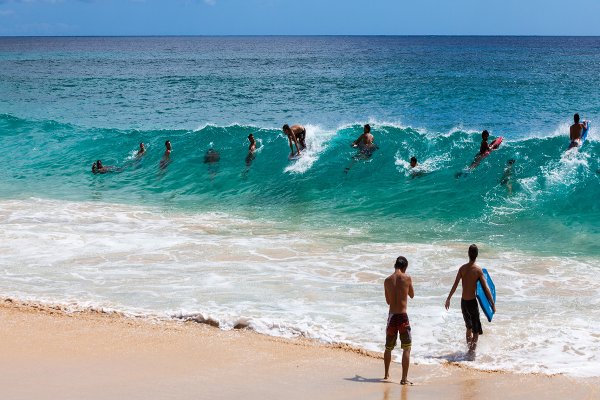
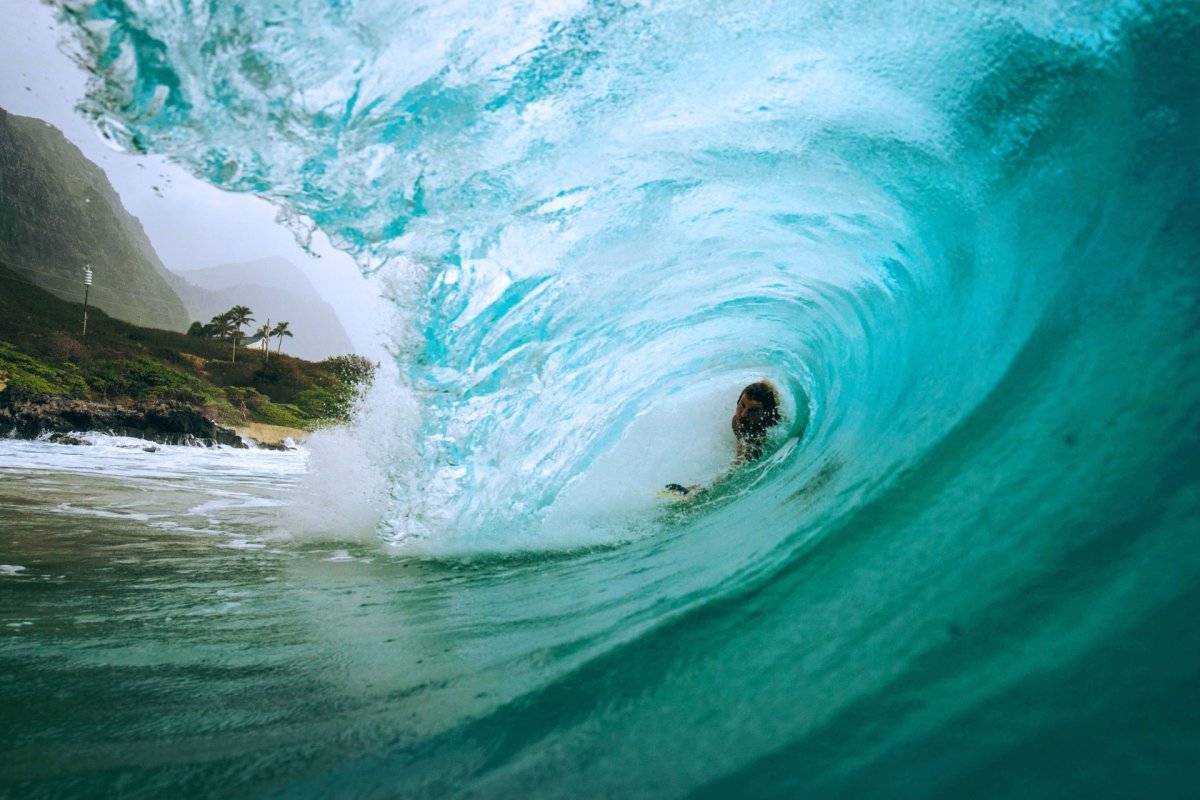
This sign goes up where waves break right at the sand instead of out on a reef. Sandy Beach on Oʻahu’s south shore is the textbook example, and it accounts for a disproportionate share of Hawaii’s ocean-related spinal cord injuries — Honolulu Civil Beat has reported on the pattern at length. Shore break can slam a body face-first into hard wet sand from waist-deep water, fast. If you see “Dangerous Shore Break” posted, don’t bodysurf, don’t turn your back on the water, and don’t stand in the impact zone.
High Surf
The National Weather Service in Honolulu issues two tiers when surf gets big. Per the NWS Honolulu surf criteria, a High Surf Advisory triggers at 15-foot face on north-facing shores or 8-foot face on south-facing shores. A High Surf Warning triggers at 25 feet north or 12 feet south. On those days the safe morning beach can be a different beach by afternoon. Swells move around the islands clockwise, and an offshore-wind day can mask a serious swell from the lookout.
Slippery Rocks
Wet basalt and lava rock are exceptionally slick, particularly with algae growth. This sign goes up at coastal access points, blowholes, and tide-pool areas. The risk is twofold: falling, and being knocked off by a rogue wave. Stay back from the wet zone. Never turn your back on the ocean on a rocky shoreline. Watch for sets that are larger than the average.
Sharp Coral
Hawaii’s reef is mostly hard coral, not the soft tropical reef of the Caribbean. It cuts. Coral cuts also frequently get infected because of marine bacteria. Closed-toe water shoes solve this for shoreline access. For snorkeling, keep reasonable distance from the coral and don’t stand on it — both for your skin and for the reef. Separately, on the sun-protection side: Hawaii has banned the sale of sunscreens containing oxybenzone and octinoxate (Act 104, effective 2021) and added avobenzone and octocrylene under a follow-up law that took effect in 2023. Mineral sunscreens with non-nano zinc oxide are the simplest way to comply and stay reef-friendly.
Brown Water Advisory
After heavy rain, runoff carries sediment, leptospirosis bacteria, and other pathogens into nearshore waters. The Hawaii Department of Health Clean Water Branch posts these advisories online and at affected beaches. Stay out until DOH lifts the advisory; if water near a stream mouth or harbor entrance is visibly brown after a storm, don’t get in.
How to Read a Beach With No Flag and No Lifeguard
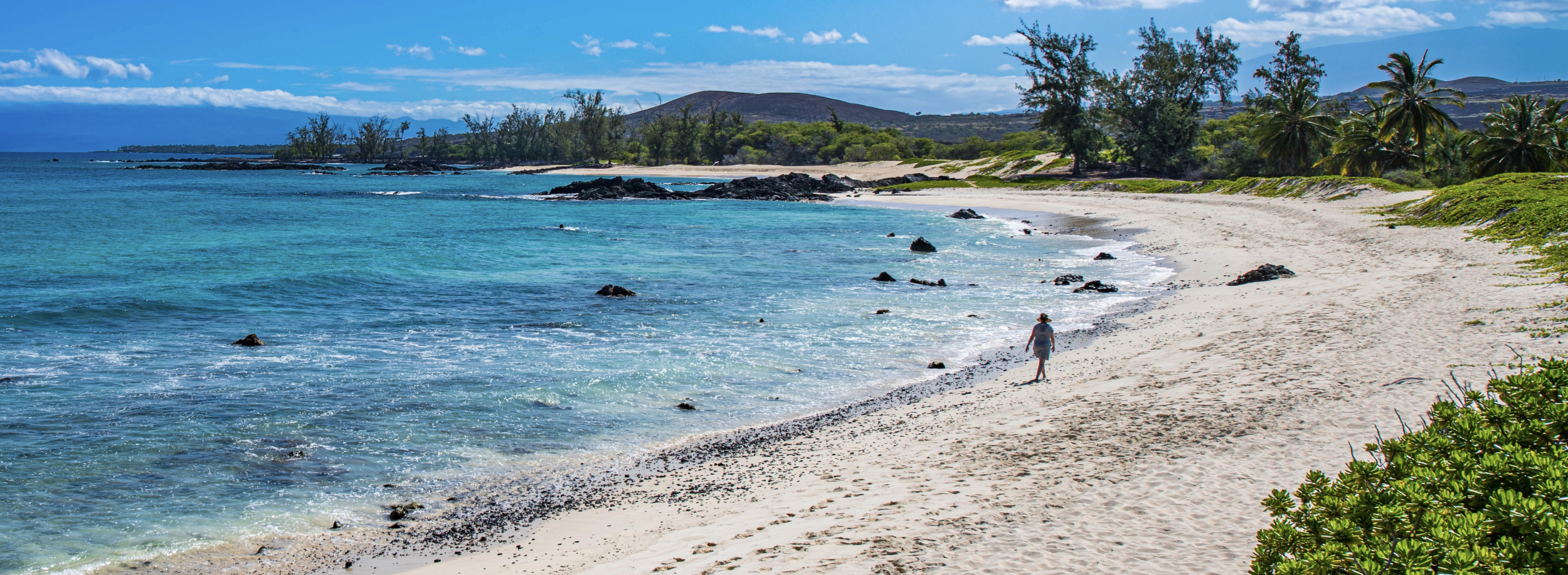
Most of the postcard beaches on the neighbor islands fall in this bucket. There’s no tower, no flag, and the conditions you see are the conditions you have to evaluate yourself. A few questions, in order: First, look at where the waves are breaking. If the break is far offshore on a reef and the water inside looks glassy, you may have a more protected area — but glassy water can still hide currents, reef hazards, and tricky entries. If the break is on the sand, you have shore break (see above). If the break shifts position depending on which set rolls in, that’s a sign the swell is bigger than the average wave height suggests. Second, watch a single point in the water for two full minutes. Sets often arrive in groups of larger waves with longer flat periods between them. The flat water you arrived during might not be the typical condition. Two minutes of watching tells you more than two minutes of social-media scrolling on your towel. Third, look for water moving against the wind. A rip current is often visible from shore: it’s the narrow strip where water is foamy or choppy heading out, not in. A discolored streak heading offshore is also a tell. Fourth, ask the right people. A lifeguard at a nearby guarded beach, the staff at a county park kiosk, a permitted tour operator, or a surf shop near the break can all tell you what today is doing at that specific spot. The answer is sometimes “yeah, totally fine, hop in.” It’s also sometimes “I wouldn’t take my kids in there today.” Both are valuable. Fifth, when in doubt, drive to a guarded beach. The list is on the county pages above, and it’s not long. Our live ocean report pulls current NWS advisories and surf forecasts in one place — useful for picking a beach for the day before you leave the hotel.
Practical Rules That Cover Most Bad Days
A short list of things almost every Hawaii ocean safety department says, condensed: Never turn your back to the ocean. Especially on rocky shoreline, blowhole overlooks, and at the water’s edge during high surf. Sets that are larger than the average wave height are how people get knocked off lava-rock outcrops. If in doubt, don’t go out. The single most reliable rule. If you’re hesitating, don’t. The beach will be there tomorrow. Swim near a lifeguard tower whenever possible. Even a strong swimmer benefits from someone watching with binoculars and a rescue tube ten feet away. Hawaii Beach Safety’s island maps let you sort beaches by patrol status before you drive. Keep an eye on kids and weaker swimmers at all times. Hawaii’s reef topography means depth can change abruptly. A step from waist-deep to over-your-head water can happen in one stride past a coral ledge. Don’t drink and swim. Alcohol impairs the judgment and reaction time you need in surf and rip conditions. County ocean safety departments flag it as a recurring factor in visitor incidents. If you get caught in a rip, don’t fight it. Float, swim parallel to the beach, signal for help. NOAA says rip currents are typically 50 to 100 feet wide; you don’t have to swim far to escape one. If you see somebody in trouble, don’t go in after them. Get a lifeguard if there is one. If there isn’t, dial 911, find a flotation device or anything that floats, and throw it out to the swimmer instead of swimming out yourself. Untrained bystander rescues often end with the rescuer in trouble too.
When the Conditions Are Good
Most days at most beaches in Hawaii, the conditions are fine, the flag is green, and the water does what the brochure promised. The point of this post isn’t to scare anyone off the ocean. It’s to make sure your good day stays good. If you’re new to Hawaii ocean activities and want a guided introduction, a beginner snorkel tour with a reputable operator is a high-leverage way to spend two or three hours. The crew checks conditions, picks a sheltered spot, and stays close while you get used to the water. You can compare Hawaii snorkel tours on Viator. Same logic applies to surf lessons — the instructor reads the surf for you, picks a beginner-friendly break, and you don’t have to interpret a single flag yourself for the morning. One more thing worth saying out loud: Hawaii’s ocean is the reason most people come here. Read the flags, respect the signs, pick patrolled beaches when you’re not sure, and you’ll spend a whole trip in the water without ever needing the lifeguard’s whistle.