

Hawaii’s colored sand beaches come in four main colors: black, green, red, and white. The colors aren’t photo filters. They come from real geology. Black sand is shattered lava. Green sand is olivine crystals. Red sand is iron-rich cinder. White sand is ground-up coral. Each color is a fingerprint of how that particular beach formed, and Hawaii is one of the few places where a visitor can see several of them in a single trip. This is the visitor-friendly explainer for what makes each color, where to see it, and the rule that catches people off guard at the airport: you cannot take any of it home.
Black Sand: Lava That Met the Ocean
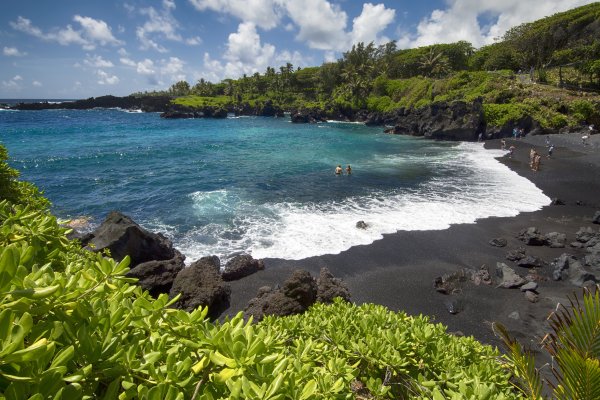
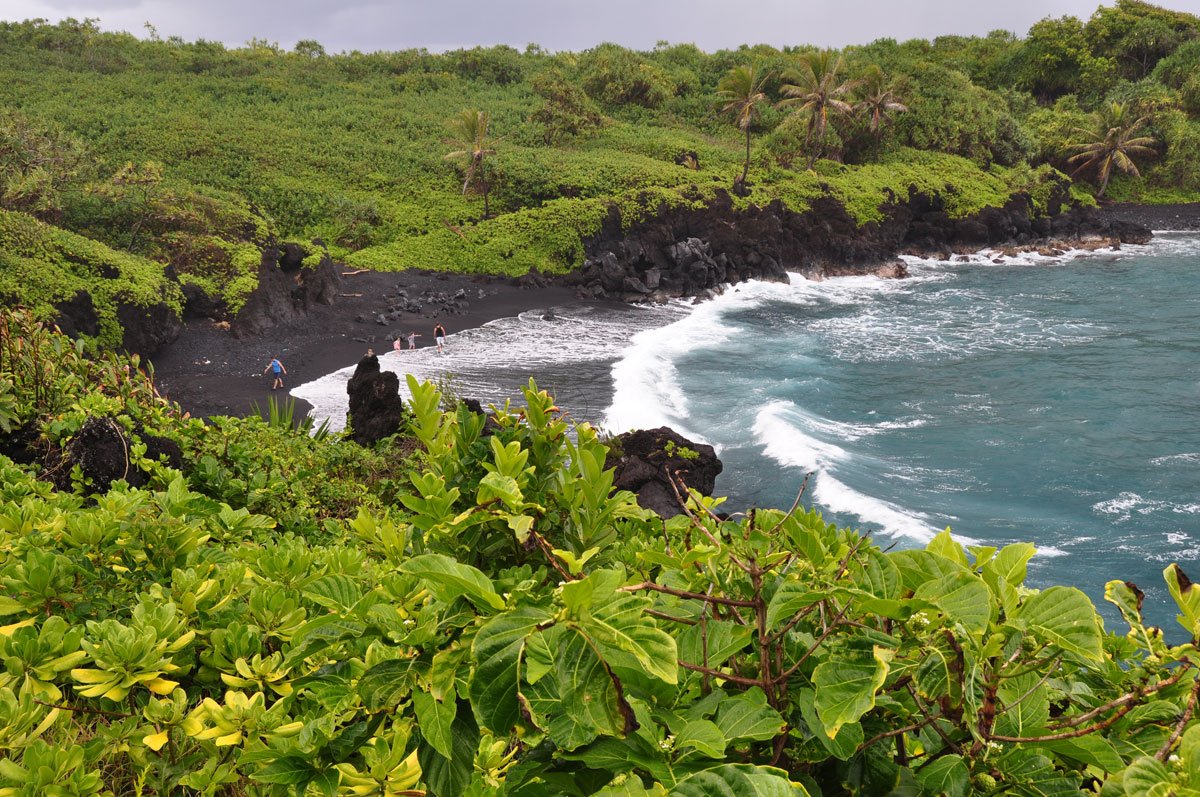
Honokalani Black Sand Beach at Waiʻānapanapa State Park on Maui. The black grains here are basalt fragments ground down from the surrounding lava cliffs over centuries.
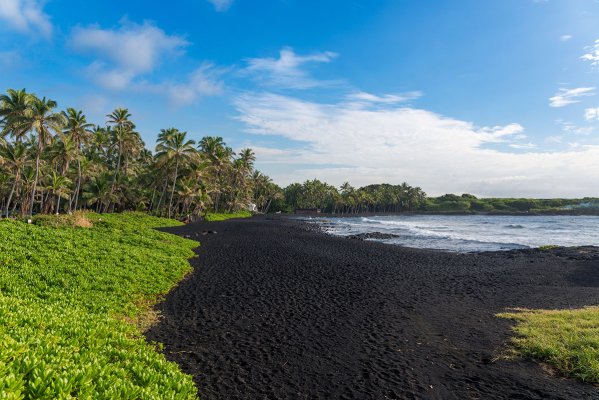
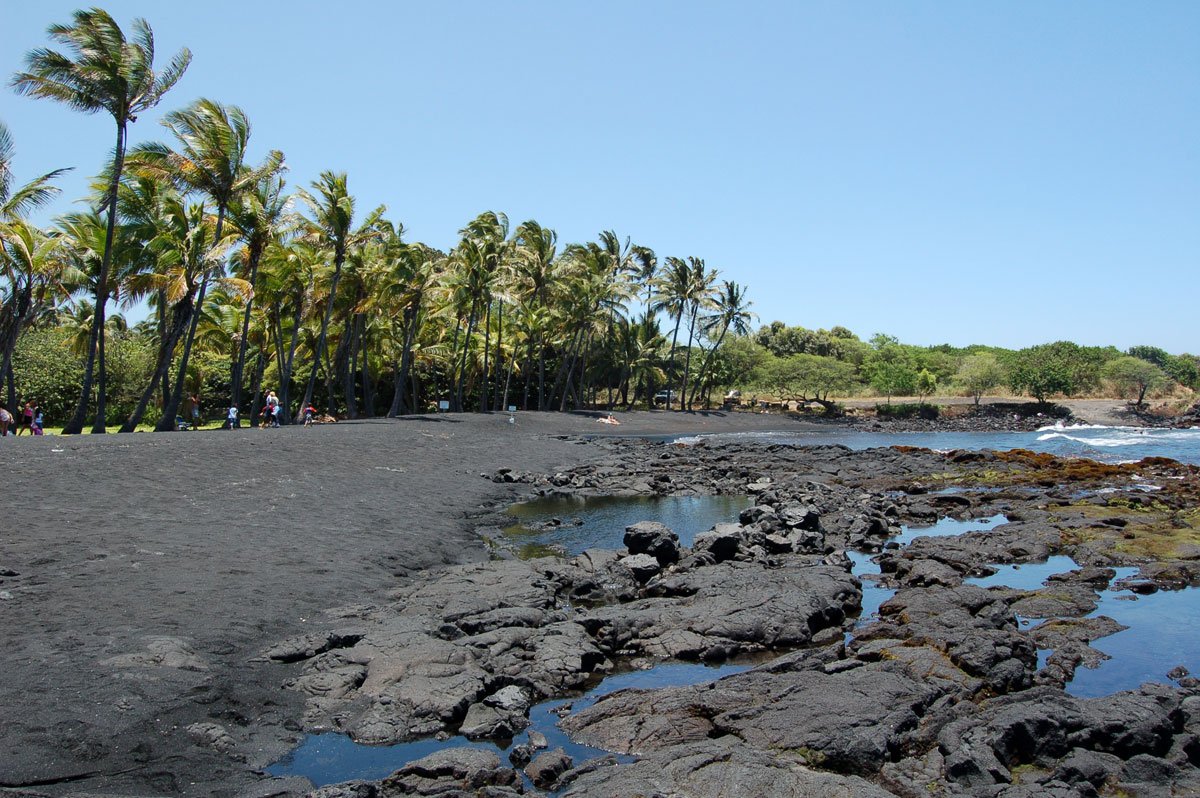
Black sand is the easiest to explain. When molten lava hits cold ocean water, it shatters explosively into glass-like fragments of basalt. Wave action grinds those fragments down to sand size. The result is a beach that looks like someone poured espresso powder against turquoise water. The USGS Hawaiian Volcano Observatory describes the process in detail. The same eruptions that built the islands are still creating new black-sand beaches whenever a lava flow reaches the coast. Where to see it: Punaluʻu Black Sand Beach (Big Island). One of the easiest black-sand beaches in the state to visit. The Hawaiʻi Division of State Parks lists it as a free day-use area with paved parking and picnic tables, and it’s one of the better places in Hawaiʻi to see Hawaiian green sea turtles (honu) hauled out on the sand. Roughly halfway between Volcano and Kona on the south coast. Honokalani Black Sand Beach at Waiʻānapanapa State Park (Maui). One of the most photographed black-sand beaches in the state, near the end of the Road to Hana. Non-resident entry is $5 per person plus $10 per vehicle for parking, and advance reservations are required through gostateparks.hawaii.gov. Reserve a couple of days out at minimum during peak season. Kehena Beach (Big Island). A locally beloved black-sand beach in Puna. Smaller and quieter than Punaluʻu, with a short scramble down a lava-rock path. It has a clothing-optional reputation, so plan accordingly. Oneuli Beach (Maui). A dark gray-black beach on the south slope of the Mākena cinder cone. Good snorkeling on calm days, with easy walk-in access from Mākena State Park. Pololū Valley Beach (Big Island). Dark and dramatic, reached by a roughly half-mile descent from the Pololū Valley Overlook on the north Kohala coast. The current is strong; this is one to admire from shore rather than swim.
Green Sand: Olivine, and Only a Few Places on Earth
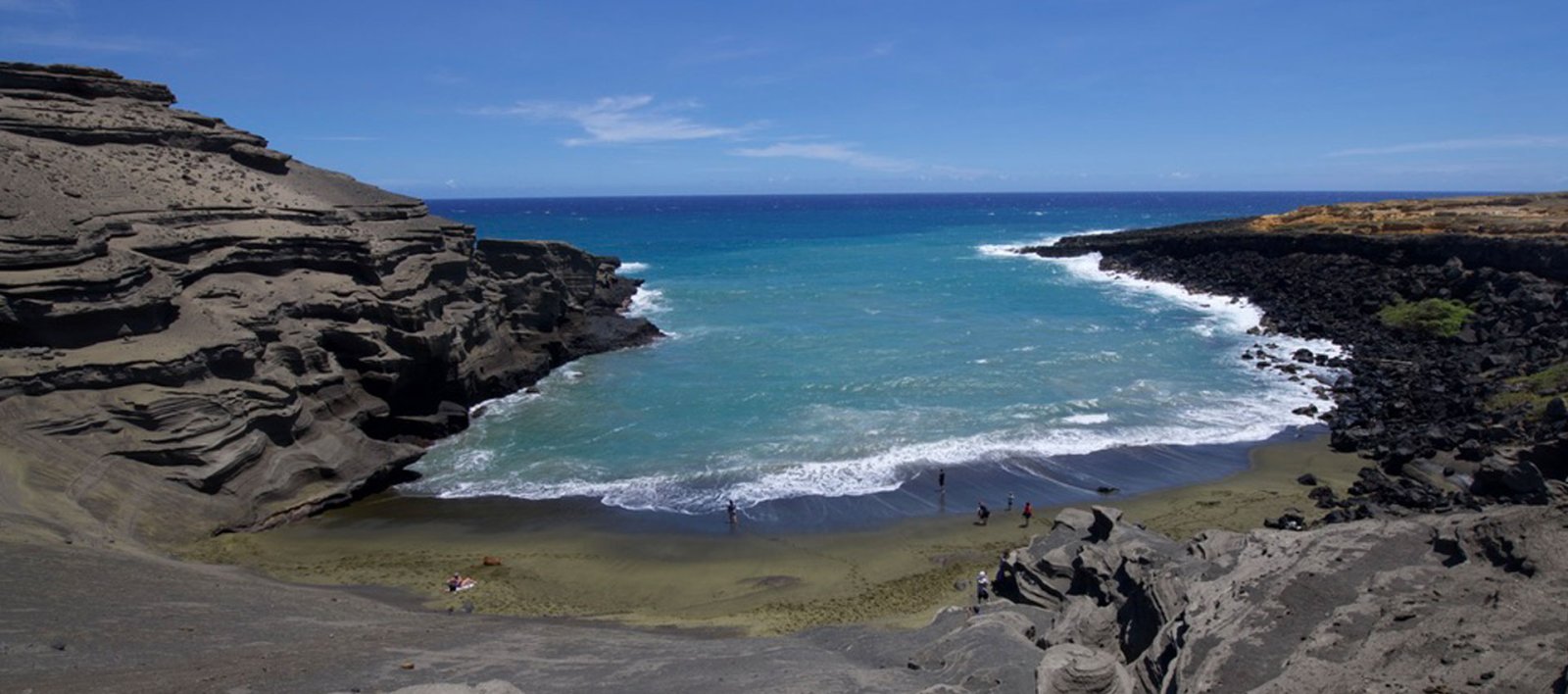
Green sand is the rare one. The Big Island’s Papakōlea Green Sand Beach sits inside an eroded cinder cone at Ka Lae (South Point), the southernmost point in the United States. The cone, called Puʻu Mahana, erupted around 49,000 years ago and threw out lava unusually rich in olivine, a pale-green silicate mineral common in Hawaiian basalt. Olivine is harder than most of the surrounding rock, so as the cone has eroded, the ocean has washed away the lighter material and left a beach made mostly of olivine grains. Papakōlea is commonly listed as one of only four green sand beaches in the world, alongside sites in Guam, the Galápagos, and Norway. Color in person ranges from olive-drab to a saturated emerald depending on light and how recently the waves have agitated the sand. Getting there is the catch. There is no road to the beach. Visitors face a roughly 2.5-mile dirt track from the South Point parking area, and they either hike round-trip (allow about 2.5 to 3 hours plus beach time) or pay around $20 per person for a ride in a private 4WD shuttle. The shuttle operators are not officially permitted. The Department of Hawaiian Home Lands has stated the services are unauthorized, and they continue to operate informally from the trailhead. Bring water and cash, with plenty of sun protection. The descent into the cone is a short scramble down a lava-rock chute. Plan for a short stay at the beach itself. Swimming is rough on most days because the cove channels swell, and there are no lifeguards.
Red Sand: Worth Knowing About, Worth Approaching With Caution
Maui’s Kaihalulu Red Sand Beach in Hāna is the only widely known red sand beach in Hawaiʻi. Its color comes from iron-rich volcanic cinder; the same oxidized iron is also what gives Mars its reddish color. The cliff above the beach is the eroding remnant of an old cinder cone, and the cone has stained the sand below it a deep brick-red. Kaihalulu is famous and photogenic, but the access is hazardous and the beach is not officially open to visitors. The path drops along the edge of a sea cliff that has eroded badly. The trail is unmaintained and unmarked, the land status along the route is contested, and serious injuries have happened. A visitor died on the route in 2021. The honest recommendation: do not attempt the descent. View Kaihalulu from the public lookout above, or skip it. There is no version of the trail that is safe to recommend, especially in wet conditions or with children.
White Sand: Coral, Shells, and Most of the Beaches Visitors Recognize
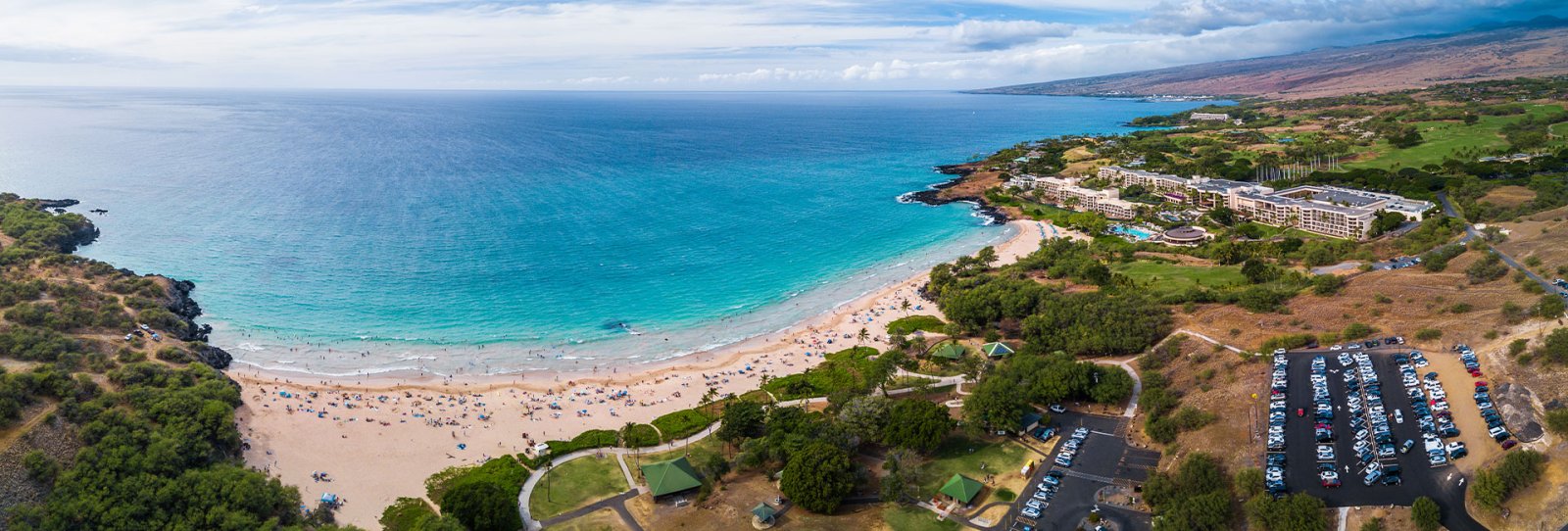
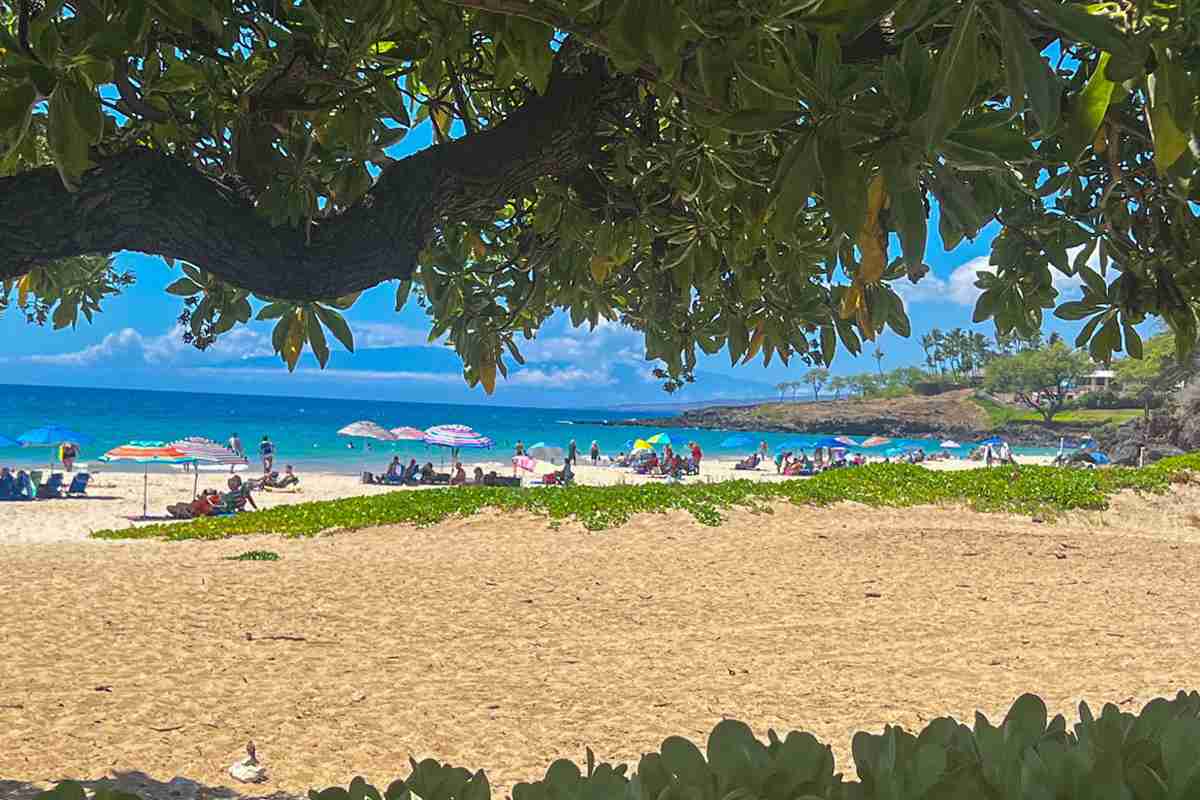
Hapuna Beach on the Big Island's Kohala Coast. The white sand here is centuries of coral and shell fragments ground down by waves and parrotfish.
Most of Hawaii’s famous beaches are white-sand beaches, and that sand has nothing to do with lava. It comes from coral and shell fragments broken down by waves, plus the limestone skeletons of marine organisms. A surprising amount of it comes from parrotfish, which graze on coral and excrete the inorganic fraction as fine sand. NOAA estimates a single large parrotfish can produce hundreds of pounds of white sand a year. Most of the white beaches in the islands have been built up over thousands of years by this slow biological grinding plus storm-driven coral fragments delivered to shore. Reliable white-sand beaches:
- Hapuna Beach (Big Island). Half a mile of soft white coral sand on the leeward Kohala Coast.
- Lanikai Beach (Oahu). The postcard pale-sand crescent on Oahu's windward side, with the Mokulua islets offshore.
- Waikīkī Beach (Oahu). Note that portions of Waikīkī are periodically replenished with imported sand by the state to combat erosion. The original sand is local coral.
- Kāʻanapali Beach (Maui). Three miles of beach along the leeward West Maui resort strip.
- Poʻipū Beach (Kauaʻi). The leeward south shore's main resort beach, with a sheltered keiki swimming area.
Salt-and-pepper beaches are coarse mixes of white coral and dark basalt. They exist all over the state where black-sand sources sit close to white-sand sources. Some of the small beaches near Pololū Valley and along the Kona coast read as gray rather than white because of this mixing.
The Rule Every Visitor Needs to Know
Punaluʻu Black Sand Beach on the Big Island. The signs here ask the same thing every other state beach asks: leave the sand, leave the rocks, leave the turtles.
Do not take sand home. Do not take black sand or green sand. Do not take red sand, white sand, or coral fragments. Hawaiʻi state law (HRS § 205A-44) prohibits the removal of sand, rock, soil, and minerals from beaches, and the Hawaiʻi Division of State Parks rules publish the same prohibition for every state park beach. Federal law adds the same restriction in Hawaiʻi Volcanoes National Park, which discusses both the legal rule and the cultural one. This is not a token rule. Sand removal can contribute to erosion, especially at small beaches like Papakōlea where the olivine supply is finite and not being replenished at any human-relevant rate. The rangers at Volcanoes National Park receive hundreds of returned rocks every year, often with apology notes. That’s a side of Pele’s Curse that deserves the cultural respect it earns. The cleaner version of the rule: take photos and the experience, and leave everything else exactly where you found it. That includes the green sea turtles. They are federally protected, and the rangers at Punaluʻu have the same conversation regularly with visitors trying to get a closer photo.
Pocket Trip Plan: How to See All Four Colors in One Visit
You cannot do this on one island. The Big Island has black, green, and white. Maui has black, red (with the caveats above), and white. Oahu has white. Kauaʻi has white. So the only way to see all four colors in one trip is to combine the Big Island and Maui. A reasonable plan: spend three to four days on the Big Island and base on the Kohala Coast. Day-trip to Punaluʻu (black) and on to South Point for Papakōlea (green) on the same long loop. Take a separate day for Hapuna or another Kohala beach (white). Then move to Maui for two to three more days, drive the Road to Hana, and use Waiʻānapanapa for the second black-sand beach experience and the Hāna lookout above Kaihalulu for the red. That gives you three colors with confidence and the fourth (red) safely from above. Reserve Waiʻānapanapa in advance and check vog and weather conditions for the Big Island legs on our weather forecast page before committing to the South Point drive.
The Short Version
Hawaii’s sand colors are a story about how the islands are made: black sand is shattered lava, green sand is olivine that outlasts the rock around it, red sand is iron-stained cinder, and white sand is centuries of coral and shells. Three of those colors are rare on Earth. All four are protected by law. See them, swim if conditions allow, photograph everything, and leave the beach as you found it.