


Change a party from two travelers to four in our Lodging Cost Calculator and the estimate moves. The reason is a second input: room count. Before comparing per-person lodging costs, check how many rooms each number assumes.
Check the suggested room count
Setting Travelers to 4 automatically fills Rooms / units as 2. The default is one room per two travelers, rounded up. You can then edit Rooms manually.
That default is an estimate input, not a property occupancy rule. The calculator does not know how much privacy you need, which beds you want, or what a particular room is permitted to hold. After editing Travelers, recheck Rooms / units.

Two beds in a guest room from HawaiiGuide's photo collection. Confirm the bedding and occupancy of the room you book.
The same stay, three ways to split it
To try this comparison, select Oahu, October, seven nights, Mid-Range, with Parking, Resort fee and Cleaning fee switched off. Read the breakdown row labeled Nightly lodging: despite its label, that figure covers the room charge for the whole stay. It differs from the headline total, which includes taxes.
For the worked example below, hold the room-only rate at $240.33 per night. This is a fixed modeling input, not a property quote or a rate you can type into the calculator. The tool identifies DBEDT’s August 2026 hotel data as its current hotel-data source; later results may differ. The calculation here keeps the rate fixed so only room count and party size change.
| Travelers / rooms | Room charge, 7 nights | Per person, per night |
|---|---|---|
| 2 / 1 | $1,682 | $120 |
| 4 / 1 | $1,682 | $60 |
| 4 / 2 | $3,365 | $120 |
Calculate each room charge as $240.33 × 7 nights × rooms. Divide that unrounded charge by seven nights and the number of travelers for the last column. Round the final displayed amounts to whole dollars. It is not the calculator’s all-in per-person figure. The table excludes taxes, resort fees, parking, cleaning and extra-guest charges; turning off optional fees does not remove taxes from the tool’s headline total.
A smaller share does not mean a cheaper room
The one-room, four-person row only applies if an acceptable room actually accommodates the whole party. The model holds the room rate fixed as the party changes; an actual quote may add extra-person charges.
Sharing one room among four halves the modeled per-person room cost compared with two people sharing it. Four people in two rooms return to the same per-person cost as two people in one. Two rooms roughly double the room charge here; real quotes may differ.
A lower per-person figure can simply mean sharing the same space. Decide whether that arrangement suits your group before treating the difference as savings.
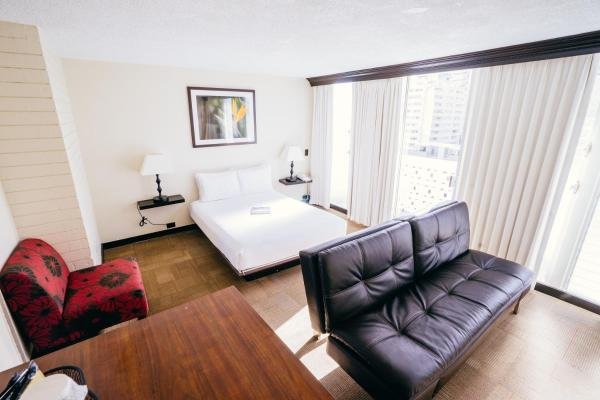
A Stay Hotel Waikiki room in HawaiiGuide's photo collection. Neither pictured property is priced by this model.
Decide the rooms first, then compare quotes
Start with the rooms, beds and privacy you need. Ask the property to confirm permitted occupancy, bed layout, extra-person charges and whether any requested connecting arrangement is guaranteed.
Set Rooms / units to an arrangement that works, then compare final quotes for your acceptable options using the same dates, cancellation terms and inclusions. Include taxes and mandatory fees in that booking decision. Our resort fee and parking guide covers the next step.
Build the rest of your lodging budget
Test the room arrangement, then check the fees.