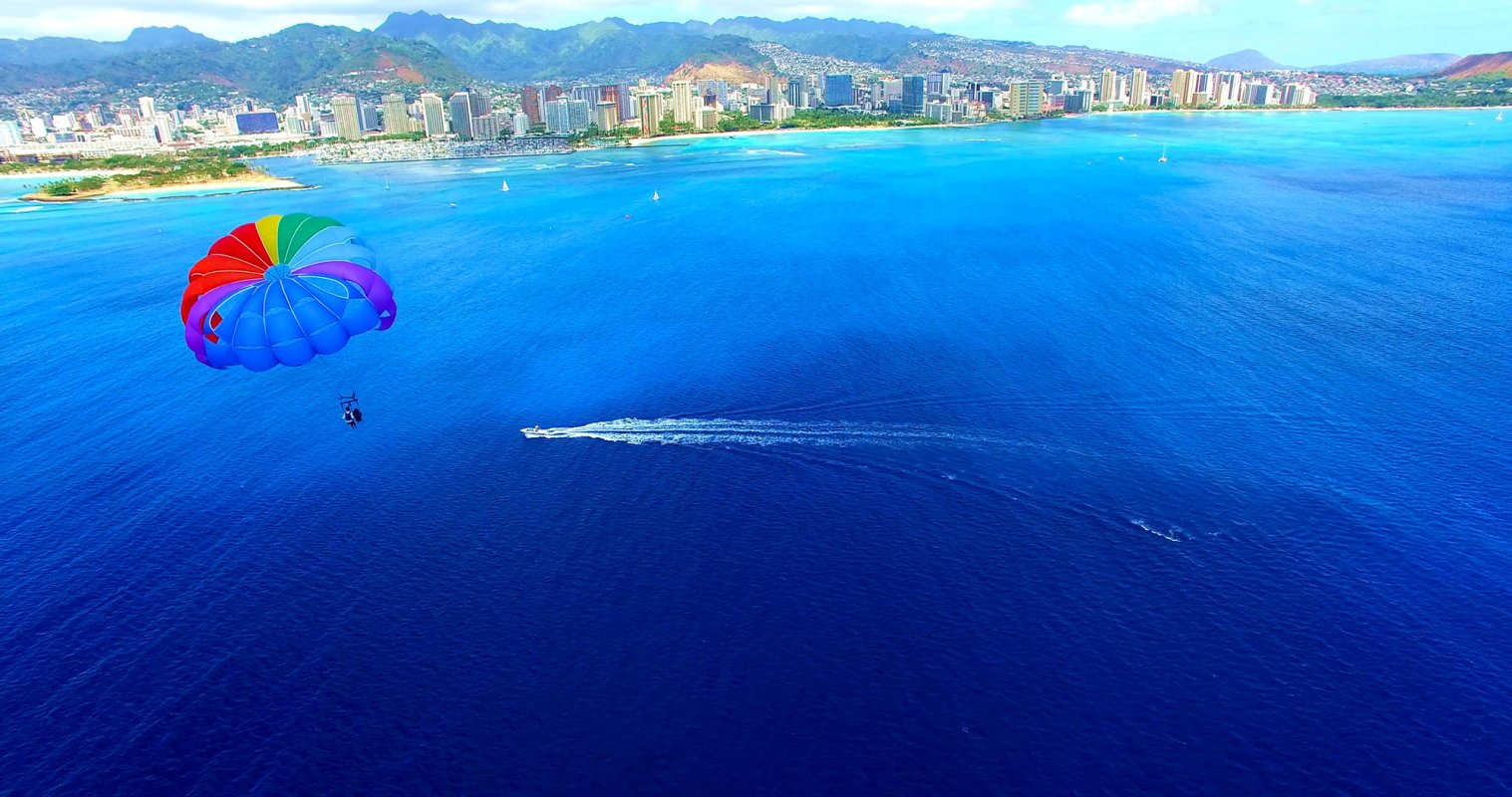

Hawaii parasailing tours are one of the few activities where the season matters more than the weather. Oahu boats fly year-round out of Kewalo Basin and Maunalua Bay. Maui parasail boats sit on the trailer for the back half of every winter and return in the spring, because of a federal rule designed to protect humpback whales while they’re using Maui County waters as a breeding ground. Maui’s closure ends May 15 each year, and operators usually resume after that date, weather permitting. Per the Hawaiian Islands Humpback Whale National Marine Sanctuary, the prohibition on commercial parasailing in Maui County waters runs from December 15 through May 15. Confirm exact reopening dates with the Maui operator you’re booking with. This is a planning guide for summer 2026: which islands have parasailing, who can fly, what a flight feels like, and how to book. Specific prices and policies change month to month, so the operator pages linked throughout this guide are the source of truth on the day you book.
What parasailing actually is
Parasailing is the ride where a powerboat tows you behind it on a long line, with a parachute clipped between you and the line so the wind lifts you several hundred feet into the air while the boat keeps moving. You’re seated in a harness, not a chair, attached to a horizontal bar below the chute. Most Hawaii operators offer tandem flights (two riders on one chute) and triple flights (three riders on one chute), which is most of why parasailing is a popular couples and family activity. You’re flying together, not solo. Tandem and triple flights also distribute the lift across more weight, which means you don’t need a stiff wind to get airborne. An operator’s published minimum and maximum combined weight per chute is a harder constraint than wind. We’ll come back to weight rules in the eligibility section. A few more things worth knowing before you book: Advertised feet are line length, not altitude. When an operator describes a “1,000-foot flight,” that’s the length of the tow line played out behind the boat. Actual flight altitude is lower, because the line rides at an angle, not straight up. Don’t expect to be 1,000 feet in the air on a 1,000-foot package. Wet versus dry flights. You can request a “splash” (lower the line until your feet and lower legs touch the water) or a dry landing back on the deck. Tell the crew at boarding which one you want. The captain has final say and will reel you in dry if conditions or operator policy call for it. Flight time vs. trip time. Per Hawaiian Parasail’s activities page, airtime per rider is roughly 7 to 12 minutes depending on the package. Per operator FAQs at Hawaiian Parasail and X-Treme Parasail, the full boat trip runs about 60 to 90 minutes including check-in, boarding, the ride out, and other passengers’ flights between yours.
Why Maui's parasail season is different
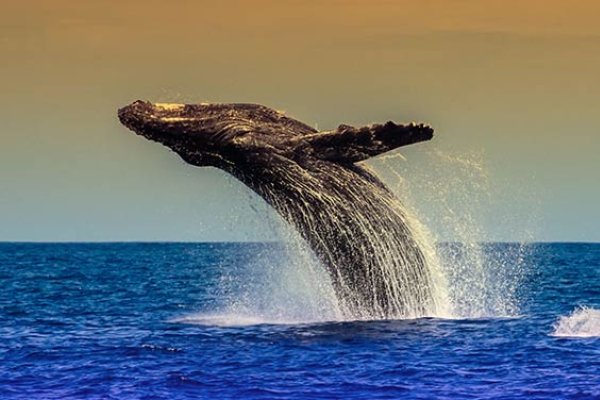
The reason Maui parasailing has a federal off-season: the channel between Maui, Lanai, and Molokai is one of the most important humpback breeding areas in the United States during winter, per NOAA's sanctuary materials.
Hawaii’s parasail rules trace back to the Hawaiian Islands Humpback Whale National Marine Sanctuary, which Congress established in 1992 to protect the North Pacific humpback population during their winter breeding season. The waters off Maui, Lānaʻi, and Molokaʻi (collectively Maui County) are described by NOAA as one of the world’s most important humpback whale habitats. Per NOAA’s sanctuary regulations summary, commercial parasailing inside the sanctuary’s Maui County waters is prohibited from December 15 through May 15. The same rule doesn’t apply to Oahu, because Oahu’s parasail zones aren’t inside the portion of the sanctuary where the seasonal closure applies. What this means in practice for trip planning: Maui parasail boats start running again in late May. The first commercial flights of the summer season typically launch the week after May 15, weather permitting. June through August is peak. Oahu parasail boats run year-round. Even at the height of whale season, Hawaiian Parasail and X-Treme Parasail keep flying out of Kewalo Basin and Maunalua Bay. Don’t trust an aggregator listing showing Maui parasailing between mid-December and mid-May. Those listings sometimes remain visible on third-party booking sites during the closed season with future dates that aren’t actually available. The operator’s own site or a direct phone call is the cleaner way to confirm during that window. If you’re flying to Hawaii in winter and parasailing is on the must-do list, plan it for an Oahu day. If you’re locked into a Maui itinerary, treat the parasail flight as a maybe and have a backup plan.
Who can fly (weight and age rules)
Each Hawaii parasail operator publishes their own minimums, but the published rules across the major operators converge on roughly the same shape. Minimum age. Per Hawaiian Parasail’s FAQ, Oahu’s Kewalo-based operator sets the minimum at 6 years old. Per UFO Parasail’s FAQ, Maui’s Kāʻanapali operator generally sets the minimum at 5 years old. X-Treme Parasail’s FAQ doesn’t list a specific minimum age, but states a parent or guardian must sign for any minor. If you’re traveling with a child under 6, ask the operator directly before booking. Weight, both single and combined. This is the rule that surprises travelers. Hawaii parasail chutes are sized for a combined weight range. Per X-Treme Parasail’s FAQ, max combined weight is 500 pounds. Per Hawaiian Parasail’s FAQ, max combined weight is 450 pounds. Per UFO Parasail’s FAQ, a solo rider needs roughly 130 to 165 pounds and combined max is 450 pounds. The operator weighs riders at check-in. There’s no way around this. Pregnancy. Per the Hawaiian Parasail and X-Treme Parasail FAQs linked above, pregnant passengers are not allowed to fly. The harness fit is one reason. Takeoff and landing forces are the other. If you’re pregnant, plan a sunset cruise or a snorkel sail instead. Recent surgery or pre-existing conditions. Treat parasailing like a moderate amusement-park ride. The lift and descent are smooth on a normal flight, but they aren’t zero-G. If you’ve had recent surgery, or you have known back, neck, or heart issues, check with your doctor and disclose it on the operator’s waiver. You don’t need to be able to swim. A dry flight never touches the water. A wet flight is different. Even with a flotation harness, the splash is an open-water moment and you should be comfortable in open water. If anyone in your group isn’t, request a dry flight at boarding.
Oahu — Kewalo Basin and Maunalua Bay (year-round)
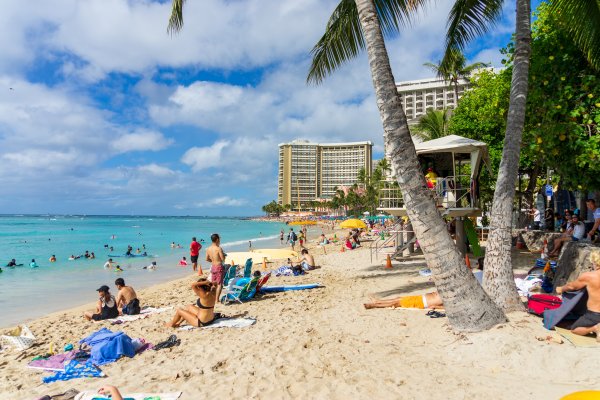
Kewalo Basin (just west of Waikiki) and Maunalua Bay (Hawaii Kai end of Honolulu) are the two Oahu parasail launch zones. Hawaiian Parasail runs from Kewalo. X-Treme Parasail runs from Maunalua Bay.
Oahu has the easiest parasailing logistics on any Hawaiian island. Two long-running operators run morning-through-late-afternoon trips out of the Kewalo Basin and Maunalua Bay area, year-round. Hawaiian Parasail flies out of Kewalo Basin, just west of Waikiki. Per their activities page as listed May 2026, the standard package uses 700 feet of line for $99 per person, and the deluxe package uses 1,000 feet of line for $119 per person. They also offer triple flights for groups of three. X-Treme Parasail operates out of Maunalua Bay (closer to the Hawaii Kai end of Honolulu). Per their activities page, the headline option is the “X-Treme” flight on 1,200 feet of line, the longest line they advertise. A note on booking platforms: parasail tour-aggregator listings on Viator and the like are usually the same flights you can book directly with the operator. The benefit of the aggregator is that a free-cancellation window typically applies, which is useful in summer if your itinerary shifts. Browse current Oahu parasailing inventory on Viator’s Oahu water-sports page and filter for parasailing. Direct booking through the operator is sometimes cheaper, but a tighter cancellation window is the trade-off. If you prefer calmer conditions, morning is usually the safer pick; trade winds and swell often build across the day. Afternoon flights can give you better light for photos. Either way, the operator makes the final call on conditions.
Maui — west coast (May 16 through mid-December)
Maui parasail boats restart their season around May 16 and typically run through mid-December, after which the federal whale-season closure kicks back in. The current commercial parasail activity is concentrated on the West Maui coast. We couldn’t verify a current South Maui parasail launch as of May 2026. UFO Parasail launches from Kāʻanapali Beach, in front of Whalers Village. Per their contact page, that’s their only Maui location. Morning slots fill first. West Maui Parasail historically operated from Lahaina Harbor. After the August 2023 wildfire, per the Hawaiʻi DLNR Lahaina Recovery page, Lahaina Harbor remains under reconstruction, and many West Maui ocean operators have shifted departures to Kāʻanapali Beach or Māʻalaea Harbor. West Maui Parasail’s own site lists a current Kāʻanapali Beach departure. Confirm the current launch point at booking. Don’t trust a homepage that may not have been updated since the fire. Summer ocean conditions on the west Maui coast are generally favorable, since the lee of the West Maui Mountains tends to mute trade winds. Operators still cancel for high winds or large swells, so build flexibility into your booking date. Browse current Maui parasail inventory on Viator’s Maui water-sports page filtered for parasailing. Verify the date is on or after May 16, 2026, and confirm the meeting point matches the operator’s current departure location.
Big Island and Kauai — limited or none
As of May 2026, parasailing is not a regular commercial activity on either Kauai or the Big Island. Searches for current Big Island operators turn up no consistent inventory. UFO Parasail’s locations page no longer lists a Kona base, and we couldn’t verify any other Kona operator running regular flights. Kauai has had no consistent commercial parasail operator we’ve been able to verify in current searches. If you’re set on parasailing and your itinerary includes Kauai or Big Island time, plan it for your Oahu or summer-Maui days. Use Kauai and the Big Island for activities those islands actually do best. On Kauai, that’s a Na Pali sea cave kayak or a sunset catamaran. On the Big Island, that’s the Kona manta ray night snorkel or a Mauna Kea visitor center stargazing trip.
What a flight actually feels like
The full check-in to dock-back rhythm runs roughly: Check-in and boarding. Sign waivers and weigh in. The crew matches you into rider groups, then walks everyone to the boat. Operators rotate multiple rider groups through one chute on each trip. Boat ride out. The boat heads offshore. The crew demonstrates the harness clip-in and the hand signals you’ll use mid-flight (thumbs up to go higher, thumbs down to come down). Other passengers fly first or after you. If you’re first up, your ride happens almost immediately. Plan to spend the rest of the boat time on deck watching others, and bring sunglasses and reef-safe SPF. Your flight (roughly 7 to 12 minutes airtime). The chute is laid out on the back deck. You sit on the platform, the crew clips your harness to the bar, the boat accelerates, and the wind catches the chute. The lift is smooth. There’s a brief acceleration as you go up, then stillness once the line plays all the way out. On Oahu’s standard package (700 feet of line) you can see the south Oahu shoreline. On the longer 1,000- or 1,200-foot lines, the view stretches farther into the channel. Remember that advertised line length is longer than your actual altitude. Wet or dry landing. You’re either reeled all the way in dry and landed on the back platform, or splashed first and reeled in wet. Wet landings get you a souvenir story; dry landings keep your camera dry. Boat ride back. Quick ride to the dock.
Booking lead times for summer 2026
We don’t have published booking-window data from the Hawaii operators, so treat the windows below as HawaiiGuide planning rules of thumb, not guaranteed availability. Confirm with the operator on the day you book. Maui parasailing, May 16 through June. Book ahead. Morning slots fill first. Maui parasailing, July and August. Booking windows tend to loosen by midsummer. Book ahead anyway for morning slots. Oahu parasailing, summer. Often bookable closer in, sometimes even same-day for afternoon slots. Hawaiian Parasail and X-Treme Parasail run multiple trips per day year-round. Maui parasailing, September through mid-December. Closer-in booking is usually fine before the December 15 closure. For broader timing across other Hawaiʻi tour categories (helicopter, Molokini, Na Pali, etc.), our Hawaii Tour Booking Lead Times: Summer 2026 guide is the right next read.
What to bring
Operators provide the harness and chute. What you bring is mostly about the boat ride before and after your flight. Reef-safe mineral sunscreen. Per the Hawaiʻi Department of Health, Hawaiʻi restricts the sale of sunscreens containing oxybenzone and octinoxate because of documented reef damage. The boat sits in the sun for an hour-plus, and several hundred feet up is even more direct. A mineral SPF 50 stick is easier to apply on a moving boat than a lotion bottle. A swimsuit if you’re flying wet. Wear quick-dry under your shorts. Ask the operator at check-in about changing space. Boat layouts vary. Sunglasses with a strap. The wind at altitude will take loose sunglasses straight off your face. A floating sunglasses strap is the cheap fix. A small dry bag for your phone. Each operator has their own rules about whether you can bring a phone or camera up on the flight, and how it has to be secured. Confirm at booking. A waterproof phone pouch handles spray on the back deck either way. Body-mounted cameras (GoPro chest mounts, etc.) are usually a problem. Loose hardware in a harness is a safety issue, and operator policies on body cameras vary. Don’t assume. Ask the operator directly before you bring one.
Getting to the harbor
How you get to the launch point depends on which island and which harbor. Oahu, Kewalo Basin (Hawaiian Parasail). A short hop from most Waikiki hotels. Rideshare or a hotel shuttle is usually the easiest play; you don’t need a car for the day. Oahu, Maunalua Bay (X-Treme Parasail). Maunalua Bay is out in Hawaii Kai, roughly 20 to 30 minutes’ drive from Waikiki without heavy traffic, per Google Maps directions. A rental car or a planned rideshare both work, but build in the drive. Maui, Kāʻanapali Beach. If you’re staying at a Kāʻanapali resort (Whalers Village area), you may be walking to the boat. From Wailea or Kīhei, plan on roughly 45 to 55 minutes’ drive each way per Google Maps directions, longer in afternoon traffic. A rental car gives you the rest of the day for whatever’s next, which is usually the call if your parasail flight is the morning anchor on a bigger Maui or windward Oahu day. If you haven’t locked in a vehicle yet, Discount Hawaii Car Rental is the aggregator we use on our own trips. Per their own FAQ, they hold reservations with no deposit and let you cancel free, the right shape for a tour day that might shift if the weather window does.
When to skip parasailing and pick something else
Parasailing isn’t always the right pick. Specific cases where a different activity beats it: You’re on Maui between mid-December and mid-May. The federal closure means there is no commercial parasail option on Maui during those months. A Maui whale watch is the activity that actually matches the season — same boat shape, same west coast, with the whales themselves as the show. You’re on Kauai or the Big Island and parasailing is on the list. Skip it. Neither island has reliable inventory. A Kauai or Big Island helicopter tour gives you the airborne perspective on terrain that parasailing wouldn’t get you anywhere near. You want airtime over land or volcanoes. Parasailing is strictly an over-water experience. If you want sweeping views of Kauai cliffs or active lava on the Big Island, a helicopter or a fixed-wing tour is the right tool. You’re traveling with a pregnant rider, or anyone with serious back, neck, or heart conditions. A sunset dinner cruise is the same boat-and-water shape without the harness physics.
More Hawaii Adventure Guides
Adjacent reads on the Hawaii activity stack — booking timing, comparable thrill rides, seasonal alternatives.