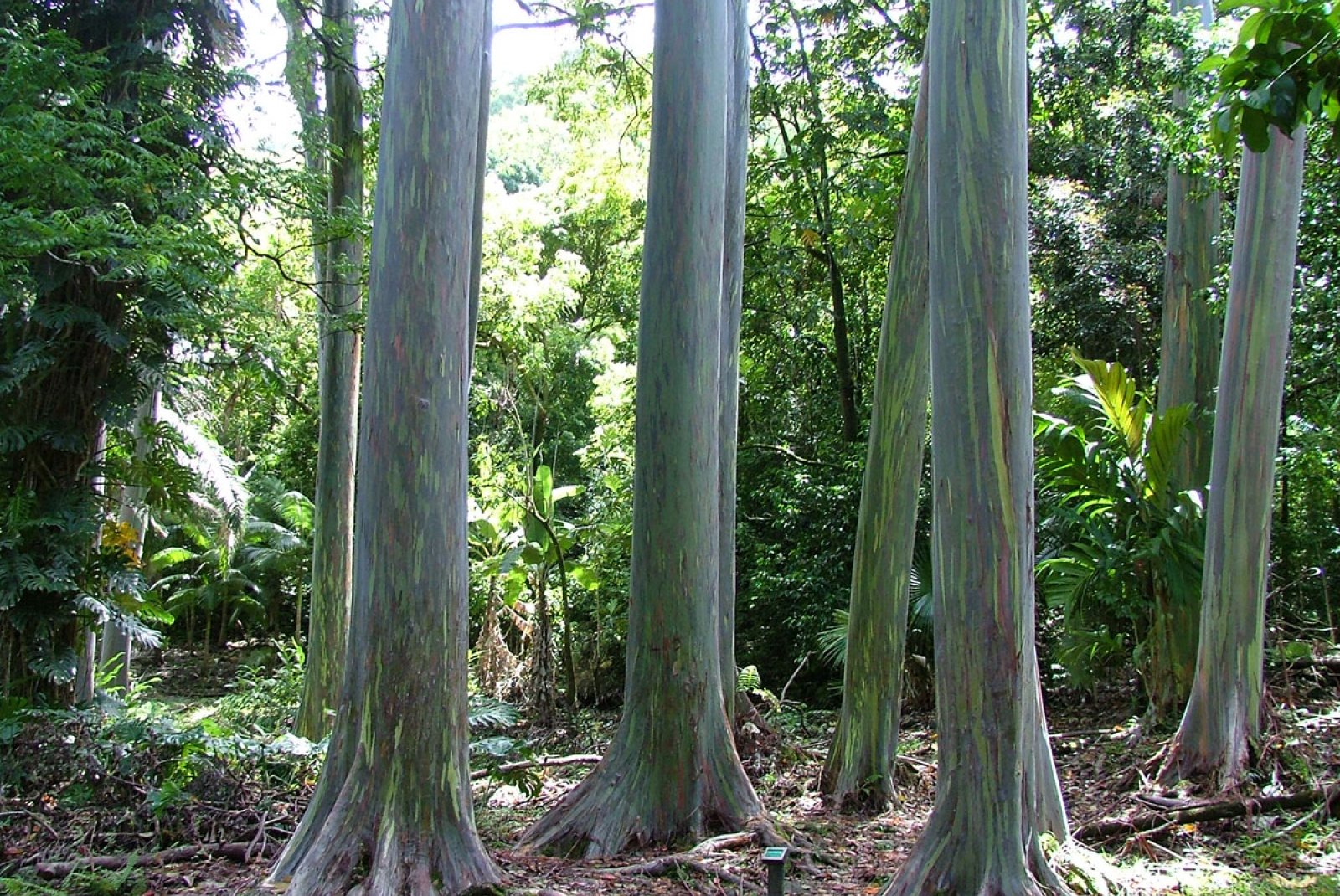

Most visitors who see a rainbow eucalyptus for the first time stop walking. The bark looks wet, like someone took a brush to it. Patches of pale green sit next to streaks of blue, orange, maroon, and gray, all on the same trunk, all real, none of it painted.
Where to actually see them in Hawaiʻi:
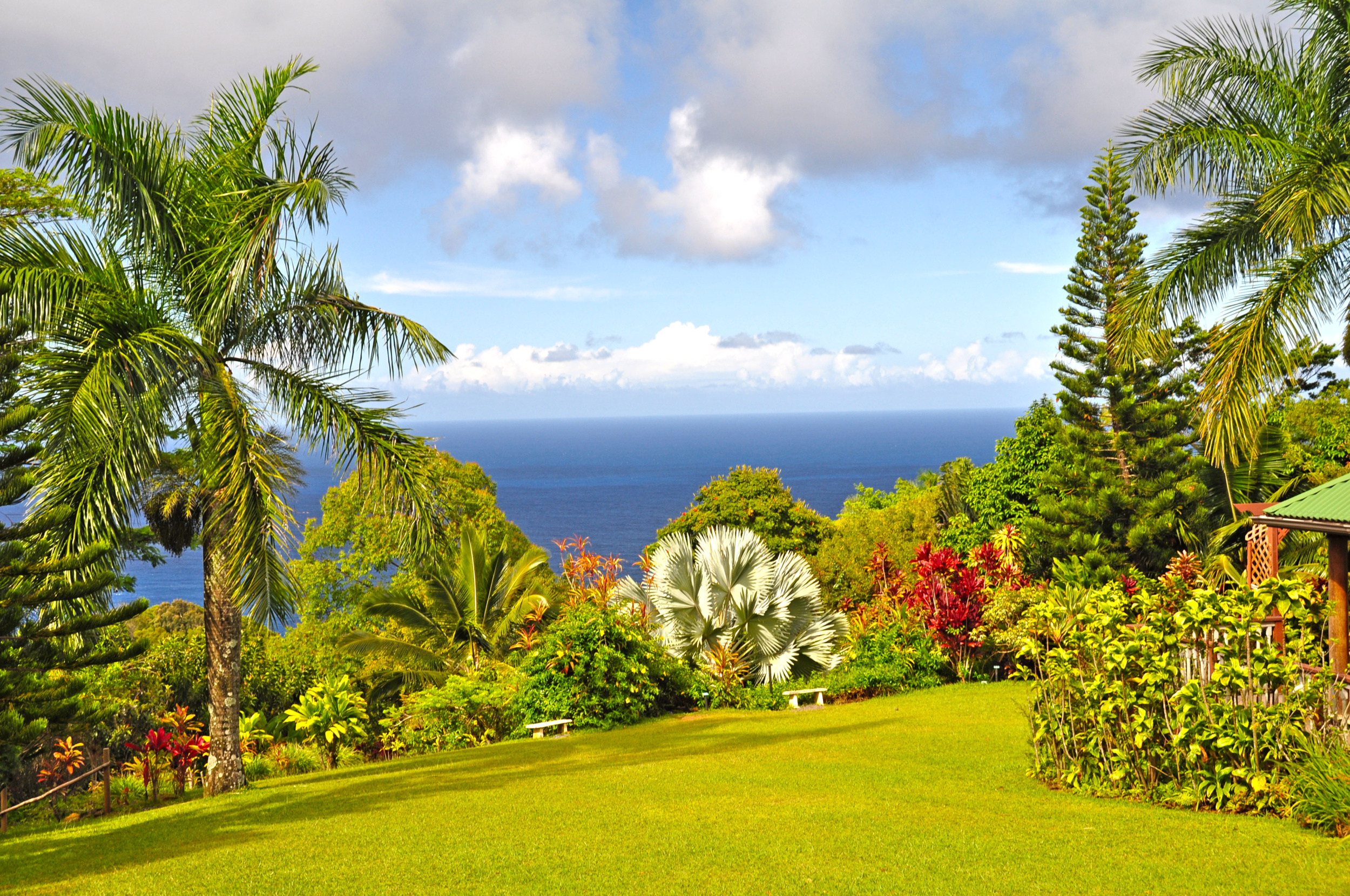
- Maui: Keʻanae Arboretum on the Hāna Highway (free), and Garden of Eden Arboretum at mile marker 10.5 (paid). - Kauaʻi: Keahua Arboretum at the top of Kuamoʻo Road in the Wailua Forest Reserve (free). - Big Island: Hawaiʻi Tropical Bioreserve & Garden on the Onomea Bay scenic route, about 7 miles north of Hilo (paid). - Oʻahu: Hoʻomaluhia Botanical Garden in Kāneʻohe (free) and Foster Botanical Garden in downtown Honolulu (small fee).
The rest of this piece walks through each spot, the bark science behind the color, and how to photograph the trees without getting a muddy shot.
The species is Eucalyptus deglupta, native to the Philippines, Indonesia, and Papua New Guinea per the USDA Plants Database. It is the only eucalyptus that occurs naturally in the Northern Hemisphere, and it grows fast and tall in wet tropical climates. A handful of older plantings around the islands stuck around long enough to become visitor attractions.
The painted look is not decoration. It is the tree’s normal bark cycle. As explained by the U.S. Forest Service, the outer bark sheds in long thin strips at different times of year, and the freshly exposed inner bark starts out bright green. As that new layer ages and oxidizes in the sun and air, it darkens through blue, then purple, then orange and red, and finally brown before it sheds again. Because the strips peel off at different times across the trunk, the colors all show at once.
That is the whole trick. The colors come from age. A young patch is green; an old patch is rust. Same tree, same minute.