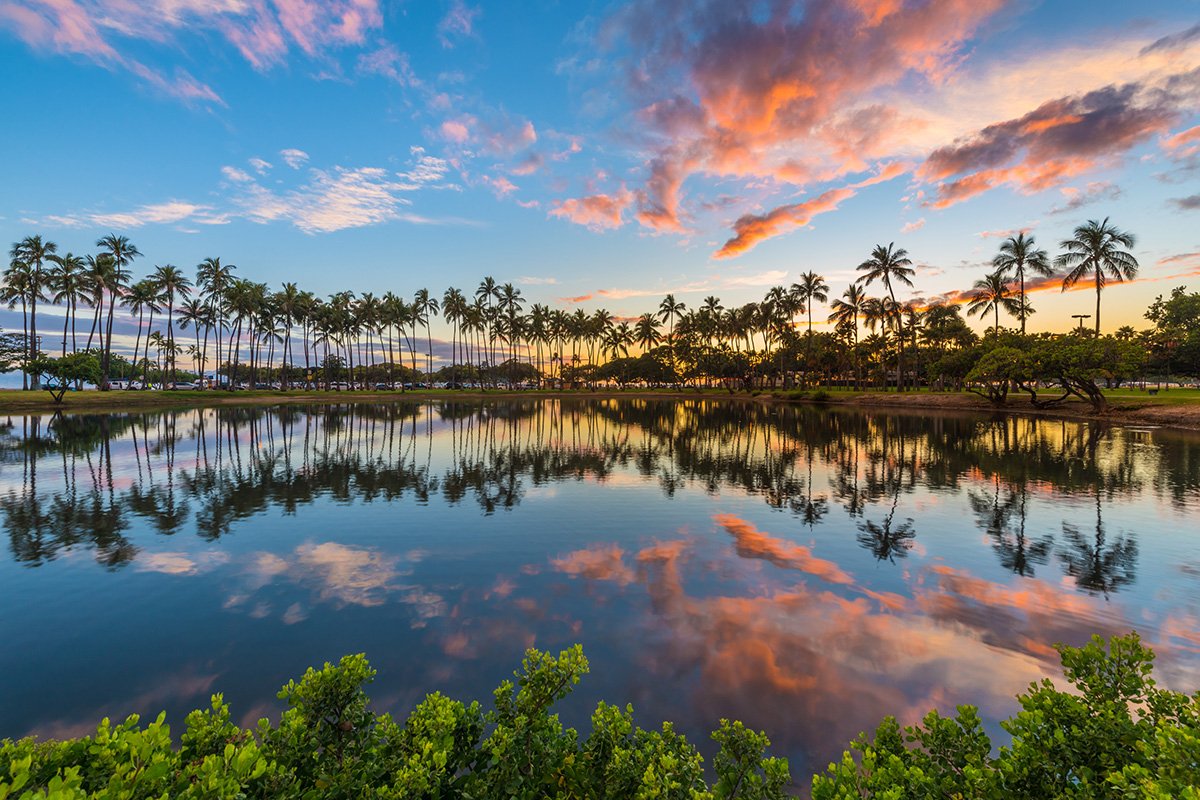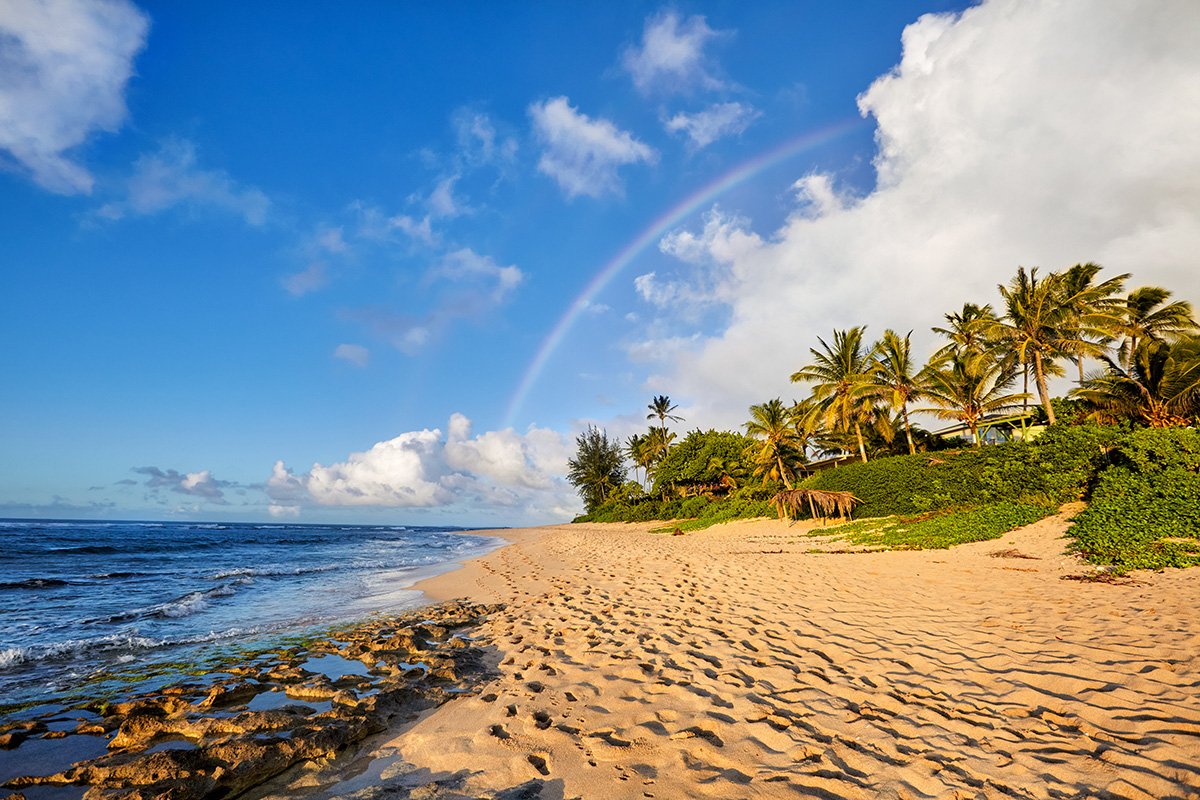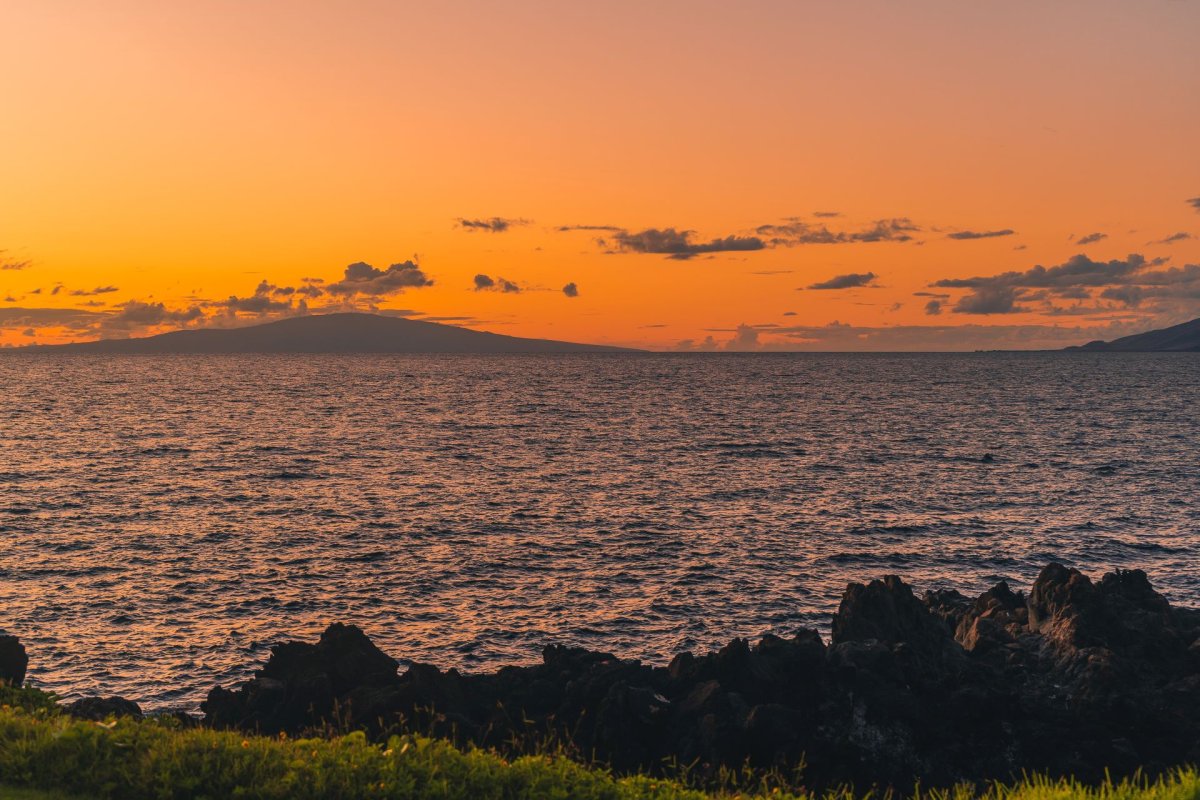


The opening photograph has no visible sun disc. It has orange sky, cloud layers, a low run of land, water through the middle and dark rocks in the foreground. This image from our Maui sunset views guide is a useful starting point: choose the picture you want before planning around a listed sunset time.
Choose the horizon your photo needs
A sunset photo might show the sun meeting the sea, or a shoreline and clouds against colored sky. For the first, you need an unobstructed sea horizon in the sun’s direction. For the second, land can become part of the composition.
The U.S. Naval Observatory defines conventional sunset using the sun’s upper edge reaching the horizon, with average atmospheric conditions and a level site. A ridge or cloud bank can hide the disc from your camera before that calculated moment.
Trace the skyline in the opening photo. Land extends from the left toward the center, with another wedge at right. Water fills much of the picture, but the horizon is not open sea in every direction. From your permitted viewing spot, check the direction you intend to photograph. If land interrupts that view, consider making it part of the frame.
A sunset photograph can work without the disc

A Maui photograph from HawaiiGuide’s founder story. The land, clouds and human silhouette give the frame its shape; no sun disc is visible.
This photograph appears in our founder story under “My First Maui Sunset - Wow!” Look at the broad land silhouette on the left, the figure on the right and the bands of orange-red cloud. The photograph does not establish what hid the sun or its exact capture time.
Use it as a composition exercise: what would you keep in the frame if the disc disappeared? A person, a shoreline or a land silhouette can give you something to work with while you watch the light change.
Use the clock to leave room for looking
Our Sunrise & Sunset tool shows island reference times and a monthly calendar. It calculates sea-level times for Honolulu, Kahului, Kailua-Kona and Līhuʻe. Its evening Golden Hour starts at sunset minus 30 minutes. That is the tool’s planning cue, not a guaranteed arrival deadline or a forecast of color.
The calculation does not account for trees, buildings or the terrain in front of your camera. Leave enough time to reach a permitted viewing spot, inspect the skyline and choose a composition before the light changes. Our photography tips cover camera technique.
Check the weather forecast and posted hours and access before settling in. Stay in permitted viewing areas; do not scramble across wet rocks chasing a gap in the horizon. If the light or access does not work, move on.
Plan your sunset photograph
Check the time and plan your photograph.