
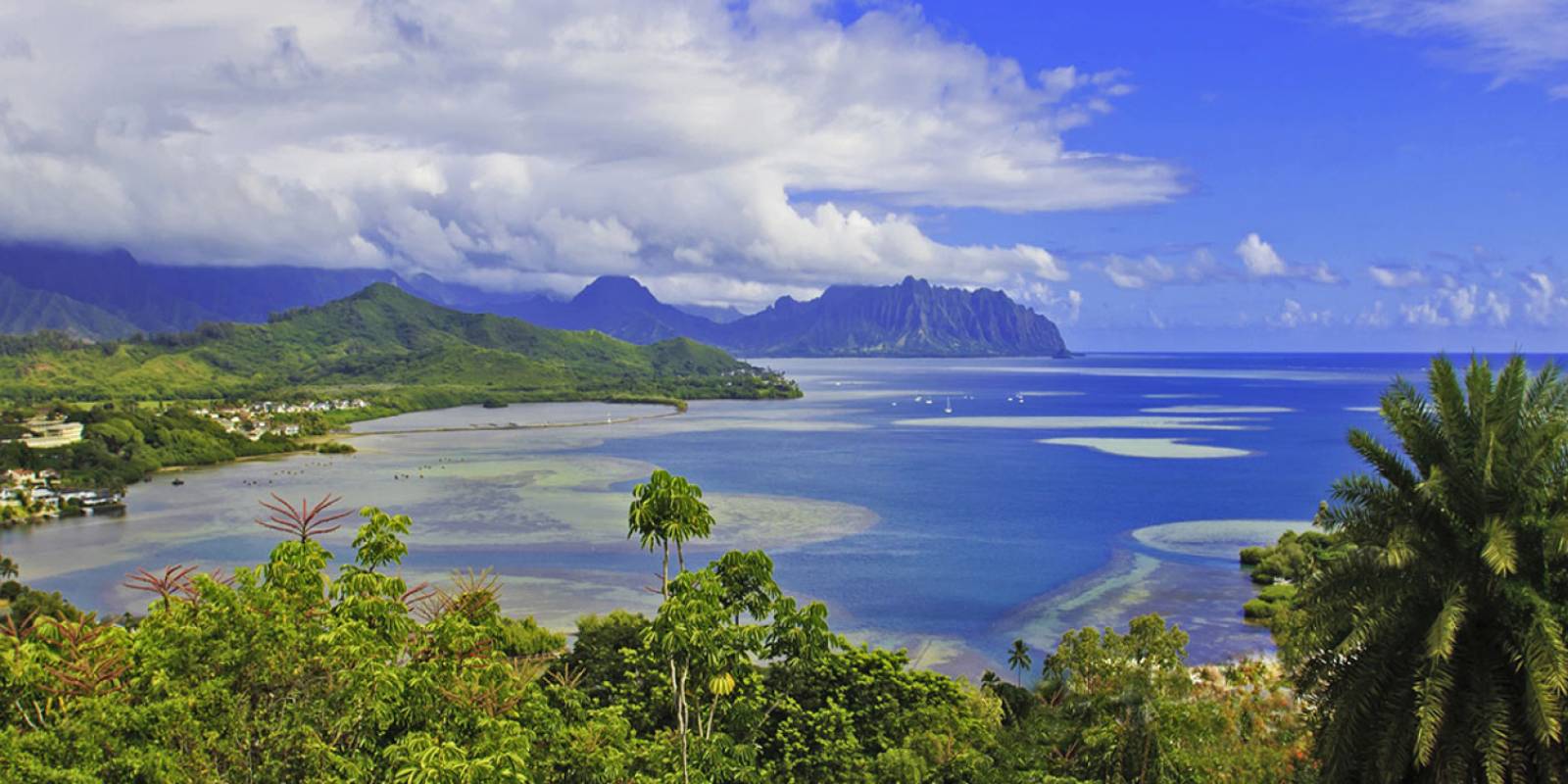


Halfway across Kāneʻohe Bay on Oahu’s windward coast, a broad shallow sandbar sits beneath the water and emerges at low tide. Locals call it the Kāneʻohe Bay sandbar. The Hawaiian name is Ahu o Laka. As the tide drops, exposed sand and warm turquoise shallows appear in the middle of the bay. As the water returns, the bar submerges again. Water depth and the amount of exposed sand change with the tide and conditions. It requires water access. Visitors reach it by tour boat, private boat, kayak, or another paddle craft. The sandbar rewards a well-timed trip, but a couple of rules catch visitors off guard. Alcohol is prohibited inside the Ahu o Laka safety zone during specified holiday weekends. Commercial ocean-use operations do not run on Sundays or federal holidays. Then there’s the tide window that decides whether you spend the day standing on sand or floating above it. This guide lays out the plan.
What Ahu o Laka actually is
Ahu o Laka is a shallow sandbar in central Kāneʻohe Bay. The bay is protected by a barrier reef, according to a State environmental document. The bay is sheltered from the open ocean by that reef. A State Hawaiʻi environmental document discusses Hawaiʻi’s reef systems; DLNR identifies Kāneʻohe Bay as one of only two bays in the state with barrier reefs (per DLNR). At high tide, the sandbar remains underwater. Depth varies across the bar and with the tide, so don’t plan around a fixed water-depth number. The State environmental document refers to the sandbar by its traditional Hawaiian name, Ahu o Laka. The Kāneʻohe Bay Regional Council is administered by DLNR and coordinates public and private activity across the bay. Follow access and ocean-use rules, give local users room, and stay off live coral.
The rules that bite first-time visitors
Two rules commonly surprise visitors planning a sandbar afternoon. 1. Alcohol is prohibited inside the Ahu o Laka safety zone during designated holiday weekends. Per HAR §13-256-73.13, possession, use, or consumption of alcohol inside the Ahu o Laka safety zone is prohibited during three-day Memorial Day, Independence Day, and Labor Day holiday weekends. Entering or remaining in the zone under the influence is also prohibited, along with specified disorderly conduct. Leave the beer cooler ashore if you plan to enter the safety zone on one of those weekends. 2. Commercial tours, rentals, and delivery services don’t run on Sundays or federal holidays. Under HAR §13-256-73 and HRS §200-39, commercial ocean-use activities in Kāneʻohe Bay, including tours and commercial rentals, are prohibited on Sundays and federal holidays. Check the official OPM federal holiday list against your trip dates. Memorial Day and Independence Day are federal holidays. This restriction applies to commercial operations, not private recreational boats. Two smaller but useful rules. Jet skis and other thrill craft are prohibited inside Ahu o Laka under DOBOR thrill-craft rules. The statewide DLNR coral-reef protections also apply. Within Kāneʻohe Bay, HAR §13-256-73 specifically prohibits walking, sitting, standing, or anchoring on live coral. Most of the actual sandbar is sand, but reef surrounds it. Watch where you walk.
Tide windows: when to actually go
The sandbar is best at low tide. The lower the water, the more of the bar surfaces and the easier it is to stand around in shallow water with a snorkel mask hanging off your wrist. Aim for a departure where low tide falls during your tour window. Check the NOAA tide predictions for Waikāne, Kāneʻohe Bay (TPT2777) before you book. Operators schedule around the daily tide curve, but private kayakers need to do the math themselves. Wind and chop can change through the day. Check the same-day National Weather Service forecast and your operator’s weather and cancellation policy. A boat removes the physical kayak paddle, not exposure to wind chop. Rough water can still affect comfort, snorkeling visibility, photo conditions, and whether a trip runs.
Boat tours from Heʻeia Kea Harbor
Common shared-tour options out of Heʻeia Kea Small Boat Harbor include Captain Bob’s, Captain Bruce, and Kāneʻohe Bay Ocean Sports. Smaller private charters come and go alongside them. Traffic between Waikīkī and the harbor can change fast, so check live navigation before leaving (per Google Maps). Each operator has its own duration, inclusions, and sandbar itinerary. Check the listing that matches the trip you want.
Captain Bob's Picnic Sail
Captain Bob’s current Picnic Sail page says the company has an exclusive permit for a special location at the sandbar. The Picnic Sail includes round-trip Waikīkī transportation, a barbecue lunch on board, snorkel gear, and sandbar volleyball. The group spends about four hours on the water. Rates and times shift, so confirm current pricing on the Captain Bob’s site before you book. Commercial trips are barred on Sundays and federal holidays, and the booking calendar is the final availability check.
Captain Bruce
Captain Bruce runs a catamaran from the same harbor. The current Captain Bruce Kāneʻohe Sandbar page lists two daily departures Monday through Saturday. Sundays and federal holidays are blackout days. Pricing and schedules move over time, so check the current listing before a special-trip detour. Captain Bruce also offers a separate Turtle Time! Cruise. Snorkeling and other water activities are not included on that trip, though guests may be able to walk on the sandbar when weather permits. For groups with grandparents or young children, ask about boarding access, shade, restroom availability, and whether the current itinerary suits your group.
Kāneʻohe Bay Ocean Sports (KBOS)
Kāneʻohe Bay Ocean Sports runs a large catamaran out of Heʻeia Kea. Its current listing includes an activity menu like:
- snorkel gear
- kayaks and SUPs
- water volleyball at low tide
- a floating lounge platform
- live Hawaiian music
KBOS currently lists 9:30 a.m. and 1:00 p.m. departures, each about 3.5 hours. Its FAQ says the company is closed Sundays, Wednesdays, and federal holidays. Confirm the current schedule, vessel size, and capacity directly with KBOS before booking. They also offer all-inclusive options and group or private charter inquiries, which may suit wedding parties and reunions. For a side-by-side of the main operators plus smaller charters, browse Oahu sandbar tours on Viator.
Self-guided kayak from Heʻeia Pier
If you’d rather skip the catamaran and paddle yourself, the kayak route is doable for reasonably fit paddlers with their own equipment or a confirmed rental plan. Heʻeia Pier sits inside Heʻeia Kea Small Boat Harbor, the same harbor the boat tours use. Kāneʻohe Bay is sheltered by the barrier reef, but it is still open water with wind and boat traffic. Per Active Oahu Tours, the run from the pier to the sandbar varies with wind, tide, route choice, and paddler ability. You need to be a confident swimmer and comfortable paddling in open water. If anyone in the group can’t swim well or has never kayaked before, take a guided boat tour instead. Check the wind forecast as carefully as the tide. Strong trade winds can make the return paddle a real workout, and your launch conditions should be your final go/no-go check. Commercial kayak rentals and delivery services are unavailable on Sundays and federal holidays under the Kāneʻohe Bay commercial ocean-use closure. If you paddle with privately owned equipment, that commercial-activity closure does not apply, though all other bay rules still do. Do not assume a rental company can deliver a kayak to the launch. Active Oahu’s current FAQ says customers generally pick up equipment at its Kailua shop and that state regulations restrict commercial-equipment delivery to public beaches and parks. Confirm the current pickup, transport, launch, and permit process before arranging a self-guided sandbar day. Leave early. You want to be on the sandbar at low tide and finish the paddle before conditions build. Plan to carry what you need for your time on the water: water, sun protection, and a dry bag for your phone. The paddle can feel easy on the way out and much harder on the return into a headwind. Pace yourself. For a broader look at where to kayak in Hawaiʻi, our summer 2026 kayaking guide covers the Nā Pali sea caves on Kauaʻi alongside the sandbar.
What to bring (and what to skip)
Pack mineral sunscreen, a wide-brim hat, water shoes for reef edges, and a dry bag for your phone. Bring more water than you expect to need. The sandbar is exposed, with little shade, and sun reflects hard off the water. A note on sunscreen specifically. Hawaiʻi’s 2018 sunscreen law (Act 104 / SB2571) bans the in-state sale of sunscreens containing oxybenzone and octinoxate as of January 1, 2021. The law restricts sales, not personal possession or use, so it is not illegal to bring sunscreen from home. The practical call is simpler: use a mineral sunscreen with zinc oxide on this bay. Leave alcohol behind if you will enter the Ahu o Laka safety zone during a designated holiday weekend. Consider leaving glass containers behind, too. Conditions and crowd levels vary, so ask an operator how its itinerary and sandbar access work before booking. Captain Bob’s sandbar tour details its own itinerary.
Getting there from Waikīkī
A rental car is the simplest option for the run up to Heʻeia Kea. Rideshare from Waikīkī can work, but don’t leave the return pickup to chance. Schedule it in advance if possible, ask your operator about cellular pickup conditions at the harbor, and keep a backup plan. Price both options before you commit, especially if you’ll need a return pickup. Compare rental-car options through Discount Hawaii Car Rental, then check each supplier’s deposit and cancellation terms. They vary by supplier and rate.
If you're staying out near the bay
Most visitors do the sandbar as a half-day from a Waikīkī hotel. If you’d rather stay closer, Kailua and Kāneʻohe are two practical windward bases for Heʻeia Kea Harbor:
- Kailua (south of the harbor; check Google Maps for live drive time): a useful base if you also want time at Lanikai or Kailua Beach. Honolulu County limits short-term rentals under its short-term rental ordinance. If booking an ordinary vacation rental for fewer than 30 days, verify that the listing displays the required registration license or nonconforming-use certificate number and tax-map-key information.
- Kāneʻohe (right next to the harbor): the easiest base for an early harbor departure, with Kualoa Ranch and the Byodo-In Temple at Valley of the Temples on the same side of the island.
Compare options on Expedia’s Kailua hotel guide or Booking.com’s Kailua results.
Bottom line
Pick a tour or paddle window that overlaps low tide. If you’re taking a commercial tour, rental, or kayak-delivery service, avoid Sundays and federal holidays; each operator may also have its own blackout dates. Book Captain Bob’s, Captain Bruce, or KBOS if you want a catamaran day, then check each operator’s current calendar. For a self-guided paddle, arrange your gear and transport before you go. Visitors using privately owned equipment are in a different category from commercial rentals, but they still need to follow bay rules. Leave alcohol behind if you will enter the Ahu o Laka safety zone during a designated holiday weekend. Watch where you step on the reef. The sandbar appears and disappears with the tide, so plan to be there while it is exposed.