
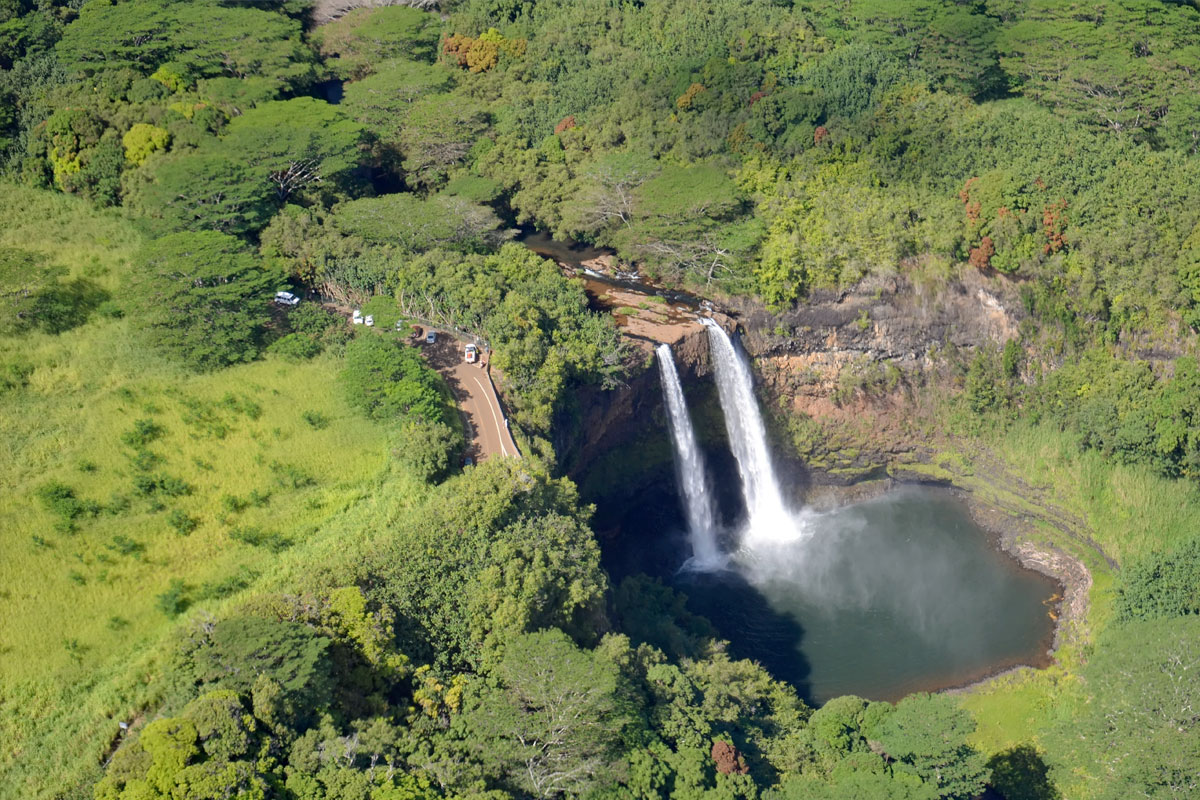

Every fall, the same thing happens on Kauaʻi’s north side. Trades soften. Ground swells from the North Pacific start reaching the coast a few weeks before winter surf season officially arrives. And a whole set of ways to see the Nā Pali Coast either shuts down for the year or gets meaningfully rougher. If you’re planning an October or November trip and you want to see the coast that put Kauaʻi on the map — the one with cliffs rising up to 4,000 feet above the ocean and no roads in — the fall shift matters. The choices you had in July are not the choices you have in October. Book with the summer playbook and you’ll end up either bounced around a Zodiac raft in choppy seas or staring at a “sorry, we’re done for the year” note on a kayak outfitter’s website. Here’s what actually changes, and what I’d book now.
Kayak Nā Pali closes for the season in mid-September
The full-day sea kayak paddle down the Nā Pali — Kēʻē Beach on the north shore all the way around to Polihale on the west side, roughly 17 miles of open ocean — is a summer-only trip. Commercial outfitters like Kayak Kauai and Nāpali Kayak run the trip May through September, and then everyone shuts it down for the winter. The Nā Pali Coast State Wilderness Park itself stays open year-round. What ends is the ocean conditions that make an all-day open-water paddle survivable. This isn’t a soft “check with the operator” seasonal thing. Commercial permits and winter swell both point the same direction. If a kayak Nā Pali trip is on your list, it’s a spring or summer trip. Not a fall trip. Same story with the shorter half-day sea-cave paddles that a couple of operators run out of Hanalei. Those wind down in the same window, for the same reason. Winter puts the water back in charge.
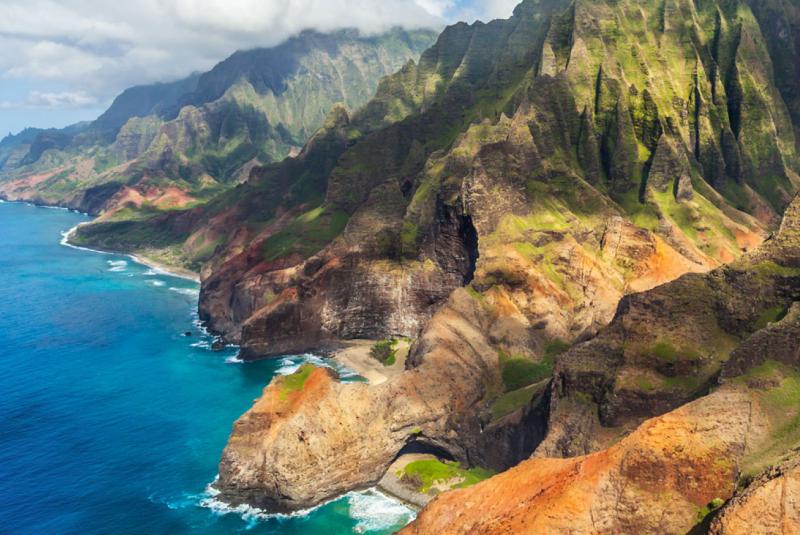
Catamarans keep running the Nā Pali all fall — they just leave earlier and the ride gets choppier as the ground swell builds.
Boat tours keep running — but the boat you pick matters more
Nā Pali boat tours run year-round in name. In practice, fall and winter is when the difference between a large catamaran and an open Zodiac raft stops being a matter of preference and becomes a matter of whether you throw up. A Zodiac in October is not the same trip as a Zodiac in July. The rafts are lower to the water, faster, and more exposed. Every swell you cross is a small compression on the spine. For anyone with a back issue, anyone prone to motion sickness, or families with kids under about ten, I stop recommending Zodiacs once the ground swell shows up. Catamarans handle the shoulder season much better. They’re bigger, slower, and the motion is more sailboat than jetski. You won’t get summer’s glass-flat water, but you’ll finish the trip grinning instead of green. A few practical shifts to expect:
- Departures move earlier. Afternoon trade winds pick up sooner in fall. The 7 a.m. and 8 a.m. catamaran runs have the best odds of a calm return leg.
- Sea caves become weather-dependent. Operators can't push into the caves along the Nā Pali if swell is running against the cliffs. In fall, that call gets made day-of. Don't book a Nā Pali trip primarily for the sea caves in October or later.
- Snorkel stops get shorter. The snorkel drop at Nualolo Kai reef, the classic mid-trip stop, can get skipped or shortened as fall goes on. Pick an operator whose pitch isn't "you'll snorkel the reef" and you won't feel cheated when the swell says no.
- Departure harbors matter. Boats out of Hanalei on the north side face rougher launches in fall. Boats out of Port Allen and Kikiaola on the south side stay in workable water longer into the season. If you have flexibility, book a south-side departure.
When I’m comparing operators I usually check rates, reviews, and available departures for Kauaʻi catamaran cruises on Viator alongside each operator’s own website. It’s a fast way to line up three or four catamarans side by side without opening five tabs.
Helicopters become the default way to see the whole coast
This is the biggest shift. In summer, boat tours are how most people see the Nā Pali — you’re at eye level with the cliffs, you can hear the waterfalls, you can smell the coast. In fall and winter, that same trip becomes a compromise. Half your view is chop, half your morning is spent hoping the swell doesn’t cancel the second half of the itinerary. Helicopter tours don’t have any of those problems. They fly year-round, they don’t care about swell, and the coast from the air is arguably a better view than the coast from a boat. You see the whole 17 miles of cliffs in a single arc. You see Manawaiopuna Falls (the “Jurassic Park falls”), Waiʻaleʻale’s crater wall, and the Nā Pali cliffs on the same tour. You see them from the angle that made half the aerial photography of Kauaʻi famous. A few things worth knowing:
- Doors-off vs. doors-on is a real choice. Doors-off gives you the shot. It also gives you a much colder, much windier ride and a briefing on how not to drop your phone out of the helicopter. If photography isn't the point of the tour, doors-on is more comfortable and cheaper.
- Book the first flight of the day. Kauaʻi's afternoon weather closes in on the interior valleys. Waiʻaleʻale is one of the wettest spots on Earth by annual rainfall (USGS), and by mid-afternoon there's often a cloud sitting on it. The 8 a.m. and 9 a.m. flights have the best chance of a full Nā Pali plus interior loop.
- Two or three days of flex is smart. Even in fall, helicopter tours cancel or delay for weather. If you have three days on Kauaʻi and the flight is on day one, you have two backups. Book it for your last day and you have zero.
If you’re pricing helicopter tours, it’s worth comparing the current Kauaʻi helicopter options on Viator — you can see side by side which operators fly doors-off, which do the full Nā Pali plus interior loop vs. just the Nā Pali, and which include Waimea Canyon.
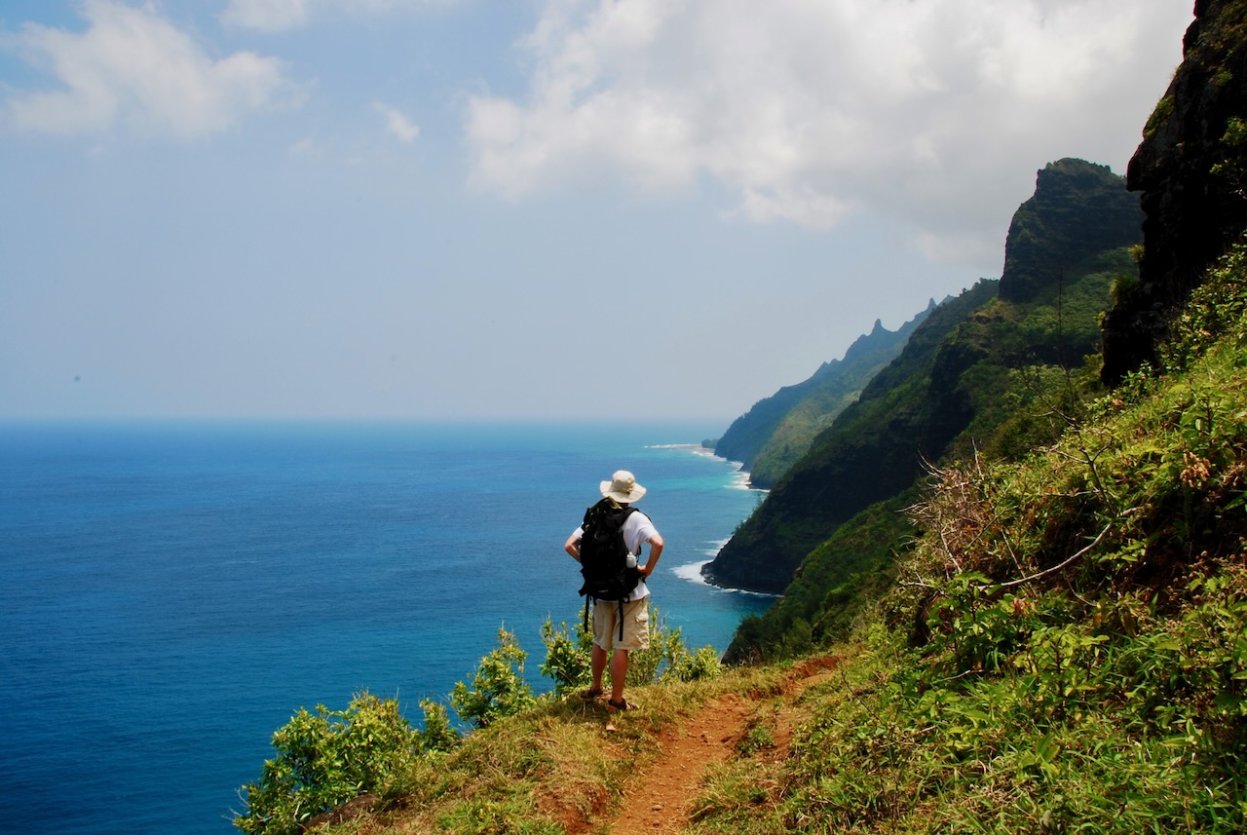
The Kalalau Trail is the one Nā Pali experience that doesn't shift with the seasons — the trail stays open year-round when weather allows.
The Kalalau Trail — the year-round option, with caveats
The Kalalau Trail is the one Nā Pali experience that doesn’t have a “season” the way the tours do. The trail is open year-round when weather allows, and fall is a genuinely reasonable time to hike it — cooler than summer, less crowded than spring break, less rainy than the peak wet-season months of December and January. A few things to keep straight:
- The first two miles to Hanakāpīʻai Beach only require a Hāʻena State Park entry reservation. That's the day hike most visitors actually do. The reservation is separate from any overnight backpacking permit and has to be booked in advance through the official Hāʻena reservation system.
- Anything past Hanakāpīʻai — including the Hanakāpīʻai Falls side trail and the full 11-mile route to Kalalau Beach — requires a Nā Pali Coast State Wilderness Park permit. Fall permits are easier to get than summer permits, but they're not fall-only. Book early through the Hawaiʻi State Parks reservation system.
- Do not cross Hanakāpīʻai Stream in high water. The DLNR trail page specifically warns about flash floods at this crossing, and drownings here have been documented for decades. One heavy rain upstream turns an ankle-deep stream into a chest-high torrent within an hour. If you reach the beach and the stream is running high, wait for it to drop or turn around.
- Hanakāpīʻai Beach is not a swimming beach. There's a bad rip current there almost every day of the year and winter surf makes it worse. It's a photo-and-turn-around beach, not a swim beach.
Fall on this trail is underrated. If you’re a reasonably fit hiker with sturdy shoes, a couple liters of water, and a real rain shell, the day hike to Hanakāpīʻai in October is one of the better hikes in the state.
The free view: Kalalau Lookout from Kokeʻe
There’s an angle a lot of first-time visitors miss. The Kalalau Lookout at 4,000 feet inside Kokeʻe State Park gives you a straight-down view into Kalalau Valley — the same green amphitheater the boats and helicopters circle — from the top edge. No tour, no boat, no ticket. Just a drive up Waimea Canyon Drive and a short walk from the parking lot. This becomes the most valuable Nā Pali view on the island in the middle of winter, when boat tours cancel for weather and helicopters get grounded by clouds. Fall is the transitional stretch. In October you’ll still get most of your booked tours; in December you may not. Either way, a morning up at Kokeʻe belongs on any Nā Pali plan. Two practical notes:
- Kokeʻe clouds in by late morning too. Same rule as helicopters — earlier is better. If the lookout is fogged in at 11 a.m., you'll get nothing.
- There's a small state park entrance fee for non-residents at Kokeʻe and Waimea Canyon, paid on-site. Check the state parks page for the current amount before you go.
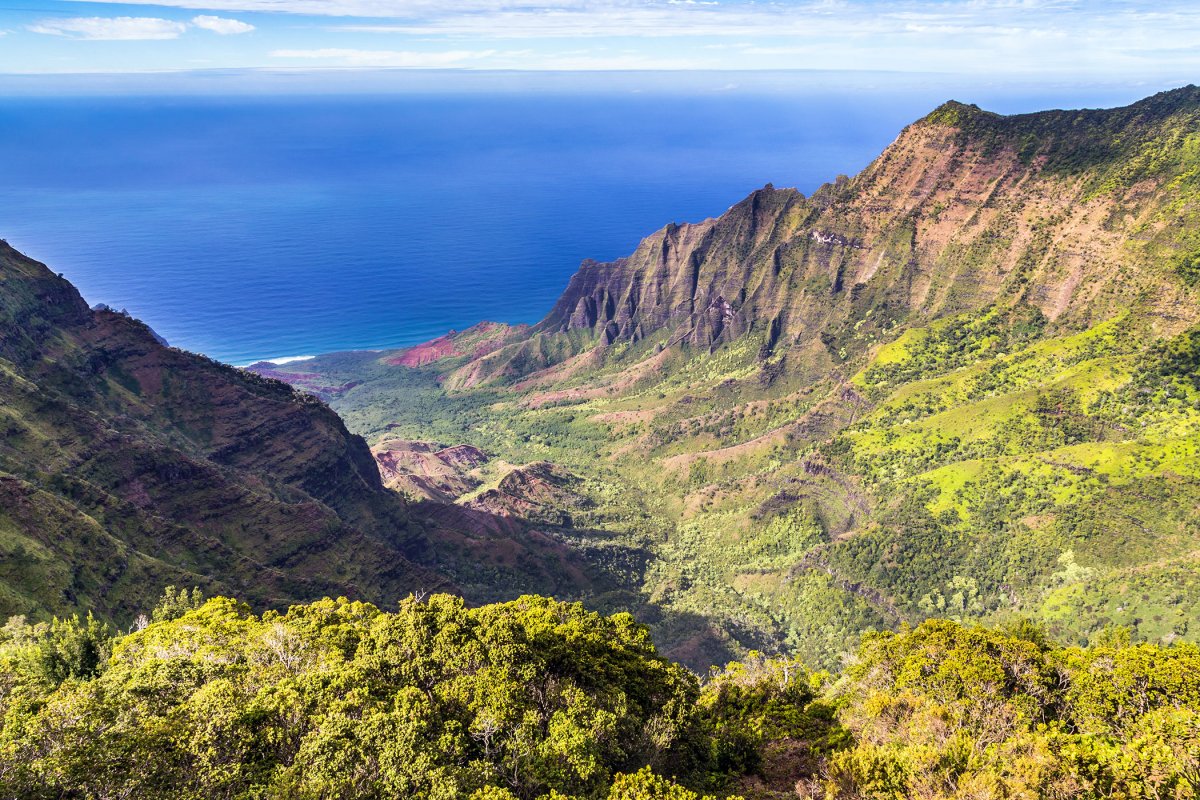
Kalalau Lookout inside Kokeʻe State Park gives you the Nā Pali view for the price of a parking spot — the fallback when tours cancel.
What to book right now for an October or November trip
If you’re reading this in July or August and planning an October or November trip to Kauaʻi, here’s the to-do list I’d work off of:
- Book the helicopter tour first. It's the most weather-flexible of the tours, it's the one that shows the whole coast in an hour, and the best morning slots go early. Book it for the first or second day of your trip so you have backup days if weather cancels.
- Book a catamaran cruise as your water option. Skip the Zodiac rafts in fall unless you specifically want a rougher, smaller-boat experience. Morning departure, south-side harbor if you can. Plan a backup day for this one too.
- Book Hāʻena State Park entry for a Kalalau day hike. The two-mile out-and-back to Hanakāpīʻai Beach is the highest-value few hours a first-time visitor can spend on the north shore, and the parking reservation is what actually gates access. Book through the official Hāʻena system for your target day.
- Pencil in a Kokeʻe morning. No advance reservation for a drive-up visit to Kalalau Lookout, just the on-site fee. It's a worthwhile half-day most visitors miss, and if tours cancel, this is your rain-shell backup plan.
- Rent a car. Every one of these plans requires getting yourself around the island — the north shore boat harbors, Līhuʻe Airport where the helicopter operators fly from, the drive up to Kokeʻe. Discount Hawaii Car Rental is the aggregator I've used for years. It prices the major brands against each other and doesn't require a booking fee up front.
The Nā Pali is why a lot of people fly to Kauaʻi in the first place. In fall you can still see it from three different angles — you just need to pick the right one, book the right slot, and plan for a weather backup. Do that, and October is arguably a better time to be on this island than July.