
Oahu’s North Shore in summer is the beach trip most visitors never plan. The image people carry is winter — the Banzai Pipeline magazine cover, the Eddie Aikau swell at Waimea Bay, the closeout sets that draw pros from around the world. That image is real. From roughly October through April, the North Shore is dangerous surf country, and when the National Weather Service in Honolulu issues a high surf advisory or warning, lifeguards and county Ocean Safety crews may close beaches outright. What that image leaves out is the other half of the year. From about May through September, the same coast calms down. The north-facing swells that dominate winter go quiet, the bays empty out of surfboards, and the water in front of Waimea Bay turns into a turquoise swimming hole that families can have to themselves on a weekday morning. The summer North Shore is a different beach trip than the one Instagram has trained you to expect. Time it right, and it can beat the standard Waikīkī beach day. Below is a planning piece for summer 2026, May through September — when snorkel windows are at their longest and the drive from Waikīkī is worth it for reasons that have nothing to do with watching surfers.
Why summer flips the North Shore
Hawaii’s surf seasons are driven by where storms are forming. In winter, low-pressure systems in the Gulf of Alaska and the North Pacific push energy south, hitting Oahu’s north- and west-facing shores. In summer, those storms shut down. The action moves south of the equator, where deep South Pacific lows generate swells that travel thousands of miles north and arrive at Hawaii’s south-facing coasts. Waikīkī fires up. The North Shore drops off. The NWS Honolulu surf season page spells out the mechanics. Hawaii’s Ocean Safety division documents the pattern explicitly: north shores carry heightened risk October through April, south shores May through September. They overlap in the shoulder months, but in midsummer the contrast is at its starkest. Most days through that window, North Shore swell drops to small, often glassy surf in the morning before the trade winds pick up — the Surfline forecast for Waimea Bay regularly reads in the 1–3 foot range across June, July, and August. That’s the size where reef snorkeling becomes viable, where the shore break at sandy-bottom beaches stops launching swimmers, and where a beach you’d never set foot in during February is the calmest water on the island. Two things to keep in mind even on the calmest summer days. First, small south- or west-trending swells can still wrap the North Shore. They’re nothing like the closeout monsters of winter, but enough to lift the shore break unexpectedly on a few afternoons. The NWS Honolulu daily surf forecast is the right last-check before any swim or snorkel plan. Second, “calm” doesn’t mean “no current.” A few of the named spots below have year-round currents that visitors underestimate. The notes per beach flag which ones.
Waimea Bay — the bay that becomes a swimming pool
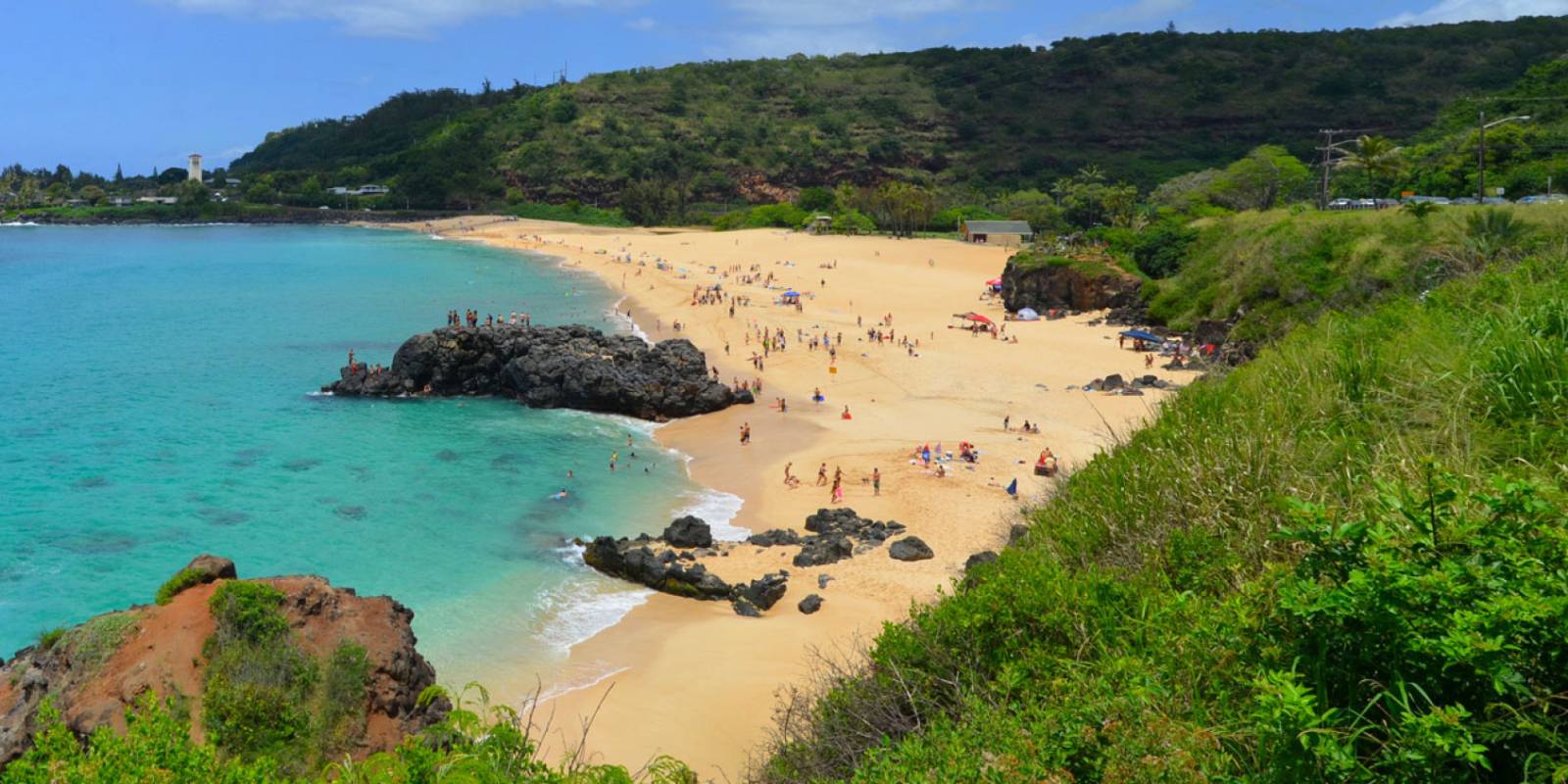
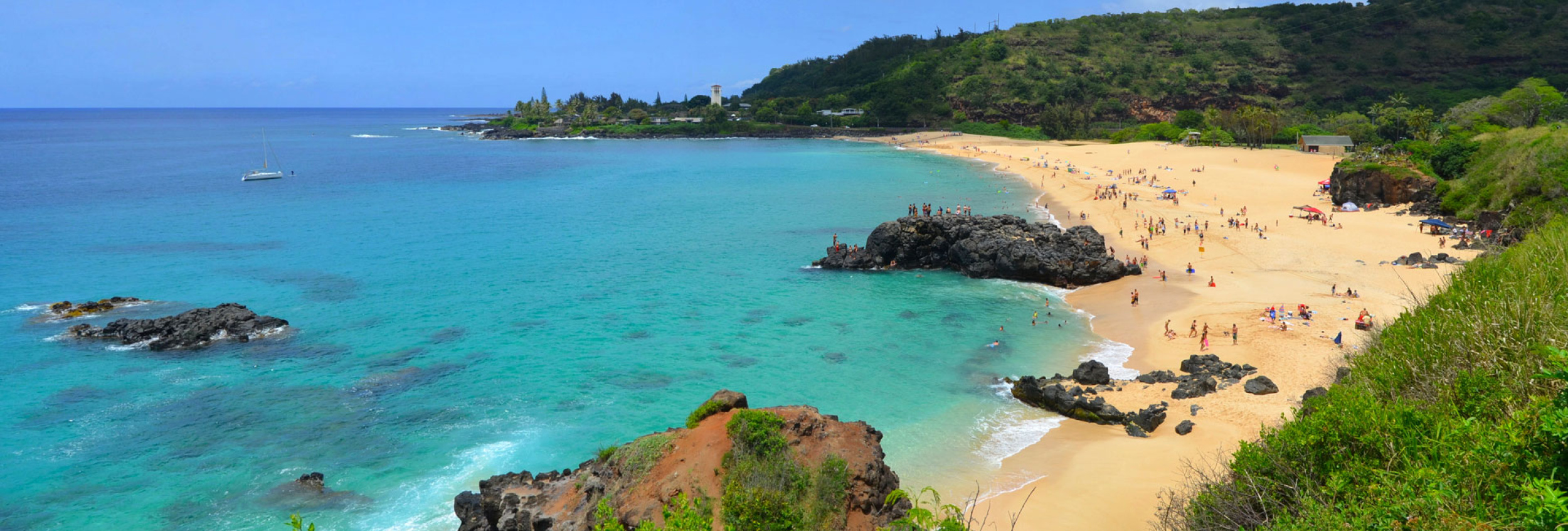
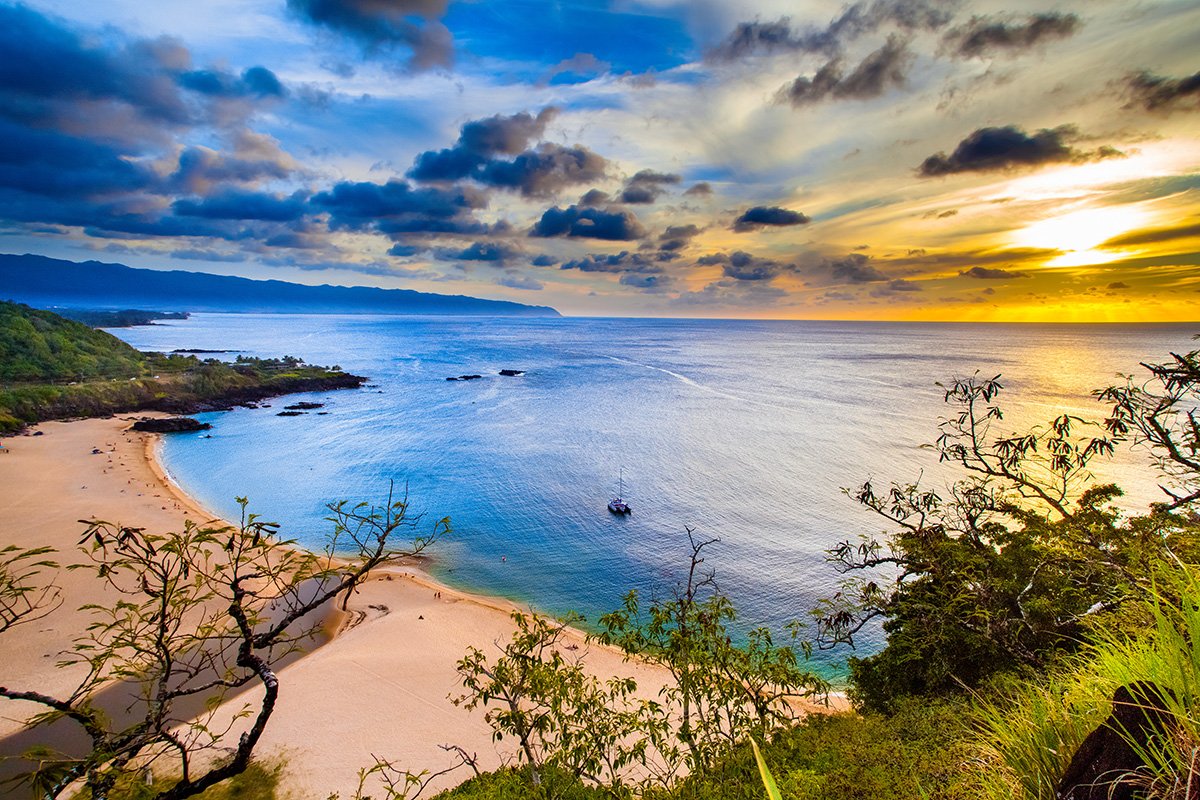
Waimea Bay in winter is the big-wave break that put Oahu on the map. In summer it’s a wide, sand-bottomed swimming bay with lifeguards, restrooms, picnic facilities, and a parking lot — the closest thing the North Shore has to a resort-grade family beach. The official Honolulu Parks page covers the amenities. The horseshoe bathymetry that focuses winter swells into faces that can top 25 feet, per the DLNR Pupukea page covering this stretch of coast, also shields the bay from most summer energy. By June the bay reads as a deep-water swimming hole. The famous “jumping rock” at the south end of the bay is a summer-only activity. The volcanic outcrop sits roughly 25 to 30 feet above the water depending on tide, and you’ll see the line forming most mid-mornings once the parking lot fills. Conditions change with the swell. Check with the lifeguards and read the posted flags before considering any jump — depth, surge, and current at the base of the rock are not constant. Lifeguards are stationed at the bay year-round, the bay has a posted swim area, and the bottom is sand. Park early; the lot fills by 10 a.m. on a summer weekend. Detail and access notes are on our Waimea Bay page. One important caveat. Even in summer, Waimea has a sneaky shore-break section on the north end of the beach that can dump unexpectedly when a small swell rolls through. Watch where the lifeguards have planted their flags. If you’re swimming with kids, the south end (closer to the jumping rock side) is generally the gentler half of the bay.
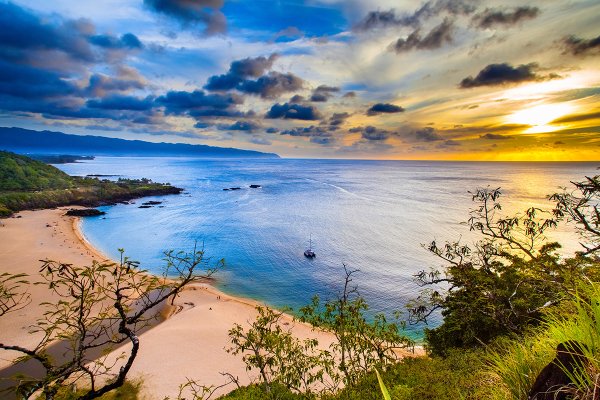
Waimea Bay in summer. The same headlands that focus winter giants protect the bay from south swells, and the water is sand-bottomed and deep enough to swim.
Sharks Cove and Three Tables — the snorkel that only opens in summer
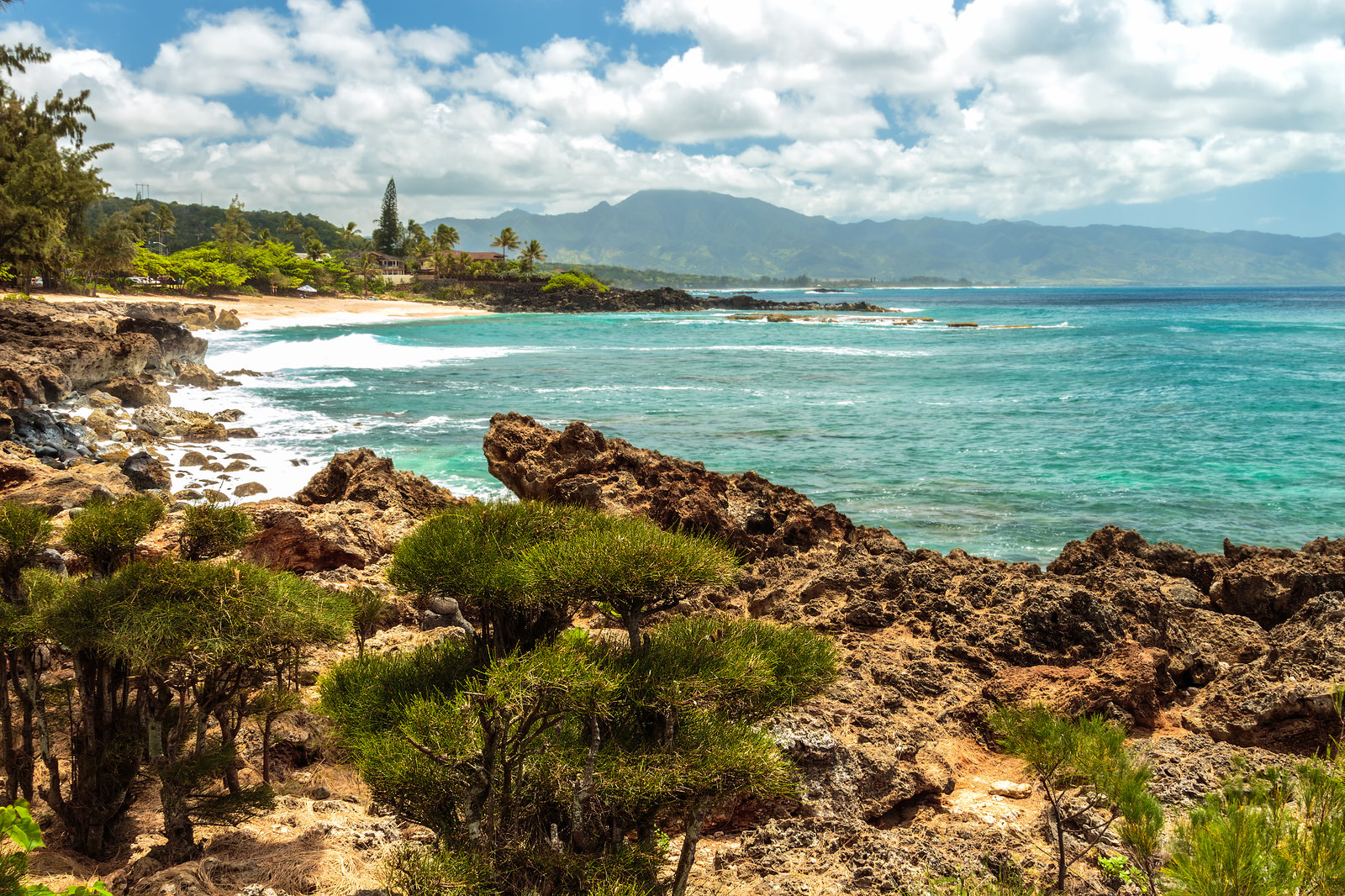
A few minutes north of Waimea Bay along Kamehameha Highway, the Pupukea Marine Life Conservation District protects a stretch of reef and tide pools that includes Sharks Cove and Three Tables — the two spots where the North Shore finally becomes snorkelable. Both are open year-round, but they’re realistically only swimmable from roughly May through September. The DLNR page on Pupukea states it plainly: summer waves are small and good for snorkeling, while winter wave heights can reach 25 feet or more, making the water unsafe to enter. People have died at Sharks Cove in those winter conditions, with Honolulu Ocean Safety pulling bodies from the cove during high surf as recently as December 2023. Treat the seasonality as a hard rule. Sharks Cove is the headline. A protected pocket of clear water sits inside a lava-rock perimeter and drops to about 15 feet at its center, with coral heads, sea turtles, and reef fish that go about their business unbothered by snorkelers. The name comes from the outline of the reef from above, which resembles a shark — not the species. There’s no lifeguard here (the closest tower is at Ehukai), the entry is over slippery lava (water shoes help), and you’ll want to walk in at the sandy break at the south end rather than scrambling over the rock. The cove is small enough that a busy summer Saturday will feel crowded. Mid-week mornings are dramatically quieter. Three Tables, just up the road, is the calmer sister. The name comes from three flat lava platforms that protrude through the surface offshore. The entry is sandy, the crowd is usually thinner than Sharks Cove, and the turtle and reef-fish life is just as good — sometimes better, in our experience. If you’re snorkeling with kids or first-timers, Three Tables is the more forgiving start. Both spots share a key rule: the marine conservation district is no-take. The official MLCD rules prohibit taking fish, shells, coral, sand, or rock. The reef is more fragile than it looks, and the rules are enforced.
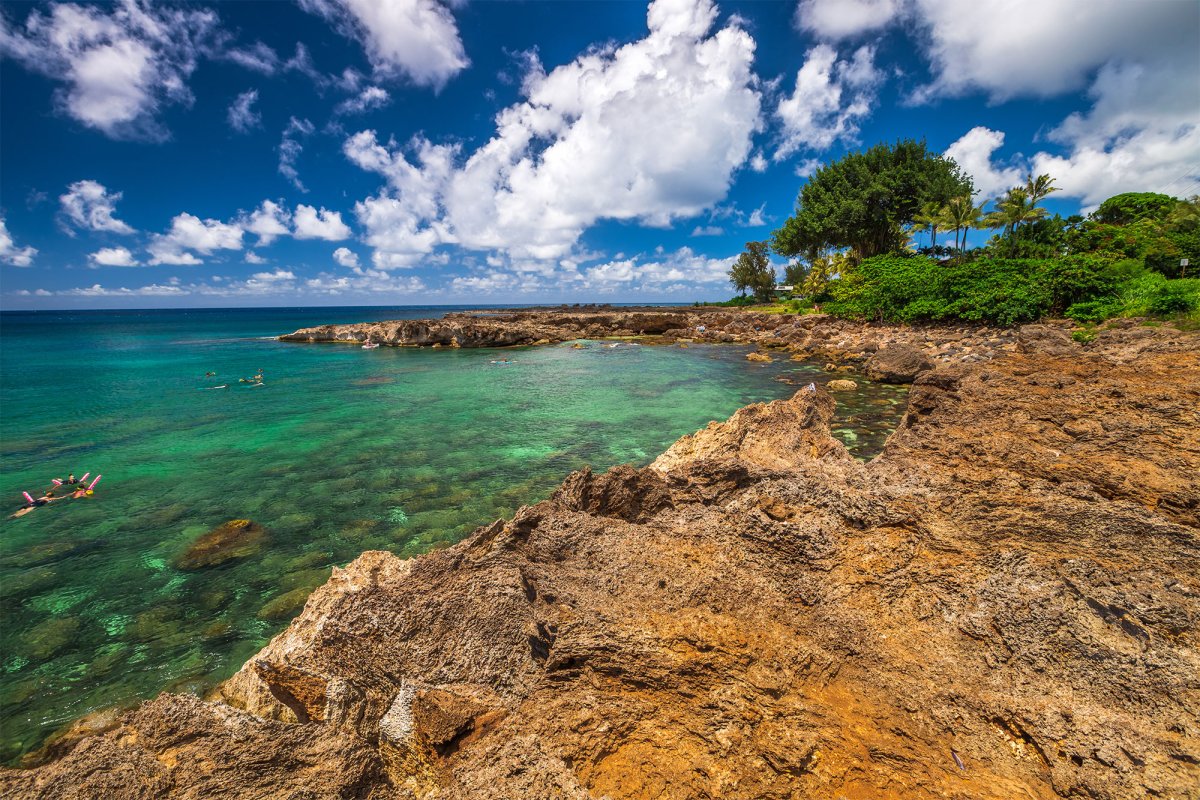
Sharks Cove. The same notch in the lava that locks out winter swell traps a small, clear-water snorkel zone that opens up from May through September.
Sunset Beach, Ehukai, and the surf coast in summer
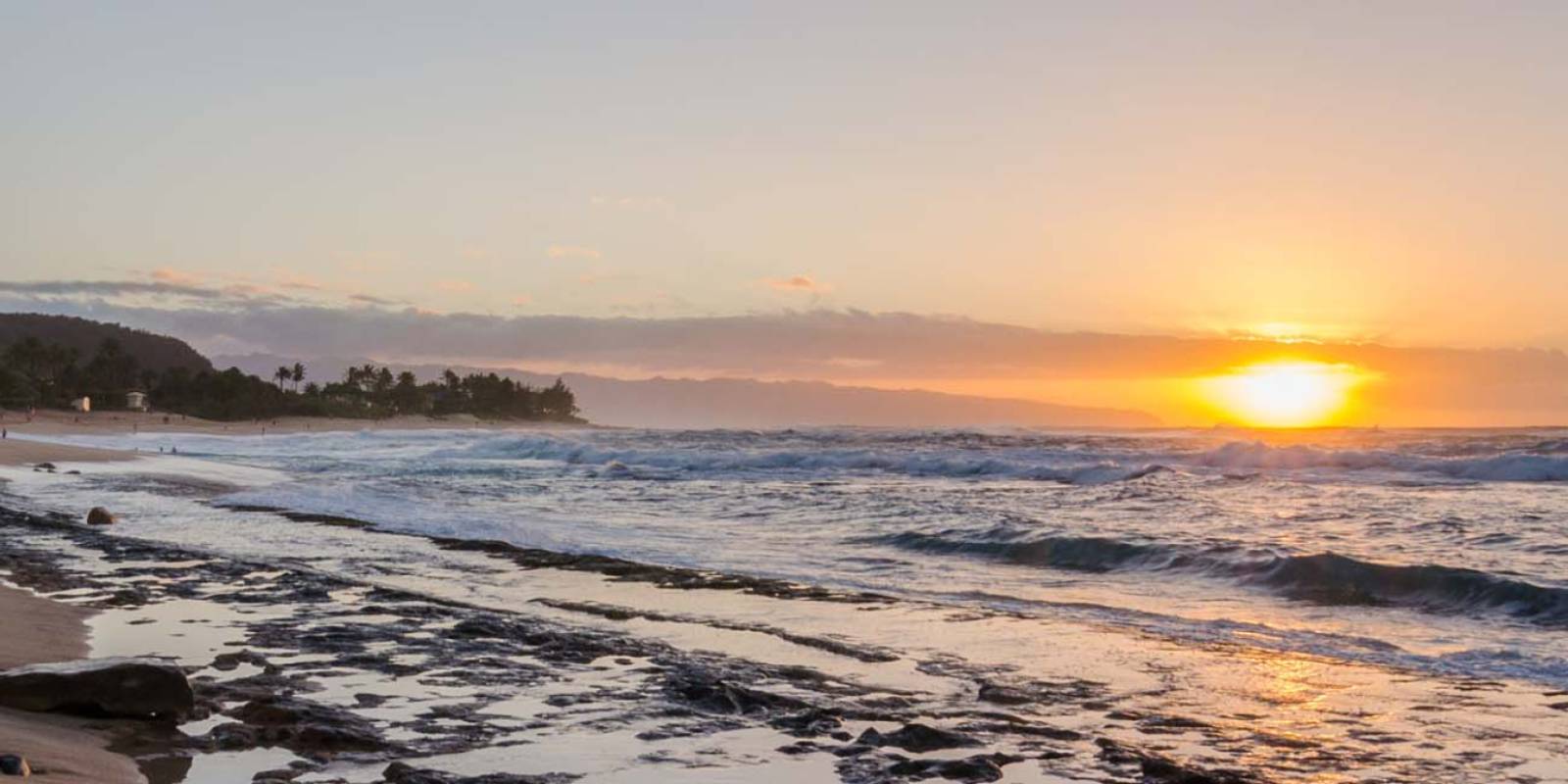
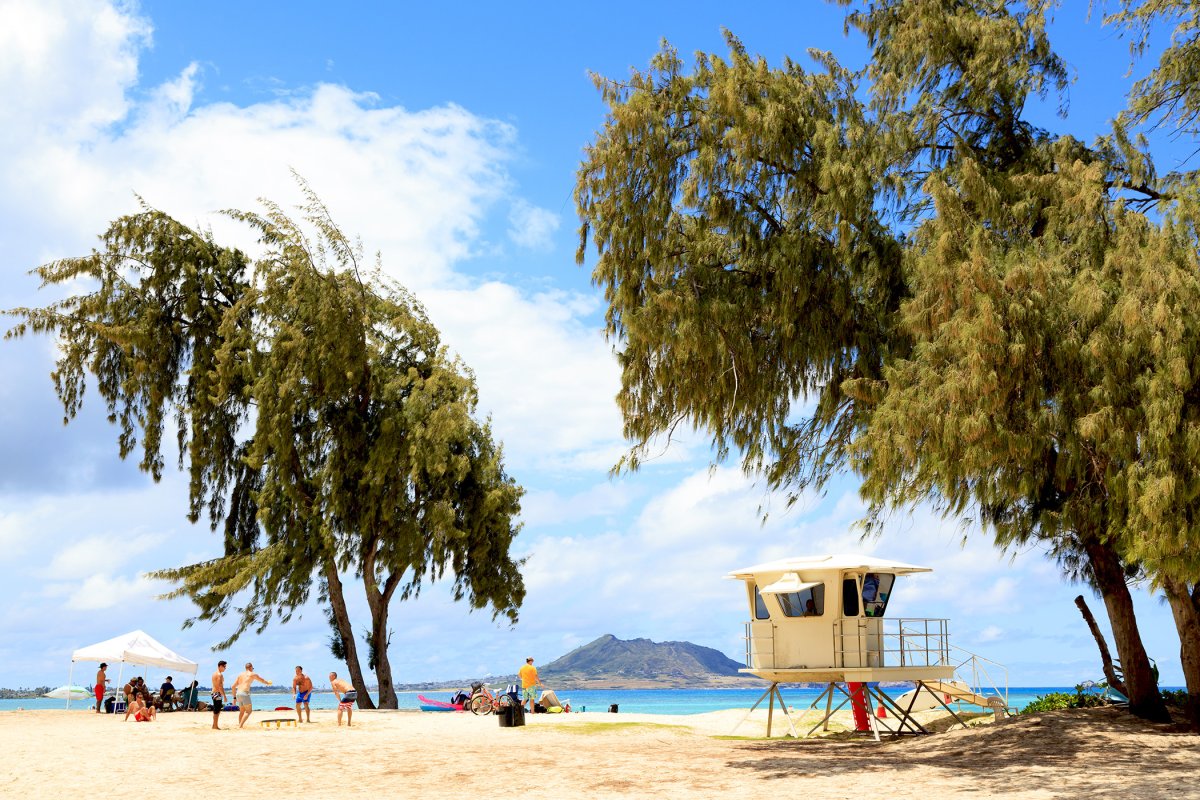
The stretch of coast from Pupukea north to Sunset Point is the most photographed surf real estate on the island. Ehukai Beach Park fronts the Banzai Pipeline, the closest break to shore. Sunset Beach is a perennial World Surf League venue and one of the three home reefs of the Vans Triple Crown of Surfing, which now runs as a season-long, video-submission competition across Haleiwa, Sunset, and Pipeline rather than as a single November event. In summer, both beaches are empty — and that’s the point. Sunset Beach in July and August is a wide, soft-sand beach with small, swimmable shore break and a lifeguard tower, per the Honolulu Parks page. The deep blue water that produces world-class waves in winter lays down for the summer, and the beach widens noticeably as the seasonal sand cycle deposits material that winter swells will scour away again come October. This is the right setting for an afternoon of reading on a beach towel, light swimming, and a sunset that gives the place its name. Parking is alongside the highway, and the crowd you’ll find here in summer is mostly residents enjoying their own coastline back. Ehukai Beach Park (Pipeline) tells the same story. The reef sits offshore; the wave that breaks over it in winter is a high-consequence reef break for experts only, and the beach is mostly closed to swimming during big-swell advisories. In summer, the same sand becomes a quieter beach park with a lifeguard and picnic tables across the highway, per the Ehukai Parks page, and the water is gentle enough to splash in. A handful of small summer swells can still produce shore break — keep an eye on the flags. The Pupukea Beach Park page covers the whole adjacent stretch. One spot to skip even in summer: Ke Iki Beach. The shoreline is steep, the sand drops sharply at the water line, and the shore break dumps even on small days. Hawaii Beach Safety flags it for spinal injuries and confirms there are no lifeguards. Walk it, photograph it, do not body-surf it.
What to do on the drive — Haleiwa, Waimea Valley, and Turtle Bay
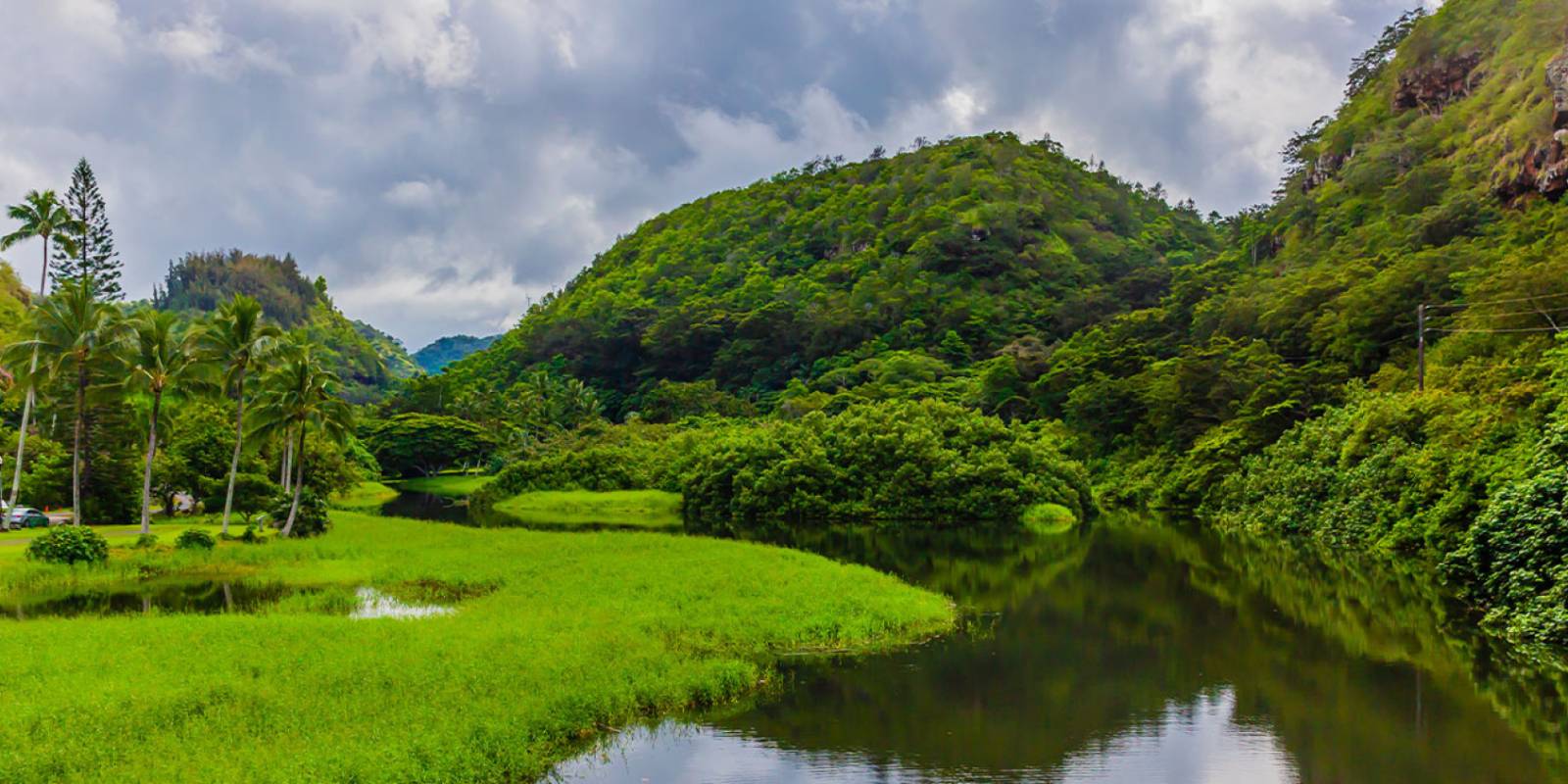
The North Shore in summer is built for a long beach loop with a couple of off-beach stops to stretch the day. The drive from Waikīkī takes about an hour to ninety minutes depending on traffic and route. The standard run is central Oahu via H-1 to H-2 and down to Haleiwa; the windward alternative, Kamehameha Highway through Kāneʻohe and Kahuku, is slower but scenic if you have the time. Once you’re up there, the coast strings together cleanly along Kamehameha Highway from Haleiwa town at the south end to Sunset Beach at the north. Haleiwa town is the natural lunch stop. Matsumoto Shave Ice has been pouring colored syrup over snow since 1951, and the line out the door is part of the experience. A cluster of food trucks at the north end of town serves the famous garlic shrimp plates that have become as North-Shore-iconic as the surf. Giovanni’s Aloha Shrimp Truck is the canonical first stop. Romy’s Kahuku Prawns & Shrimp sits about eight miles farther along Kamehameha Highway in Kahuku as a similar-style alternative. The town also holds locally owned galleries and a surf-history museum, plus a working harbor where Haleiwa Joe’s restaurant sits overlooking the water. Waimea Valley sits a mile inland from Waimea Bay and is the right second stop for a beach-day break. The valley is a working botanical and cultural site managed by Hiʻipaka LLC, a non-profit created by the Office of Hawaiian Affairs. A paved three-quarter-mile path winds through gardens of native and Polynesian-introduced plants and ends at Waihi Falls, a 45-foot waterfall with a deep pool below it where the staff hands out lifejackets and lets you swim — both figures from the official Waimea Valley activities page. Non-resident admission runs about $25 for adults; current rates are on the Waimea Valley tickets page. It’s a rare Oahu waterfall where the public is genuinely welcomed into the pool, and the walk in is gentle enough for kids and older travelers. Turtle Bay, at the far north end of the coast, is now The Ritz-Carlton Oahu, Turtle Bay after a late-2024 rebrand from Turtle Bay Resort (Marriott announcement). It’s the only large resort property north of Haleiwa. As with every beach in Hawaii, the shoreline is public — state law guarantees it, and as Hawaii Magazine explains, marked access paths from highway lots are how you reach them. Plenty of day-trippers stop in for a drink at the open-air bar after a beach day and split out before sunset.
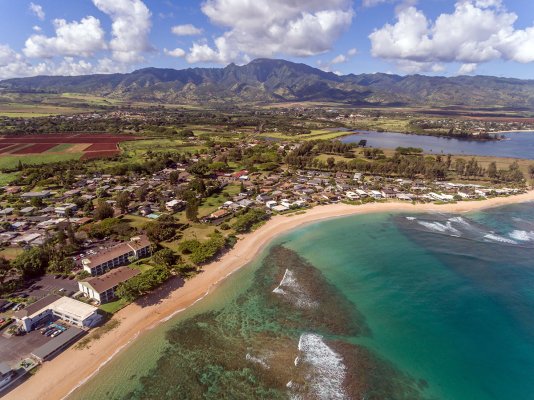
Haleiwa Beach and harbor, the south anchor of the North Shore loop and the right lunch stop on a summer beach day.
Logistics — when to go, where to park, what to skip
Timing the day. A North Shore beach day works best as an early start. Leave Waikīkī by 7 a.m. if you want a parking spot at Waimea Bay or Sharks Cove on a summer weekend. By 10 a.m. the lots are full and late arrivers are walking in from the highway shoulder. Trade winds usually pick up by mid-afternoon, which doesn’t ruin the beach experience but chops up the snorkel water. Morning is the cleaner snorkel window. Getting there. The North Shore is genuinely a different part of Oahu, and you’ll need a car. Public transit on TheBus (route 60 from Ala Moana through Kāneʻohe to Haleiwa) does serve the coast, but it’s a long ride one way and timing your beach gear and snorkel rentals around the bus schedule is more friction than it’s worth. Most visitors drive up. Our car rental discount partner covers the major brands at the Honolulu airport and Waikīkī pickup points; book a small SUV if you have room in the budget, because the North Shore parking lots are unpaved in places and the shoulder pullouts are tighter than they look. Parking. Waimea Bay has a free county lot that fills early. Sharks Cove and Three Tables share an unpaved dirt lot across the highway, also early-fill. Sunset Beach and Ehukai Beach Park have small lots and roadside shoulder parking. Do not park in private residential driveways or block local mailboxes. The North Shore has a real residential community, and the friction with day-trippers is real. Leave nothing visible in the car. Snorkel gear. Rent in Haleiwa town or at the dive shops near Pupukea, not in Waikīkī — you save a lot of driving with wet gear in the trunk. Surf N Sea in Haleiwa rents a mask, snorkel, and fins for around $15 a day (half-day rates are cheaper); reef-safe mineral sunscreen is required under Hawaii Act 104, which bans the sale of oxybenzone- and octinoxate-based products without a prescription. Most North Shore shops stock zinc oxide alternatives. What to skip in summer. Don’t drive up specifically to see Pipeline or the Eddie at Waimea — those are winter shows. The big-wave breaks just look like blue ocean in summer. The right summer trip is the swim-and-snorkel version of the same coast, anchored on Waimea Bay, Sharks Cove or Three Tables, and a Haleiwa town lunch. That’s a full day, comfortably done between the morning departure and a Waikīkī dinner.
Most visitors run the North Shore loop in winter, take the obligatory photos from the Banzai Pipeline parking lot, eat a shave ice in Haleiwa, and drive back impressed but mostly dry. The summer version of the same loop is a different trip. It’s wet. It’s slow. And it looks a lot more like the way the North Shore community actually uses its own coast between May and September. If you’re on Oahu over the summer, it’s the half of the North Shore most visitors never quite figure out — and it might be the best beach day on the island.