
If you’re worried about sharks in Hawaii, start here. Almost everyone planning a Hawaii trip has the same quiet thought before their first swim. It is a fair question, and the honest answer is reassuring. Sharks live in Hawaiian waters. They also leave nearly everyone alone, nearly all of the time. Here is the part worth saying first. The real ocean danger in Hawaii is not sharks. It is water itself: currents and shore break on beaches you don’t know. State ocean-safety crews respond to thousands of rescues a year, while shark incidents stay in the single digits (see the DLNR incident list and Hawaii’s Hawaii Ocean Safety). Before you worry about teeth, learn to read the water and check the daily Hawaii ocean report. With that out of the way, let’s talk about the sharks honestly: how common they are, how rare encounters are, and the simple habits that lower your already-small risk.
Shark species in Hawaiian waters
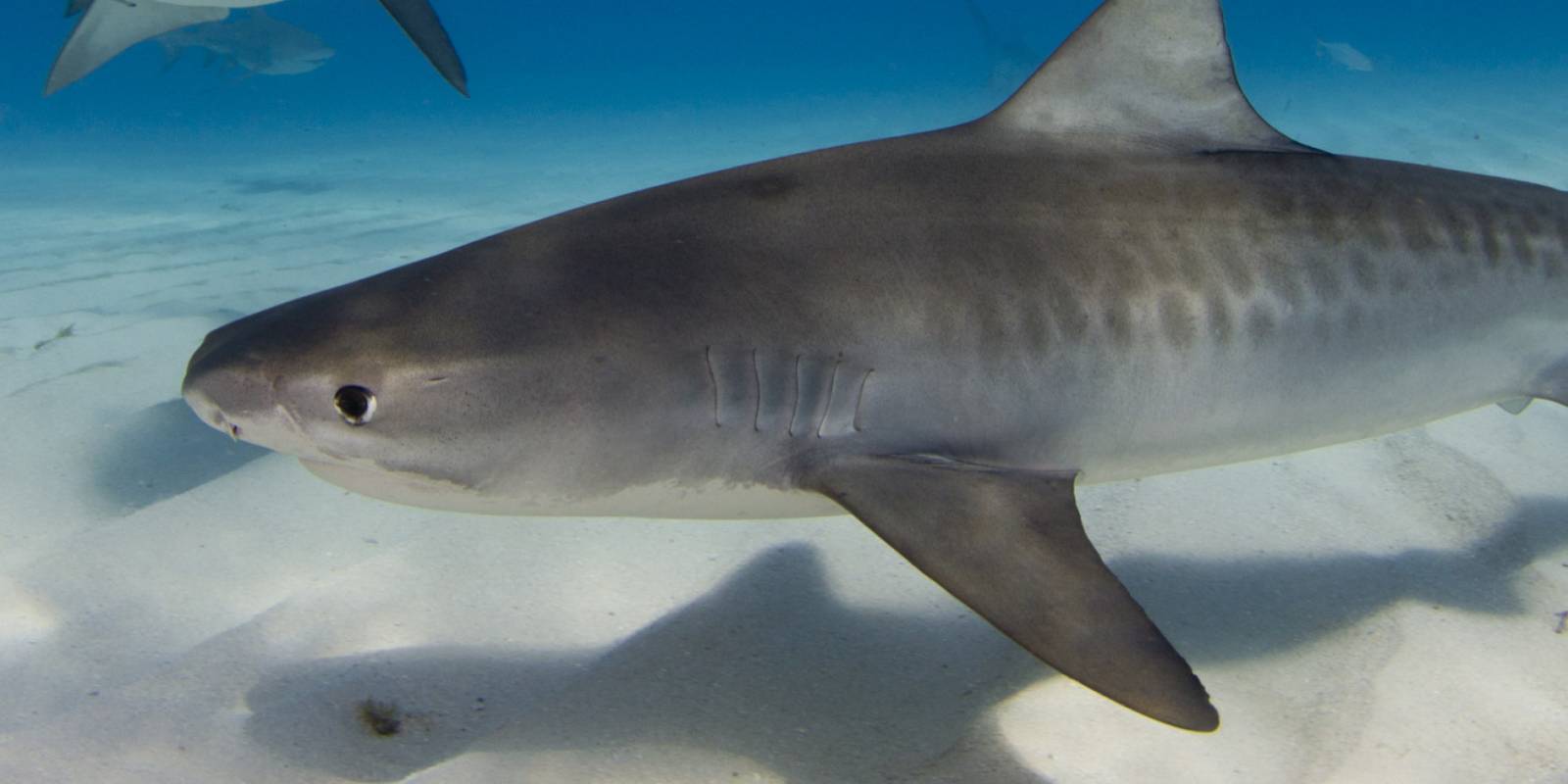
About 40 species of shark live in or pass through Hawaiian waters, according to the Hawaii Division of Aquatic Resources. Most are small, shy, and want nothing to do with people. The ones you might actually notice while snorkeling are the small reef sharks: whitetip reef sharks resting under ledges and the occasional blacktip cruising the shallows. Both are timid and pose no real threat to a swimmer keeping a respectful distance. Sandbar and scalloped hammerhead sharks are common offshore but rarely bother people in the water. The species that gets the headlines is the tiger shark. Tigers are large, and the Florida Museum notes they can grow past 14 feet. They are the shark most often involved in the rare bites that do happen in Hawaii. They tend to move into shallower water to feed at dawn and dusk, which is exactly when you should be doing something other than swimming far from shore.
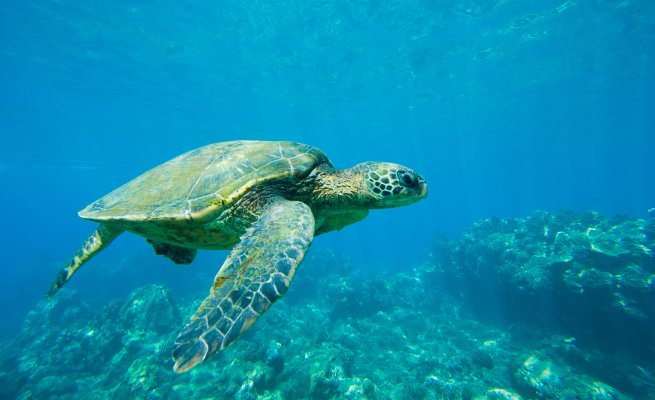
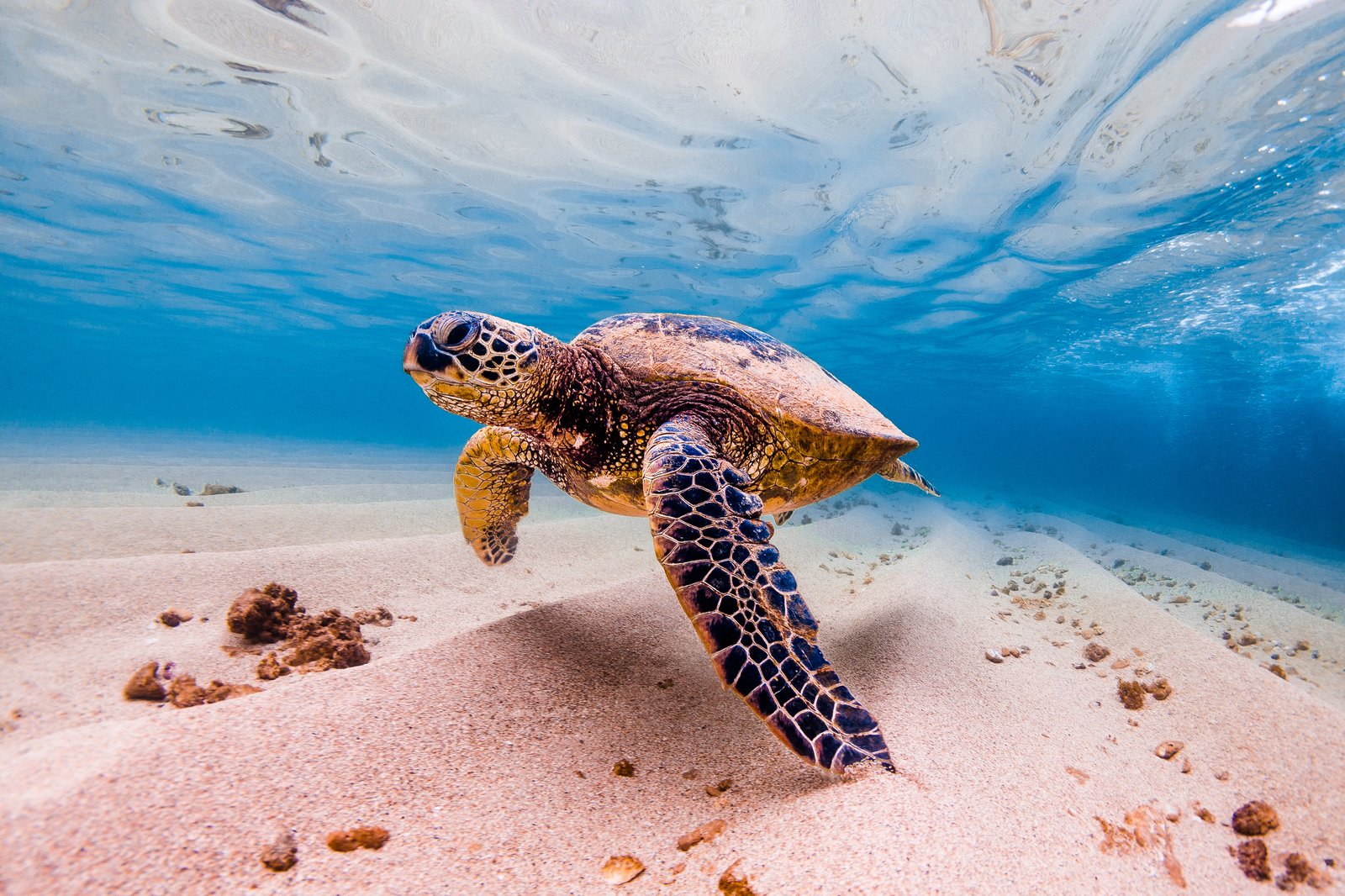
Far more often than a shark, the big animal you'll meet on a Hawaii snorkel is a green sea turtle (honu) gliding past the reef.
Shark bite numbers, in context
Bites are rare. The state has tracked shark incidents going back to 1828, and the running record on the DLNR shark incident page shows a typical year lands in the mid single digits, occasionally reaching the low teens (2019 had 14; most recent years have been between 5 and 8). Most incidents are non-fatal, and many involve surfers or divers well offshore rather than swimmers near the beach. For scale, the International Shark Attack File logged 69 unprovoked bites worldwide in 2023, with a ten-year average near 63. That is the entire planet’s coastline. Hawaii sees a small share of an already small global number, against millions of swim, snorkel, surf, and dive hours each year. None of that means zero risk. It means the odds are low enough that a few sensible habits, not avoidance of the ocean, are the right response.
When and where your odds go up a little
Shark risk is not evenly spread. The DLNR shark safety guidance points to a short list of conditions worth avoiding, and you can sidestep almost all of them by choice. Murky or cloudy water. Sharks hunt partly by sensing movement, and poor visibility makes mistakes more likely on both sides. Skip the water after heavy rain, when runoff turns the nearshore brown. River mouths and harbor entrances. Runoff carries fish and debris that draw predators, especially after a storm. Stay away from stream outlets and channel mouths, particularly when the water is discolored. Dawn and dusk. Several nearshore species, tigers included, are more active and feed closer to shore in low light. Save your swims for the bright middle of the day. Where fish are concentrated. Diving seabirds and active fishing or spearfishing both signal feeding activity. If you see either, choose a different spot.
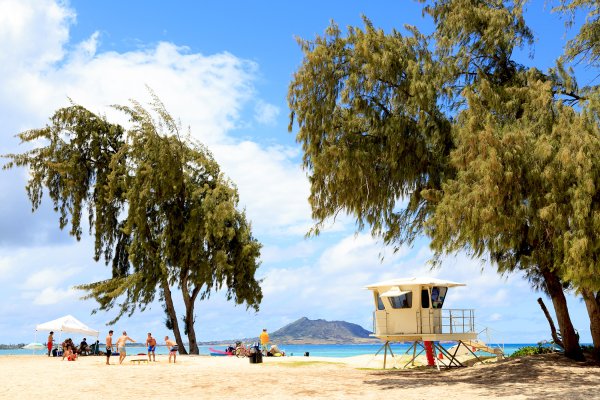
Swimming at a lifeguarded beach is one of the strongest ocean-safety habits you can build, for sharks and for the far more common current and shore-break trouble.
How to lower your already-small risk
The DLNR and Hawaii Ocean Safety crews give the same short list every year. None of it asks you to skip the water you came for. Swim, snorkel, and surf with other people, and stay where you can see others nearby. A lone swimmer far from shore is the rare profile worth avoiding. Stay out of murky water and away from stream and harbor mouths, and pick the bright middle of the day over dawn and dusk. Don’t enter the ocean with bleeding cuts, and leave the shiny jewelry on the towel. Bright metal can flash like fish scales in the water. Swim at a lifeguarded beach, and read the posted signs. If a beach is flagged for any reason, that flag is worth more than any guidebook. New to snorkeling? Our beginner snorkeling guide covers the rest of the safety basics.
What to do if you actually see a shark
First, most sharks you might glimpse on a snorkel — a reef shark, say — are no cause for alarm. They are usually more interested in leaving than in you. If you see a larger shark or one behaving with obvious interest, the DLNR’s safety guidance is to keep the animal in sight and back toward shore or your boat with calm, steady movements. Don’t thrash or splash, which can read as a struggling fish. Stay vertical, keep the shark in view, and exit the water without panic. If you are with a group, gather together rather than scattering. Once everyone is out, report the sighting to the lifeguard so they can post a warning for others.
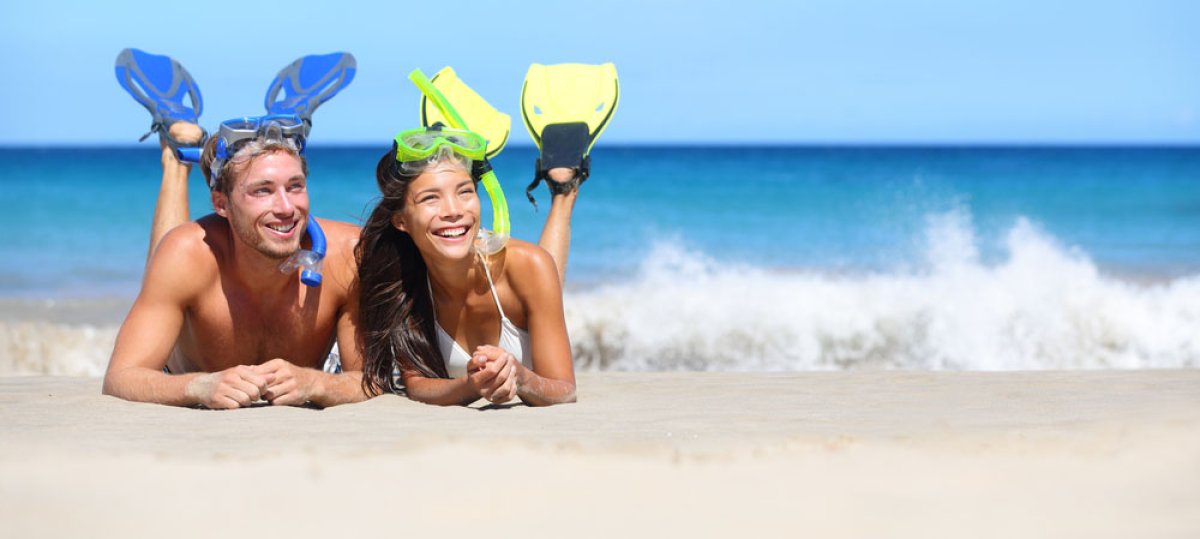
Clear water, a guarded beach, and a midday swim — the combination that keeps the ocean both safe and exactly as good as you pictured it.
Sharks in Hawaiian culture
It helps to know that in Hawaii, the shark is not simply a threat. In Hawaiian tradition the manō carries deep meaning, and some families regard a particular shark as an ʻaumakua, an ancestral guardian watching over their line. The reverence runs deep: at Puʻukoholā Heiau National Historic Site on the Big Island, a submerged temple called Hale o Kapuni was built to honor the shark gods. Stories of protective sharks run through Hawaiian history, and you’ll find the manō honored in place names and chants across the islands. You don’t need to adopt the belief to respect it. Treating the ocean and its animals as something to observe with care, rather than conquer, is simply the right posture for a guest in Hawaiian waters. It also happens to be the same mindset that keeps you safe.
Shark tours and cage dives
Plenty of visitors decide the best way to handle the fear is to meet a shark head-on, from the safety of a cage. Most of Hawaii’s shark tours run out of Haleiwa Harbor on Oahu’s North Shore, where boats motor a few miles offshore and lower you into a floating cage to watch Galapagos and sandbar sharks circle in clear, deep water. It is calmer and more graceful than the movies suggest, and it tends to cure the fear rather than feed it. We round up operators and what to expect in our guide to cage diving with sharks in Hawaii, and you can compare current Oahu shark tours on Viator for dates and pricing. One last note for the worriers: Shark’s Cove on Oahu, a popular snorkel spot, is named for the shape of an offshore lava-rock formation, not for its residents. In summer, when the surf drops, the snorkeling at Shark’s Cove is gentle, shallow, and family-friendly. In winter, high North Shore surf makes it dangerous, so check the ocean report and posted signs before you go.
Bottom line
Should sharks change your Hawaii plans? No. Respect the ocean, swim smart, pick guarded beaches, and skip the murky-water-at-dusk situations, and you’ll spend your trip watching turtles and reef fish instead of scanning the horizon. The water here is one of the great gifts of the islands. Go enjoy it.