
Hawaiʻi Guide · Audio Driving Tour
Hāna Backside Loop BETA
A conditional route from Hāna through Kīpahulu and Kaupō to ʻUlupalakua and Kula. Continue only after checking current road status, daylight, your rental agreement, and driver and vehicle readiness. Use only clearly open, legal stops and travel through residential Kaupō without creating roadside pullouts. Free self-guided audio tour.
55 miles
~2h 20min driving
7 curated stops
Free self-guided audio tour
~2h 20min
total driving time
55 mi
total distance
7 stops
curated stops
5-8h
suggested day
We may link to trusted Hawaiʻi resources at no extra cost to you.
Build your own route
Pick a preset or tap the ✓ Include chip on any stop below to customize.
7
of 7 stops selected
-
Intro
Intro
Show transcript
This is the backside of the Road to Hāna—the wild, lonely southern half of the loop that most visitors never see. Instead of turning around at Hāna and driving back the way you came, this route keeps going: south past the pools of ʻOheʻo, through the remote ranchland of Kaupō, around the dry, raw south flank of Haleakalā, and up through ʻUlupalakua to the cool upcountry at Kula. It's the road less traveled, for good reason—and that's the first thing we need to talk about. This is a remote, rugged road, the Piʻilani Highway, Route 31. It narrows to one lane in long stretches, hugs sea cliffs with blind curves, has almost no services, and it closes regularly for washouts, rockfall, and repairs. So before you commit past Kīpahulu, confirm the road is actually open all the way through—check the Maui County and state highway closure pages, or ask in Hāna. If it's closed beyond the pools, the smart move is simple: turn around at ʻOheʻo and return on the Hāna Highway the way you came. The other thing: many rental-car agreements restrict this road or won't cover you on it, so check your own contract before you drive it. If the road's open and your rental's okay with it, go in daylight, gas up in Hāna because there's no fuel for forty-plus miles, carry water, and take it slow. What you get in return is some of Maui's most remote south-coast country. Let's head south. -
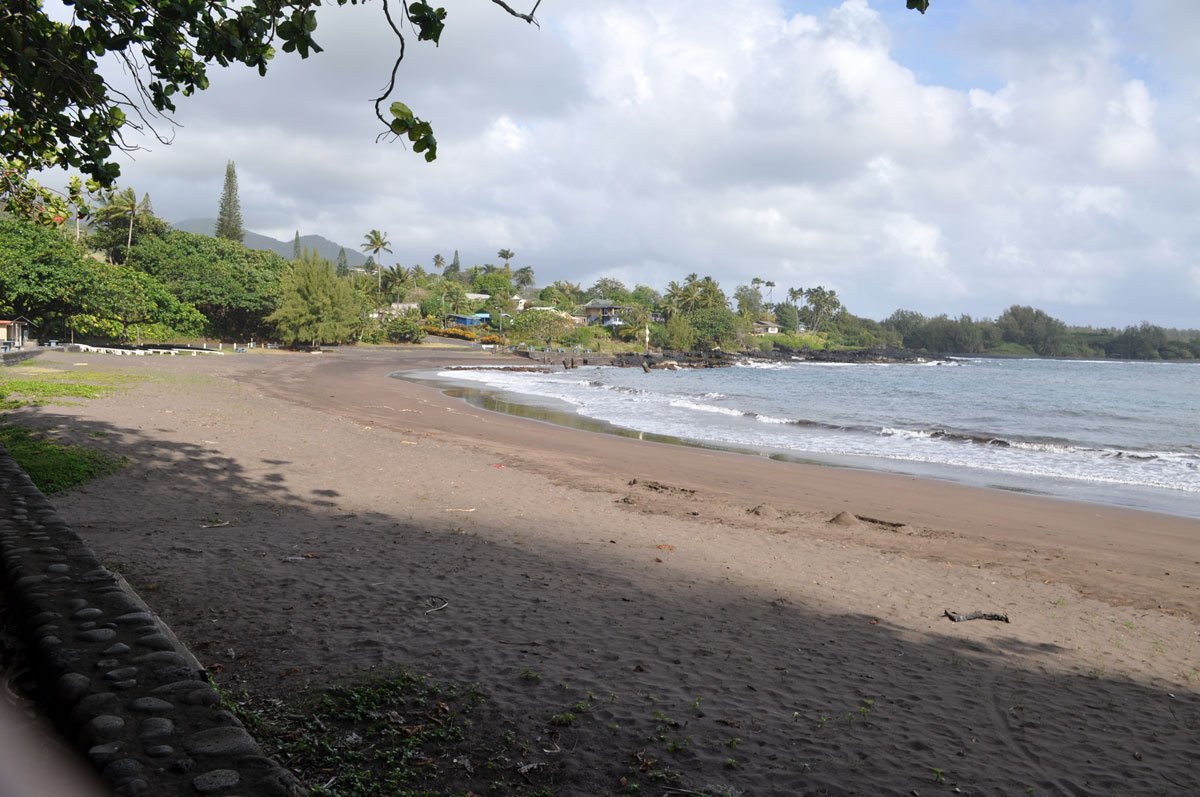
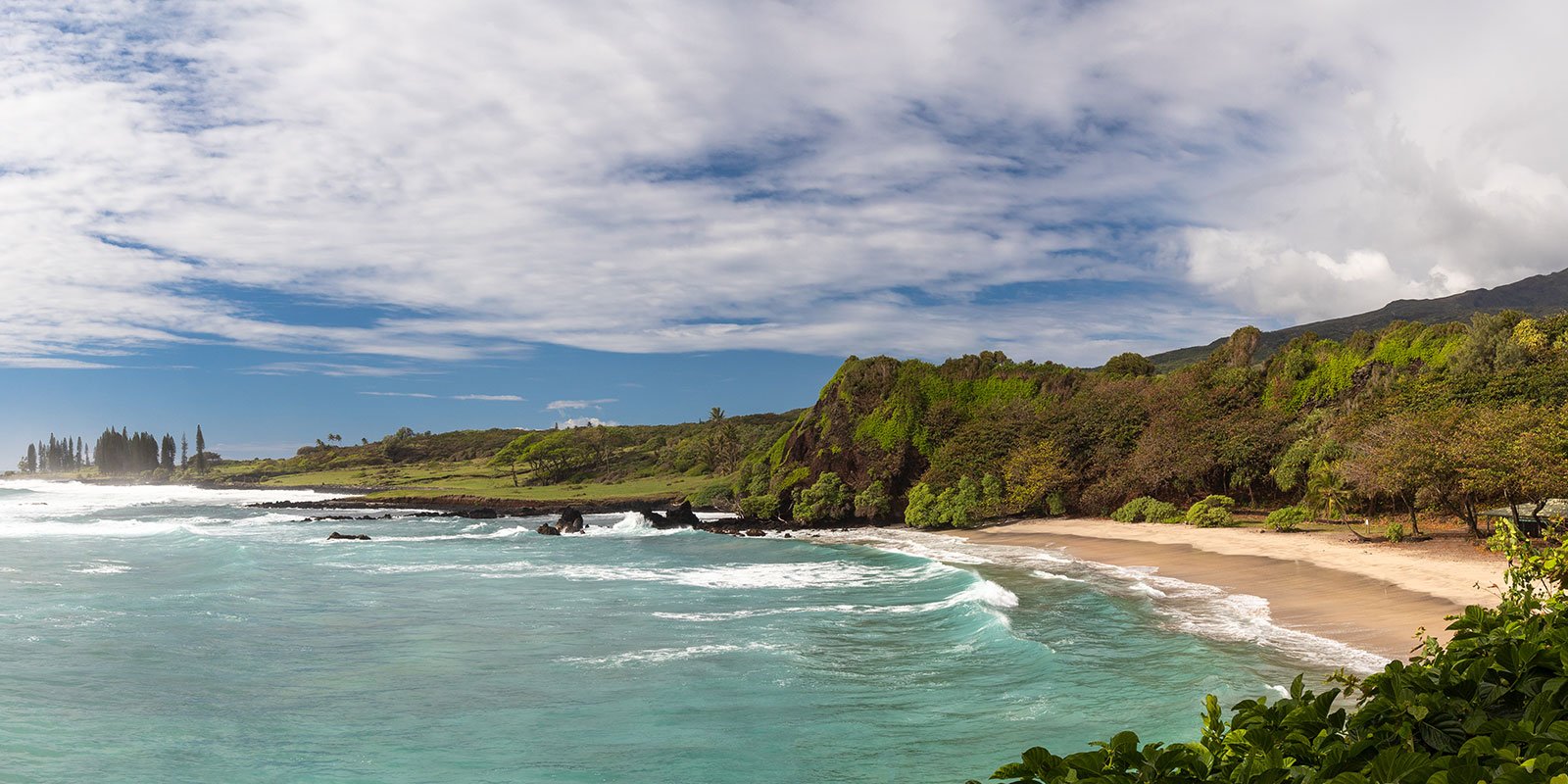
The heart of Hāna town and the route's departure point — a calm bay under Kaʻuiki Head. Last reliable fuel, food, and water for 40-plus miles.
Approach Cue (~12-15 sec)Show transcript
We're starting at Hāna Bay, in the middle of Hāna town. This is your staging point and your last real stop for gas, food, and water before the remote south coast, so take care of all of that here.Arrival Narration (~45-60 sec)Show transcript
Hāna Bay is a calm, salt-and-pepper-sand beach tucked below the green hills, with the cinder cone of Kaʻuiki Head guarding the south end—a spot heavy with Hawaiian history, said to be the birthplace of Queen Kaʻahumanu, Kamehameha's most powerful wife. Hāna itself is one of the last truly Hawaiian towns on Maui, quiet and proudly out of the way. Fuel up, fill your water, use the restroom, and make sure you're ready, because once we leave town heading south, the services basically end until ʻUlupalakua, more than forty miles on. When you're set, we roll south toward Kīpahulu. -
 33 min from previous stop · 10.6 mi
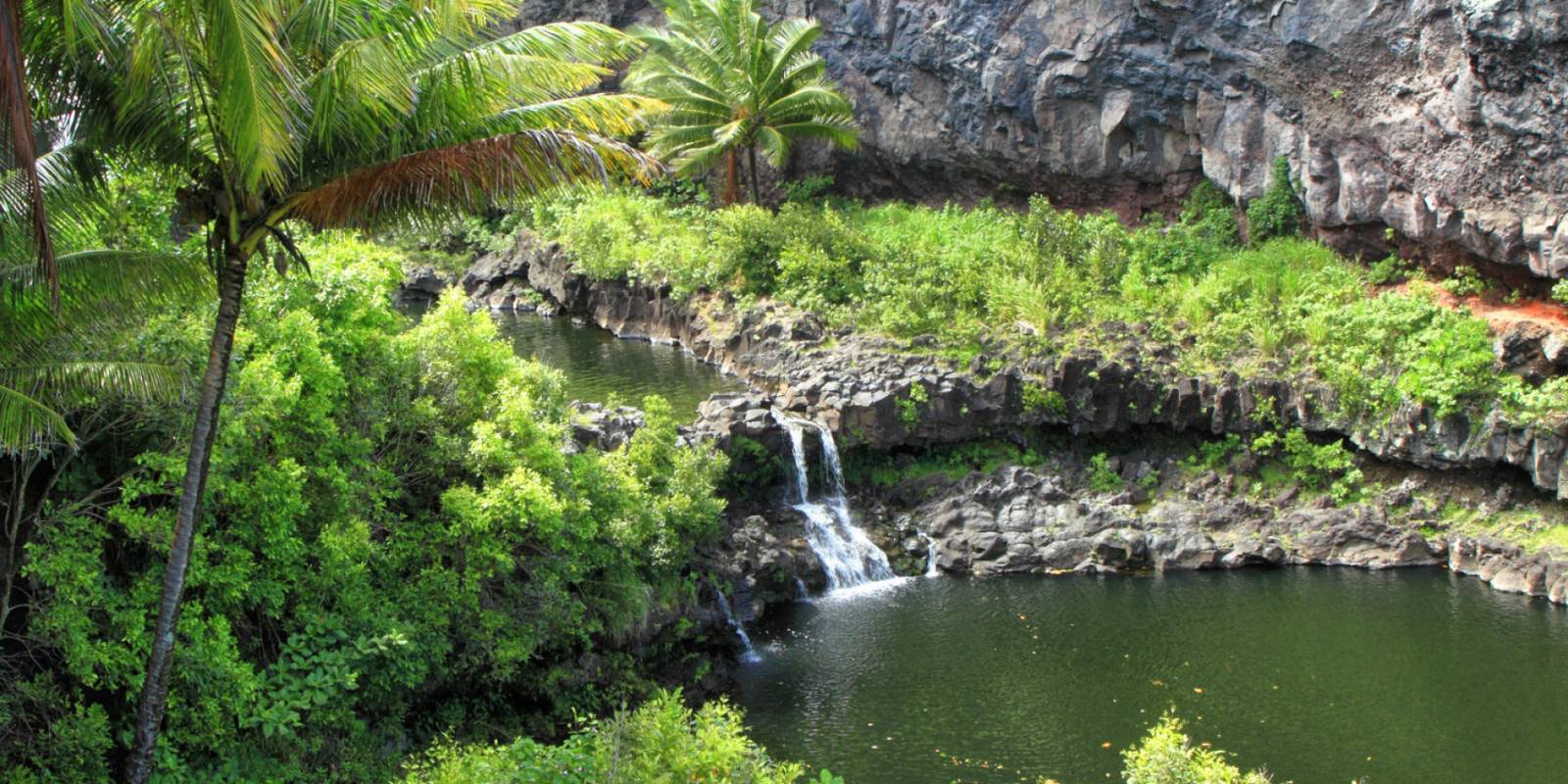
A series of waterfall-fed pools stepping to the sea, in the Kīpahulu district of Haleakalā NP. Entrance fee applies; swimming is frequently closed for deadly flash-flood risk. Not the "Seven Sacred Pools."
Approach Cue (~12-15 sec)Show transcript
About ten miles south of Hāna, you reach the Kīpahulu district of Haleakalā National Park and ʻOheʻo Gulch. There's an entrance fee here—it's part of the national park, and the pass is good at the summit too. One important thing: the pools are often closed to swimming, sometimes for long stretches, because of flash-flood and rockfall danger, so don't count on getting in. Check the posted status when you arrive.Arrival Narration (~45-60 sec)Show transcript
You may have heard this place called the "Seven Sacred Pools"—that's a tourism invention; there's nothing sacred or seven about it. The real name is ʻOheʻo Gulch, a beautiful series of waterfall-fed pools that step down a stream to the ocean. When they're open they can be a stunning swim—but here's the deadly serious part: this stream drains a huge, rainy watershed up the slope, and a flash flood can turn these calm pools into a violent torrent in minutes, with no warning, even where you're standing in sunshine. People have been killed and swept out to sea here. So if the pools are closed, respect it; and if they're open, never get in if there's any rain up the mountain. Either way, the coastal trail out to the sea cliffs is gorgeous and usually open. Take it in—and remember the park fee covers you at the summit if you're headed up Haleakalā later. -
 0 min from previous stop · 0 mi
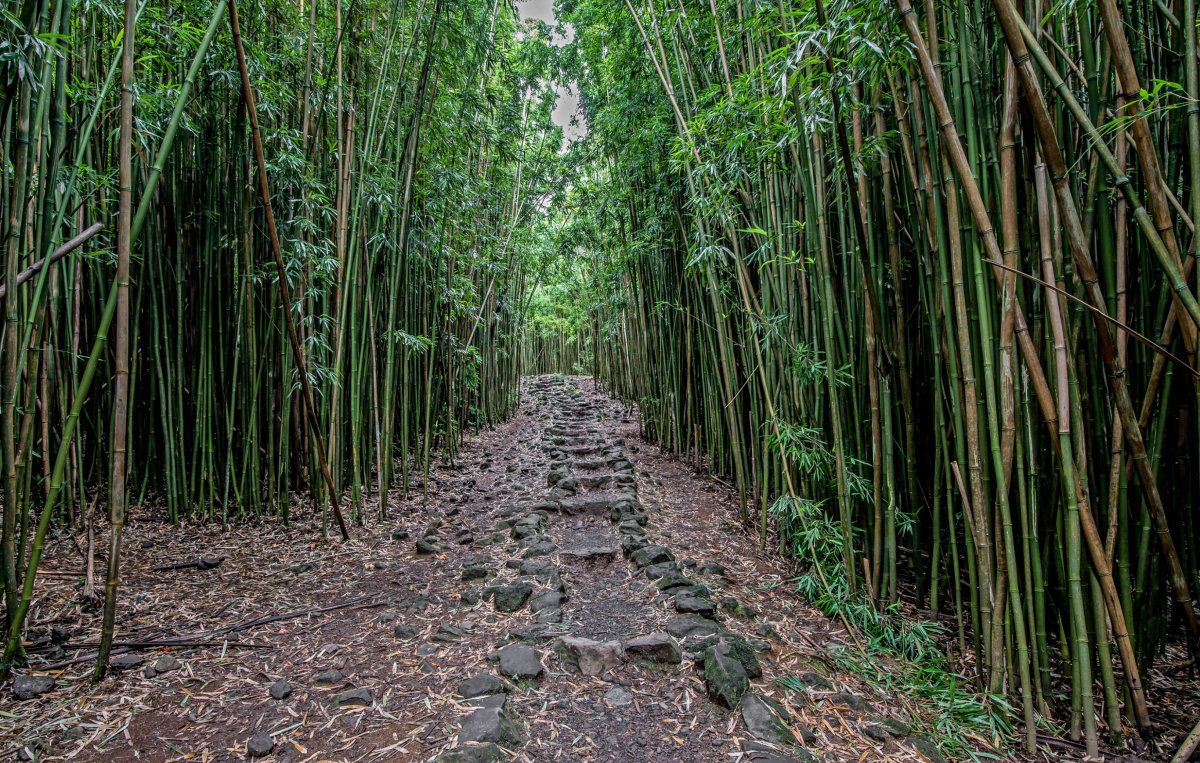
A ~4-mile round-trip climb through a bamboo forest to the 400-foot Waimoku Falls, from the same Kīpahulu trailhead and NP fee. A real hike, not a quick stop.
Approach Cue (~12-15 sec)Show transcript
From the same Kīpahulu parking area, the Pīpīwai Trail heads inland. Quick, honest framing: this is a real hike—about four miles round trip, climbing past waterfalls and through a famous bamboo forest, two to three hours of actual walking. So this is a commitment, not a pull-off. Decide before you leave the car whether you've got the time and the legs for it.Arrival Narration (~45-60 sec)Show transcript
The Pīpīwai Trail is one of the best hikes on Maui. It climbs gently through the forest past Makahiku Falls, then plunges you into a grove of green bamboo so thick the light goes emerald and the stalks knock together in the wind. At the top, you come out at the base of Waimoku Falls, a thread of water dropping a sheer four hundred feet down a mossy cliff. It's wet, often muddy, and has stream crossings that get dangerous after rain—so if it's pouring, save it. But on a decent day, it's unforgettable. If you do the hike, give yourself the time; if not, no shame in pressing on. Either way, from here the highway changes character completely—the pavement narrows, the rainforest gives way, and the wild backside begins. -
6 min from previous stop · 1.2 miStop makai
Palapala Hoʻomau Church (Lindbergh's Grave)
A historic coral-and-stone seaside church and active cemetery in Kīpahulu, where aviator Charles Lindbergh is buried. A working church — visit quietly and respectfully.
Approach Cue (~12-15 sec)Show transcript
A little past the park, watch makai for a small turnoff toward Palapala Hoʻomau Church—it's easy to miss, down a short side road near the old Maui Stables. Park considerately and step softly here. This is a working church and an active cemetery, not a tourist attraction.Arrival Narration (~45-60 sec)Show transcript
Palapala Hoʻomau is a simple, beautiful historic church of coral and lava stone, sitting on a green bluff above the sea—and in its small graveyard, under a Java plum tree with a plain stone marker, is the grave of Charles Lindbergh, the aviator who made the first solo nonstop flight across the Atlantic. Lindbergh spent his last years in Kīpahulu, fell in love with this remote coast, and asked to be buried here when he died in 1974. His grave is intentionally modest, and the setting is the point: the sound of the surf, the wind in the trees, the quiet. Visit the way you'd want strangers to visit a grave that mattered to you— quietly, respectfully, no loud voices, and leave it exactly as you found it. Then we continue into Kaupō. -
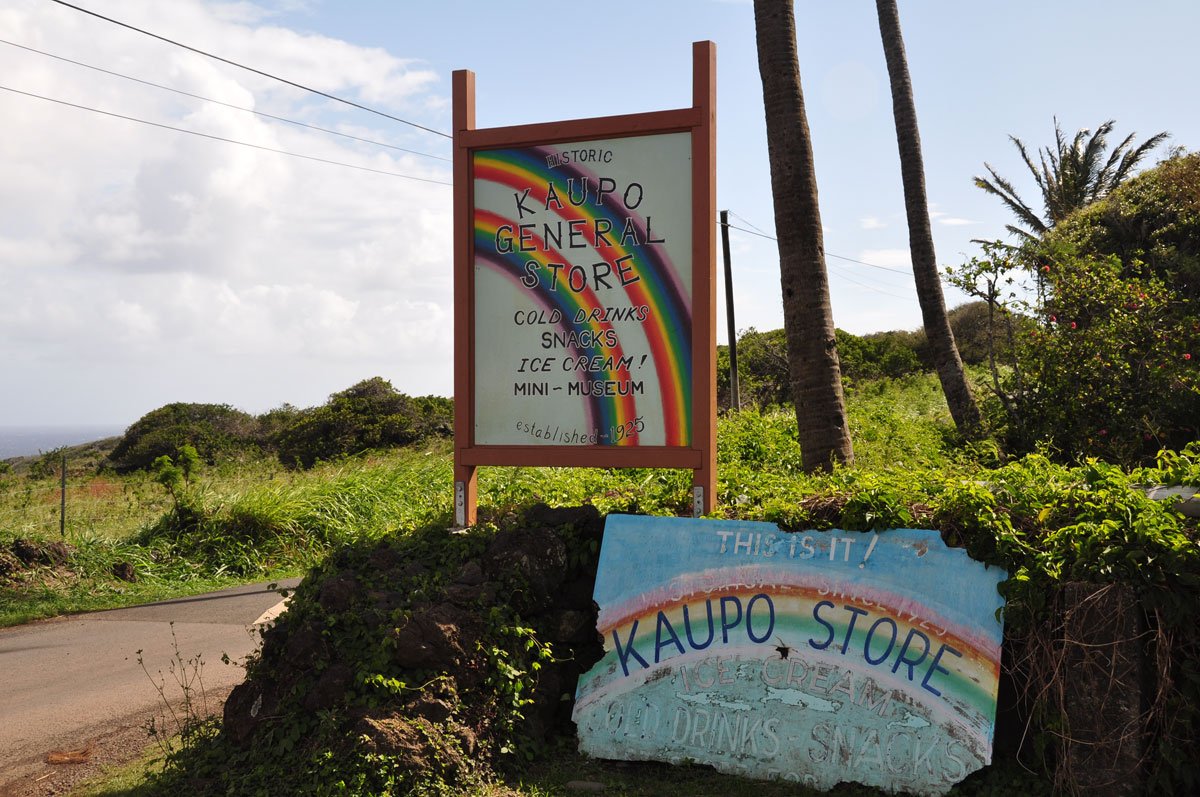 25 min from previous stop · 6.2 mi
Remote paniolo (cowboy) ranchland under the Kaupō Gap, with the historic Kaupō Store (irregular hours) and the 1859 Huialoha Church on the coast. The lonely heart of the south side.
Approach Cue (~12-15 sec)Show transcript
Now the world opens up. The rainforest falls away and you come into Kaupō—wide, dry, sun-baked ranchland sloping down from the great notch in Haleakalā called the Kaupō Gap. There's a famous old shop out here, the Kaupō Store, but do not count on it being open; its hours are legendary for being unpredictable. This is the most remote stretch of the whole drive.Arrival Narration (~45-60 sec)Show transcript
Kaupō feels like the end of the world, in the best way—open grassland, grazing cattle, lava-rock walls, the huge bulk of Haleakalā rising on your right and the empty blue ocean on your left, and almost no one around. This is real paniolo country, Hawaiian cowboy land, ranched for well over a century. Down near the water sits Huialoha Church, an 1859 stone church on a grassy point above the surf. It is a historic, sacred place, not a casual roadside prop, so if you stop, visit quietly, stay outside any closed areas, and leave every gate exactly as you found it. There are no services out here to speak of, which is exactly why it stays so quiet. Soak in the space. From Kaupō, the road gets to its most rugged stretch as it works west around the mountain. -
Connector · 31 41 min drive · 20.4 mi
The Rugged South Flank
Show transcript
This next part, from Kaupō west toward ʻUlupalakua, is the wildest and roughest of the whole drive—and the part the rental companies worry about. The road narrows to one lane in places, with blind curves, no guardrails, and the pavement giving way to patches and gravel as it crosses raw lava fields and deep gulches like Manawainui, where an oversized bridge spans a chasm cut into the mountain's south flank. The land turns dry and exposed out here: black lava, red dirt, sparse scrub, and the sea far below. Take it dead slow, tap your horn at blind corners, and be ready to pull over and let someone pass—whoever's nearer a wide spot yields. This is the price of admission for the south side, and it's worth it: country few visitors ever see. -
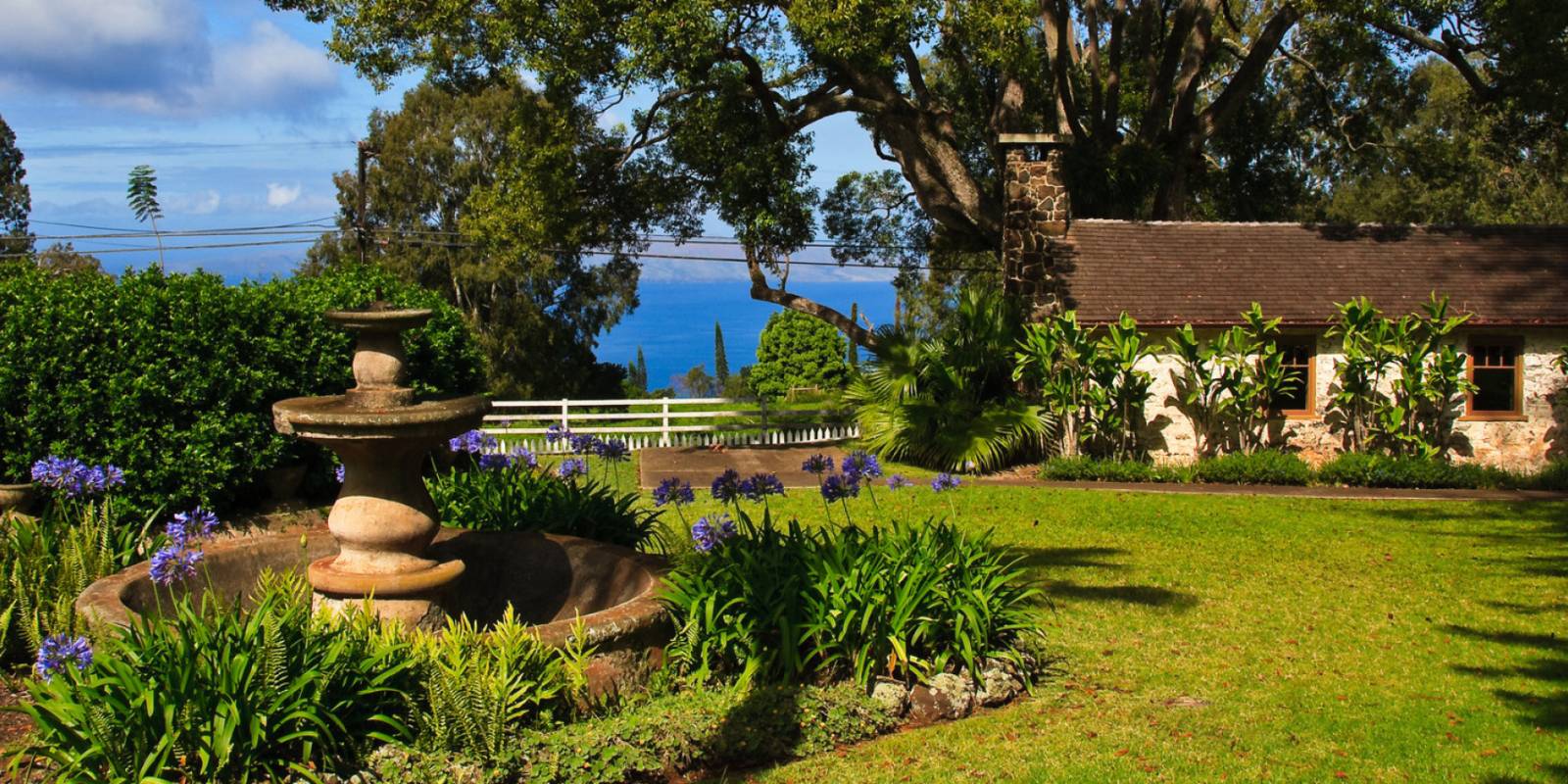 41 min from previous stop · 20.4 mi
The first real services in 40 miles — a historic working cattle ranch, the Ulupalakua Ranch Store and grill, and MauiWine's tasting room. Hours vary; check ahead.
Approach Cue (~12-15 sec)Show transcript
After the long empty stretch, you climb back into green country and reach ʻUlupalakua—and the first real services since Hāna. There's the Ulupalakua Ranch Store and grill, and MauiWine's tasting room. Hours and days vary, so it's worth checking ahead, but this is the "you made it" stop.Arrival Narration (~45-60 sec)Show transcript
ʻUlupalakua Ranch is a historic working cattle ranch sprawled across the cool upper slopes of Haleakalā, and it's home to MauiWine, set on the old Rose Ranch where Hawaiian royalty once visited. The tasting room sits in a historic cottage among enormous old trees, pouring estate wines and the pineapple wine they're known for. Across the road, the Ulupalakua Ranch Store serves burgers—including ranch-raised beef—on a porch with a long view down to the sea. After forty miles of empty road, it's a genuinely good place to stop, stretch, and let your shoulders drop. From here it's an easy run up into Kula. -
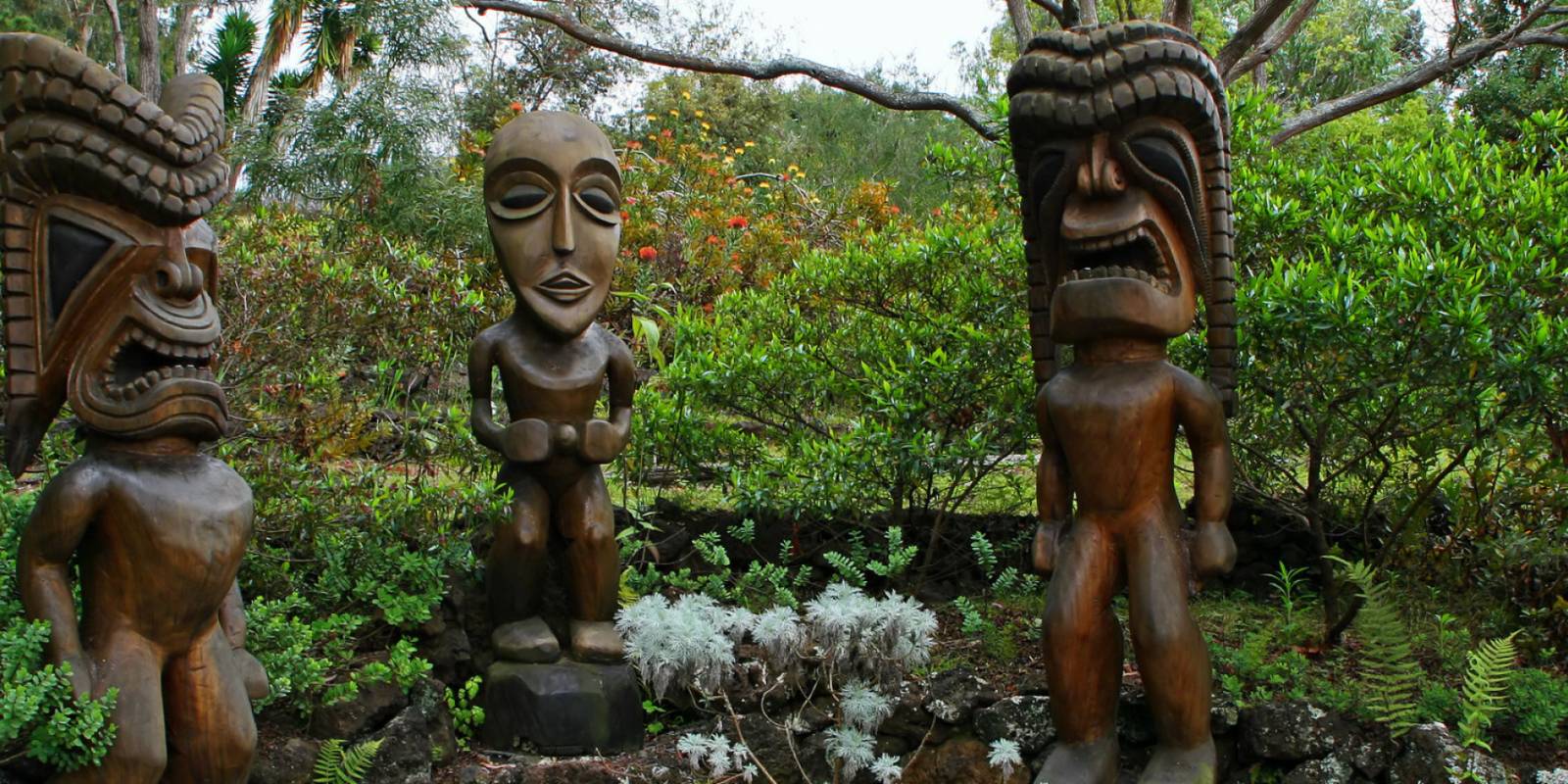 18 min from previous stop · 9 mi
Cool upcountry farm country at ~3,000 feet — the green, temperate end of the loop and the gateway back to central Maui.
Approach Cue (~12-15 sec)Show transcript
The last stretch climbs gently into Kula, Maui's upcountry. The road's good again, the air turns cool, and you're back in civilization. This is where the backside loop ends and hands you back to the rest of the island.Arrival Narration (~45-60 sec)Show transcript
Kula sits around three thousand feet on the western slope of Haleakalā, and it's the green, temperate, almost alpine opposite of where you started—rolling farms and ranches, jacaranda and eucalyptus, lavender and protea growing in the cool mountain air, and on a clear day a sweeping view across the central valley to the West Maui Mountains. After the heat and lava of the south side, it feels like a different island. You've now done the full Road to Hāna loop—the lush, waterfall-soaked frontside and the wild, remote backside—a drive most visitors never complete. From Kula you can drop down into Kahului and the central valley, or, if you've still got it in you, keep climbing to the Haleakalā summit. Either way: you earned this one. Mahalo for riding the backside with us. -
Outro
Outro
Show transcript
That's the backside of the Road to Hāna—the pools of ʻOheʻo, Lindbergh's quiet grave, the wide-open ranchland of Kaupō, the rugged south coast, and the easy green welcome of upcountry Kula. It's the half of the loop that asks the most and rewards you with country most visitors never see. If you drove it, you've now circled the whole eastern end of Maui—and you've earned a good meal and a long rest. Take the upcountry roads easy on the way down, and mahalo for riding along.
This tour is created with AI from HawaiiGuide route content and read by the computer-generated Mele and Kani voices. Hawaiian names and place names may occasionally be mispronounced — mahalo for your patience as we refine.

Need help planning?
Search & Planning Chat →

Hawaiʻi Weather Forecast
Today’s Weather Brief · Audio · ~45s
0:00
0:54
Read the transcript
Trades are breezy right now with scattered showers on the windward side and mountains; the leeward coast stays mostly dry. Tomorrow stays breezy with the same pattern.
A tropical disturbance southeast of the islands is likely to become a tropical storm by mid-week and approach the state Thursday through Saturday. The exact track is still uncertain. If it comes closer, expect heavier rain over a longer stretch; if it stays farther out, impacts will be shorter and lighter. Winds will increase late this week, with potential gusts over 70 miles per hour on the highest summits.
Plan your leeward beach time and snorkeling for today through Tuesday. Save summit drives and offshore water sports for after Saturday, and check updates daily as this develops.
Created with AI from the official NWS forecast discussion · verify with NWS before heading out
Loading forecast…
Temperature
Weather data by Open-Meteo.com
Current Time in Hawaiʻi
--:----
Hawaiʻi Standard Time · UTC−10 · No Daylight Saving
You’re on Hawaiʻi timeMainland US
International
Aloha Today daily podcast →
Full HST breakdown, FAQ & DST schedule →

Get Your Free Hawaii Visitor Guide
Enter your email and we'll send you instant access to our free 2026 Hawaii Starter Guide + Summary Guidesheets.