
The Art Scene Most Visitors Miss
Most Oahu art tours skip a simple Honolulu loop you can do on your own. The compact downtown cluster — the Honolulu Museum of Art, the free Capitol Modern, the Kakaʻako mural district, and Chinatown — sits inside a short drive of itself. Bishop Museum is the outlier in Kalihi, about 15 minutes northwest, and works best as its own half-day. None of it requires a tour bus and very little of it requires a reservation.
This page is a self-guided road map to the five places that matter: what each one is, when it usually fits, where to check current hours, and how to chain the stops together if you have one rainy day or one curious afternoon.
Who this is for
Anyone who wants a day off the sand. The art route works on rainy days, on the day you arrived too late to swim, and on the afternoon a traveler in your group is done with another beach. The Kakaʻako murals also give phone-heavy teens something worth photographing.
1. Honolulu Museum of Art (HoMA)
Honolulu Museum of Art is the flagship. It opened to the public in 1927 and sits at 900 South Beretania Street, about a 12-minute drive from Waikiki and walkable from Ala Moana. The museum's collection spans Asian, Pan-Pacific, European, and American galleries, including Japanese woodblock prints, Hawaiian landscapes, and works by artists such as Monet, Picasso, van Gogh, Georgia O'Keeffe, and Isami Doi.
The building itself is part of the experience. Open courtyards, a koi pond, and the cafe at HoMA make it a place you can spend three hours without realizing it. Check the museum website for current hours, admission, parking, and any free-admission days before you go.
Shangri La. Doris Duke's Islamic art estate near Diamond Head is the major art-side add-on to HoMA. Tours are ticketed separately and should be reserved well in advance. Duke spent decades acquiring tilework, textiles, and architectural fragments from across the Islamic world and built rooms specifically to hold them, so the house itself reads as a piece of the collection. If Islamic decorative art interests you at all, it's worth the detour.
Address: 900 South Beretania Street, Honolulu. Cafe on site. Museum School parking lot is across Beretania; check current validation details before you park.
2. Capitol Modern (formerly the Hawaiʻi State Art Museum)
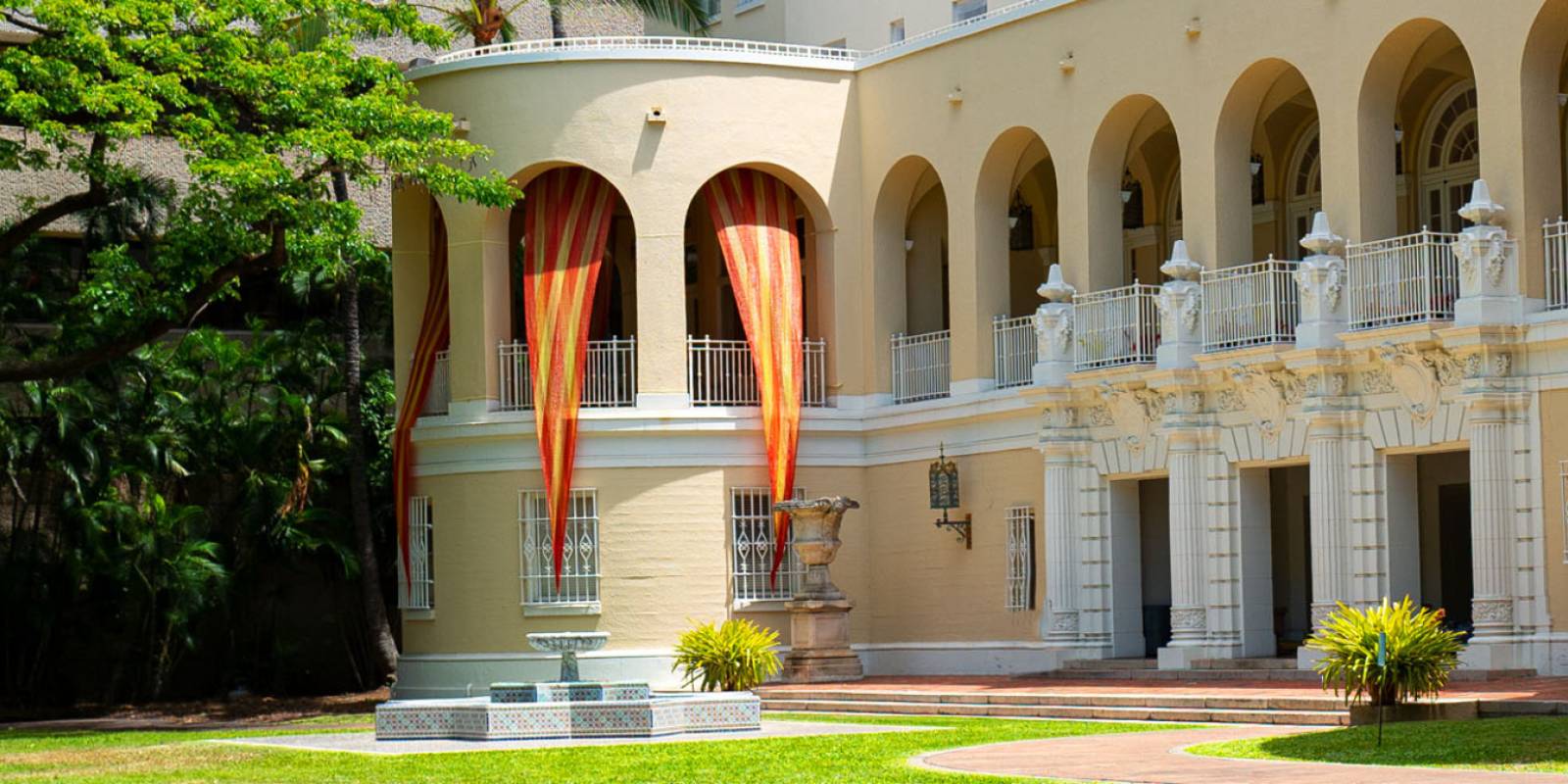
This is the free one. Capitol Modern — rebranded from the Hawaiʻi State Art Museum (HiSAM) in fall 2023 per the museum's about page — sits at 250 South Hotel Street in a 1928 Spanish Mission Revival building two blocks from ʻIolani Palace. Admission is always free. The galleries show work by Hawaiʻi-based artists curated by the State Foundation on Culture and the Arts through its Art in Public Places program, and the lineup rotates often enough that locals come back.
Capitol Modern's visit page lists current hours and free admission. The building shares a block with restaurants and is a five-minute walk from Chinatown, which is the reason it pairs so well with First Friday. Confirm current hours and what's hanging before you build a day around it.
Address: 250 South Hotel Street, Honolulu. Free admission. No onsite parking; use metered street parking or nearby downtown lots.
3. Bishop Museum
Strictly speaking, Bishop Museum is a natural-history and cultural museum, not an art museum. But Hawaiian Hall holds a deep collection of Hawaiian artifacts, and the basalt museum buildings are worth the visit on their own. If you have any interest in the visual culture of Hawaiʻi (quilts, kapa cloth, ʻahuʻula feather cloaks, koa-wood objects, traditional weaponry), this is the richest stop on the island for that material.
The museum is at 1525 Bernice Street in Kalihi, about a 15-minute drive northwest of downtown. Bishop's visitor page is the source to check for current hours, closure dates, tickets, parking, and any temporary exhibit notes before you go.
Plan on three hours minimum. Full-dome shows in the planetarium range from short overview programs to longer feature titles like Wayfinders; check the current planetarium schedule for run times and start times on the day of your visit. Hawaiian Hall deserves at least an hour with the audio guide.
Address: 1525 Bernice Street, Honolulu. Parking on site. Give it at least two to three hours.
4. The Kakaʻako Mural District
Between the Honolulu Museum of Art and downtown sits Kakaʻako, a former industrial district now covered in large-scale public murals. The neighborhood's mural identity grew out of the POW! WOW! Hawaiʻi / Worldwide Walls era, and the walls keep changing as older pieces are repainted and new local work appears along Pohukaina, Cooke, Auahi, Coral, and Ala Moana Boulevard. Treat it as a living outdoor gallery rather than a fixed museum collection.
The walk is free and self-guided. Park near the SALT at Our Kakaʻako development and wander the blocks around Auahi Street, Coral Street, Kawaiahaʻo Street, and Cooke Street. Plan an hour to do it slowly with photos. Less if you're scanning. The murals look best with side light, so go before 10am or after 3pm to avoid the harshest overhead sun. In my own walks through Kakaʻako, the mid-day pavement runs warmer than Waikiki — the neighborhood is mostly warehouses and low-rises with limited tree cover, so bring water and a hat.
A handful of operators run guided mural walks on weekends, useful if you want context on which artist did which piece and the story behind the festival. Search for "Kakaʻako art walk" or "Honolulu street art tour" when comparing current guided options. Walk-up self-touring is fine for most travelers. Book a guided tour if you're a working artist or just want the deeper read.
Start near SALT at Our Kakaʻako. Free, all hours, self-guided. Walk around Auahi/Cooke/Coral/Kawaiahaʻo.
5. First Friday in Chinatown
When First Friday is active, the galleries, boutiques, bars, and restaurants of Honolulu's Chinatown turn Hotel Street and Nuʻuanu Avenue into something between a gallery night and a block party. Check current local listings before you build an evening around it; our Hawaii Friday night art walks guide compares Honolulu with Hanapēpē, Wailuku, and Hilo if you are island-hopping.
It's free, there is no central ticket or registration, and the early part of the evening is better for actual gallery browsing. The bar-and-music crowd builds later. If your goal is art rather than nightlife, arrive close to the start, browse first, then eat in Chinatown before the sidewalks get busier.
Where: Chinatown / downtown Honolulu, centered on Hotel Street and Nuʻuanu Avenue. Check current listings before you go.
How to Combine the Stops
The four downtown stops (HoMA, Capitol Modern, Kakaʻako, and Chinatown) sit inside a triangle you can drive in about 15 minutes or walk in about 45. Bishop Museum sits 15 minutes northwest in Kalihi and is best as its own half-day. Here are the sequences that actually work:
HoMA in the morning (3 hrs), lunch at the museum cafe, then Capitol Modern (45 min). Both are indoors and a 5-minute drive apart.
Kakaʻako murals in the late afternoon, then Chinatown for First Friday. The light on the murals is better late, and the galleries are calmer early.
Bishop Museum 9am to noon, lunch in Kalihi or downtown, HoMA 1 to 4pm. Two major collections in one day is a workout but doable.
Skip the museums and do Kakaʻako (90 min, kid-friendly photo walk) plus an early dinner in Chinatown.
Getting Around
Everything except Bishop Museum is within walking distance once you're parked downtown. For the loop that includes Bishop, or for staying anywhere outside Waikiki, a car makes the day easier. We use Discount Hawaii Car Rental because the no-prepayment, free-cancellation model works well for one-day Oahu rentals.
Parking notes: HoMA uses the Museum School lot across Beretania Street, and you can get parking validated at the museum's front desk (see the museum's directions & parking page). Capitol Modern has metered street parking and the No. 1 Capitol District parking garage adjacent to the building. For Kakaʻako, the Our Kakaʻako parking page publishes current garage details, surrounding surface lots are usually cheaper, and street-parking rules vary by block. Bishop Museum has its own paid lot on site. For Chinatown on First Friday, use a downtown public lot and arrive before the evening crowd builds.
What to Bring
- A sketchbook. Most museums allow pencil sketching in the galleries with restrictions (no pens, no easels), but rules vary by exhibition. Check each museum's visitor policy before you bring one out. A small hardcover sketchbook in your bag can turn a 90-minute visit into a 3-hour one.
- Water and snacks for the Kakaʻako mural walk. You're outside on pavement with limited shade.
- Mineral sunscreen for the mural walk. Kakaʻako has less tree cover than Waikiki and the pavement soaks up sun.
- A Hawaiian art reference. A solid book on Hawaiian visual tradition makes the Bishop Museum and HoMA stops resonate more.
- Phone with a good camera. The murals are made for it. Photo policies inside the museums vary by gallery and exhibition, so check the signage or ask staff before shooting.
If You Want a Guide Instead of Going Solo
Most of the day works fine self-guided. A guide is worth it for two specific cases: artist-by-artist context on the Kakaʻako mural festival (the festival arc from 2011 to 2019, which pieces were repainted and why), or a Honolulu cultural-history tour that ties HoMA, the palace, and Chinatown together with the story of how Honolulu became Honolulu. Filter for "art," "mural," or "cultural" when comparing current guided options.
Other Cultural & Historic Stops Worth Adding
If the art day expands into a culture day, the natural additions cluster tightly around the state capitol block. Two blocks from Capitol Modern sits ʻIolani Palace, which its official site describes as the only official royal residence in the United States. Directly across King Street from the palace is the King Kamehameha statue. The Hawaiʻi State Capitol building itself sits one block mauka (inland) from the palace. From there, the historic downtown walking route runs makai (toward the ocean) down Punchbowl Street to the Aloha Tower at the harbor, then loops back through Chinatown past the Marin Tower on the way to Capitol Modern.
Related reading: Honolulu Museum of Art guide · Capitol Modern (HiSAM) · Bishop Museum · Chinatown · Hawaii Friday night art walks · ʻIolani Palace · All Oahu museum tours · Oahu spa day planning · All Oahu guided tours