


Choose the Water Before You Rent the Board
I do not treat Oahu paddleboarding as a permanent ranking. The right spot is the water that fits your ability and the conditions that morning. A beach that looks easy in a summer photo can become the wrong launch when swell or trade winds arrive.
Start by checking the water, not the map. Ala Moana Beach and Magic Island Lagoon are lifeguarded south-shore beaches, but a lifeguard listing does not make any launch automatically calm. Kailua can turn the return into a headwind workout. Sunset Beach and other exposed North Shore launches are conditions-only choices.
Fast Pick by Conditions and Traveler
Pick by Conditions First
I would choose Wai Kai's inland lagoon. It takes ocean variables out of a first session.
Check Waikīkī or Ala Moana after reviewing the daily forecast and speaking with a lifeguard.
Kailua can work when the wind and return route are manageable. Get that call from a local outfitter before launching.
Speak with a lifeguard before launching. If surf or wind is building, move the session south or into the lagoon.
Pick by Traveler
Use Wai Kai's controlled lagoon or book a Waikīkī lesson. Keep the first session focused on balance and steering.
Check Ala Moana or Magic Island with the lifeguard. A reef line or lagoon shape is not a promise of calm water.
Consider Kailua only after a local outfitter confirms that day's route and return plan.
Wait for a genuinely small-surf window and speak with a lifeguard. High winter surf means a different plan.
Oahu Paddleboarding Spots
Wai Kai Lagoon: Controlled Practice Water
Wai Kai describes its 52-acre lagoon as inland water protected from the ocean, with stand-up paddleboards and other watercraft available on site. I would start here when the goal is learning the board rather than reading an ocean launch.
The tradeoff is simple: this is a paid facility in ʻEwa Beach, not an ocean launch. Read the current Wai Kai FAQ before booking. Wai Kai says PFDs are supplied and required, and its participant rules vary by age and equipment.
Waikīkī: Lesson Access Near Your Stay
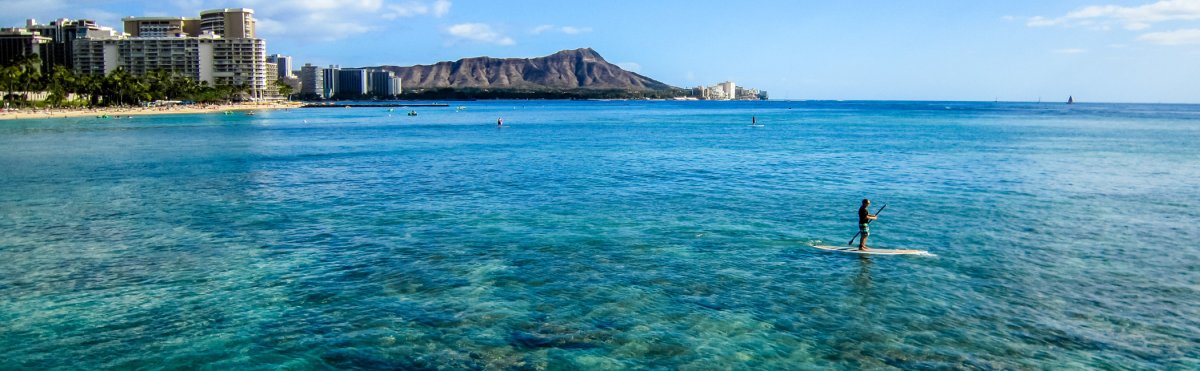
If you are staying near Waikīkī Beach, I would look for a lesson there before hauling a board across the island. Several Waikīkī sections appear on Hawaiʻi Ocean Safety's current lifeguarded-beach list.
I would not treat Waikīkī as a place to figure out board control alone. A lesson gives you a better first frame for steering, falling safely, and staying out of surf lanes.
Ala Moana and Magic Island: City-Side Practice
For an independent paddler staying near Honolulu, Ala Moana Beach Park and Magic Island Lagoon are places I would assess after checking the ocean. Both appear on Hawaiʻi Ocean Safety's current lifeguarded-beach list. Ask the tower where to enter and whether the day's wind or current changes the plan.
Do not assume “south shore” means flat. The state's surf-season guidance says larger south swells can arrive during summer, while winter is often flat to small on this side of the island. I let the daily forecast make the final call.
Kailua Bay: Better With Local Route Advice
Kailua may look inviting from shore, but Windward Oʻahu is exposed to trade winds. Hawaiʻi Ocean Safety says strong trades can create large, rough waves on east shores. Rent from a local outfitter only after the staff confirms the launch and return plan for that day.
If your real goal is reaching Popoiʻa or Mokulua Nui, use our Oahu kayaking route guide. The islets are restricted wildlife sanctuaries. Check the applicable rules before planning a landing, and build a separate plan for the distance and return crossing.
Sunset Beach and the North Shore: Conditions Only
North Shore SUP gets a green light only after you have checked small surf and spoken with a lifeguard. Hawaiʻi Ocean Safety says North Shore surf is generally flat to small in summer, though trade-wind exposure can still produce larger waves. In winter, north-facing beaches can carry huge, dangerous surf.
I would not send a beginner to Sunset Beach because a calm photo appears online. Sunset Beach is on the current lifeguarded-beach list and hazard ratings, but listed status is not a SUP recommendation. If conditions are building, move the session south or into the lagoon.
Lesson, Rental, or Your Own Board?
Start with the ocean-swimmer rule above. From there, choose the format that matches your skills and the day's water. For Wai Kai's lagoon, ask staff whether its current supervised programs and participant rules fit your group.
Book a lesson for your first ocean session or when you do not understand how wind changes the return. I would rather see a first-timer spend time with an instructor than wrestle with a changing launch alone.
Rent independently only if you can remount the board, steer it back to shore, and understand the outfitter's route briefing.
Bring your own board only if you know the launch and can transport it securely.
Booking Checklist
- Confirm the exact launch before you pay.
- Confirm whether the booking is a lesson, a tour, or an independent rental.
- Ask about the supplied PFD and leash.
- Check transport and cancellation terms.
- Check conditions again on launch day. Hawaiʻi Ocean Safety recommends using equipment from a licensed vendor and returning to shore at the first sign of bad weather.
The listings widget below, if it loads, is only a starting point for comparison. Verify the current launch location and booking format with the operator before paying. “Oahu paddleboarding” is not specific enough unless the product names the launch and tells you what is included.
When to Pick Something Else
Skip ocean SUP if the ocean-swimmer safety gate above is not met. Skip it when wind is already building or the hazard rating is high. If the group wants sightseeing without balancing on a board, choose another activity.
For a crew-led water activity, see our Waikīkī outrigger canoe ride options. For a dry alternative, see submarine tours.
Related reading: Live Ocean Report · Oahu kayaking tours · Oahu surf lessons · Hawaii paddleboarding tours by island · Things to do on Oahu