
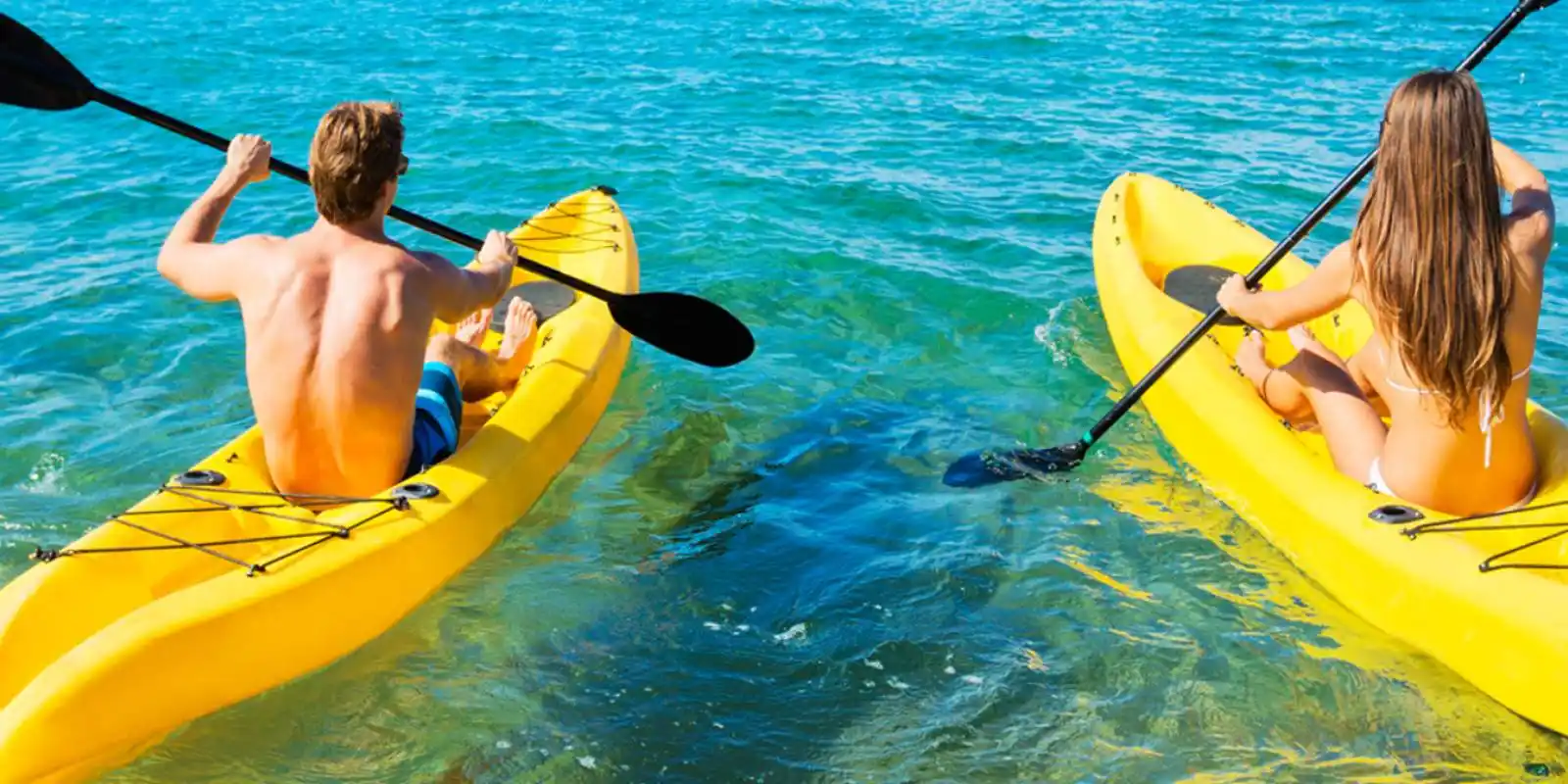


Choose the Route Before You Choose the Operator
This page compares Kailua Bay’s two islet targets: Popoiʻa and Mokulua Nui. Kailua Bay fits travelers who want to paddle under their own power toward an offshore islet. Popoiʻa sits closer to Kailua Beach, while Mokulua Nui is the longer open-water commitment.
Pay for a guide when your group has limited ocean-paddling experience, wants launch help, or needs the operator to manage its commercial-landing arrangements. If the sandbar is your priority instead, use our Kāneʻohe Bay sandbar guide; Kāneʻohe Bay is a separate day from a Kailua-to-islet paddle.
Fast pick
Do not treat the Mokulua route as a casual upgrade. Choose it only if everyone is ready for a longer open-water paddle and the operator confirms that conditions and landing access work that day. Ask about Popoiʻa if you want a shorter route, then match the operator’s current format and skill rules to your group.
1. Popoiʻa: The Shorter Route
Popoiʻa, often called Flat Island, sits offshore from Kailua Beach Park. It can fit groups looking for a shorter islet target, families whose children meet an operator’s current rules, and travelers who want kayaking plus an unhurried Kailua beach day.
Read the live product description rather than assuming every short route has the same format. Kailua Beach Adventures’ current guided-tour page lists a 2.5-hour beginner-friendly excursion alongside its five-hour Twin Islands route. Confirm the selected tour’s destination, duration, age rules, and landing plan before you pay.
- Consider Popoiʻa when an operator offers a route whose skill and age rules fit your group.
- Before payment, confirm the destination and landing plan. Then ask about child minimums, shuttle timing, and the route-change policy if wind builds.
2. Mokulua Nui: The Longer Adventure Route
The Mokulua Islands are the twin islets in the view from Lanikai Beach. The larger northern islet, Mokulua Nui, is the commercial-tour landing target when a permitted operator, wildlife protections, and ocean conditions allow it. This route asks more of the paddler and leaves less room for a casual late start.
Kailua Beach Adventures currently lists its guided Mokulua route as a five-hour outing and labels it its most active tour. The duration and open-water effort matter more than the tour name. If anyone in the group is unsure about the effort, ask about Popoiʻa or keep the day on Kailua Beach.
- Choose this route for a longer active outing and the open-water Mokulua crossing.
- Get the exact route, landing status, age rules, return conditions, and cancellation policy before you book.
Guided Tour or Self-Guided Rental?
A guided trip makes sense if you are new to ocean kayaking, want the longer Mokulua route, need launch help, or want the operator to manage its commercial-landing arrangements.
Choose a self-guided rental only if you can read wind and water, follow the rental briefing, confirm that your planned landing is allowed, and turn back early.
Landing Rules Are Part of the Booking
DLNR manages Popoiʻa and the Mokulua Islets as wildlife sanctuaries. Its rules limit public access to areas below the high-water mark, close the islets from sunset to sunrise, and prohibit dogs, fires, camping, tents, tarps, and other structures.
DLNR's permit and wildlife-sanctuary guidance says landing a commercial vessel at Popoiʻa or Mokunui, the larger northern islet, requires a Commercial Vessel Landing Permit. Commercial activity may be permitted on that larger northern islet, not the smaller southern islet. This is why “can we land?” belongs on the checkout checklist. A tour or rental reservation is not permission to ignore posted closures or wildlife buffers.
Kailua Beach Adventures states on its current guided-tour page that landing permits are available Monday through Saturday and that landing is not permitted on Sunday. Do not assume a Sunday outing includes the same landing plan; read the selected product and ask the operator before payment.
Conditions Decide Whether the Route Works
Hawaiʻi Ocean Safety notes that wind often increases in the afternoon and can make the paddle back harder. Its ocean-safety guidance also recommends checking current conditions with a lifeguard, using equipment from a licensed vendor, and returning at the first sign of bad weather.
Before a self-guided trip, check the National Weather Service forecast for Oʻahu Windward Waters, PHZ114. A forecast page does not replace the outfitter briefing or what you see at the beach. If the return leg looks questionable, shorten the route or stay on shore.
If Conditions Are Rough
If trades are strong, the surf forecast looks rough, or your group is nervous in open water, do not force the crossing because it is prepaid. Swap in a Waikiki outrigger canoe ride, an Oahu snorkel tour, or a beach day instead.
Booking Order
Start with the live Viator inventory below when you want public pricing, reviews, and multiple dates in one place. Then compare the route against the operator's own description. A generic “kayak tour” result is not enough; the product should name the launch area, target, duration, age rules, and landing plan.
For the longer outing, compare Kailua Beach Adventures' Twin Islands booking inventory on FareHarbor. Recheck the live terms, route details, and landing conditions rather than relying on a saved price or old screenshot.
Getting There
Confirm the meeting point before routing to the beach. A Kailua shop check-in, equipment transfer, parking instructions, and the actual launch can be separate steps. If you do not want a car, filter for a Waikiki shuttle and check its return time before booking.
If a rental car is already part of your Oʻahu plan, it makes it easier to add Kailua town, Lanikai, or a Windward Coast stop after the paddle. We use Discount Hawaii Car Rental to compare Oahu rates.
When to Skip the Tour
Skip it when someone cannot comfortably paddle for the advertised distance, the group expects a passive sightseeing ride, or the only available route is more exposed than the weakest paddler wants. A submarine tour or sunset cruise keeps the ocean scenery without asking the group to power the trip.
Related reading: Kailua Beach Park · Lanikai Beach · Things to do in Kailua · Kāneʻohe Bay sandbar guide · Oahu outrigger canoe tours