

Choose the Wildlife Experience First
Big Island marine-life tours are not one product. A Kona manta ray night snorkel, a daytime Kealakekua Bay snorkel boat, a winter whale watch, and a respectful dolphin-viewing cruise solve different planning problems. Pick the experience first, then compare operators, departure harbors, and swim requirements.
The Big Island's ocean trips also split by time of day. Manta rays are an after-dark Kona activity. Snorkel boats usually work best in the morning. Humpback whale tours are seasonal, and dolphin encounters should be view-only unless wildlife approaches naturally under current federal rules.
Start with the right coast
In our experience, the bookable marine-life fleet stages from the west side — Kailua-Kona, Keauhou, Honokohau Harbor, and Kawaihae. If you are staying in Hilo or Volcano, plan on a long drive for morning check-ins, or restage your lodging for tour days.
1. Kona Manta Ray Night Snorkel
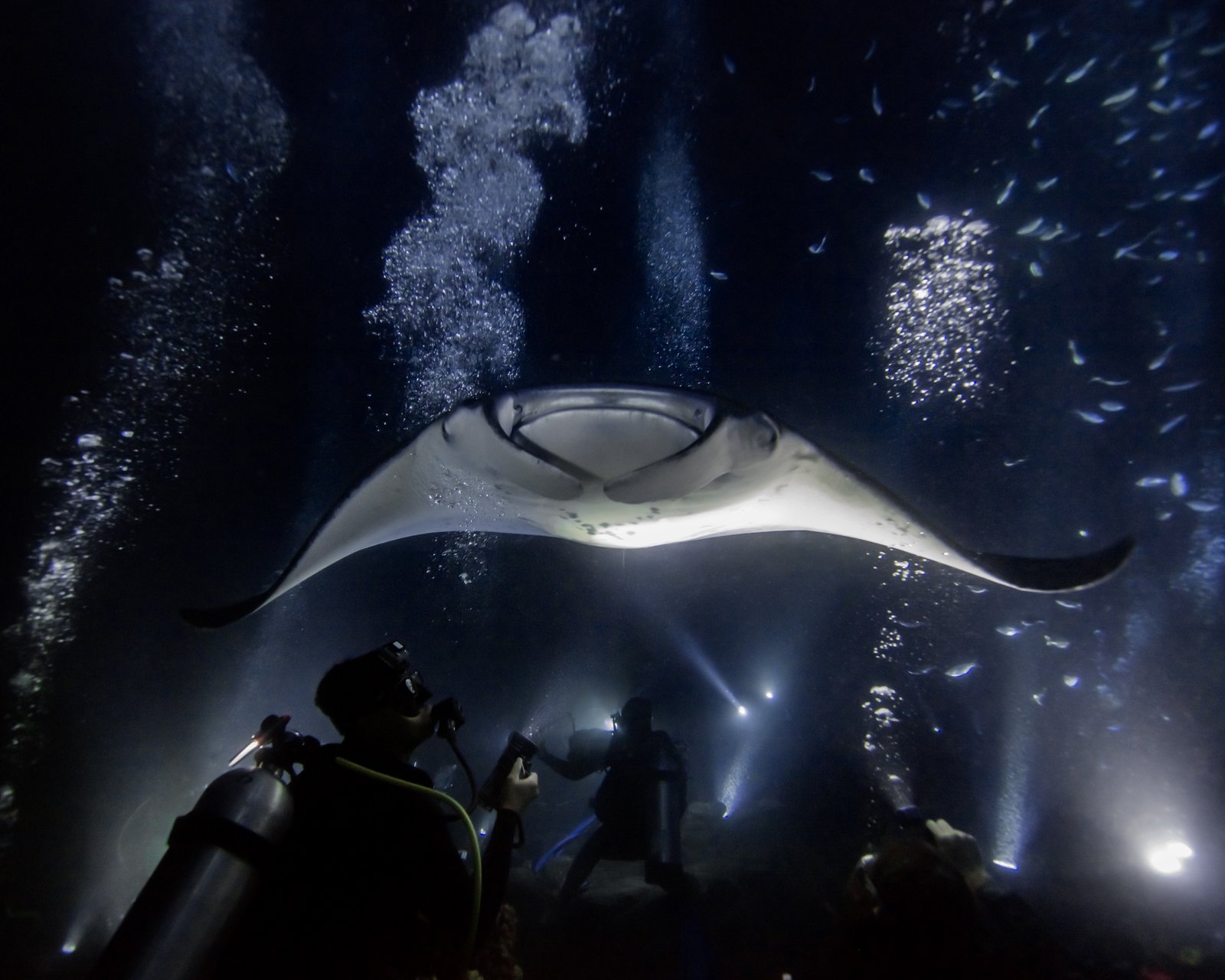
The Kona manta ray night snorkel is the Big Island's signature marine-life tour. Boats run after sunset from west-side harbors, set bright lights in the water to concentrate plankton, and guests float at the surface while reef mantas feed below. It is memorable, but it is still an open-ocean night swim.
- Best for: confident swimmers, older kids who are calm in dark water, and visitors who want a Big Island-only experience.
- Think twice if: anyone in the group panics with a mask, gets cold quickly, or needs an easy ladder exit.
- Plan it early: book early in the trip so rough-water cancellations still leave room to rebook.
2. Kealakekua and Kona Snorkel Boats
For daytime reef life, start with Captain Cook snorkeling tours and the broader Big Island snorkeling tours guide. Kealakekua Bay is a Marine Life Conservation District, and per Hawaii DLNR, Kaʻawaloa (the historic monument side) is reached by boat, permitted kayak tour, or a steep foot trail. For most visitors, a staffed snorkel boat is the cleanest way to handle access, gear, and water safety.
Large catamarans are better for shade, bathrooms, and mixed swimming ability. Smaller rafts feel more adventurous but are bumpier and less forgiving for motion-sensitive travelers. Morning departures usually give you the calmer water window.
3. Winter Whale Watching
Big Island whale watching is a winter decision, not a year-round marine-life booking. Compare the dedicated Big Island whale watching tours page if your trip falls in the humpback season window. The practical choice is usually harbor, boat size, morning sea state, and whether you want a naturalist-focused trip with hydrophone listening.
NOAA's Hawaii marine wildlife viewing guidelines prohibit approaching humpback whales within 100 yards by boat, kayak, drone, swimming, or other means. Good captains manage distance and let whales choose whether to come closer.
4. Dolphin and Turtle Viewing
Use clean expectations here. Hawaiian spinner dolphins rest in nearshore waters during the day, and NOAA's spinner dolphin rule prohibits swimming with, approaching, or remaining within 50 yards of them in designated Hawaii waters. A responsible tour may see dolphins from the boat; it should not sell forced contact.
Sea turtles are common around Kona and South Kohala reefs, but they are protected wildlife, not a photo prop. The right tour language is observation, distance, and reef etiquette. If an operator promises touching, feeding, riding, or guaranteed close interaction, move on.
Which Big Island Marine-Life Tour Fits?
Choose the manta ray night snorkel.
Choose Kealakekua / Captain Cook.
Choose whale watching.
Choose a view-from-boat cruise or sunset sail.
Getting to the Harbor
West-side harbors are spread across a long coastline, and most tours want you checked in 45 to 60 minutes before departure. If your lodging is not already on the Kona or Kohala side, a rental car is the practical way to make the window. We compare Big Island rentals through Discount Hawaii Car Rental.
Rules and Sources to Check Before Booking
- Spinner dolphins: NOAA's spinner dolphin rule is the baseline for any dolphin-focused trip.
- Humpbacks and general wildlife: NOAA's Hawaii marine wildlife viewing guidelines cover whale distance and respectful viewing.
- Kealakekua Bay: DLNR's Kealakekua Bay Marine Life Conservation District page explains why access and reef etiquette matter.
Related planning: Big Island boat and sailing tours · manta ray night snorkel · Big Island snorkeling tours · Big Island whale watching tours · things to do in Kona