

The first time many visitors walk into a Hawaii grocery store, they take a photo of a price tag. The viral price-tag photos are real, and the sticker shock has a real cause: Hawaii imports as much as 90 percent of its food, and that ocean voyage shows up in every aisle. The U.S. Bureau of Labor Statistics’ Honolulu Consumer Price Index has put local food prices well above the U.S. city average for years. The good news is that visitors who plan a few meals through their condo or vacation rental kitchen can put a real dent in the food budget. Eating breakfast and one or two casual lunches “at home” is the single biggest food-budget lever a visitor has. The trick is knowing which store to go to for what, because Hawaii’s grocery scene is not a copy of the mainland’s. Some chains are unique to the islands, and the produce that’s actually local is wildly better than what’s been in transit for two weeks. Here’s how the chains stack up, and how to use each one.
Why a Kitchen Pays for Itself
A condo or vacation rental with even a basic kitchenette unlocks every grocery-store strategy below. Without one, you're eating out three meals a day.
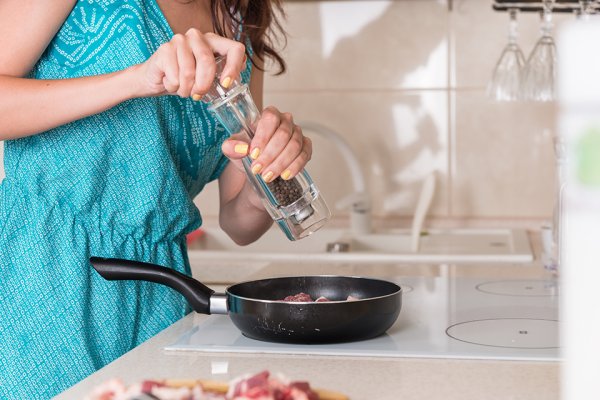
Almost every grocery strategy on this page assumes you have access to a kitchen, a coffee maker, and a refrigerator. That means a condo, a vacation rental, an Airbnb, or a hotel “studio” with a kitchenette, not a standard hotel room. If you’re staying in a standard hotel and eating every meal at a restaurant, the math is different and you’ll be looking at restaurant guides rather than grocery aisles. Even a partial kitchen helps. A coffee maker plus a fridge plus a microwave covers breakfast and reheating leftovers, which is enough to dent a food budget. A real stovetop unlocks pasta, rice, fresh fish from the seafood counter, and the cheap-but-good frozen pizzas every island grocery store carries. One realistic anchor: the trip cost calculator on this site uses around $90 per person per day for moderate dining and around $40 per person per day for budget dining. The difference is largely explained by who is doing breakfast and lunch: you, or a restaurant.
Foodland (and Foodland Farms)
Foodland is the largest locally-owned grocery chain in Hawaii. It was founded in 1948 by Maurice “Sully” Sullivan and is still based in Honolulu. Stores are on every main island and the layout will feel familiar to mainland visitors: full produce, meat, deli, hot bar, and a poke counter that is usually one of the best in the building. Foodland’s poke is a legit reason to walk in. The single most useful thing a visitor can do at Foodland is sign up for the Maika’i Rewards card at the register. It’s free, takes a minute, and unlocks the lower advertised “Maika’i price” on tagged items throughout the store. The savings on those tagged items can be meaningful, especially on weekly specials. Maika’i means “good” in Hawaiian. Without the card, you’re paying full sticker on items where everybody around you is paying less. Foodland Farms is the upscale Foodland brand, with bigger produce sections, expanded prepared foods, and more imported and specialty items. Locations and store types are listed on Foodland’s site; useful Foodland Farms locations for visitors include Ala Moana on Oahu, Lahaina Gateway on Maui (post-2023 fire-recovery layout), and Pukalani on the way up to Haleakalā. Sack ‘n Save is Foodland’s value sister chain, with fewer locations and lower-margin staples.
Times Supermarket
Times Supermarket is the other big chain with deep local roots, founded in Hawaii in 1949. It was acquired in 2017 by Don Quijote Holdings, now Japan-based Pan Pacific International Holdings, so it’s no longer locally-owned, but it still operates as the everyday grocery anchor for many island neighborhoods. Times runs Times-branded stores plus the Big Save chain on Kauai. Layouts are slightly more spartan than Foodland, prices on staples are often a hair lower, and the prepared-food and deli sections are strong. The deli sushi at Times is a genuine bargain compared to mainland-state grocery sushi. Times has its own loyalty program, Shaka Rewards; sign up at the register if you’ll be in Hawaii more than a couple of days. Times has stores across Oahu, Maui, and Kauai. On Kauai specifically, look for Big Save: same parent, slightly different branding, and on Kauai it’s often the closest full-service grocery to where you’re actually staying.
Don Quijote (Oahu's Secret Weapon)
Don Quijote is a Japanese discount chain, and Hawaii is the only U.S. state where you’ll find one. There are three locations on Oahu (Kaheka in Honolulu, Pearl City, and Waipahu); none on the neighbor islands. The Kaheka store currently runs 6 a.m. to midnight daily according to the official store-hours page; if you remember the old “24-hour Don Quijote” reputation, that’s no longer the schedule, so check before driving over late. Why visitors should know about Don Quijote: it’s a hybrid of grocery store, drugstore, electronics store, and Japanese variety shop. Prices on dry goods are often the lowest on the island. The Japanese-import aisle (snacks, instant ramen, sauces, sake, Japanese cosmetics) is enormous and is the best souvenir-shopping value on Oahu, better than Waikiki’s tourist-priced “Hawaii gift” shops for anything edible. The poke counter is solid, the prepared bento is cheap and good, and the produce is sometimes shockingly affordable. The store is busy and chaotic. That’s the point. If you’re staying in Waikiki without a car, Don Quijote Kaheka is a short rideshare from much of Waikiki (typically under 15 minutes depending on traffic), and easily worth the trip for the first big provisioning run of the week.
Costco — Worth a Detour
Hawaii has Costco warehouses on every main island: Iwilei (downtown Honolulu), Hawaii Kai, Kapolei, and Waipio on Oahu; Kahului on Maui; Kailua-Kona on the Big Island; and Lihue on Kauai. Costco’s warehouse locator will give you the current addresses. Your Costco membership from anywhere in the world works at Hawaii Costcos: the same card you use in Phoenix or Toronto scans fine in Honolulu. The reason this matters: Costco’s gas in Hawaii is consistently among the cheapest in the state, often well below the surrounding stations. If you’re renting a car for a week and have a Costco card, the gas savings alone can pay back the trip out to the warehouse. The other big visitor wins are bulk produce, the famous rotisserie chicken, and case-pack water if you’re at a beachy condo. Two practical caveats. First, the Honolulu Iwilei Costco is famously busy on weekends; go early on a weekday if you can. Second, Costco now requires a membership card at the food court too, so the old “walk-in hot dog” trick doesn’t work anymore. The food court itself is still a famous bargain for a quick lunch on a provisioning day.
Walmart, Target, and Safeway
The mainland staples are all here, with islands-of-the-state caveats. Walmart has stores on Oahu (the Honolulu store on Keeaumoku is closest to Waikiki), Maui (Kahului), Big Island (Hilo and Kailua-Kona), and Kauai (Lihue). Hawaii Walmarts are smaller and busier than the mainland giants, but the staple-grocery prices are usually competitive and the visitor-relevant beach gear (boogie boards, snorkel sets, reef-safe sunscreen, dry bags) is much cheaper than buying it in Waikiki. Target has locations on all four main islands; the Kailua, Kapolei, and Salt Lake stores on Oahu, plus Kahului on Maui, Hilo and Kailua-Kona on Big Island, and Lihue on Kauai. Target’s grocery selection is smaller than Walmart’s, but the household-staples and toiletries side of the store is often the cheapest option for items like trash bags, sunscreen, and travel-size everything. Safeway (now Albertsons-owned) has stores on Oahu, Maui, Kauai, and the Big Island, but the Big Island has only two Safeway locations (Hilo and Kona); Foodland and KTA dominate the grocery scene there. Safeway’s “Just for U” digital coupons are the equivalent of Foodland’s Maika’i card. Sign up free in the app, then load offers before you check out. The savings are real.
KTA Super Stores (Big Island Local Hero)
KTA Super Stores is a Big Island institution. Founded in 1916 in Hilo by Koichi Taniguchi, it’s family-owned, locally rooted, and stocks an exceptional range of Big Island products you won’t see at chain stores: Mountain View dairy, local honey, Hāmākua mushrooms, regional Hawaiian-language signage, and a deli that punches above its weight. Locations include Hilo, Waimea, Waikoloa, and Kailua-Kona. If you’re staying anywhere on the Big Island, KTA is the right grocery anchor. Foodland and Safeway are both fine, but KTA is the local-products one.
Whole Foods, Down to Earth, and the Specialty Tier
Whole Foods has stores on Oahu (Kahala, Kailua, and Ward Village in Kakaako) and one on Maui (Kahului). Prices are roughly what you’d expect for Whole Foods anywhere: premium. The prepared-foods bar is excellent, and the produce is reliably good when local farmers’ markets aren’t open. The Kakaako store has a beer/wine bar and is a low-key alternative to a sit-down dinner if you’ve been hiking all day. Down to Earth is a Hawaii-based natural-foods chain with Oahu and Maui locations. It’s vegetarian and plant-forward, with a good bulk-foods section. Locals lean on it for organic produce that hasn’t been on a boat for two weeks.
Farmers Markets and Roadside Stands
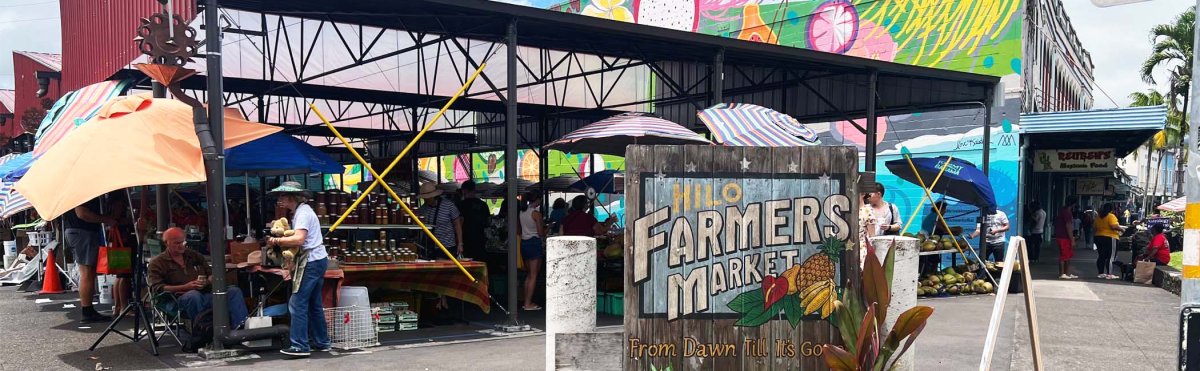
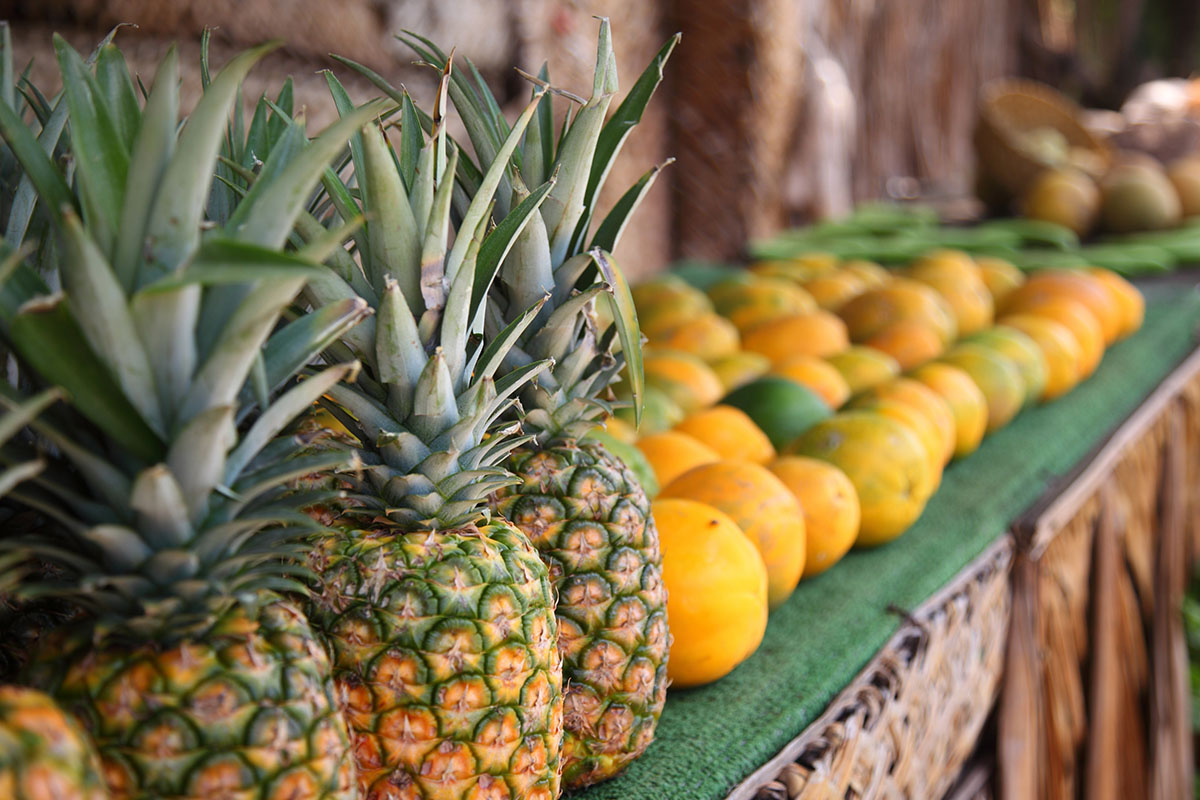
Roadside fruit stands and farmers' markets are where the produce is genuinely local — and usually cheaper than the chain grocery stores' shipped-in equivalents.
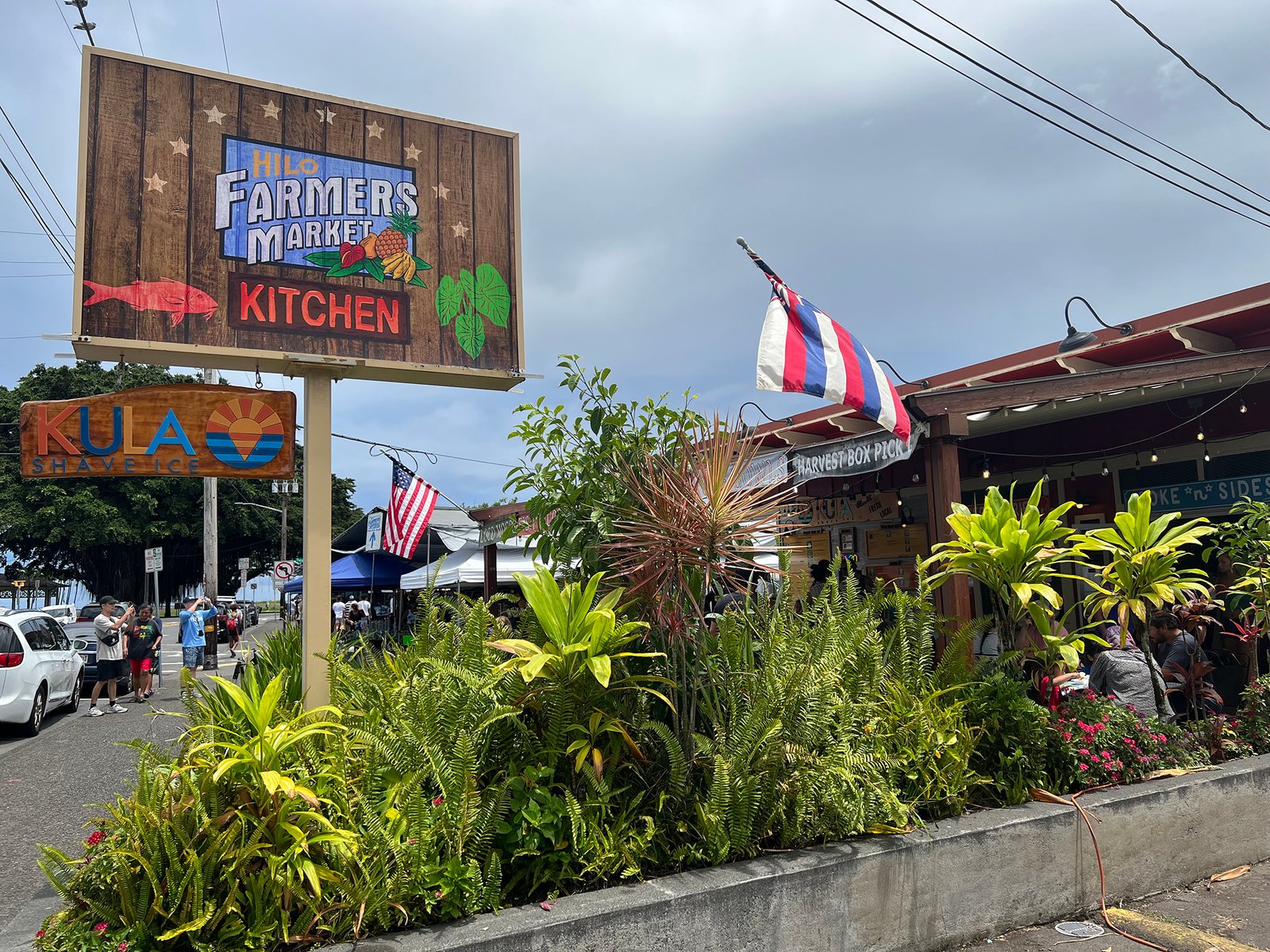
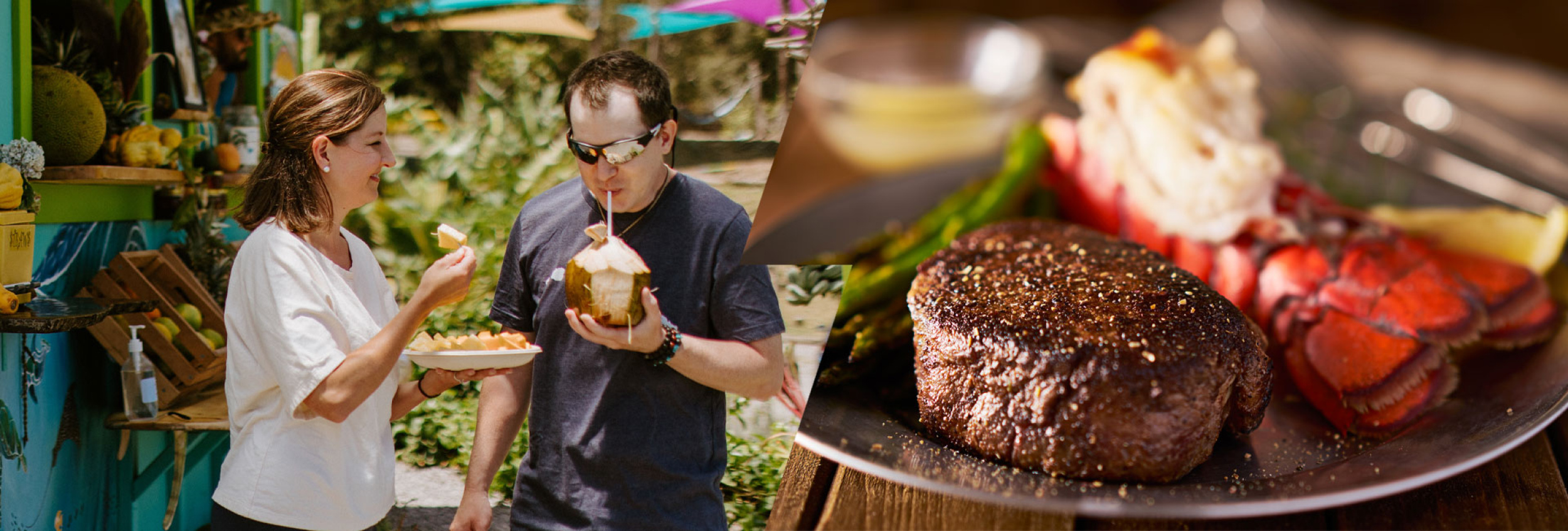
The single best produce in Hawaii is at the farmers’ markets, not the supermarkets. Apple bananas, lilikoi (passion fruit), papaya, mango in season (typically May through October, peaking in June and July), local greens, and fresh-cracked coconut are usually a fraction of grocery-store pricing and dramatically better. The farmers’ markets guide on this site covers the major weekly markets on each island; the Hilo Farmers Market and KCC Saturday Market on Oahu are two of the largest, and Kauai’s Sunshine Markets rotate by day across the island. Don’t overlook the roadside fruit stands either. The North Shore of Oahu, Hāna Highway on Maui, the Hāmākua Coast on the Big Island, and the road north of Hanalei on Kauai all have honor-system or owner-staffed produce stands where a small bag of apple bananas embarrasses any grocery-store equivalent. Bring small bills.
ABC Stores Are Convenience Stores, Not Grocery Stores
A common visitor mistake: trying to do “groceries” at ABC Stores. Don’t. The ABC chain (founded in 1964 by Sidney and Minnie Kosasa, family-owned, dominant in Waikiki and on most major resort strips) is a convenience store, not a grocery store. Snacks, sunscreen, water, beach gear, souvenirs, and a small ready-to-eat selection are all reasonable, all marked up. A loaf of bread or a gallon of milk at ABC will usually cost more than the same item at Foodland or Times. ABC is great for what it is: walking distance from your hotel, open late, and stocked with the things you forgot to pack. It’s not where you stock a vacation rental.
Poke Counters and Fish Markets
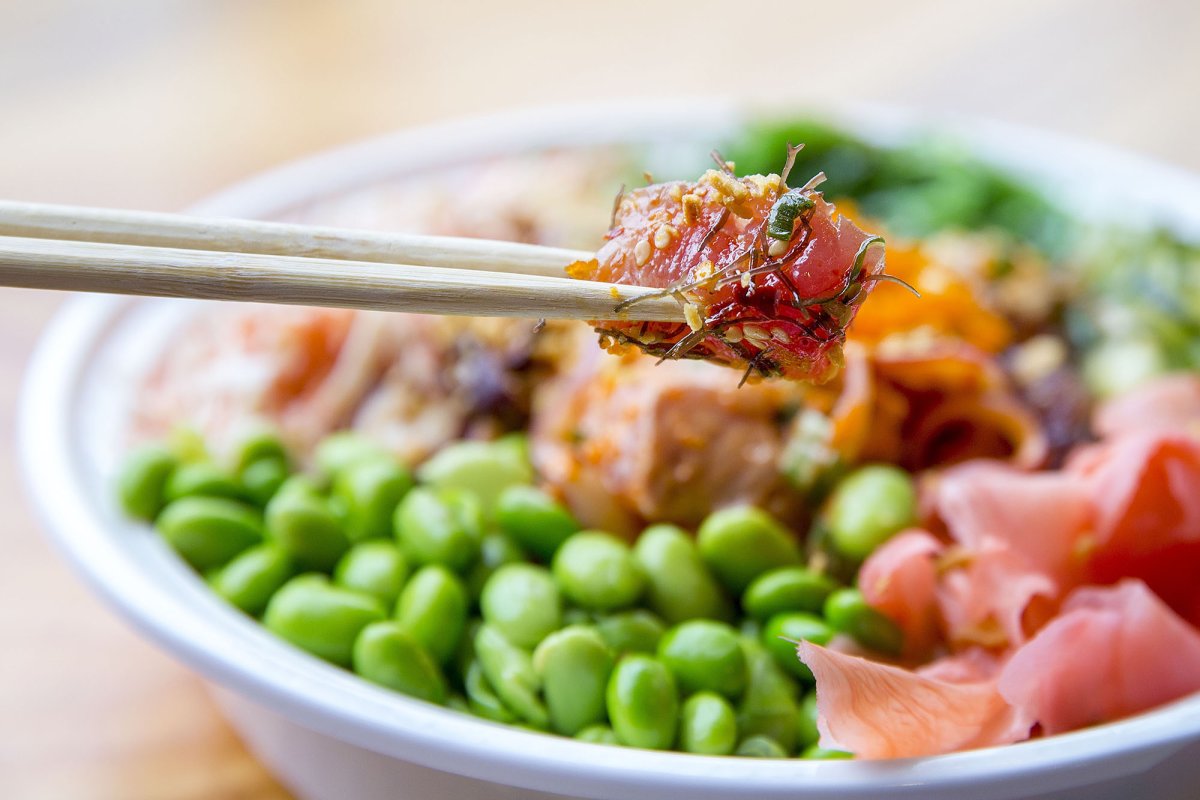
The poke counter inside a regular grocery store is one of the great Hawaii lunch values. Foodland and Times both run good ones.
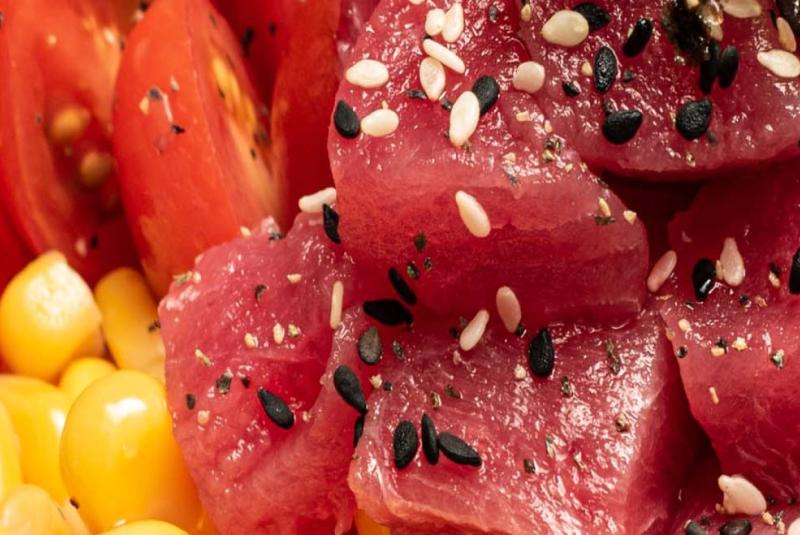
One overlooked use of Hawaii grocery stores: the poke counter is a legitimate cheap lunch. Foodland has won the Honolulu Star-Advertiser’s “Hawaii’s Best” Best Poke award for many consecutive years. Times Supermarket has its own loyal following. A pound of fresh ahi poke from a grocery counter is noticeably cheaper than the same thing at a sit-down restaurant, and it’s the same fish. Independent fish markets are the next tier up. Tamashiro Market in Kalihi on Oahu and Hilo’s fish auction–adjacent counters on the Big Island are local-favorite specialty stops if you’re cooking dinner.
What to Bring vs. Buy on Arrival
A short list of things that are often cheaper to bring from the mainland than to buy in Hawaii: Reef-safe sunscreen. Hawaii’s reef-safe-sunscreen law (SB2571, in effect since January 2021) bans the sale of sunscreens containing oxybenzone or octinoxate. Compliant sunscreens are widely sold at every Hawaii store, but pricing on island shelves runs higher than what you’ll typically see on the mainland or via Amazon, so it can be cheaper to buy before you arrive. Don’t assume the SPF you bought in Phoenix complies; check the label for “no oxybenzone, no octinoxate.” A reusable shopping bag or two. All four counties banned single-use plastic bags years ago, and most stores either don’t offer free bags at all or charge a small per-bag fee for paper. Maui County’s ordinance, for example, sets a minimum 15-cent charge for paper bags. A cheap reusable bag pays back fast. Costco doesn’t offer bags either; bring boxes from the bin near the registers. Specialty dietary items. If you have a strict gluten-free, keto, or specialty diet, your familiar mainland brands may or may not be on island shelves and will cost more if they are. Bring a small kit. Things you should not bring from the mainland: produce (Hawaii has agricultural-import rules requiring declaration and inspection of fresh fruits, vegetables, and plants, and your local mango will be embarrassed by a Maui mango anyway), liquid sunscreen or lotions if you’re carrying on (TSA limits), and anything heavy and replaceable.
The Realistic Game Plan
For a typical week in a condo, here’s what works: Day one: Big provisioning run. Costco for bulk water, breakfast staples, fruit, and snacks if you have a card. Otherwise Foodland Farms or Times for the same list at slightly higher per-unit prices. Mid-week: Farmers’ market trip for produce, eggs, and any prepared foods you want to refresh. Day-of meals: Foodland or Times poke counter for cheap lunch on a beach day. The plate-lunch option at the deli is also a quick win, and it’s the same plate-lunch tradition you’d find at a stand-alone shop, just in a tray. Top-ups: ABC Stores or the gas station near your condo for forgot-it items like water, ice, beer, or sunscreen, at a markup you accept because it’s two minutes from your front door. One thing to plan around: most Hawaii grocery stores are not 24-hour, and that includes chains that used to be. Don Quijote Kaheka now closes at midnight, and the major Walmart and Safeway locations that once stayed open all night have largely pulled back to 11 p.m. or midnight closes. If you’re flying in on a late red-eye, check current hours for whichever store is on your route from the airport before counting on a midnight grocery stop. An ABC Store run is the reliable backup.
One More Practical Note: Renting a Car
Almost every strategy on this page assumes you have a car for at least one or two of your trip days. Costco runs aren’t realistic without one, and the warehouse is rarely walking distance from where you’re staying. Discount Hawaii Car Rental is the local-favorite booking site (no deposit, free cancellation, and you can rebook if rates drop). Even one provisioning day with a car can help offset the rental cost in saved restaurant meals. If you’re carless on Oahu and staying in Waikiki, TheBus runs to Don Quijote Kaheka and to Walmart on Keeaumoku, both close enough to grocery-shop on a single round trip. On the neighbor islands, a car is essentially required for grocery shopping anywhere outside the immediate resort area. The two-line summary, then: a kitchen plus one Costco trip plus a farmers’ market trip plus the Foodland Maika’i card will cut your Hawaii food bill dramatically without sacrificing the eating-out you came for. Save the restaurant nights for the meals you actually came to eat.