

Hawaiʻi post-Labor-Day hotel rates are the most underrated planning lever in the calendar — bigger than peak summer, bigger than winter whale season. For the three-to-four weeks that begin the Tuesday after Labor Day and run through about October 5, statewide hotel ADR drops by roughly $46–$90 per night by island (per the Hawaiʻi Tourism Authority Hotel Performance Reports), most mainland school districts are back in session, and the Aloha Festivals Oʻahu programming runs the same three weekends. Labor Day 2026 falls on Monday, September 7, so the post-holiday window opens Tuesday, September 8 and runs through about October 5 before mainland fall-break travelers start showing up again. This is a forward-looking piece for travelers who haven’t locked September 2026 dates yet. The numbers below come from HTA’s monthly reports for August versus September 2025 — the same month-over-month pattern shows up in HTA’s rolling history, and 2026 is unlikely to be a structural break.
What the August-to-September drop actually looks like
The headline number is the statewide average daily rate (ADR). In August 2025, Hawaiʻi statewide hotel ADR was $360.89. In September 2025, it fell to $314.75. That’s a drop of $46.14 per night, or roughly 12.8 percent off the peak-summer rate, per the September 2025 Hotel Performance Report. The by-island breakdown is more interesting because the drop isn’t uniform. Maui and the Big Island see the largest ADR drops in absolute dollars. Oʻahu’s drop is the smallest because Waikīkī occupancy stays unusually high all year. Kauaʻi’s drop is also modest because September lines up with the back half of Hawaiian wedding-and-anniversary season on the Garden Isle and demand stays sticky. August 2025 → September 2025 hotel ADR, by island (HTA Hotel Performance Reports):
- Oʻahu: $289.09 → $259.47. A drop of $29.62 per night (10.2%).
- Maui County: $500.92 → $423.67. A drop of $77.25 per night (15.4%).
- Island of Hawaiʻi: $444.30 → $353.83. A drop of $90.47 per night (20.4%).
- Kauaʻi: $430.03 → $383.51. A drop of $46.52 per night (10.8%).
Hold those numbers for a second. A two-week trip on the Big Island in September 2025 was running you about $1,266 less in hotel ADR alone than the same two weeks in August. On Maui that gap was about $1,082. That’s not a marketing claim from a hotel chain. That’s the average across every reporting STR-tracked property on the island, pulled by Hawaiʻi DBEDT and STR/Lighthouse Intelligence. If you want to run this against your specific dates, the Hawaiʻi Cost Explorer uses the same HTA lodging data, so the calculator’s lodging line stays within about $50 a night of reality for any month, any island, any room type.
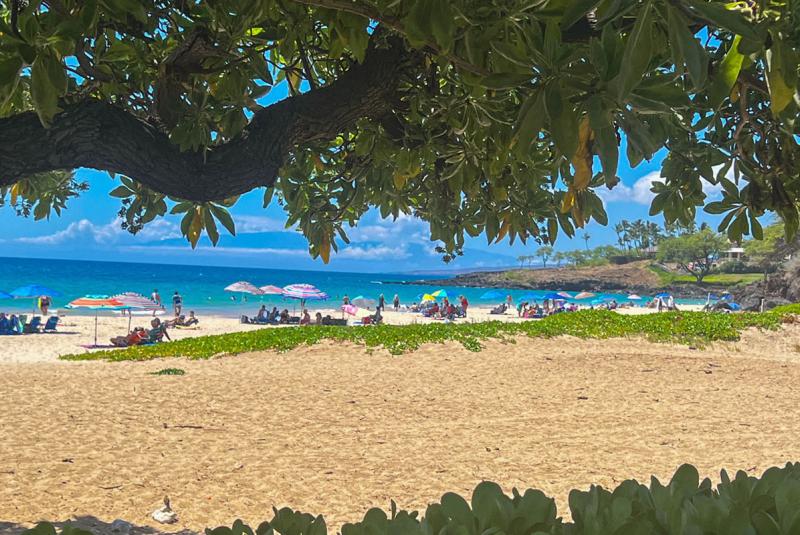
Hāpuna Beach, Kohala Coast. The Big Island's September ADR drops by about $90 per night relative to August — the biggest by-island fall in the state.
Why the drop exists
The short answer is mainland school calendars and the shift in Hawaiʻi’s traveler mix that follows. By the week after Labor Day, most U.S. mainland school districts are back in session. The top five Hawaiʻi-source visitor states by air arrivals, per the DBEDT 2023 annual visitor report, are California, Washington, Texas, Utah, and Colorado. LAUSD opens in mid-August. Dallas ISD opens in mid-August. Seattle Public Schools and Portland Public Schools open the first week of September. By September 8, families with school-aged kids are largely off the beach. The result is a traveler mix that tilts toward retirees, couples without school-aged children, international visitors, business travelers, and what HTA classifies as “leisure travelers without children.” Average length of stay rises in September — from 8.81 nights in August 2023 to 9.24 nights in September 2023, per HTA’s monthly visitor statistics reports. Average daily spend per visitor rises too as the demographic skews older and higher-income. Hotels respond rationally. Demand softens, occupancy drops a few points, and ADR falls to clear the inventory. The September drop shows up in HTA’s hotel performance reports across multiple recent years — the September 2023 data, for example, shows the same Maui and Big Island falls in the $90–$110 per night range relative to that August. Occupancy holds up better than rate. Oʻahu hotel occupancy fell only from 80.81% in August 2025 to 75.14% in September 2025. Kauaʻi barely moved (75.27% → 74.72%). The drop isn’t because no one is coming. It’s because the people coming are slightly less price-insensitive than the families who flew in earlier. Hotels discount to fill rooms that families would have booked. You inherit that discount as an adult-only or empty-nester traveler.
What's actually on the September 2026 calendar
The post-Labor-Day window doesn’t lack for things to do. It’s the opposite of a dead stretch. September is the anchor month for Hawaiʻi’s longest-running statewide cultural celebration, plus the start of fall food and music season. Aloha Festivals 2026 on Oʻahu typically runs three weekends in September. The Royal Court Investiture and Opening Ceremony has historically been held at Helumoa Gardens at The Royal Hawaiian Hotel on the Saturday of Labor Day weekend (September 5 in 2026) — just before the post-Labor-Day window opens. The Waikīkī Hoʻolauleʻa traditionally lands on the third Saturday of September (September 19 in 2026), with Kalākaua Avenue closed to traffic for a multi-stage block party that has drawn over 70,000 attendees in recent years (the festival’s 2023 sponsorship materials cite figures north of 100,000). The Floral Parade traditionally lands the following Saturday (September 26 in 2026) with floats, marching bands, and Pāʻū riders. All three are free to attend per the Aloha Festivals events page. Counting from the festival’s 1946 founding, the 2026 edition marks the 80th anniversary. Confirm the 2026 schedule against the official calendar closer to your trip. Full preview in our Aloha Festivals 2026 guide. Festivals of Aloha Maui Nui overlaps the Oʻahu schedule and extends into October. The Wailuku First Friday and the Queen Kaʻahumanu Center Aloha Friday traditionally land on the first and second Fridays of September. The big Maui events — Hāna Weekend, Wailea Weekend at the Four Seasons Resort Maui, and the Makawao Rodeo Weekend — typically fall in mid-to-late October, just outside the rate window but worth knowing if you’re extending. The Richard Hoʻopiʻi Leo Kiʻekiʻe Falsetto Contest historically lands on the third Saturday of September — likely the same date as the Waikīkī Hoʻolauleʻa, so this is a pick-one situation. Verify all 2026 dates against the official Festivals of Aloha calendar closer to your trip. Maui County Fair runs annually at the War Memorial Complex in Wailuku, historically in late September or early October per the official Maui County Fair site. The 2026 dates have not been published yet, so check before booking dates that extend into the first week of October.

Hanalei Bay in late summer. North shore Kauaʻi surf stays summer-flat through September, which is exactly when the crowds thin.
The trade-offs you need to factor
The September window has three real trade-offs. None of them are dealbreakers, but all of them belong in the calculation. Hurricane season is climatologically active. The NOAA Central Pacific Hurricane Center climatology shows late July through September as the peak of the Central Pacific hurricane season, with the highest cyclone frequency in August and early September. Most named storms pass well south of the islands without making landfall. The last major hurricane to make a direct hit was Hurricane Iniki on Kauaʻi in September 1992, more than 30 years ago. But the elevated probability of a storm interrupting a snorkel day or shifting a flight is real enough that travel insurance is worth a harder look in this stretch than it is in spring or early summer. Our Hawaiʻi hurricane season guide covers the practical version, and our travel insurance comparison walks through buying direct versus comparison-shopping. Whale season hasn’t started. North Pacific humpback whales begin arriving in Hawaiian waters in November and the season peaks January through March, per the Hawaiian Islands Humpback Whale National Marine Sanctuary. If whale-watching is the trip’s centerpiece, September is the wrong window. Other ocean wildlife (spinner dolphins, green sea turtles, monk seals, Big Island manta rays) is present year-round and easier to spot in September’s calmer water than in winter’s bigger surf. Air fares don’t drop in lockstep with hotels. Mainland-to-Hawaiʻi airfares typically soften after Labor Day but the deeper structural drop usually happens later in fall (excluding the Thanksgiving and Christmas spikes). Plug actual fares for your specific dates into Google Flights or your preferred fare tracker rather than assuming a September discount that mirrors the hotel side. For most of the booking scenarios we’ve run, the hotel-rate savings still cover the airfare gap for adult travelers, but you should pull live numbers before locking in. A smaller note worth flagging: some restaurants and small tour operators use the post-Labor-Day window for crew vacations or reduced hours before the October pickup. Spot-check current hours on a restaurant’s own website (not an aggregator like Yelp or Tripadvisor) before a special-trip detour. Our This Week in Hawaiʻi page tracks confirmed near-term events across all four islands.
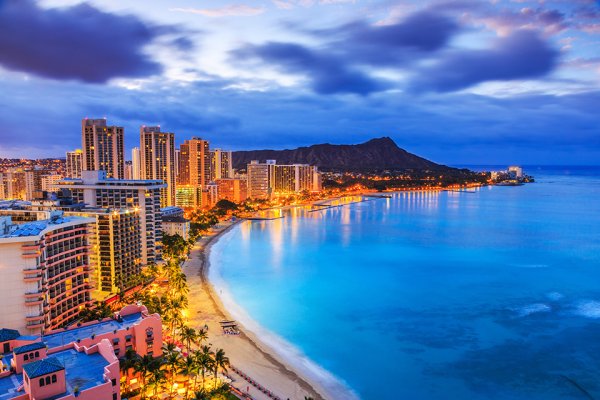
The Waikīkī hotel cluster. Oʻahu has the lowest hotel ADR of the four major islands ($259 in September 2025), and Waikīkī room availability is at its September best.
How to actually book the window
Four practical moves if the post-Labor-Day window fits your calendar. Time your arrival for Tuesday, September 8 or Wednesday, September 9. A mid-week arrival lands you after the Labor Day weekend demand pulse has cleared out and before the first Aloha Festivals Hoʻolauleʻa weekend on September 19. It also dodges the slightly elevated Friday-Saturday arrival fares that hold even in softer pricing patterns. Pick the island where the rate gap matters most for your trip. If your budget is the binding constraint, the Big Island offers the biggest by-island rate drop ($90/night) and a near-identical experience to August beyond the slightly warmer ocean. Maui is the second-largest drop ($77/night) and a strong pick if a Wailea or Kaʻanapali resort is on the list. If you want the smallest crowd reduction with the steadiest weather, Kauaʻi’s modest rate drop is a fair trade for being on what stays the quietest of the four islands in September. Run your scenario against the Cost Explorer before locking dates. The Hawaiʻi Cost Explorer reads the same HTA hotel performance file used above, plus DBEDT visitor spending data, AAA gas prices, and current rental car rates. Plug in two scenarios (August versus September 8-30) for your specific island and accommodation type. The dollar delta is usually meaningful enough to add a tour or upgrade your room category without changing your total budget. Pair it with our rental car calculator for the full ground picture. Lock the rental car early. Tour operator booking lead times soften in the post-Labor-Day window (per our tour booking lead times guide), but rental car inventory tightens around the Aloha Festivals weekends because of inter-island visitors flying over from Maui and the Big Island for the Hoʻolauleʻa. Among the brokers we track, Discount Hawaii Car Rental books without requiring a credit card deposit per their stated reservation policy, which is a practical fit when you’re locking dates 14 weeks ahead. The post-Labor-Day window won’t reshape the trip the way a date shift from peak winter to spring would. What flexing your September dates buys you is a measurably cheaper hotel night, a quieter beach, and the same 80-degree water that brought you to Hawaiʻi in the first place. Plus the 80th anniversary of one of the oldest statewide cultural celebrations in the U.S., thrown in for free.