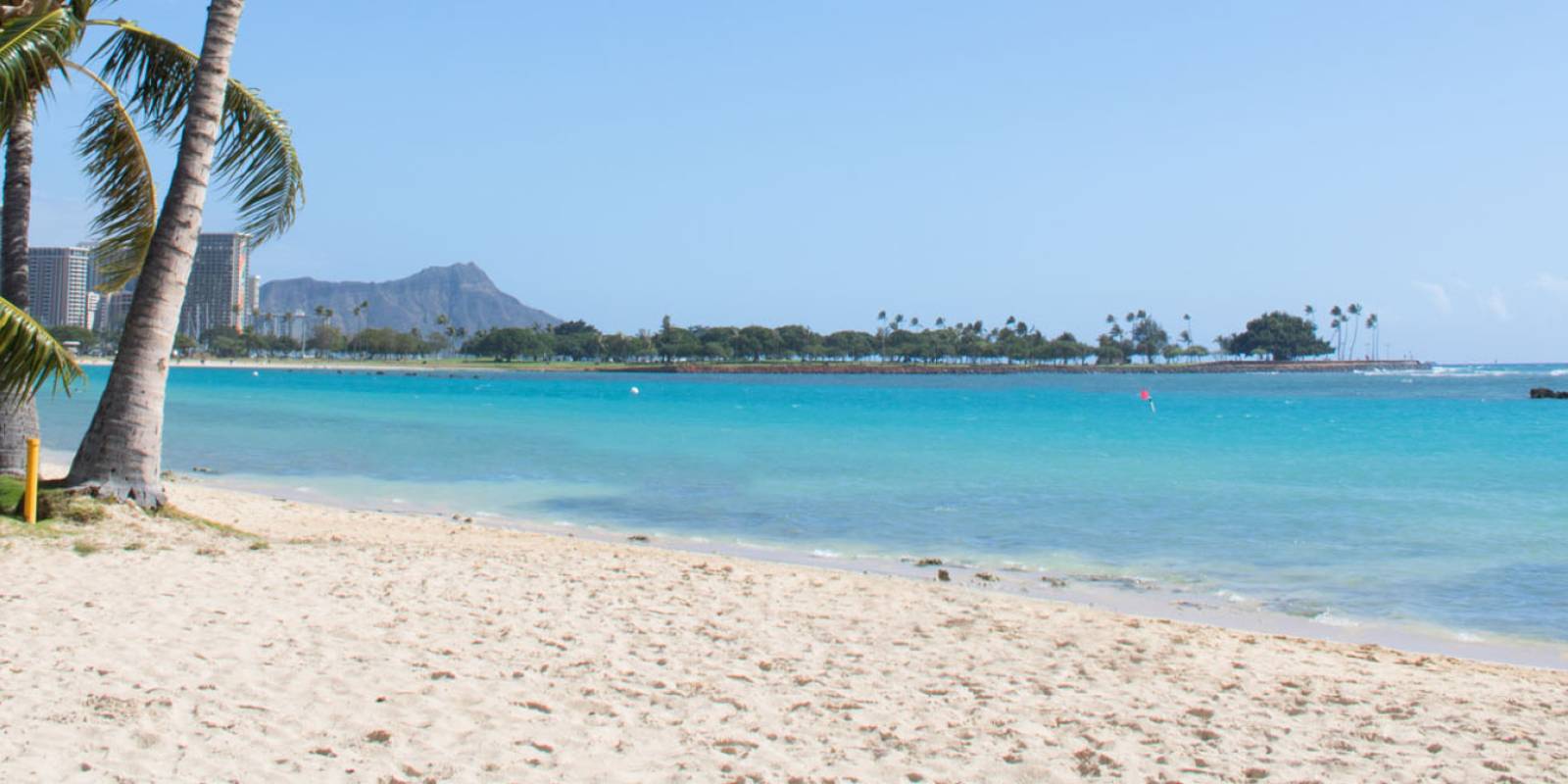
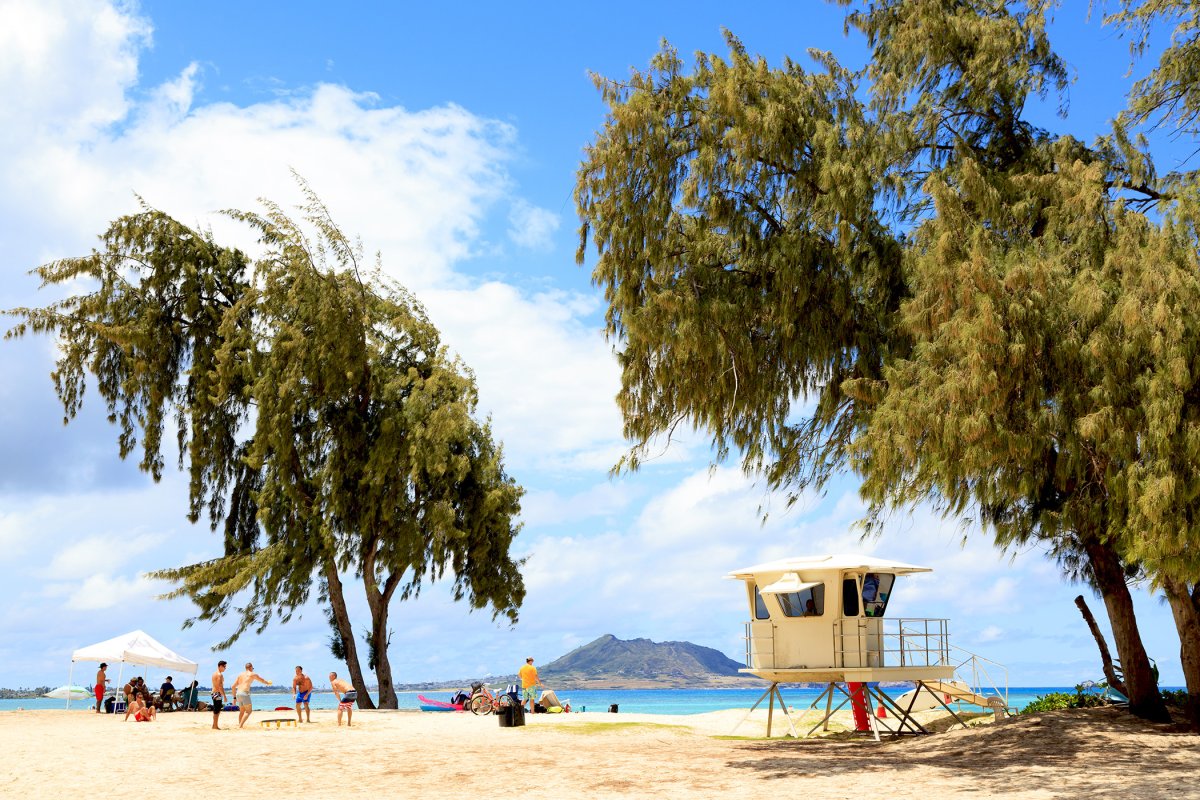


Summer changes Hawaiʻi’s common swell pattern, but it does not create a universally calm coast. South swells can raise surf on south-facing shores, trade-wind waves can roughen east-facing shores, box-jellyfish risk follows an estimated lunar pattern, and rip currents strengthen as surf increases. The Hawaiʻi Department of Health treats drowning prevention as a statewide public-health priority. Choose the beach from today’s conditions, posted warnings, and lifeguard advice—not the season or a remembered reputation.
Box Jellyfish: The Lunar Calendar You Need to Know
Hawaiian box jellyfish (Alatina alata) typically appear on south- and leeward-facing shores 8 to 10 days after the full moon. The Waikiki Aquarium publishes the annual prediction calendar and makes the important caveat explicit: the dates are estimates, jellyfish can appear outside the window, and beach warning signs and lifeguard guidance outrank any calendar. (Waikiki Aquarium — Box Jellyfish Calendar)
Do not plan from a remembered date list. Check the current Hawaii Jellyfish Calendar for your exact beach day, then treat that result as one layer of planning rather than a guarantee. South- and leeward-facing beaches carry the highest risk during warning windows, especially Oʻahu’s south shore. On other islands, use the same rule of thumb for south- and leeward-facing beaches, then check posted signs when you arrive. The Hawaii Ocean Report gives you the current surf and hazard layer before you leave the hotel.
Box jellyfish stings are painful and can be serious for children, older adults, and anyone with a strong reaction. If lifeguards are present, ask them for first-aid guidance immediately. If symptoms spread beyond the sting site, breathing feels difficult, or the person looks faint or confused, call 911.
Portuguese Man-o'-War — Not a Jellyfish, Still a Problem
Portuguese man-o’-war (Physalia physalis) can appear throughout the year and may be pushed ashore by onshore winds. Unlike the box-jellyfish estimate, this is not a lunar-calendar decision. Check the beach-specific report and look for posted warnings or stranded blue-purple floats before entering.
The blue-purple floats are easy to spot on the sand. Don’t touch them — even washed-up specimens can sting. Treatment guidance differs from box jellyfish in many first-aid references, so if lifeguards are present, ask them before applying anything. The practical visitor rule is simpler: leave washed-up blue floats alone, keep children from collecting them, and move to a different beach if you see several on the sand.
South Shore Swells: Summer and Shoulder Season
Hawaiʻi’s swell patterns rotate seasonally. Winter brings powerful north and northwest swells generated by North Pacific storms — that’s when Pipeline, Sunset Beach, and Waimea Bay light up. In summer, south-facing shores deserve extra attention, trade winds can roughen north and east-facing shores, and local exposure matters.
A south swell can change conditions at Waikīkī, Ala Moana, and Maui’s Kamaʻole beaches even when the weather is sunny. Check the National Weather Service Honolulu surf forecast, then compare it with the beach-specific report before you choose where to swim. The NWS warns that rip-current strength generally increases with surf size.
The south shore of Oʻahu is the most visible example because so many visitors base in Waikīkī, but the same seasonal logic applies statewide: match the beach to that day’s swell direction, not to the postcard version in your head. Sandy Beach is a good cautionary example. Its shorebreak is powerful even when the beach looks sunny and inviting, and a red flag there should end the swim plan for almost every visitor.
Rip Currents: The Invisible Threat
Rip currents form when water pushed onto shore by waves funnels back out through a narrow channel. They’re hard to see from water level and can pull even strong swimmers offshore fast.
Rip currents can form at any beach, any time of year, but they’re especially worth watching during summer when south swells combine with reef channels that funnel water outward. The same dynamic plays out at south-facing beach breaks across the islands whenever a swell is running, which is why the morning condition check matters more than picking a beach by reputation.
If you’re caught in a rip current: don’t fight it. NOAA’s guidance is to relax, float or tread water, call or wave for help, and swim parallel to shore if you can do so without exhausting yourself. Once you’re out of the pull, swim back toward land at an angle. (NOAA — Rip Current Safety)
Posted Warnings and Lifeguards
Warning systems vary by beach and county. Read every posted sign, ask the lifeguard where and whether to enter, and stay out when a beach is closed or officials advise against swimming. A lack of a flag does not mean low hazard, especially at an unlifeguarded beach.
Use the Hawaii Beach Safety condition map and the National Weather Service surf forecast before driving. At the beach, current signs and lifeguard instructions outrank an app or forecast captured earlier in the day.
Lower-Risk Starting Points—When Conditions Allow
No Hawaiʻi beach is condition-free. A lifeguarded beach with a protected or reef-sheltered section can be a more conservative starting point when officials say the water is suitable for your ability.
On Oʻahu, compare Ala Moana, Waikīkī, and Hanauma Bay on the morning report; Hanauma Bay also has a reservation system. Kailua can still be rough in onshore wind, so do not treat its usual appearance as a guarantee.
On Maui, compare Kapalua Bay and the lifeguarded Kamaʻole parks, then let the day’s swell direction and lifeguard guidance decide. A protected-looking cove can still have surge, current, or poor visibility.
On Hawaiʻi Island, Hāpuna and Kahaluʻu have lifeguard or stewardship resources, but shore break, current, crowding, and water quality can change the choice.
On Kauaʻi, compare Poʻipū and Lydgate’s protected sections with the current report. Do not move into adjacent open water because the enclosed area looks calm.
Every one of these beaches has conditions that can change within hours. Check the Ocean Report and the beach-specific forecast the morning of your beach day.
Five Rules That Will Keep You Safe
-
Prefer lifeguarded beaches. Use beach-specific condition reports before you drive, then ask the lifeguard what has changed that morning. (Hawaii Beach Safety)
-
Never turn your back on the ocean. Waves can arrive in sets, and shore break can knock people down even in shallow water. Keep extra distance at beaches known for powerful shore break, including Sandy Beach and Makapuʻu.
-
Check conditions before you go. The Ocean Report, Hawaii Beach Safety, the NWS surf forecast, and posted signs each tell you something different. Use them together when the day involves swimming, snorkeling, bodyboarding, or children in the water.
-
Don’t swim alone. Even experienced ocean swimmers should have someone watching from shore or swimming nearby. Cramps, disorientation, and sudden current shifts happen to everyone.
-
Know your limits. Pool fitness does not reproduce surf, current, or shore break. If conditions are bigger or rougher than your experience supports, stay on shore or choose another activity.
Stay Safe in Hawaii's Ocean
More resources for safe ocean activities in Hawaii.