
The best hour to be on Hawaiian water is the last one before dark — day boats back at the harbor, wind laid down, ocean shifting from noon-blue to bronze while the sky runs through pink and gold and purple in about twenty minutes. A sunset paddle is the cheapest way to put yourself inside that light instead of watching it from a beach chair. Below is what each island does best, which outfitters run evening trips, and what to plan around as sunsets creep earlier through fall. Heads up: this article includes affiliate links. We earn a small commission if you book through them, at no extra cost to you. We only link to operators we would send a friend to.
Three ways to catch a sunset from the water
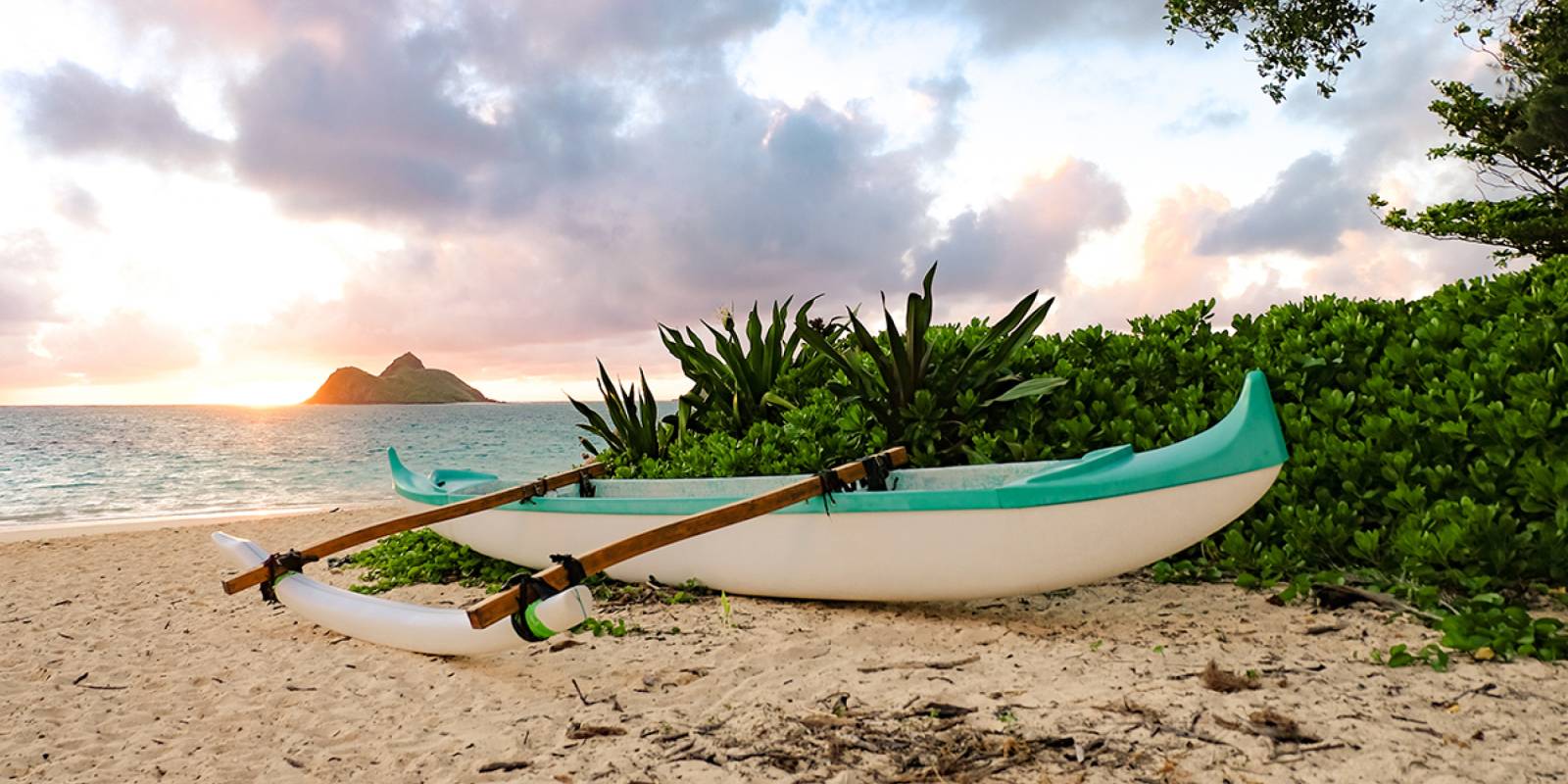
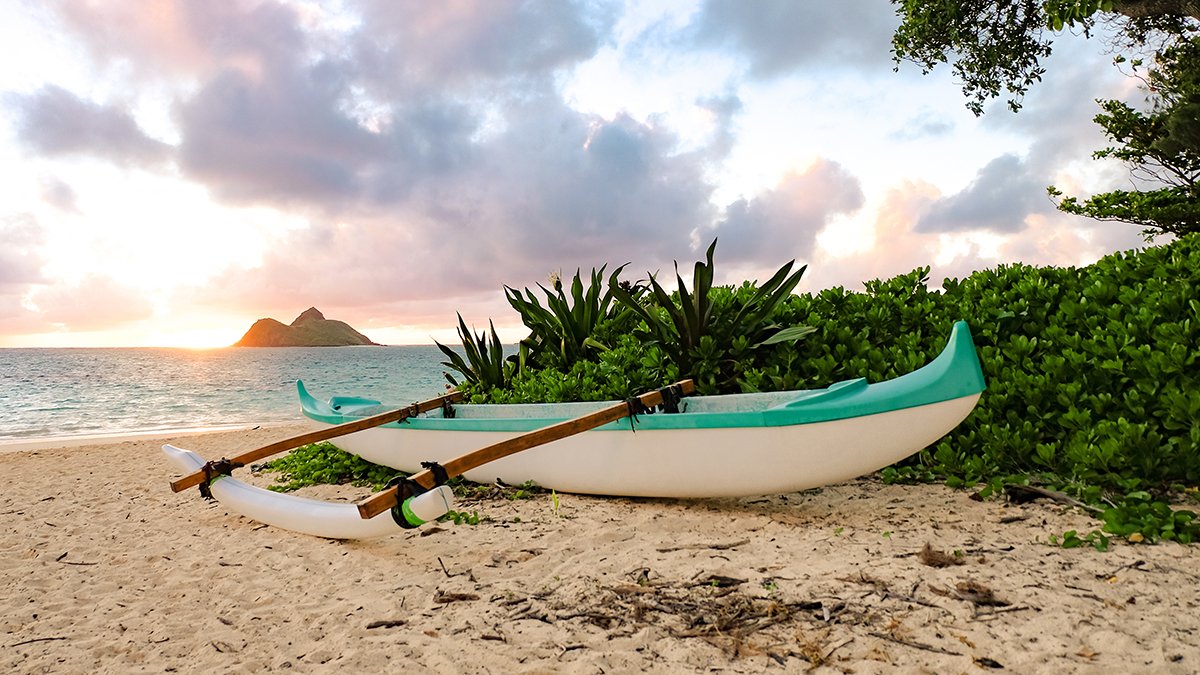
“Sunset paddle” covers three different vessels, and they are not interchangeable. Pick the one that matches your group and your comfort level. Outrigger canoe — the six-person Hawaiian canoe with the wooden ama (the float arm on the left side). Guided, seated, stable enough for grandparents and kids who cannot swim. You paddle as a crew under a steersman’s calls. The Polynesian Voyaging Society’s history of the Hawaiian canoe traces its use here back over a thousand years, and it is still the calmest way to move a group across open water. Waikīkī is the classic launch, but sunset outrigger rides now run out of Wailea, Kailua, and a handful of Kohala Coast resorts. Stand-up paddleboard (SUP) — single rider, standing or kneeling, harder to fall off than it looks in the calm water most Hawaiʻi bays offer at the end of the day. You need basic balance and the willingness to get wet if a boat wake catches you. Best in protected bays: Kailua, Kāneʻohe, Kīhei’s south-facing coves, Kona’s Keauhou Bay. Kayak — sit-on-top, one or two people, no balance required, and the easiest way to cover a mile of shoreline. Rentals are widely available and the learning curve is roughly zero. The trade-off is that a kayak sits low; you feel every ripple. Fine on a calm evening, brutal on a windy one.
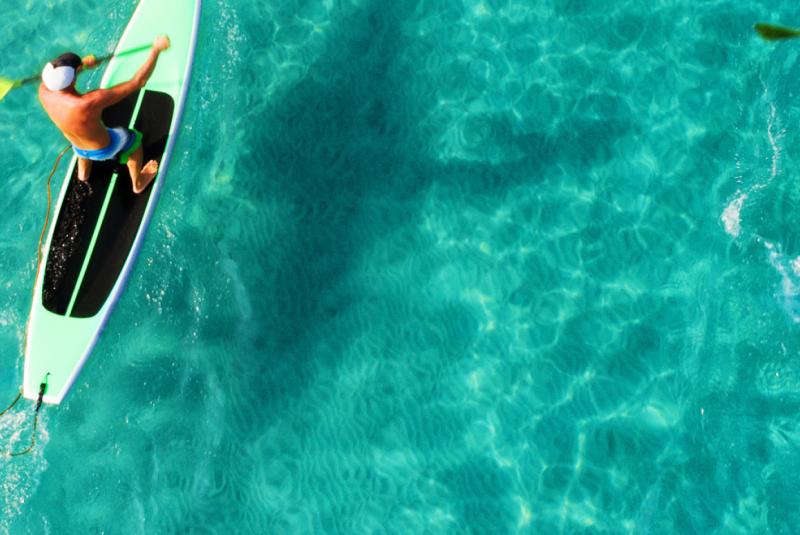
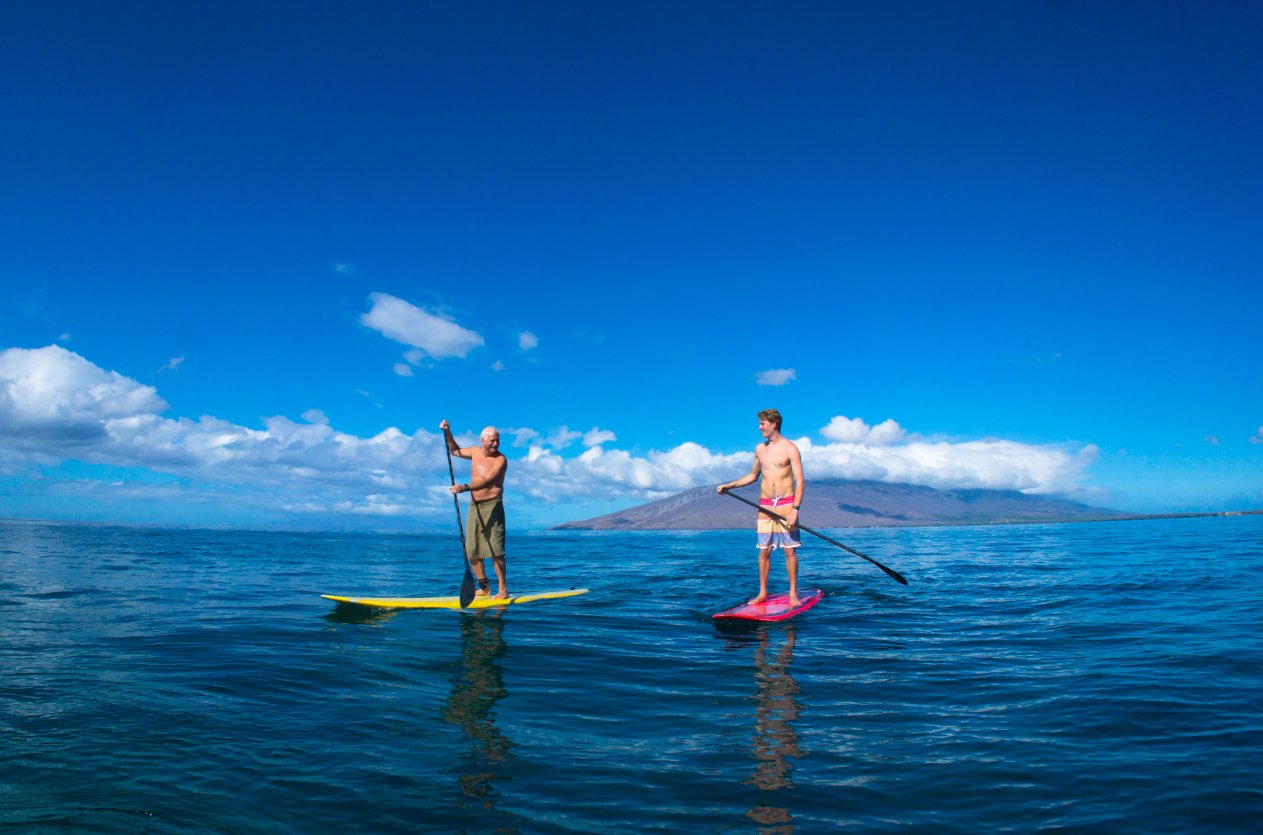
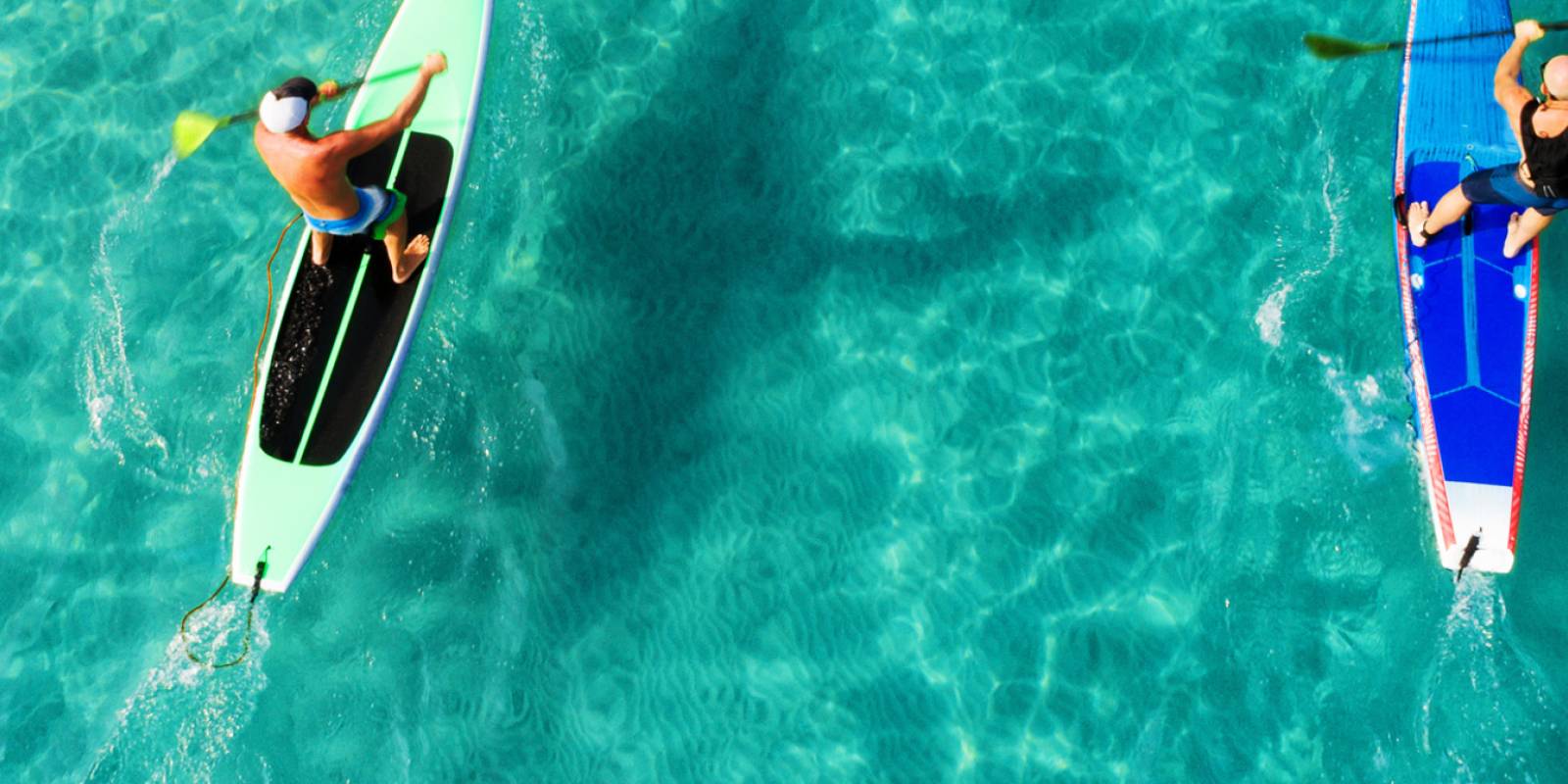
SUP is the most photogenic sunset vessel and the one that gets people on the water for the first time. Protected bays make it beginner-friendly.
Oʻahu: Waikīkī outrigger and Kailua kayak
Oʻahu has the most options because Waikīkī has a long history of commercial outrigger rides — the Waikīkī Beach Boys popularized tourist canoe rides in the early 1920s, and the concession model has run more or less continuously since. The classic trip is a short sunset paddle out past the reef line off the Royal Hawaiian, catching a wave back in if conditions cooperate. It runs about 45 minutes for the price of a resort cocktail, and it puts you inside the postcard. Waikīkī outrigger: Waikiki Beach Services runs canoe rides from the sand in front of the Royal Hawaiian and the Sheraton Waikiki. Walk up in the late afternoon, ask about the last ride of the day, and check the surf report — if the south swell is running they may extend the ride to catch a wave. Our full Oʻahu outrigger canoe guide covers the other operators and how the wave-catching version works. Kailua sunset SUP or kayak: Kailua Beach Adventures rents SUP boards and sit-on-top kayaks from a shop a few blocks off Kailua Beach Park. Their afternoon rentals run into the golden hour on Kailua Bay, one of the calmest paddling bays on Oʻahu. This is not a guided sunset tour — it is a rental you time yourself — but the bay is protected enough that a competent beginner can be on the water at 5 pm and back on shore by dark. If you’d rather book a guided evening trip on Oʻahu, browse current Oʻahu water sports and paddle experiences on Viator to compare reviews and cancellation terms before you commit.
Maui: Wailea outrigger and Kīhei SUP
South Maui is the sunset paddling coast. Wailea and Kīhei face the Pacific with unobstructed western horizons, the trades soften in the afternoon behind Haleakalā, and the water in the coves stays calmer than the North Shore or the Pāʻia side. Wailea outrigger canoe: Anelakai Adventures runs traditional outrigger canoe trips out of the Wailea coast. Their guides paddle a six-seat wooden canoe you help crew, and the sunset slot lines up with the color show over Molokini and Kahoʻolawe. It is more expensive than a beach-boy Waikīkī ride, and it earns the difference by taking you into open water without a crowd. South Maui SUP: Hawaiian Paddle Sports is the Maui-side operator we point people at first for guided SUP. Small groups, sunset slots when conditions are right, and a real focus on ocean safety and lesson quality. Our Hawaiian Paddle Sports page has the current summary. Big picture: if you are staying on the Kāʻanapali side, plan for the drive south for a Wailea sunset — closer to an hour each way in typical traffic, not the quick hop the map makes it look. West Maui has plenty of dinner cruises, but the paddle inventory is thinner and the trades push harder in the afternoon.
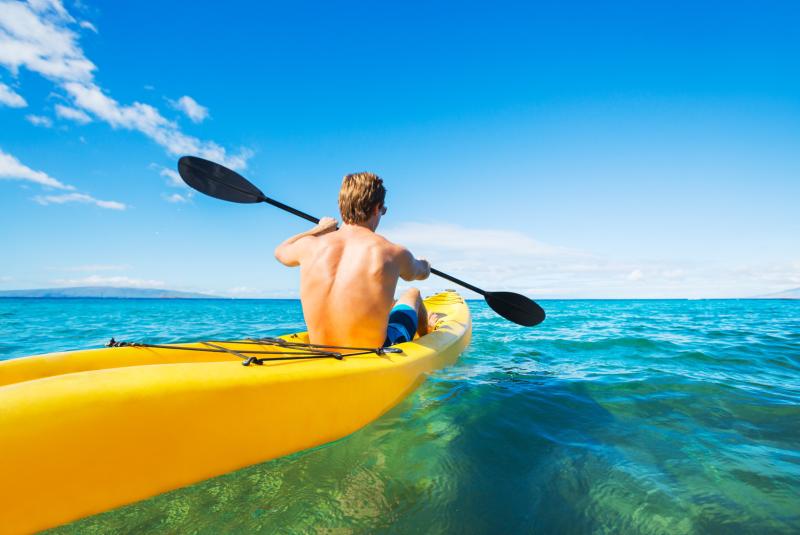
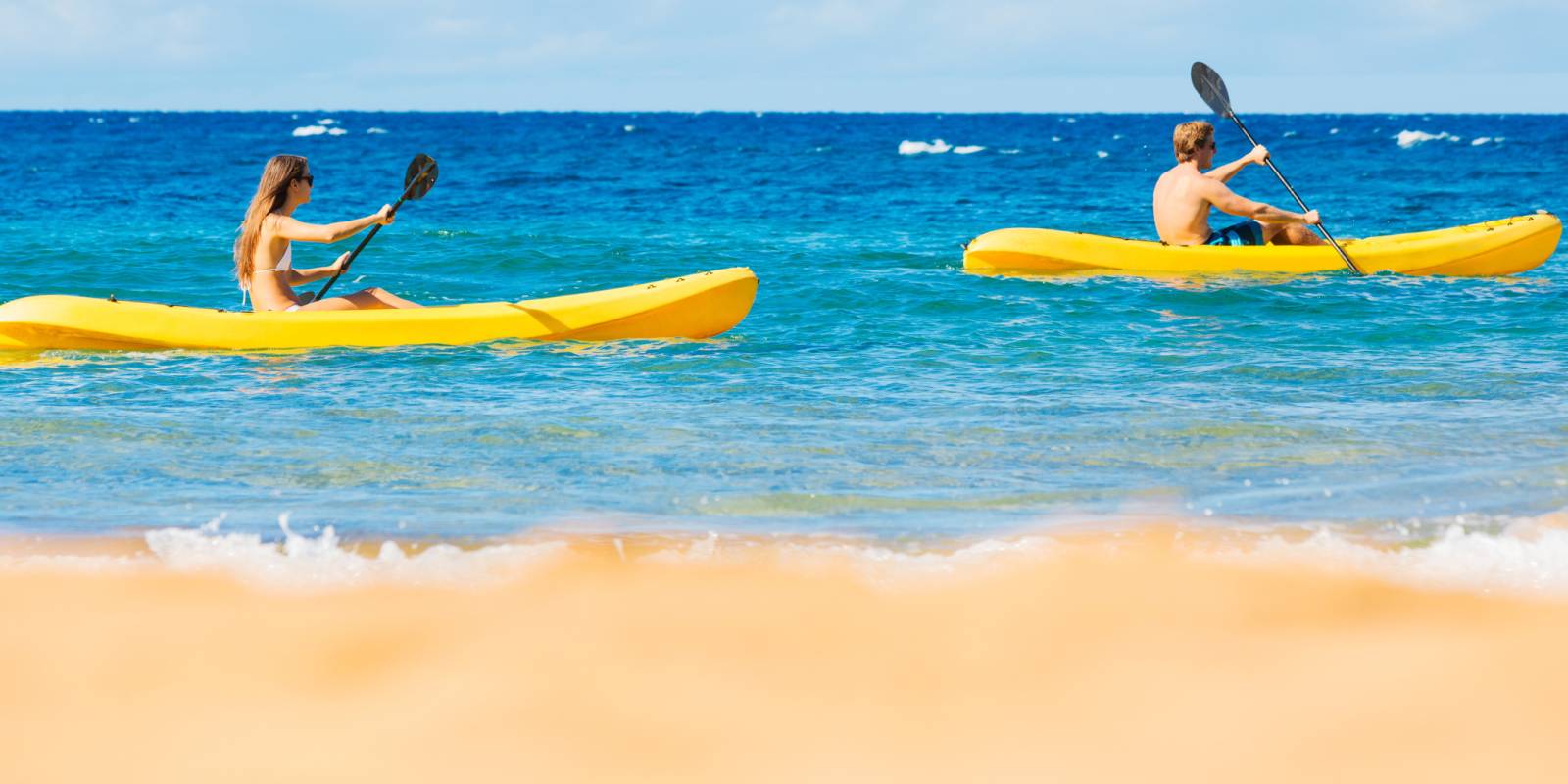
A sit-on-top kayak is the easiest sunset vessel to solo. No lesson, no balance test — just paddle out from a protected bay before the last hour and time your turnaround.
Big Island: Keauhou and Kealakekua
Kona-side Big Island has some of the calmest afternoon water you’ll find in Hawaiʻi. The Kohala mountains block the trades, the bays are deep and clear, and sunsets fall directly onto the Pacific without a single island in the way. Keauhou Bay SUP or kayak: Kona Boys operates a rental base right on Keauhou Bay and a second location up in Kealakekua. Both rent SUP boards and kayaks by the hour. The bay is calm enough at the end of the day that a first-time renter can get upright and comfortable pretty quickly, and their Keauhou location is the practical pick for a sunset paddle — you can be on the water, out to the bay’s mouth, and back before the light drops. Kealakekua Bay: this is the daytime snorkel bay that everyone books, but the same water in the evening is a different experience — nearly empty, with the volcanic cliffs glowing gold as the sun drops. Kona Boys and other Kealakekua launchers time out most trips before sunset because the bay requires a marine access permit, but ask about the latest allowed launch when you book. For guided small-group evening trips, check the current Big Island water sports listings on Viator.
Kauaʻi: Poʻipū and Hanalei's short windows
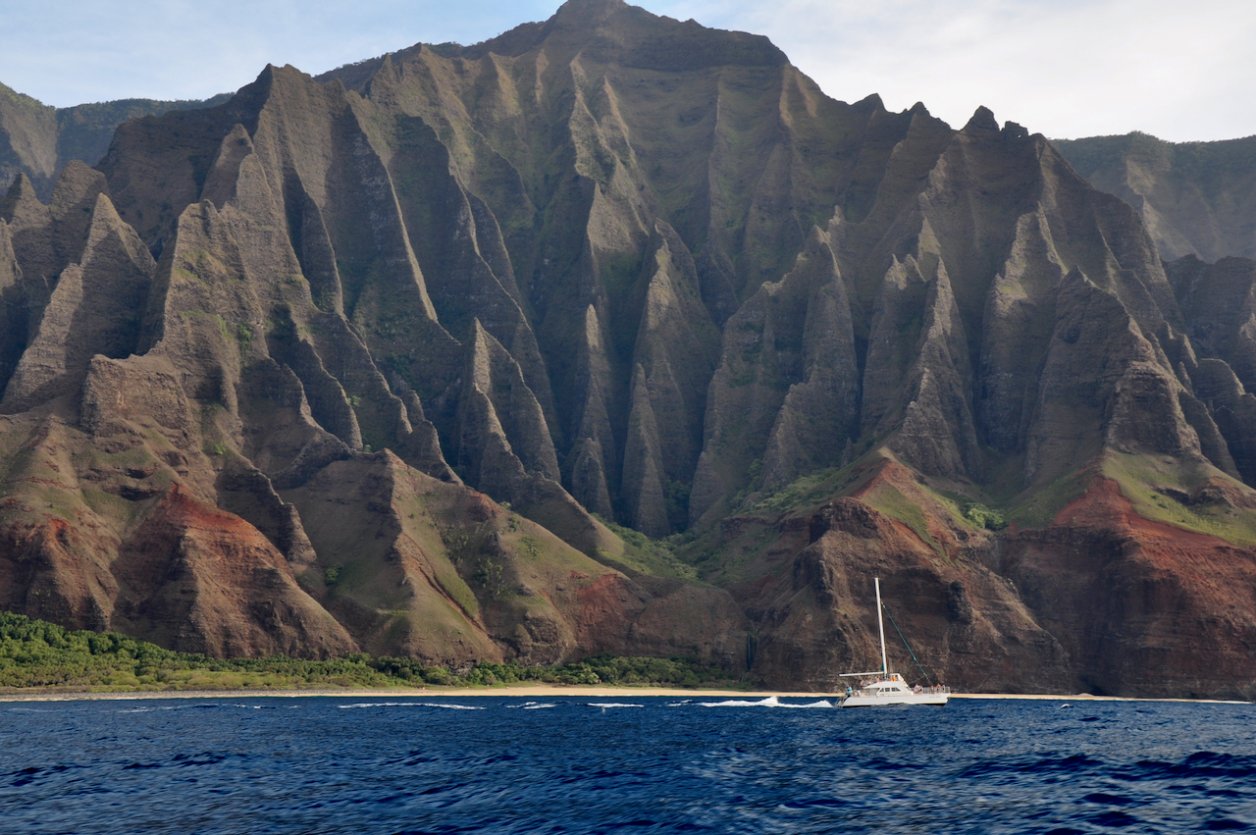
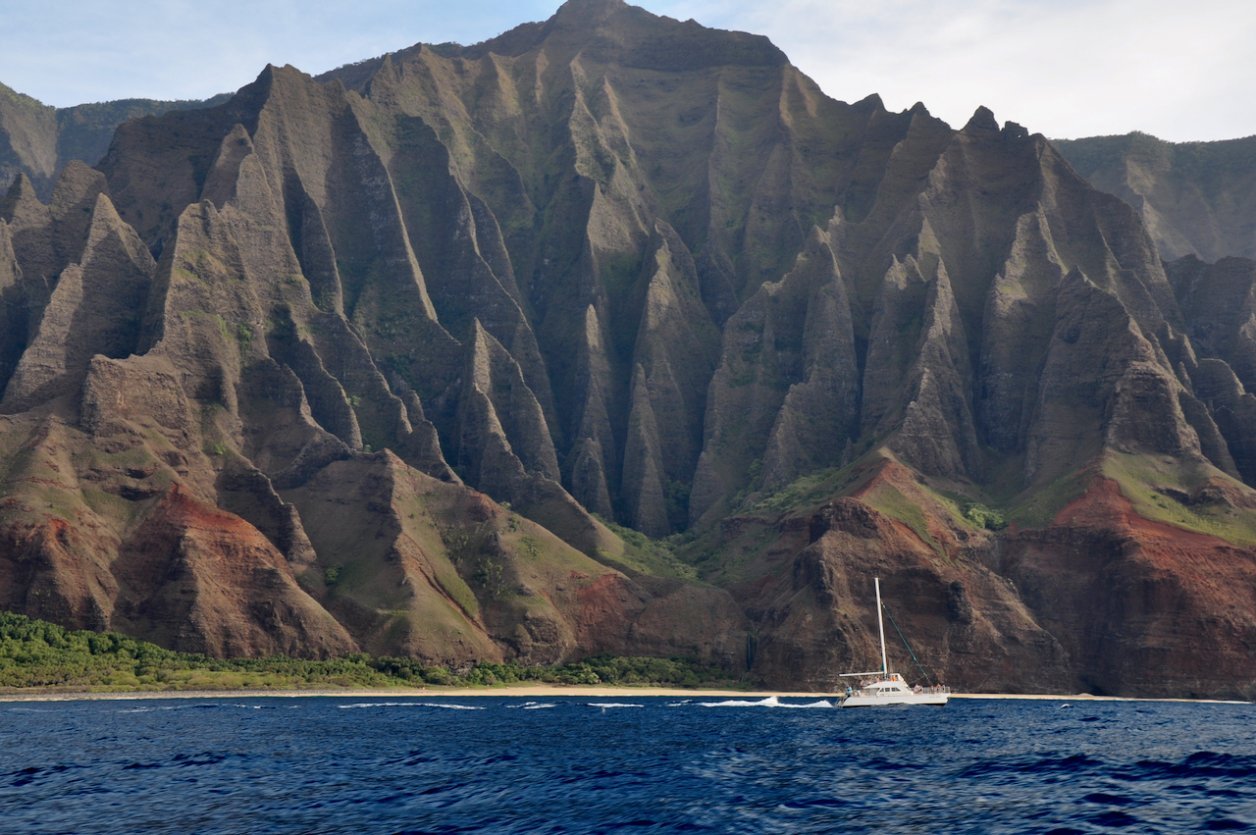
Kauaʻi has a genuinely different sunset paddle story. The Wailua River is the marquee kayak experience but it closes long before sunset. The Nā Pali Coast tours are morning-only. What that leaves you with, for an evening paddle, is the South Shore. Poʻipū SUP: Poʻipū Beach and the coves west of it face south-southwest, which means the sun sets across your paddle line in a way that lights the whole cove. Local outfitters and hotel activity desks in the Poʻipū corridor rent SUP boards by the hour, and the water in Poʻipū’s protected middle section is calm enough for a beginner to be on it comfortably. Hanalei Bay in summer only: Hanalei is postcard calm in summer, and paddling on the bay at sunset is one of the best experiences on the island. From roughly late September through early May, however, north-shore surf shuts it down. If you are reading this in fall, the answer for Hanalei is: not this trip. Book Kauaʻi’s evening paddles on the south shore and save Hanalei for a summer return. Rental options rotate on Kauaʻi, so check the current Kauaʻi water sports listings on Viator or call the shop closest to your hotel a day ahead.
The fall timing shift
Sunset in Hawaiʻi moves earlier through fall. In mid-July, Honolulu still has light past 7 pm; by late October the sun is down around 6 pm; by early December sunset falls near 5:50 pm — those numbers are pulled from timeanddate.com’s Honolulu sunset table, and our sunrise-sunset tool gives you the exact time for any Hawaiian coast on any date. Practically, that means your sunset paddle window shifts too. A 6 pm departure that works in September needs to launch closer to 5 pm by late October. If you book a sunset trip more than a month ahead, confirm the launch time with the outfitter the week you travel — a slot that read “5:30 pm” in your confirmation email may quietly have moved earlier. Fall also brings the first north swells of the season starting roughly mid-October. They hit the north-facing coasts (North Shore Oʻahu, Hoʻokipa, Hanalei, the Kohala Coast north of Hāwī) and leave the south-facing paddle spots (Waikīkī, Wailea, Kīhei, Poʻipū, Keauhou) untouched. If your itinerary put you on the North Shore in late October, drive south for the paddle. One more fall detail: October and November are the shoulder for whale season. NOAA notes humpbacks start arriving in Hawaiian waters in fall, with sightings building through November on the Kona and West Maui coasts. A late-November sunset paddle occasionally rewards you with a distant spout on the horizon — not the point of the trip, but a real bonus.
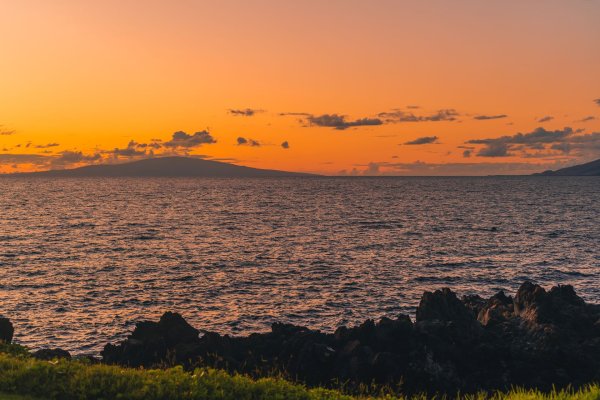
South Maui's sunsets are the reason Wailea and Kīhei have the most consistent sunset paddle inventory in the state — western horizon, sheltered from the trades, and Lānaʻi in silhouette almost every clear evening.
What to bring and what to know
Reef-safe sunscreen — a 2018 Hawaiʻi state law (Act 104) that took effect January 1, 2021 banned the sale of over-the-counter sunscreens containing oxybenzone and octinoxate, and enforcement has tightened. Bring a mineral-based (zinc oxide or titanium dioxide) formula. A search for reef-safe zinc sunscreen on Amazon returns the standard options. A dry bag — even on a calm bay you will get water splashed on your phone, wallet, and car key. A cheap 10-liter dry bag is worth every dollar the one time it saves your rental car key from an ocean bath. Any 10-liter dry bag from Amazon works fine. A cheap headlamp or a lit phone strap — if you are going to be on the water at the exact moment the sun drops, plan for the walk back to your car in the dark. Beach parking lots on the South Maui and Poʻipū coasts are not well-lit. Book two-part rentals for the return — outfitters that let you keep a SUP or kayak until “closing” often quietly close at sunset. Confirm the return time. A missed return can cost you a full extra day’s rental. Do not paddle after true dark. Hawaiian bays have boat traffic (harbor pilots, fishing boats, whale-watch returns) that cannot see a solo SUP on a moonless night. Turnaround well before the last light so you are on shore before you become a shipping hazard. Reservations tighten in fall. Late September through Thanksgiving is a busy shoulder-season window in Hawaiʻi. Sunset slots at the guided outfitters (Anelakai, Hawaiian Paddle Sports, Waikīkī Beach Services) fill early on peak dates — book before you land rather than after you arrive.
Getting there — and getting back
Most paddle spots are away from your resort. The Wailea outrigger launch is closer to an hour from Kāʻanapali in real traffic. The Kailua outfitters are half an hour from Waikīkī. Kealakekua is forty-five minutes from most Kohala Coast resorts. That is a car trip in each direction, and the return happens in dusk or dark, so pick a rental car you are comfortable driving on unfamiliar roads at night. We book most of our own Hawaiian rentals through Discount Hawaii Car Rental — they broker across the major agencies and consistently come in under the walk-up counter rate. If you are a Waikīkī hotel guest, the sunset outrigger from Waikīkī Beach Services is the exception. You walk from the hotel to the sand and back. No parking, no return drive. For that reason alone, it is the easiest sunset paddle in the state.
What to pair a sunset paddle with
A sunset paddle plus a late dinner is the day-ender we recommend to friends. In Waikīkī, walk from the beach into any of the second-floor restaurants along Kalākaua for a 7:30 pm table. In Wailea, most of the resort dining rooms and the Shops at Wailea keep the kitchens running past 9. In Kailua-Kona, Alii Drive lines up bay-view restaurants for a mile in each direction from Keauhou. If you would rather pair the paddle with more water, look at our guides to Hawaiʻi sunrise boat tours for the opposite bookend of the day, or Hawaiʻi SUP yoga classes if you want to add a morning water session that pairs nicely with an evening paddle later the same day.