
Update, evening of June 14, 2026: Episode 49 ended abruptly at 5:05 p.m. HST after about 7.5 hours of continuous lava fountaining inside Halemaʻumaʻu. Per the USGS Hawaiian Volcano Observatory, the observatory dropped the Volcano Alert Level from WATCH back to ADVISORY and the Aviation Color Code from ORANGE to YELLOW. No active fountaining at the summit right now. Background unrest continues at Halemaʻumaʻu and another episode is likely within the next 1 to 3 weeks, in line with the cadence this eruption has held since it resumed in December 2024.
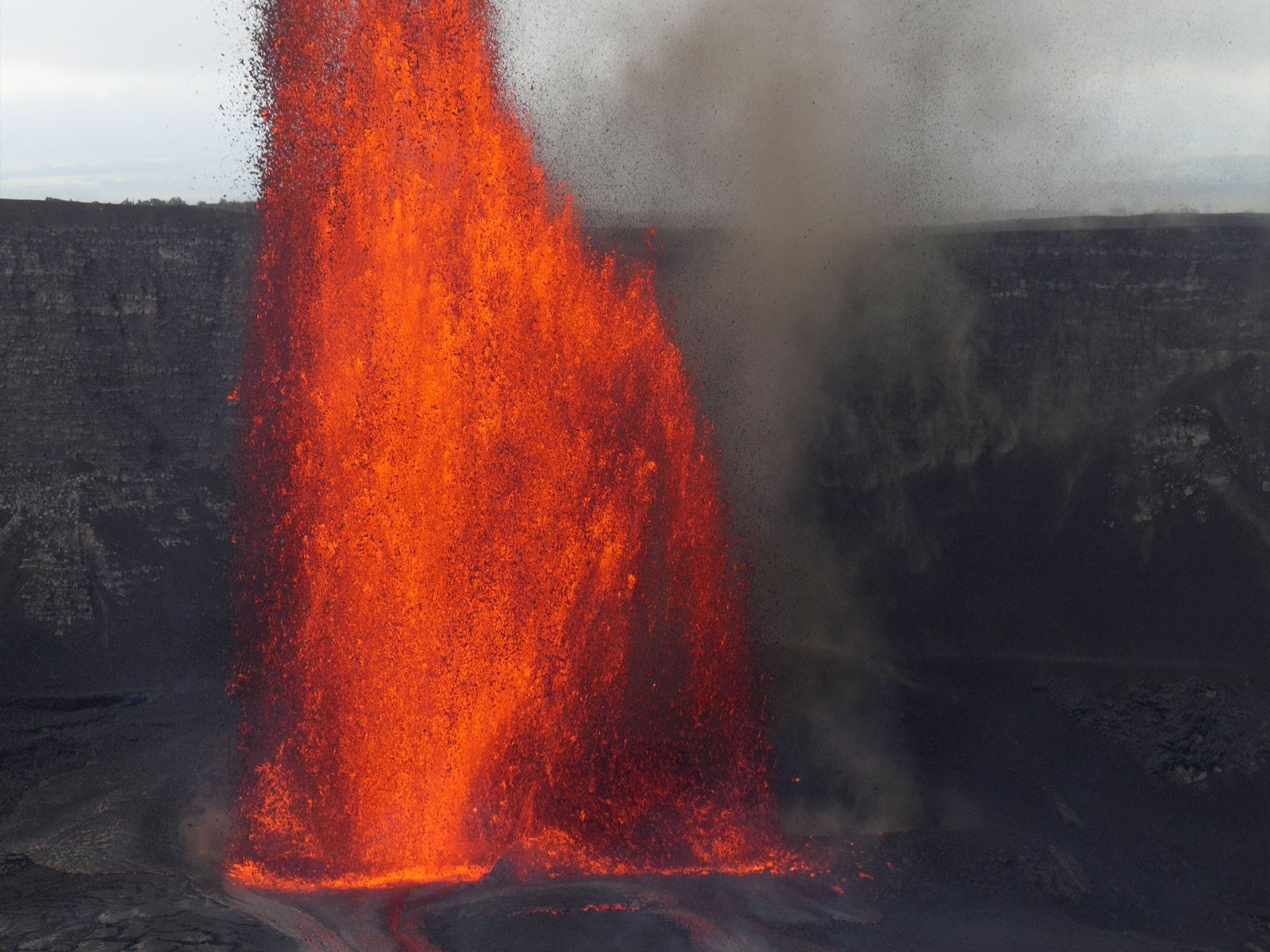
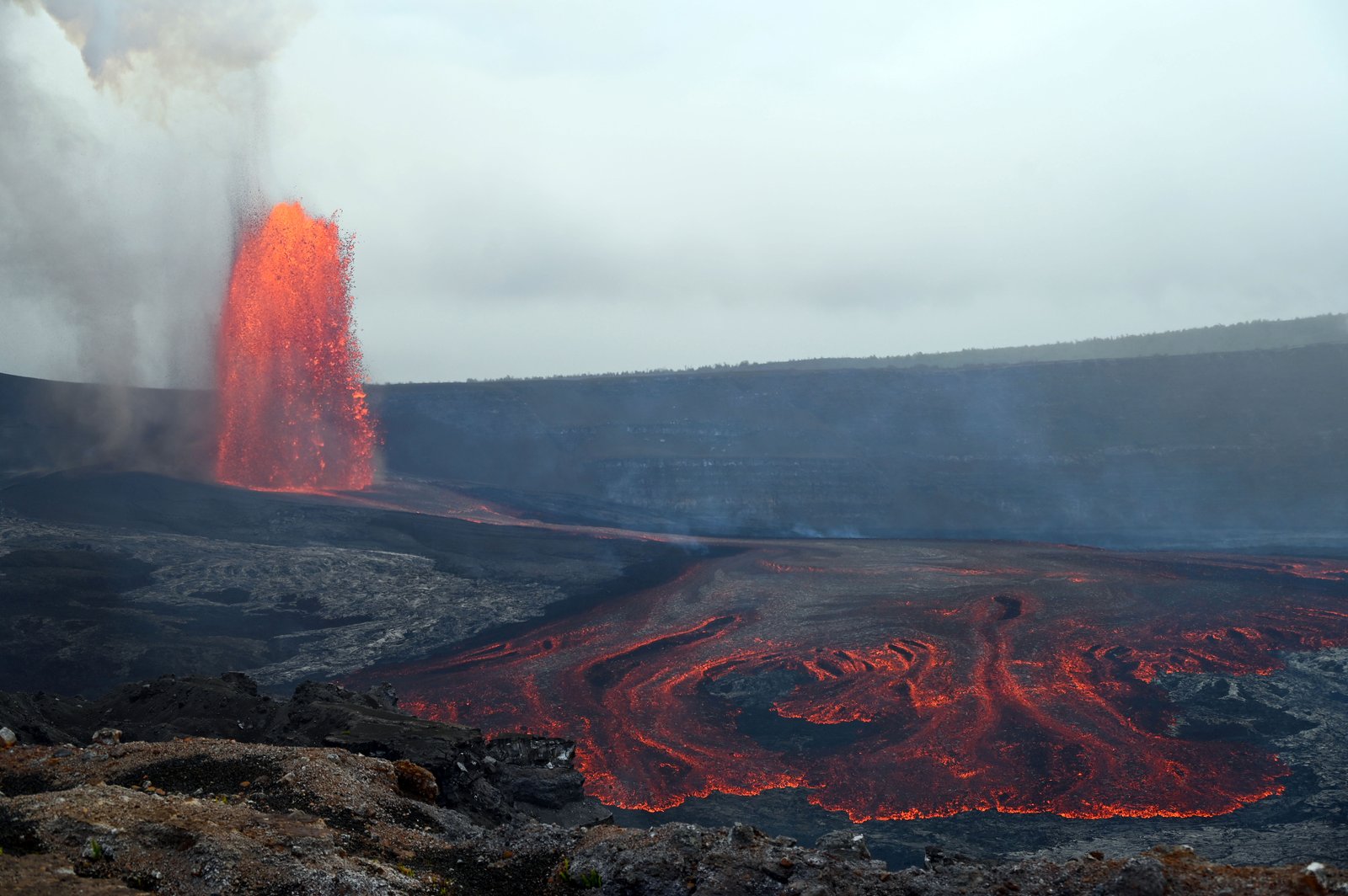
Update, late morning of June 14, 2026: Episode 49 lava fountaining began at 9:32 a.m. HST inside Halemaʻumaʻu, a little over five hours after the first precursory overflow. Per USGS HVO, ground-level winds near the vents are out of the north-northeast, so lower-level volcanic gas and erupted material are being carried to the southwest of Halemaʻumaʻu; higher-altitude winds are light and variable per the National Weather Service. Ash-dispersion models put most tephra fall to the southwest of the vents, though communities to the north of the summit may see trace tephra or Pele’s Hair. Kīlauea stays at Volcano Alert Level WATCH and Aviation Color Code ORANGE during active fountaining.
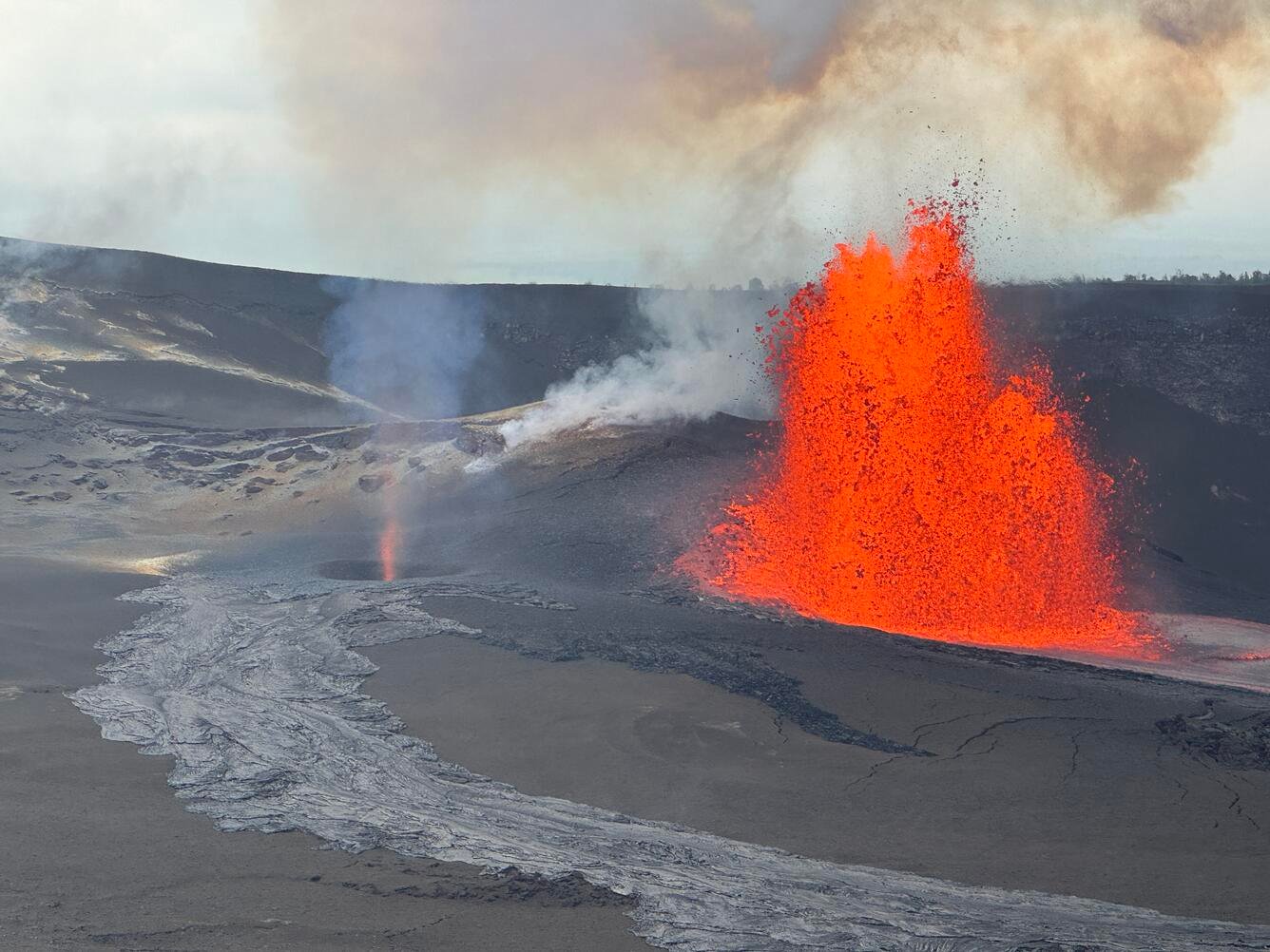
Update, morning of June 14, 2026: Precursory low-level activity for Episode 49 of the ongoing Halemaʻumaʻu eruption began around 4:10 a.m. HST on Sunday, June 14, with low dome fountains 10 to 15 feet (3 to 5 meters) high feeding a short flow from the north vent. The flow stagnated and lava drained back into the vent by 4:30 a.m. Per the USGS Hawaiian Volcano Observatory, this kind of brief overflow is the typical opening sequence before a main fountaining event. HVO raised the Volcano Alert Level for Kīlauea from ADVISORY to WATCH and the Aviation Color Code from YELLOW to ORANGE.
No volcanic cloud or tephra was produced by the precursory overflow, and none is expected during this precursory phase. The summit reservoir has spent the past two weeks re-pressurizing since Episode 48 ended on June 1, and the early dome fountaining suggests Episode 49 — the next sustained fountaining event — is approaching. There is no exact clock on it: precursory overflows can run for hours to more than a day before a main fountain begins, and on rare occasions stall out without one.
How Episode 49 Built Up
The lead-up followed the rhythm the summit has settled into over the past several months: inflation, short precursory overflows, then a single multi-hour fountain, then collapse and recovery. The 4:10 a.m. overflow on June 14 was small and short-lived, with dome fountains only 10 to 15 feet high before the lava drained back into the north vent twenty minutes later. That is a long way from the 650-foot fountain that opened Episode 48 on June 1, which is exactly what “precursory” means — the system testing the vent before it committed to the sustained fountaining that followed at 9:32 a.m.
Between episodes, the Uēkahuna tiltmeter tracks inflationary tilt as magma re-pressurizes the shallow summit reservoir. When that tilt approaches the threshold that preceded recent episodes, HVO starts watching for precursory overflows like this one — which is why the observatory moved the alert level up to WATCH this morning. Episodes through this stretch have averaged roughly 10 to 14 days between starts; Episode 48 ended June 1, putting June 14 squarely inside that window.
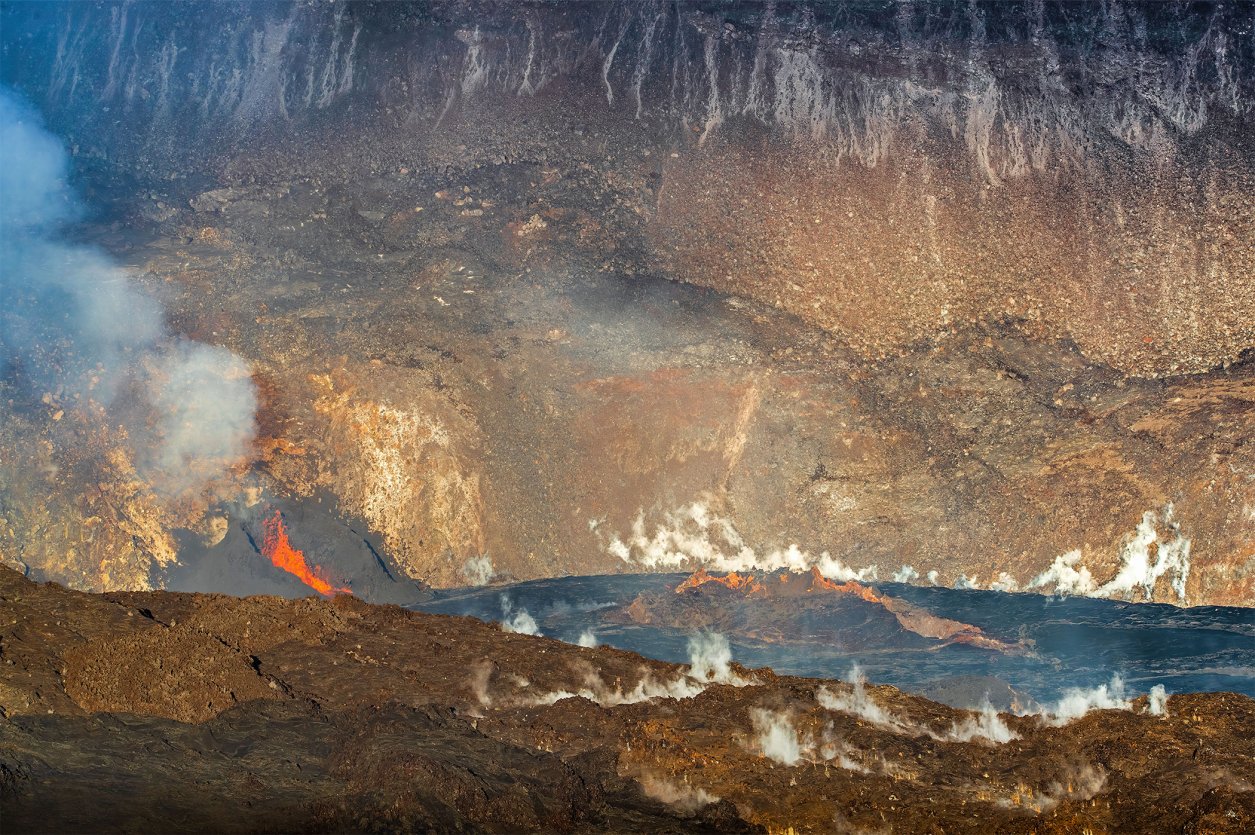
Keanakākoʻi Overlook puts you on the rim of Halemaʻumaʻu — the closest visitor sightline to the active vents.
How to Watch — Livestream and In Person
USGS livestream. The USGS Kīlauea webcams page lists every active summit camera. The V1cam is a pan-tilt-zoom camera the observatory re-aims toward whichever vent is most active, and HVO also runs live summit streams on YouTube during fountaining episodes. During a precursory phase like this, the webcams are the best way to catch the moment a main fountain starts.
In person at the park. Hawaiʻi Volcanoes National Park is open 24 hours and does not close during summit eruptions. The best sightlines into Halemaʻumaʻu are from Keanakākoʻi Overlook and Uēkahuna, both on or near Crater Rim Drive — though either can cycle closed for tephra cleanup or poor air quality once an episode is active. Check the NPS conditions page the day of your visit. After dark, the crater glow is visible from multiple overlooks along the rim during any active fountaining.
Park entrance fee: $30 per vehicle, valid for 7 days, per the NPS fees page. Annual and America the Beautiful pass holders enter free.
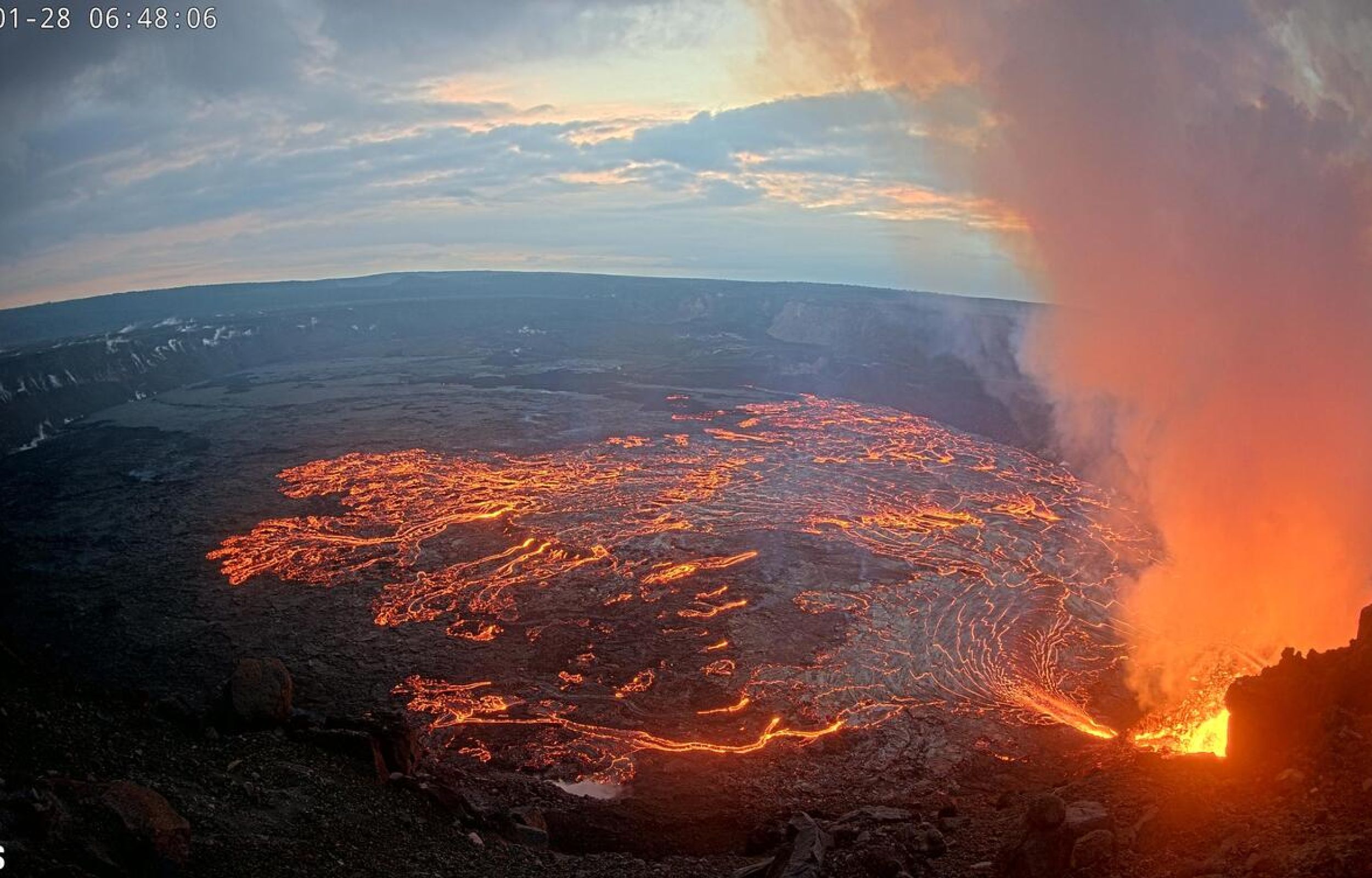
The north vent — the source of this morning's dome fountains and the vent that has driven most of this cycle's episodes.
If You Are on the Big Island This Week
Catching a fountaining episode in person comes down to timing. These episodes have run roughly 6 to 13 hours from start to abrupt finish, and there is no guaranteed lead time between the precursory overflows you read about and the main fountain. If you are near the park while the alert sits at WATCH, the smart move is to keep the webcams open and be ready to drive up quickly. Even between episodes, the trip is worth it — fresh cooled lava covers most of the crater floor, the steaming vents are visible from the rim, and the post-episode landscape is its own geology lesson.
Volcano Village sits a few minutes from the park entrance and is the obvious base camp for eruption-watching. From Hilo it is about 45 minutes to the park; from Kona, roughly 2.5 hours (per Google Maps driving estimates). A rental car is essential — eruption windows do not coordinate with shuttle schedules, and the next fountain could start at any hour.
For aerial viewing, several Big Island helicopter operators fly volcano-focused routes out of Hilo and adjust in real time to eruption status. You can compare Big Island helicopter tours on Viator.
Safety and What Visitors Need to Know
Activity is confined to Halemaʻumaʻu inside the park boundary. Per the HVO assessment, the precursory overflow stayed within the crater and is not threatening communities or homes. The 2018 lower East Rift Zone eruption that destroyed Leilani Estates was a fundamentally different event. Conditions can change, and HVO will update the alert level if rift-zone activity develops.
Tephra is the main hazard once fountaining starts — but not yet. HVO reported no volcanic cloud or tephra from this morning’s overflow, and none is expected during the precursory phase. That changes if a main fountain begins: past episodes have sent reticulite, Pele’s Hair, and pumice drifting downwind across the summit area and into communities northeast of the caldera. If you are at the rim when an episode kicks off, keep car windows closed and limit time outside if you have respiratory conditions.
Vog and SO₂ spike during fountaining and drop sharply between episodes. Right now, with no sustained eruption, summit gas output is low. People with respiratory conditions should still check current air quality on AirNow before visiting, and our Big Island vog guide covers which parts of the island get hit hardest and when.
Stay on marked trails and behind barriers. The NPS safety guidance warns that ground near the crater edge can be undercut by lava tubes and unstable. Ignoring closures at an active volcano is how people get hurt.
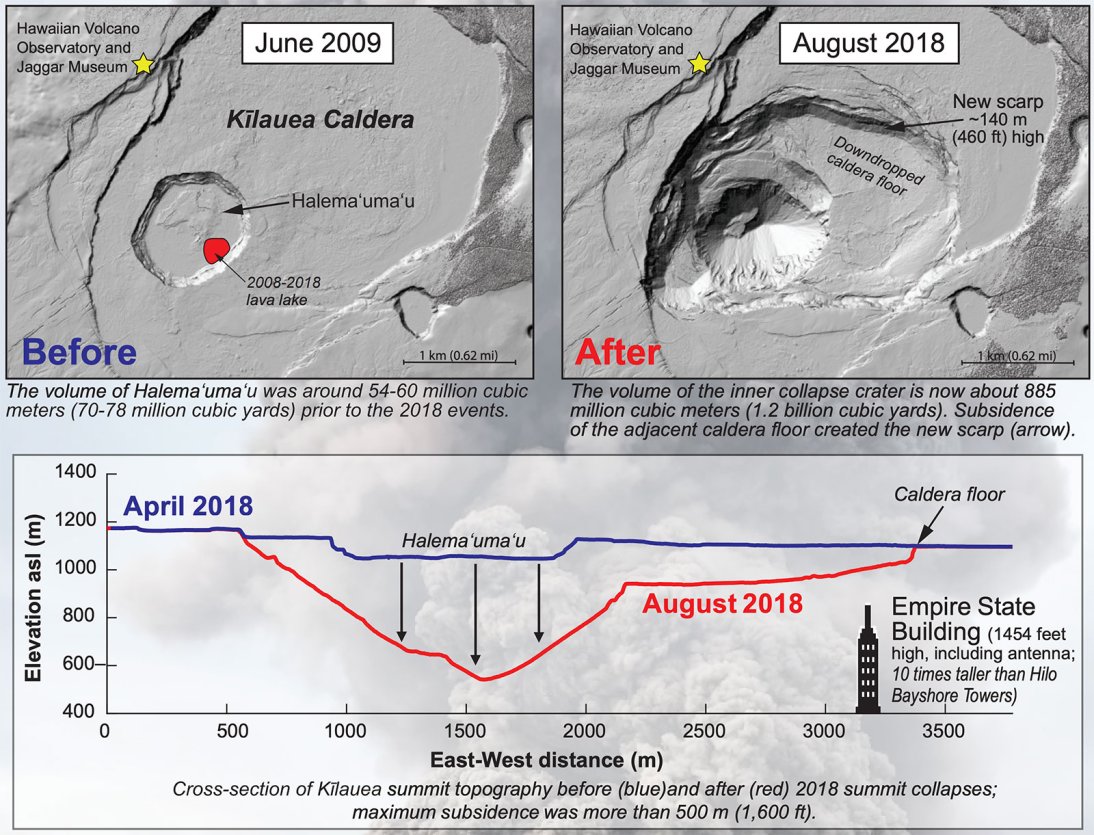
The 2018 collapse re-shaped the floor of Halemaʻumaʻu — the bowl every modern episode is steadily filling back in.
What to Watch For Next
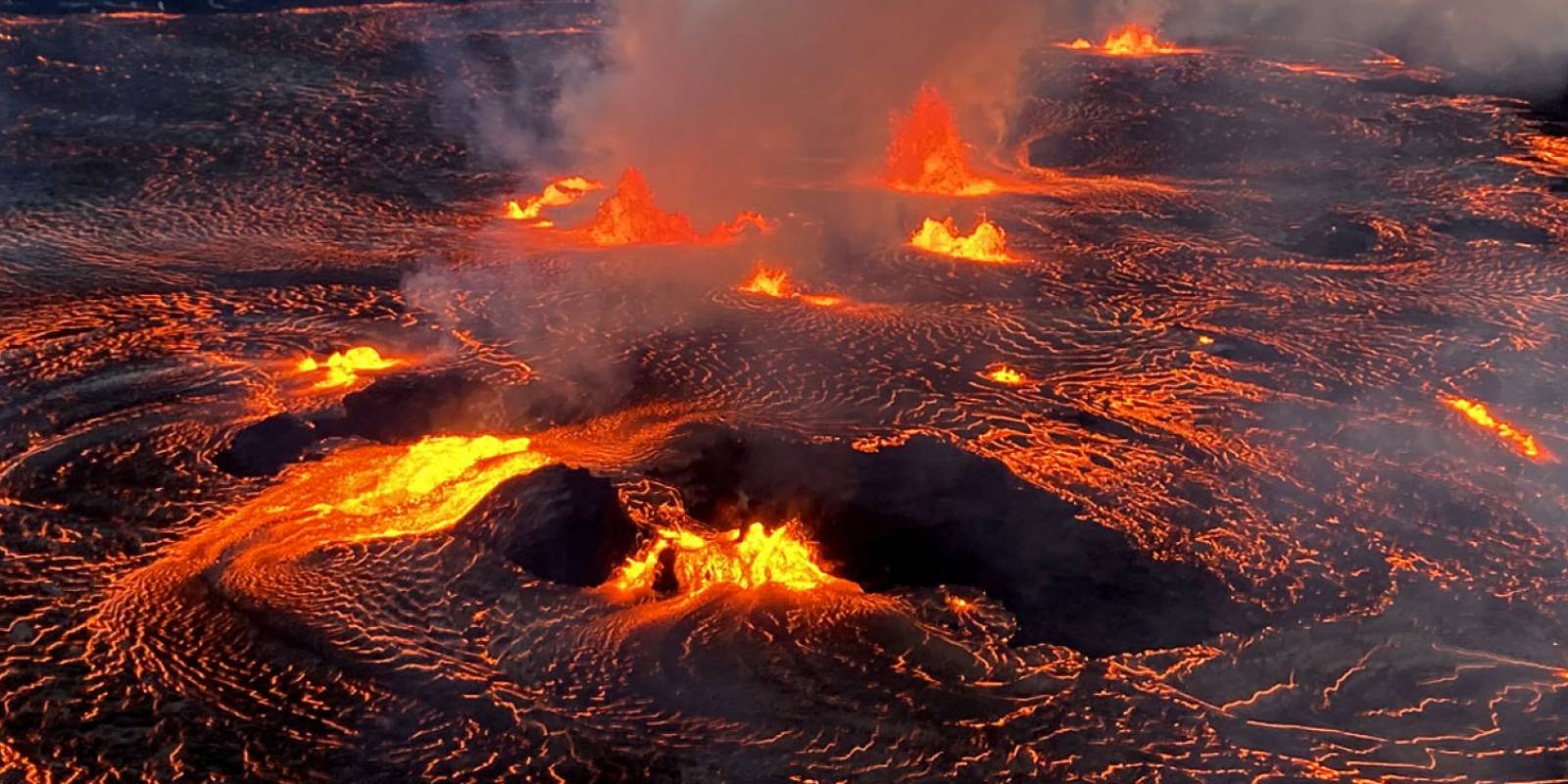
Episode 49 fountained for about 7.5 hours before shutting off abruptly at 5:05 p.m. HST — right in the 6-to-13-hour range recent episodes have held. The summit reservoir now flips into recovery mode: the Uēkahuna tiltmeter will track inflationary tilt as magma re-pressurizes the shallow reservoir, and when that tilt approaches the threshold that preceded recent episodes, HVO will start watching for the next round of precursory overflows. The eruption itself is not over — the summit has been running this inflation-and-fountain loop on roughly a two-week clock since the eruption resumed in December 2024.
The right tools to keep an eye on Kīlauea: the USGS Kīlauea webcams, the HVO daily updates for tilt and deformation summaries, and AirNow for summit air quality if you plan to visit. Our Kīlauea eruption updates page tracks the current USGS alert level and the latest episode summary, and we will update this post as Episode 49 develops.