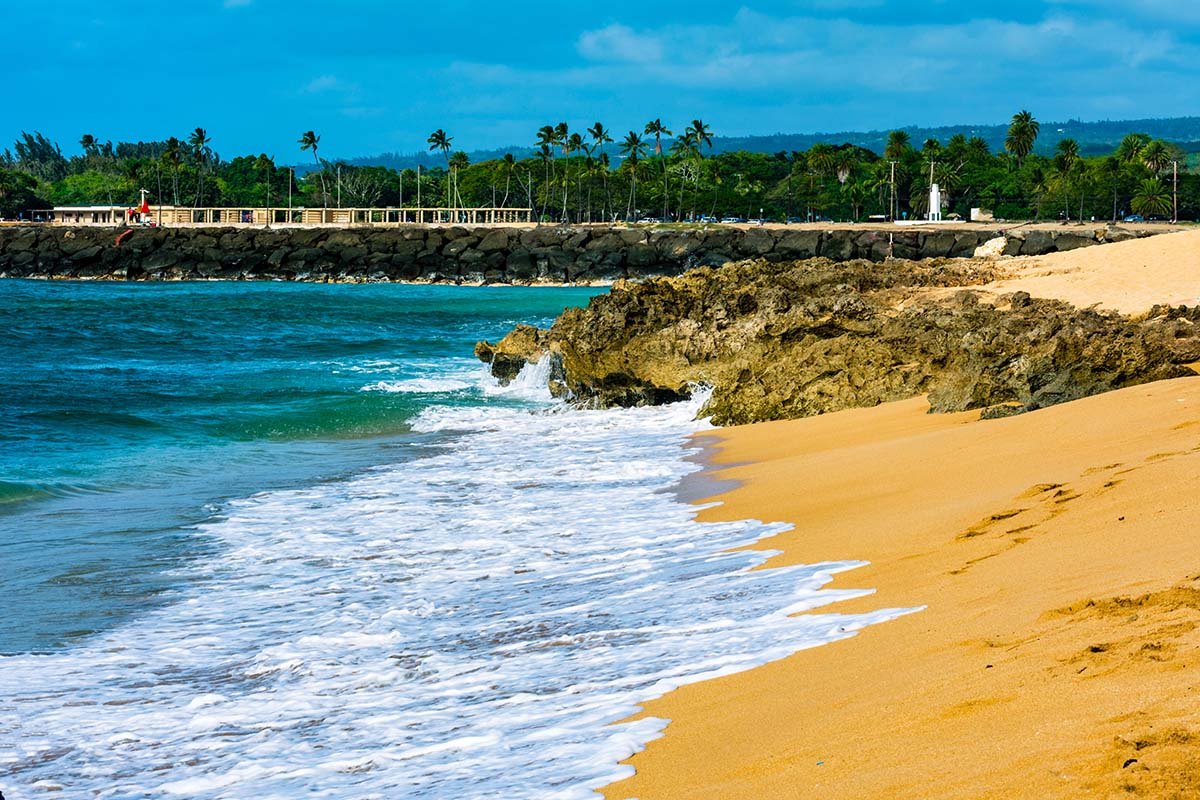

Oahu shark tours all run out of one small harbor on the North Shore, and they split cleanly into two camps that get treated as the same trip. They’re not. Three miles off Haleʻiwa, the bottom drops away — the water shifts from lagoon green to a Pacific blue that reads as black under a passing cloud. North Shore Shark Adventures, Hawaii Shark Encounters, and One Ocean Diving all run to roughly that same patch of open water. They just put you in it very differently. </p><p> Camp one: a steel cage clipped to the side of a dive boat, snorkelers at the surface, sandbar and Galapagos sharks circling underneath. Camp two: no cage at all, swimmers in the open ocean alongside the same species, a safety diver in the water with you the whole time (One Ocean Diving). And camp three, which doesn’t show up on any booking site: a Native Hawaiian view that the boats shouldn’t be out there in the first place, because the shark is a family guardian — an ʻaumakua — and the chum-and-tour model has no place inside that relationship (DLNR). </p><p> All three are defensible. A visitor deciding whether to book deserves to hear all three before clicking. Here’s what these trips actually are, who runs them, what you will and won’t see, and the honest case for skipping the whole category.
The Two Things You Are Actually Choosing Between
Two distinct shark-tour products operate out of Haleʻiwa Small Boat Harbor. Travel sites blur them together. They’re not the same trip. </p><p> The cage tour. A morning boat ride out to a working spot roughly three miles offshore (North Shore Shark Adventures, Hawaii Shark Encounters). You snorkel inside a partially submerged steel cage clipped to the boat. The operator uses bait to bring sharks into view — that’s part of the model. Most of what you see will be Galapagos sharks (Carcharhinus galapagensis) and sandbar sharks (Carcharhinus plumbeus), both documented in Hawaiian waters by DLNR and identified by the operators themselves as the most common species on the route (North Shore Shark Adventures). Two-hour trip, no scuba required, minimum ages start as low as three or five depending on the operator. </p><p> The cage-free swim. Smaller, more selective. You enter the open ocean without a cage, with a guide and a safety diver. One Ocean Diving, co-founded by Ocean Ramsey and Juan Oliphant, runs the dominant cage-free operation out of Haleʻiwa and frames the trip as a research swim. They explicitly do not chum — “Instead, our method is based on studying shark behavior and body language,” per their tour page. Expect a higher price, a stricter screening process, and a real possibility that the sharks you came for aren’t around that morning. </p><p> Decide which trip you’re weighing before you start reading reviews. The reviews are not interchangeable.
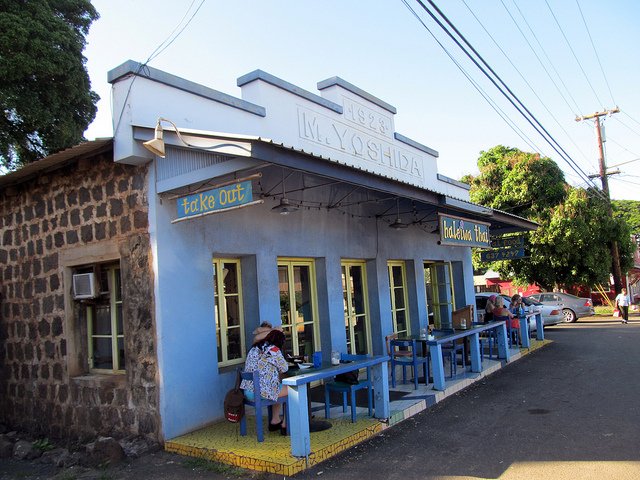
Many shark-tour mornings start the same way — early coffee in Haleʻiwa town, then a short drive down to the small-boat harbor before the surf shops open.
Who's Running These Trips
Two cage operators have been on this route longer than most Hawaiʻi travel writers have been writing about it. North Shore Shark Adventures and Hawaii Shark Encounters have both been running cage trips with a bait component out of Haleʻiwa for the better part of two decades. Both have well-developed safety protocols. Both have been booked solid for most of that run. The dominant cage-free operator is One Ocean Diving, and their model sits closer to a research swim with paying participants than a standard tourist excursion. </p><p> You can also book most of these operators through Viator and compare snorkel-class tours on Viator side by side. That’s often the fastest filter for a discontinued listing. Confirm the actual booking on the operator’s own page before paying — Haleʻiwa’s fleet moves around enough that the operator’s site is the ground truth.
What the Cage Tour Is Actually Like
You arrive at Haleʻiwa Small Boat Harbor before the surf-shop owners do. Check-in is a clipboard and a waiver. Boat capacity varies by operator. You’ll get a safety talk, a mask, a snorkel, and a pre-departure question about whether you can swim with your face in the water for a few minutes at a time. The honest answer matters. </p><p> The ride out is short — about fifteen minutes from harbor to the working spot, per Hawaii Shark Encounters. The cage clips to the side of the hull and rides at the surface, with roughly half its volume underwater. You enter through a top hatch, stand on a metal grate at chest depth, and breathe through the snorkel with your face down. Cage time per group runs around 20 minutes with North Shore Shark Adventures and at least 30 minutes guaranteed with Hawaii Shark Encounters. Check the current listing — these numbers shift. </p><p> What you see depends entirely on the day. On a good morning, several sharks circle five to twenty feet below the cage in clear visibility, with deep blue dropping out underneath. On a slow morning, one or two pass through and you watch a lot of pelagic blue. Both are normal, and a good operator says so in the safety talk — this is a wild-animal encounter, not a guaranteed exhibit. Sandbar and Galapagos sharks are the common sightings. Tiger sharks are possible but rare on the cage routes (North Shore Shark Adventures).
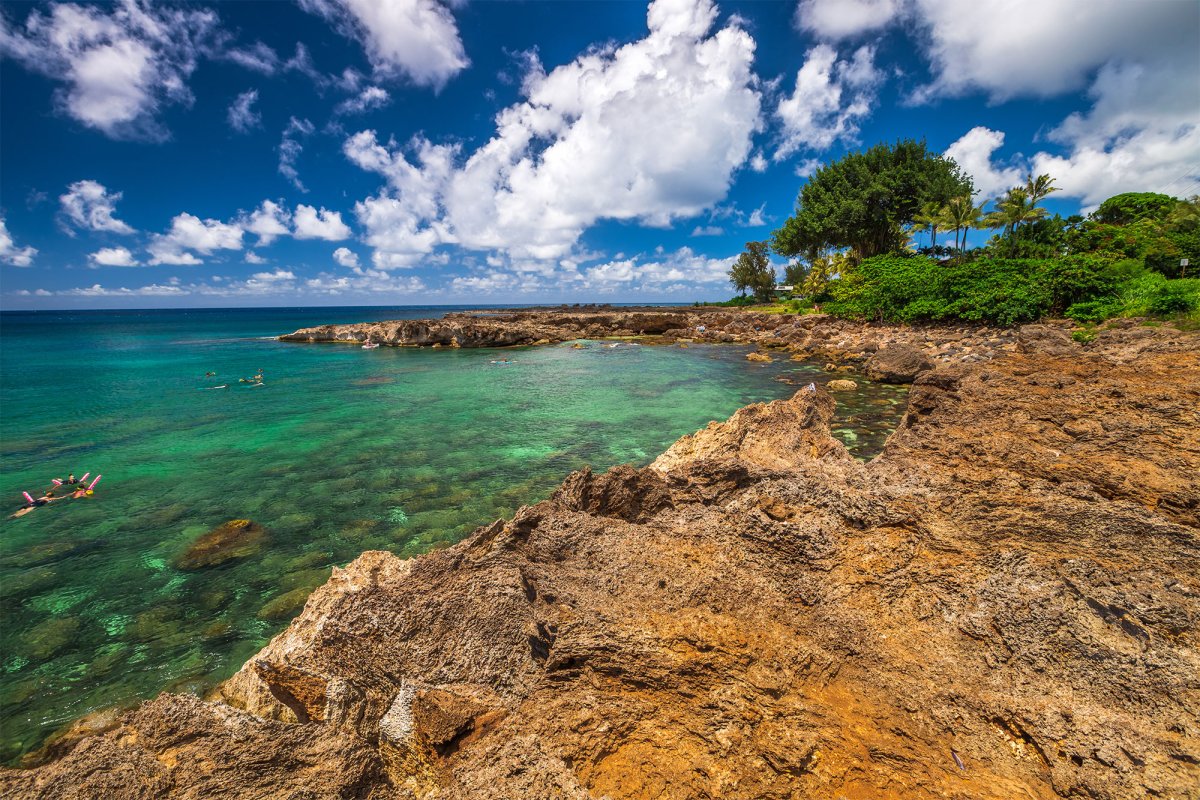
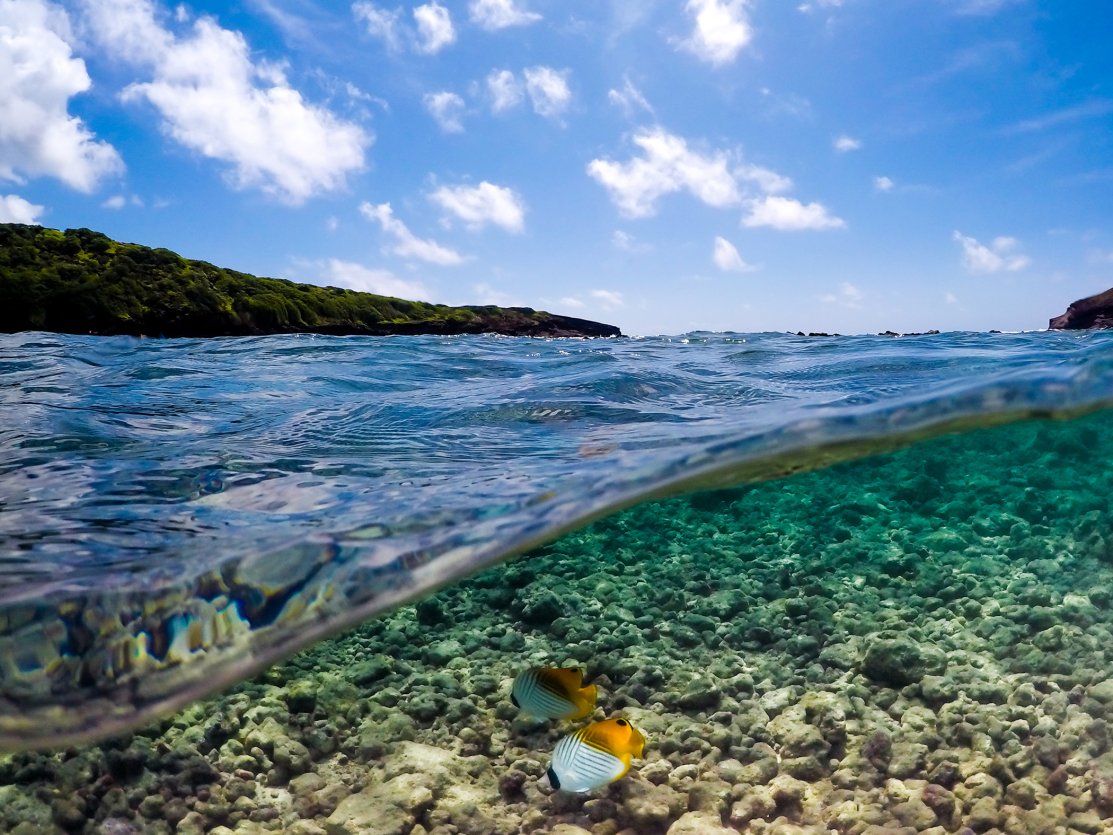
Sharks Cove, a few miles up the road from the tour harbor, was named for the shape of its reef — not for what swims there (Hawaii Magazine). Cage and cage-free tours run miles offshore in deep water, not in shoreline coves like this one.
The Mano Question
In Hawaiian, the word for shark is manō. For many Hawaiian families, the manō is an ʻaumakua — a guardian ancestor whose physical form is a shark, with a relationship built up across generations. The state’s DLNR page on sharks in Hawaiian culture describes the ʻaumakua relationship directly, and the Papahānaumokuākea cultural brief on manō (PDF) goes into more depth than a blog post can. The short version: the shark isn’t just wildlife in this tradition, and the relationship isn’t transactional. </p><p> That makes the bait-and-cage model meaningfully different from a snorkel-with-turtles trip. Native Hawaiian views aren’t monolithic. Some practitioners object to the commercial tours outright. Others draw a line between cage tours that use bait — which they may read as disrespectful — and research-style cage-free swims that don’t, which they may view as closer to an observational encounter. Some Native Hawaiian guides work in the industry themselves and frame their participation as education-as-conservation. </p><p> A respectful visitor doesn’t have to memorize this debate. The least useful move is to do the trip and then act surprised on the boat that anyone might object. The most useful move is to listen if a guide or deckhand brings it up.
Hawaiian sacred sites long predate the tour fleet at Haleʻiwa. The manō / ʻaumakua relationship sits inside a larger cultural framework that the cage-tour model can sit uneasily within.
Who Should Book, Who Should Skip
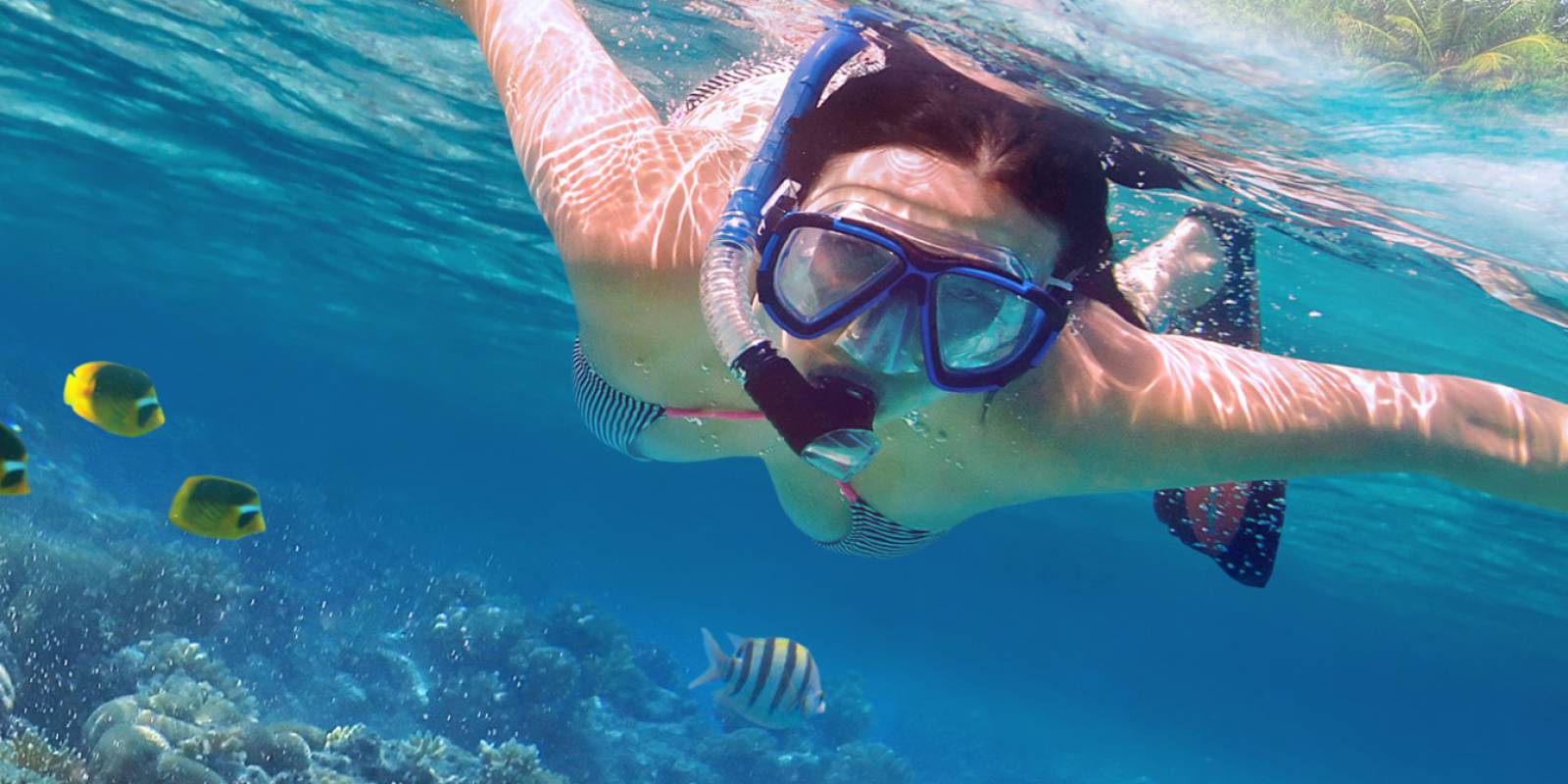
Book the cage tour if you want a memorable, relatively beginner-friendly encounter with pelagic sharks, you’re comfortable in the water with a mask and snorkel, you can stomach a small dose of seasickness on a small boat, and you don’t have strong ethical objections to a baited encounter. Cage tours work for families with confident-swimmer kids — minimum ages start as low as three or five, depending on the operator. </p><p> Book the cage-free swim if you have strong open-water skills, you’ll pay more for a smaller, more selective trip, you accept that you might get in with no sharks present, and you specifically want the research-swim framing. Cage-free isn’t a harder version of the cage trip. It’s a different product. </p><p> Skip the whole category if you have any history of severe seasickness, anxiety in open water, panic while snorkeling, or strong ethical objections to baited wildlife encounters. The cage does not make a panicked swimmer un-panic, and the lift back to a rocking deck in three-foot chop is not where you want to discover you have motion sickness. There are softer alternatives — a calm-water snorkel tour out of Waikiki sees green sea turtles in waist-deep water, no chum, no cage, and a fraction of the cost.
Logistics — When to Book, What to Bring, How to Get There
Season. Cage tours run year-round, but winter (roughly November through March) brings the large North Shore swells that can cancel trips, sometimes on short notice (Hawaii Shark Encounters FAQ). Summer is the calmer, more reliable window. Cancellations are weather-driven, not operator-driven; build a buffer day into your itinerary if a shark tour is the centerpiece of your trip. </p><p> Time of day. Departures typically start around 7 AM, with later slots at 9 AM and 11 AM at both North Shore Shark Adventures and Hawaii Shark Encounters. Mornings are calmer water and better light. By afternoon the trade winds usually push chop onto the North Shore. Check the current schedule before booking — the times shift seasonally. </p><p> What to bring. Reef-safe sunscreen (mineral-based, zinc oxide), a wide-brim hat for the boat ride, light layers for the early morning, a towel, a change of dry clothes for the drive back, and a strong constitution for breakfast. Hawaiʻi has tightened reef-safe sunscreen rules in recent years — see our Maui rules write-up for current detail and check the latest before you fly. Cameras are welcome; phones in a waterproof pouch work fine for the cage. </p><p> Getting to Haleʻiwa. The drive from Waikiki runs about an hour with no traffic, and pre-dawn there isn’t any. A rental car booked through Discount Hawaii Car Rental is the practical answer for a pre-dawn drive across the island. Rideshare gets unreliable that far out at that hour. Tour shuttles exist but add time and markup.
What It Costs (Roughly)
Pricing on these tours moves with the season and with online promotions, so I’d rather point you at the operator pages than freeze a number into a blog post. As a frame of reference: cage tours sit in a premium-excursion band — meaningfully more than a Waikiki snorkel charter, meaningfully less than a private boat charter. Cage-free swims run higher than cage tours and often require a screening conversation before they’ll take the booking. Online discounts disappear in high season. Check the current rates at North Shore Shark Adventures, Hawaii Shark Encounters, and One Ocean Diving before you build your itinerary around it. Some travelers count the trip among the best mornings of their Hawaiʻi trip. Some regret it. Both reactions are common, and the booking pages don’t always make that clear.
The Honest Bottom Line
Oahu shark tours are a trip where the right answer depends as much on who you are as on which operator you pick. Go in clear-eyed about the bait question, awake to the cultural context, and honest with yourself about your comfort in open water, and a cage morning off Haleʻiwa can be the kind of thing you tell people about for years. Get any one of those wrong and there are easier wins on this island — the North Shore snorkel reefs, a guided marine-life cruise out of Waikiki, or a quiet morning at Sharks Cove (which, despite the name, is famous for tropical fish). </p><p> Whatever you decide, decide before you click “book.” It’s a better trip when you’ve already made peace with the question.