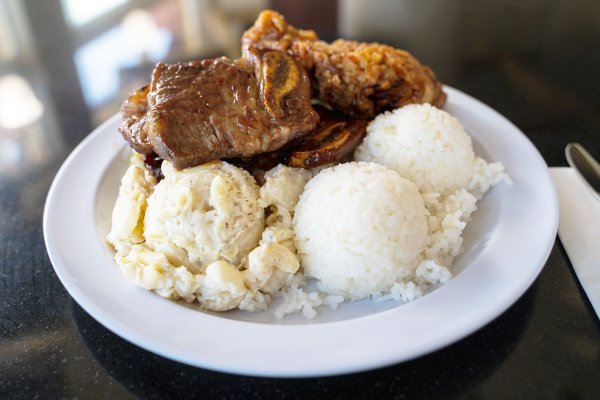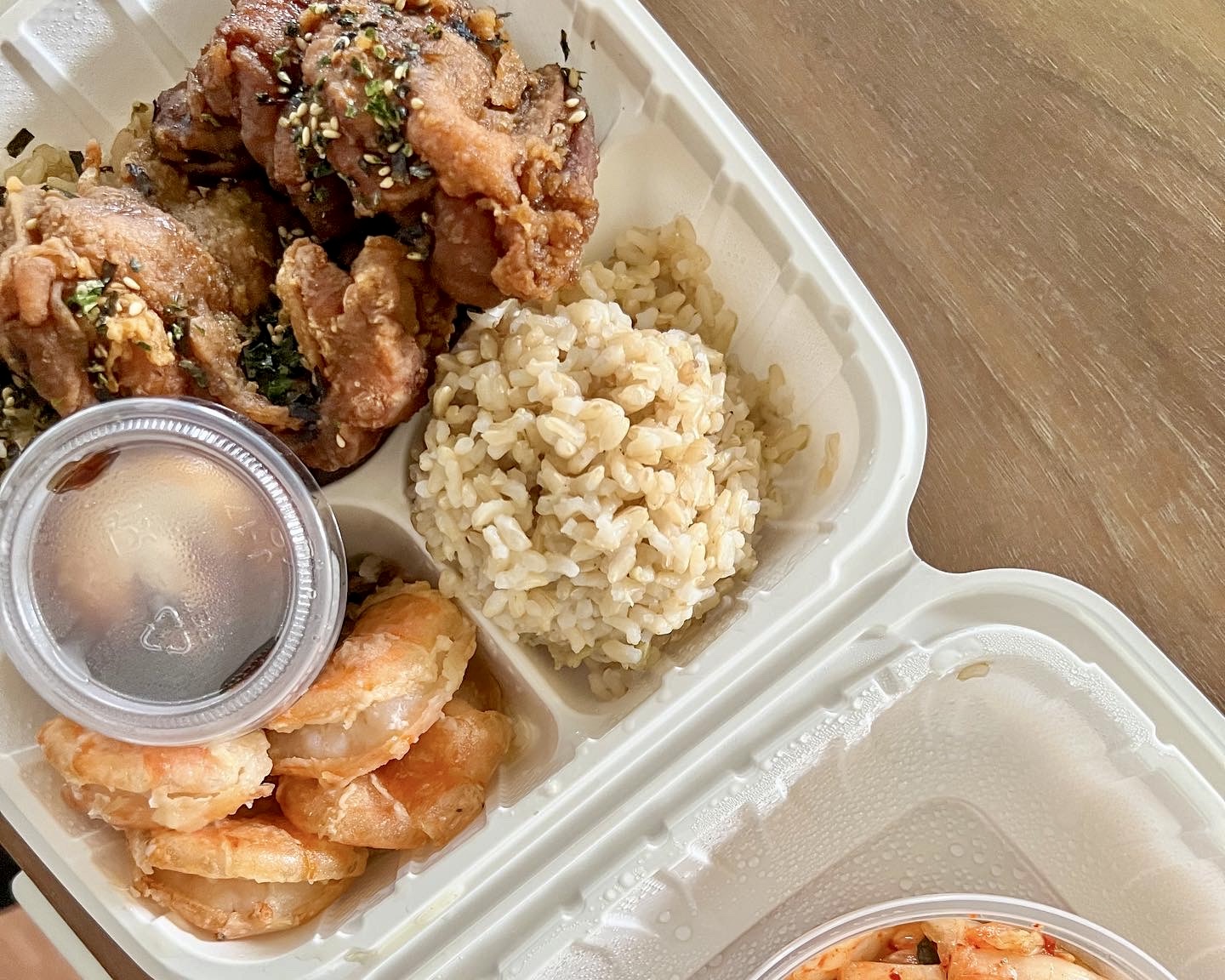
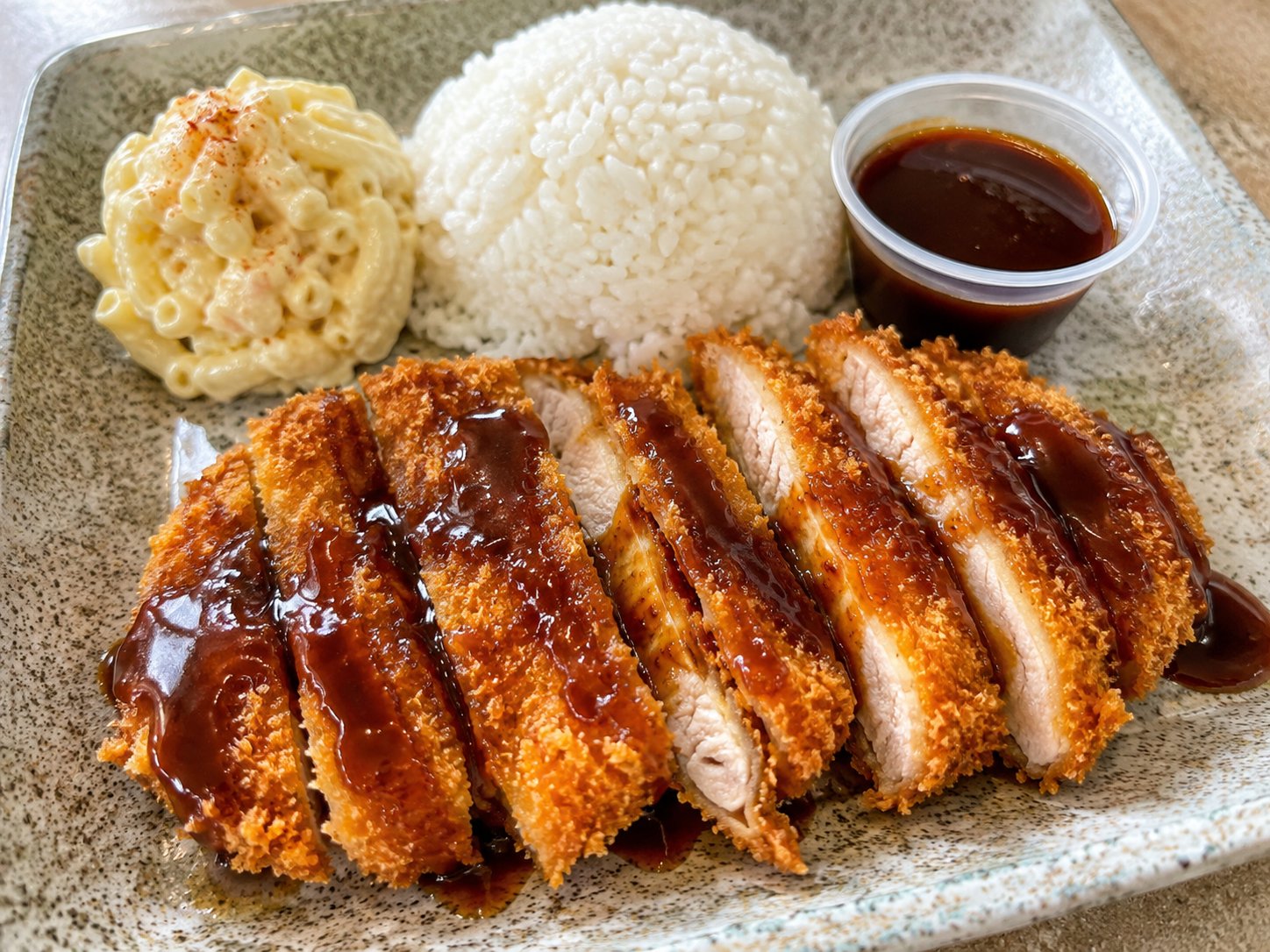

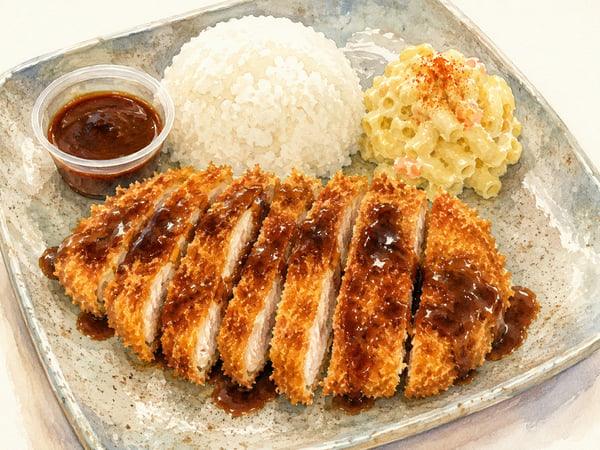
Chicken katsu is the cutlet that built the modern Hawaii plate lunch. A boneless chicken thigh gets pounded thin, dredged in seasoned flour, dipped in egg, pressed into panko, and shallow-fried until the crust crackles like sugar glass. Sliced across the grain into ribbons, fanned over two scoops of rice with mac salad on the side, the whole plate crosshatched with bottled brown katsu sauce that smells like Worcestershire and tastes like ketchup's smarter cousin. This recipe gets you that exact plate, in thirty minutes, on a home stove.
The template extends past the bird. Swap the cutlet for kalbi, teriyaki beef, or mahi-mahi and you've built the rest of the plate-lunch menu. Tonkatsu, the pork ancestor, came over with the Japanese immigrants who started arriving in the islands in the late 1800s and grew into the largest plantation labor force by the early 1900s. The chicken-thigh variant became the everyday version on hot fry stations, and at L&L Hawaiian Barbecue — the Honolulu-born chain that helped take plate lunch nationwide — chicken katsu is still one of the menu's best-sellers.
At a glance
4
15 minutes
15 minutes
Easy
Ingredients
For the chicken
- 1½ lb boneless, skinless chicken thighs (about 4 thighs)
- 1 teaspoon kosher salt
- ½ teaspoon black pepper
- ½ teaspoon garlic powder (optional)
For the breading
- ½ cup all-purpose flour
- 2 large eggs, beaten
- 1½ to 2 cups panko bread crumbs
For frying
- ½ cup neutral oil (canola, vegetable, or peanut)
For the katsu sauce
- ½ cup ketchup
- 3 tablespoons Worcestershire sauce
- 2 tablespoons shoyu (Aloha Shoyu, Kikkoman, etc.)
- 1 tablespoon sugar
- 1 teaspoon Dijon mustard
Equipment
- Heavy 10- or 12-inch skillet (cast iron is ideal)
- Three shallow bowls or rimmed plates for breading
- Meat mallet or heavy pan for pounding
- Wire rack set over a sheet pan
- Sharp knife for slicing
To serve
- Two scoops hot white rice (Calrose)
- Shredded green cabbage
- Lemon wedge (optional)
- Mac salad on the side if you're building the full plate
Method
- Pound the chicken. Place a thigh between two sheets of plastic wrap or in a zip-top bag. Pound to an even ½-inch thickness with the flat side of a meat mallet or the bottom of a heavy skillet. You're after even thickness, not thin paper. Repeat with the rest. Season both sides of each thigh with salt, pepper, and garlic powder if using. Let sit at room temperature for 10 minutes while you set up the breading station.
- Mix the sauce. Whisk the ketchup, Worcestershire, shoyu, sugar, and Dijon in a small bowl until smooth. Taste and adjust. More Worcestershire for sharper, more ketchup for sweeter. Set aside.
- Set up the breading line. Bowl 1: flour. Bowl 2: beaten eggs. Bowl 3: panko. Line them up in that order. Drop your wire rack at the end of the line so the breaded thighs have a place to wait.
- Bread each piece. Dredge a thigh in the flour and shake off the excess. Dip it in the egg and let the drips fall. Press it into the panko, then flip and press again so the crumbs cling everywhere, including the edges. Set on the rack. Repeat with the rest.
- Heat the oil. Pour the oil into the skillet to a depth of about ¼ inch. Heat over medium-high until the oil shimmers and a panko crumb dropped in sizzles immediately, around 350°F if you have a thermometer.
- Fry. Place 2 thighs in the pan (don't crowd it). Fry undisturbed for 3 to 4 minutes per side, until the crust is a deep golden brown and the chicken registers 165°F at the thickest point. The crust should crackle audibly when you press a fork against it. Drain on the wire rack, not on paper towels, which steam the bottom and soften it. Fry the remaining batch.
- Slice and plate. Let the cutlets rest for 2 minutes. Slice across the grain into ½-inch ribbons. That's the cut that makes it look like katsu and not just fried chicken. Fan the slices over a bed of shredded cabbage next to two scoops of rice. Drizzle with katsu sauce or pool the sauce alongside for dipping. Mac salad goes on the third quadrant of the plate if you're going full plate-lunch.
Notes from a local cook
Thighs, not breast. Breast meat dries out and turns chalky if you look at it wrong. Thighs have enough fat to stay juicy through the fry, and the texture holds up under the crust. Every plate-lunch counter I've ever paid attention to uses thighs.
Panko, real panko. The Japanese-style flaky panko (not "Italian breadcrumbs") is what makes the crust shatter instead of soften. Look for the long, jagged flakes in a clear bag. Kikkoman and Marukan both work. Regular breadcrumbs absorb oil and turn dense.
Don't skip the rest after slicing. Slice too soon and steam from the meat softens the crust. Two minutes on the rack is enough. The crust stays crisp, the slicing surface stays clean, and the juice stays inside the meat where it belongs.
Sauce shortcut. Bottled tonkatsu sauce works fine. Every plate-lunch counter I've worked behind or eaten at kept a squeeze bottle of Bull-Dog or Kikkoman katsu sauce within arm's reach, and there's no shame in doing the same at home. The homemade version above gets closer in flavor than you'd guess from the ingredient list. Worcestershire and ketchup together approximate the same fermented-fruit base.
While You're on the Islands
Eat it made by someone else. Plate-lunch chicken katsu is on most Oʻahu menus and across the islands — most plate-lunch counters carry it as a default. L&L Hawaiian Barbecue, the Honolulu-born chain that took plate lunch nationwide, still does a solid katsu plate. Zippy's serves a chicken katsu plate from its regular menu across Oʻahu, Maui, and Hawaiʻi Island. For something more old-school, Mitsu-Ken Okazu & Catering at 2300 N. King Street in Kalihi (early-morning hours, takeout — check Instagram for current hours and payment options before driving over) is the okazu-ya every Honolulu local I know respects. See our Oahu dining guide for more plate-lunch counters across the island.
Cook it yourself while you're here. This one doesn't require a special sourcing trip — boneless chicken thighs, panko, and shoyu are stocked in the Asian-foods aisle of every Foodland, Safeway, and Times Supermarket on the islands. If you're cooking from a vacation rental, grab a bottle of real Japanese panko (look for Kikkoman or Marukan) instead of the dry Italian-style crumbs at a mainland grocery — that's the one ingredient worth being picky about even on island.
Bring It Home
What to stock up on before you fly home: a bottle of real Aloha Shoyu and a bag of Japanese-style panko travel well in a suitcase and make the home version taste right. If you don't want to make the sauce from scratch, a bottle of Bull-Dog tonkatsu sauce is the same shortcut every plate-lunch counter uses.
What you can substitute, what you can't: any neutral cooking oil works for frying, and Worcestershire-plus-ketchup gets you 90% of the way to bottled katsu sauce. The one place this recipe won't bend is the panko — standard dry breadcrumbs absorb oil and go dense instead of crackling, so it's worth the extra few dollars for the real thing.
Where to try this in Hawaii