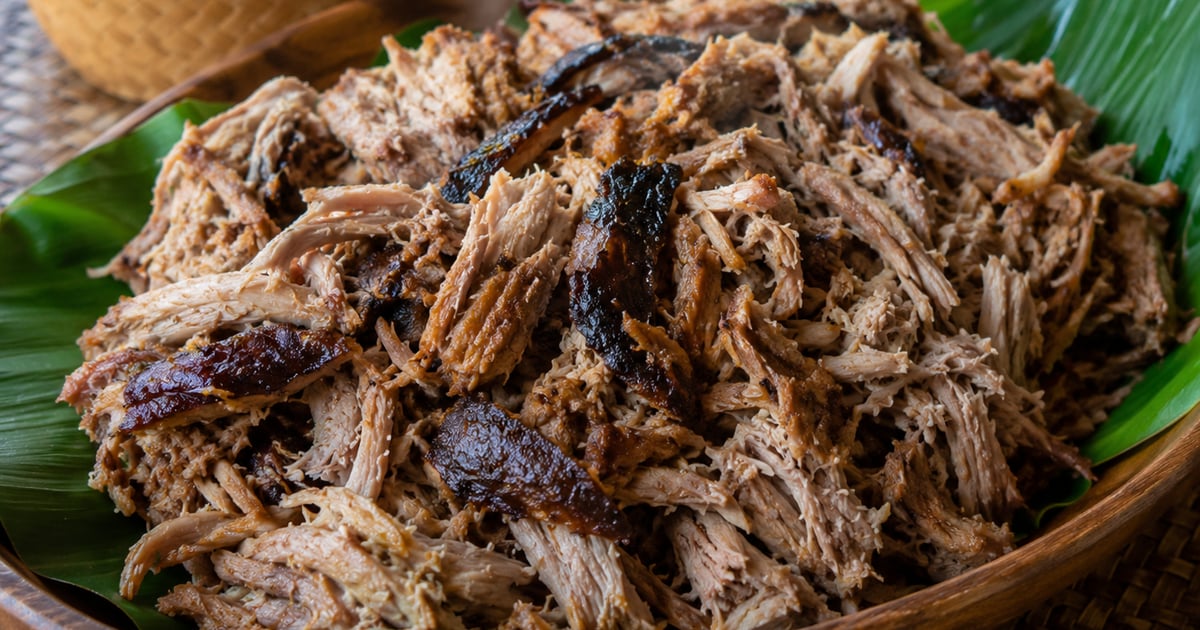

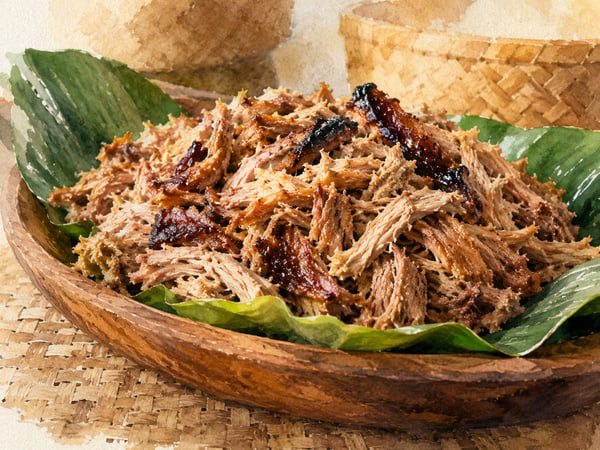
Kalua pig is a Native Hawaiian dish where a whole pig is salted, wrapped in ti and banana leaves, and slow-cooked in an imu — an underground oven lined with hot lava rocks. The pit is sealed with wet burlap and earth, and the pig steams for six to eight hours over smoldering stones. The result is fall-apart shredded pork with a deep, smoky, almost briny flavor that is unmistakably Hawaiian. The word kalua means "to cook in an underground oven," and the technique arrived with Polynesian voyagers long before Western contact.
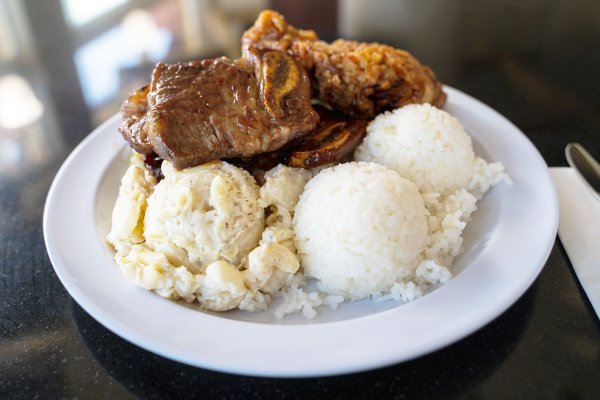
You can't replicate a real imu in a backyard in Iowa. But the home version below — pork shoulder rubbed with Hawaiian sea salt, a little liquid smoke, and a long, low oven — gets surprisingly close. Kalua pig anchors the luau plate and shows up on the "plate lunch" menu at places like Highway Inn on Oahu and Helena's Hawaiian Food on Kalihi.
At a glance
8 to 10
15 minutes
5 to 6 hours
Easy (mostly hands-off)
Ingredients
For the pork
- 1 (5 to 6 lb) bone-in pork shoulder (Boston butt)
- 2 tablespoons Hawaiian alaea sea salt (or coarse kosher salt as a substitute)
- 1 tablespoon liquid smoke (mesquite or hickory)
For the wrap (optional but recommended)
- 4 to 6 ti leaves OR frozen banana leaves (thawed and rinsed)
- Heavy-duty foil to seal the package
Equipment
- Roasting pan with a rack, or a heavy Dutch oven with a lid
- Sharp knife for scoring
- Two forks for shredding (or clean hands once it's cool enough)
To finish
- Reserved cooking juices, skimmed of excess fat
- Steamed white rice and cabbage on the side
Method
- Preheat the oven to 325°F. Pat the pork shoulder completely dry with paper towels. Dry skin means dry rub adhesion, and that matters here because the salt is doing most of the work.
- Score and salt. Make shallow cuts (about ¼ inch deep) across the fat cap in a crosshatch pattern. Rub the alaea salt aggressively into every surface, working it into the scored cuts and any crevices. Don't be timid — kalua pig is supposed to taste salty.
- Add the smoke. Drizzle the liquid smoke evenly across the top of the shoulder. Rub it in with your hands so it coats the surface. One tablespoon is plenty; more is overpowering.
- Wrap it. Lay the banana leaves or ti leaves in the roasting pan in a cross pattern, set the pork shoulder on top, and fold the leaves up and over to cover the meat completely. Wrap the whole package tightly in heavy foil, sealing the edges. (No leaves? Skip them and wrap directly in two layers of heavy foil. The leaves add a faint vegetal note but the smoke and salt do the heavy lifting.)
- Roast slowly. Place the pan in the oven and cook for 5 to 6 hours, or until the meat shreds easily with a fork. Internal temperature should be 195°F to 205°F. There is no rushing this. The collagen needs to fully break down for the texture to be right.
- Rest, then shred. Pull the pan out and let the pork rest in its wrapper for 20 minutes. Open carefully. There will be hot steam. Pull the pork apart with two forks. It should fall into long, juicy shreds with no resistance. Mix in some of the reserved cooking juices for moisture and flavor. Taste and adjust salt if needed.
Notes from a local cook
The single biggest decision is the salt. Real Hawaiian alaea sea salt is mixed with red volcanic clay (alaea) and tastes mineral and earthy in a way ordinary kosher salt does not. Hawaiian alaea salt is widely sold on the mainland — worth seeking out. Coarse kosher salt is fine in a pinch.
Liquid smoke gets a bad reputation, but it is the closest analog to the imu's smolder you can get in a residential kitchen. Use it sparingly. Mesquite reads more like grilled meat; hickory reads more like wood-smoked. Both work. If you have access to a smoker, you can cold-smoke the pork for an hour before the long oven roast and skip the liquid smoke entirely.
Serve over white rice with a side of steamed or quick-sauteed cabbage. This is the classic "kalua pig and cabbage" plate. Leftovers freeze beautifully and re-warm in a covered pan with a splash of the reserved juices. Save the rendered fat for fried rice the next morning.
While You're on the Islands
Eat it made by someone else. If you're heading to Hawaii, the best kalua pig is the pig that's still warm from the imu — meaning you want to try it at a luau where they actually unearth the pig in front of you. The Polynesian Cultural Center in Laie on Oahu's North Shore runs an imu ceremony as part of its daily Ali'i Luau experience (check the current schedule before you go). For a sit-down plate lunch any day of the week, Highway Inn has two Oahu locations in Kaka'ako and Waipahu and has been a family-run Hawaiian food spot since 1947. Helena's Hawaiian Food on Kalihi won the James Beard America's Classic award in 2000 — go for lunch and order the kalua pig with poi and lomi salmon. See our full guides to luaus on Oahu and Oahu dining.
Buy the ingredients fresh. Hawaiian alaea sea salt is sold in the regular spice aisle at Foodland, Safeway, and Times — no special trip required while you're here, and it's worth grabbing a bag for the recipe before you even get back to the rental kitchen.
Bring It Home
What to stock up on before you fly home: a bag of Hawaiian alaea sea salt and a bottle of liquid smoke are the two ingredients worth packing — both travel fine and are what make the home version taste like more than a pot roast.
What you can substitute, what you can't: coarse kosher salt is a fine substitute for alaea salt if you can't find it; you'll just lose the mineral, earthy note. Liquid smoke genuinely doesn't have a good substitute for this dish short of an actual smoker — it's the one ingredient doing the imu's job in a home oven.
Where to try this in Hawaii