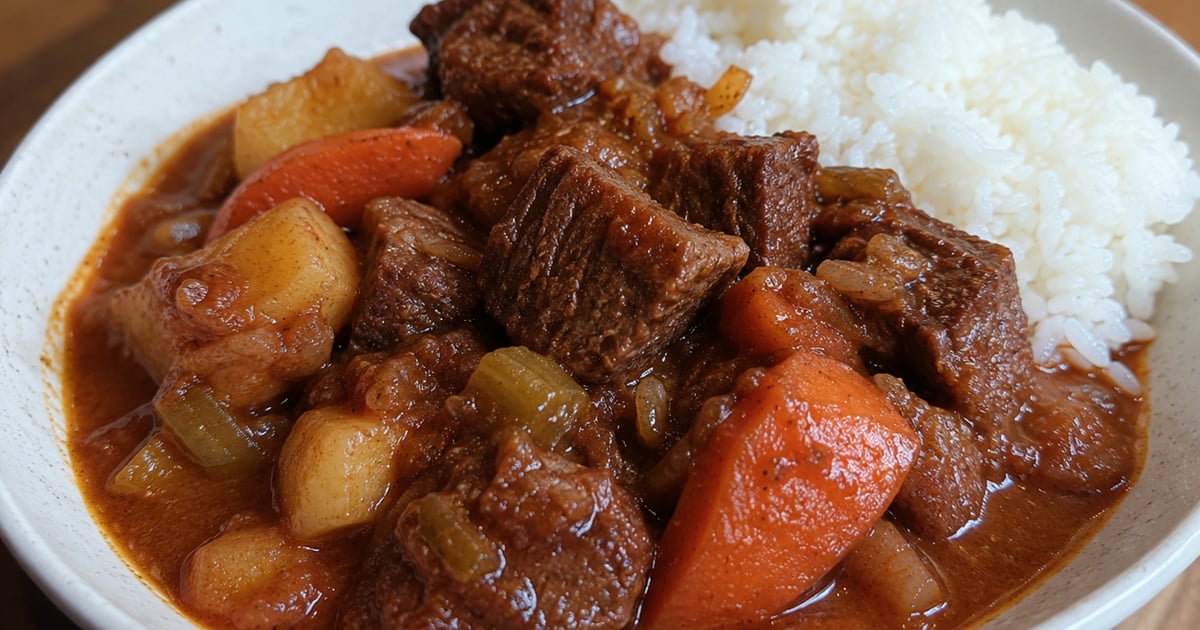

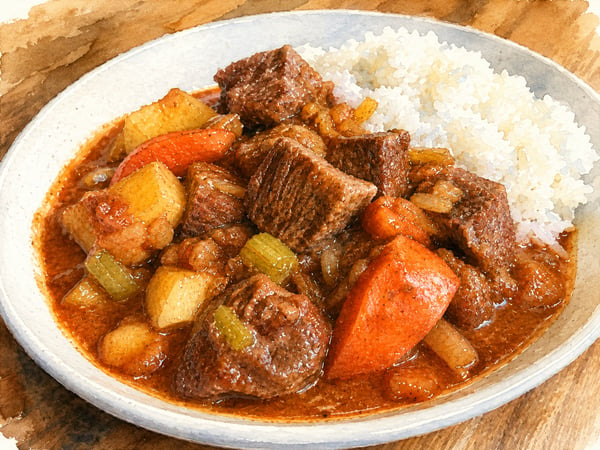
Local beef stew is the rainy-day plate-lunch dish you'll see on drive-in menus, school cafeteria lines, and family stoves all over Hawaii. The frame is straightforward: chuck cut into chunks, carrots, potatoes, onion, celery, tomato sauce, shoyu, and water, simmered low and slow until the beef is fork-tender and the broth has reduced to something thin but deeply flavored. Served over two scoops of white rice. That's the dish.
What separates the Hawaii local-style version from a midwestern beef stew is the broth. Mainland beef stew is generally thickened with flour and built around a deep brown roux. Local beef stew is thin and brothy on purpose. The broth is meant to mingle with the rice, not coat the beef. The flavor profile leans toward shoyu and tomato rather than herbs and wine, which gives it the Asian-American accent baked into most plate-lunch food (Wikipedia: Plate lunch). On any local drive-in menu, you'll see beef stew sitting next to chili, curry, and stew chicken in the same comfort-food row.
At a glance
6 to 8
20 minutes
2 to 2.5 hours simmer
Easy
Ingredients
For the stew
- 3 lb beef chuck roast, cut into 1.5-inch chunks
- 2 tablespoons neutral oil (vegetable or canola)
- 2 teaspoons kosher salt, plus more to taste
- 1 large yellow onion, diced large
- 4 cloves garlic, smashed
- 1 thumb fresh ginger, peeled and sliced (about 2 inches)
- 1 can (15 oz) tomato sauce
- 6 cups water or low-sodium beef broth
- 1/3 cup soy sauce (Aloha Shoyu if you have it)
- 2 tablespoons Worcestershire sauce
- 1 tablespoon brown sugar
- 1 teaspoon black pepper
- 2 bay leaves
For the vegetables
- 4 medium russet or Yukon Gold potatoes, peeled and cut into 1.5-inch chunks
- 4 large carrots, peeled and cut into 1-inch lengths
- 3 stalks celery, cut into 1-inch lengths
- 1 small can (8 oz) tomato sauce, optional, for finishing color
Equipment
- Large heavy-bottomed pot or Dutch oven (6-quart minimum)
- Tongs and a slotted spoon
- Sharp knife and cutting board
- Ladle for serving
To serve
- Two scoops of steamed white rice per bowl
- Local-style macaroni salad on the side
- Chili pepper water or Tabasco at the table
- A wedge of cold tomato or kim chee as a counterpoint
Method
- Sear the beef. Pat the chuck dry with paper towels and season generously with the kosher salt and black pepper. Heat the oil in your Dutch oven over medium-high until it shimmers. Working in 2 or 3 batches so you don't crowd the pot, sear the beef on all sides until deeply browned, about 6 to 8 minutes per batch. Transfer seared pieces to a plate. The fond left in the pot is half the flavor of the finished stew, so don't skip this step.
- Sweat the aromatics. Lower the heat to medium. Add the onion to the pot with a pinch of salt and scrape up the brown bits with a wooden spoon as the onion releases water. Cook 5 minutes until softened. Add the garlic and sliced ginger and cook another minute until fragrant.
- Build the broth. Return the seared beef and any accumulated juices to the pot. Pour in the 15 oz can of tomato sauce, water, soy sauce, Worcestershire, brown sugar, and a teaspoon of black pepper. Add the bay leaves. Stir to combine. The liquid should just cover the beef.
- Simmer. Bring to a gentle boil, then reduce heat to low. Cover with the lid slightly cracked. Simmer for 1.5 hours, stirring once every 30 minutes. The beef is ready when a piece pierces easily with a fork but still holds its shape.
- Add the vegetables. Stir in the potatoes, carrots, and celery. Add a little extra water if the level has dropped below the vegetables. Simmer uncovered for another 30 to 45 minutes, until the potatoes and carrots are tender but not falling apart. Test by piercing a potato chunk with a knife; it should slide off cleanly.
- Finish and taste. If you want a slightly redder, richer broth, stir in the optional 8 oz can of tomato sauce now. Fish out the bay leaves and the ginger slices. Taste and adjust. Most stews need an extra splash of soy sauce or a pinch more sugar at the end. The broth should taste savory, slightly sweet, and tomatoey, with a clear shoyu backbone.
- Plate it. Ladle the stew over two scoops of rice in a wide shallow bowl. The broth should puddle around the rice and soak into it. That's the dish.
Notes from a local cook
Chuck, not stew meat. The pre-cut "stew meat" packages at the grocery are usually a mix of trim from different muscles, which cook unevenly. A whole 3-pound chuck roast that you cut yourself gives you uniform pieces from a single muscle, and they all reach fork-tender at the same time. Trim away big seams of fat but leave the visible marbling alone; that's what makes the broth rich.
Thin broth, not thick gravy. Mainland beef stew recipes often call for a slurry of flour or cornstarch at the end. Local-style stew doesn't. The thin, almost-soup-like broth is the whole point. It's meant to flavor the rice underneath, not coat the beef in a thick sauce. If your broth is reducing too much, add water. If it's too thin, simmer with the lid off for another 15 minutes.
Make it a day ahead. Like most braises, this stew tastes better on day two. The fat that solidifies overnight can be lifted off the top before reheating, which leaves a cleaner-tasting broth. Reheat slowly over low heat; the potatoes can break apart if you bring it to a hard boil twice.
Family variations I've seen. Some households add a parsnip or two with the carrots. Some add a splash of red wine to the broth (not traditional, but it works). One Filipino-Hawaiian cousin of mine adds tomato paste and green olives at the end and calls it her kaldereta version. A Japanese-Hawaiian uncle skips the tomato altogether and leans heavier on shoyu and mirin. Both are personal family riffs rather than codified categories. The recipe above is the most common drive-in plate-lunch version.
While You're on the Islands
Eat it made by someone else. On Oahu, Zippy's serves beef stew at locations across the island, and it's the version most locals grew up eating. Highway Inn in Kakaako and Waipahu runs a Beef Stew Combo on its signature Hawaiian combo plates section, alongside laulau and kalua pig. On Maui, Sam Sato's in Wailuku rotates beef stew through the daily plate-lunch board. See our full guides to Oahu dining and Hawaii Eats for more plate-lunch landmarks.
Buy the ingredients fresh. A whole chuck roast (not the pre-cut "stew meat" mix) is sold at any island grocery store's meat counter — ask the butcher to cut it for you if you don't want to do it yourself.
Bring It Home
What you can substitute, what you can't: chuck roast, carrots, potatoes, and tomato sauce are sold everywhere — nothing here needs special sourcing from Hawaii. The thin, soup-like broth (not a thick gravy) is the technique that makes it taste local, not a specific ingredient.
Where to try this in Hawaii