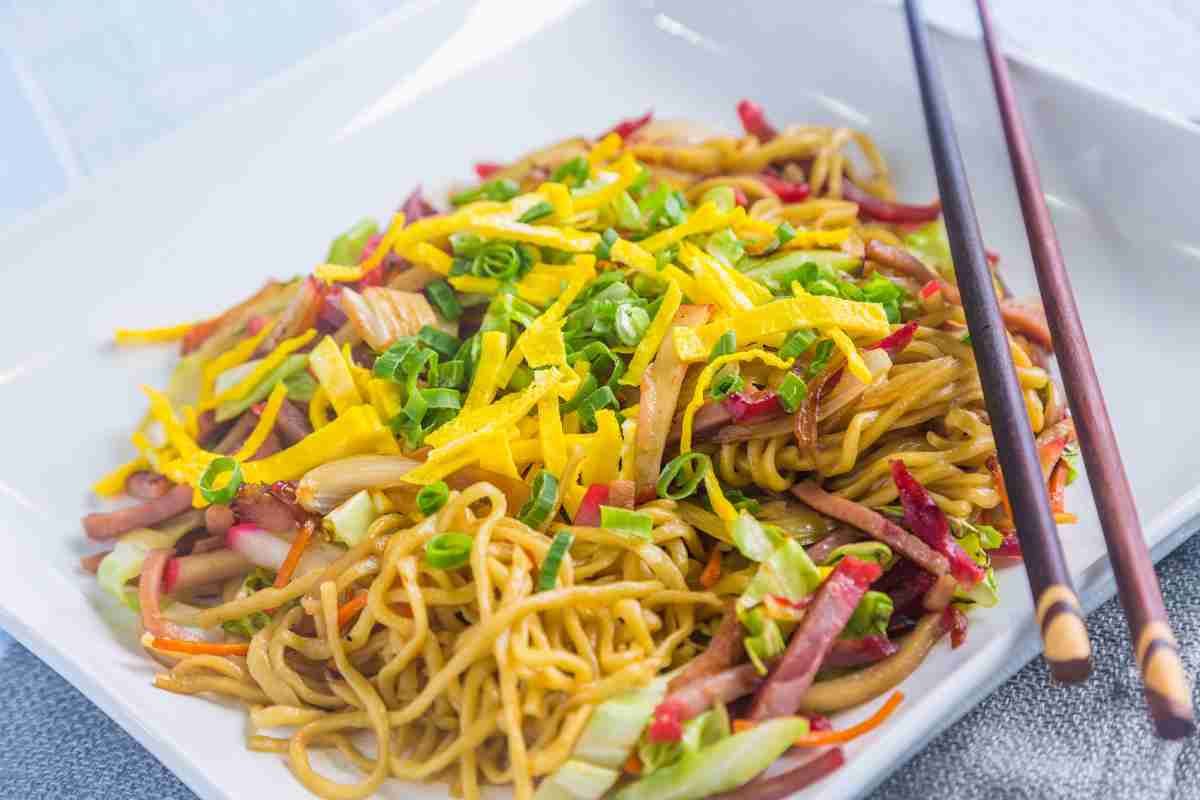

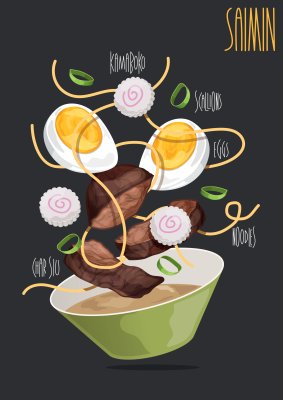
Saimin (pronounced "sigh-min") came out of Hawaii's sugar plantation camps in the late 1800s and early 1900s, where Chinese, Japanese, Filipino, Korean, and Portuguese workers cooked and ate together. The springy wheat noodle has roots in Cantonese mein and Japanese ramen, but the broth goes its own way: clear, built on kombu, dried shrimp, and bonito instead of pork or chicken bones.
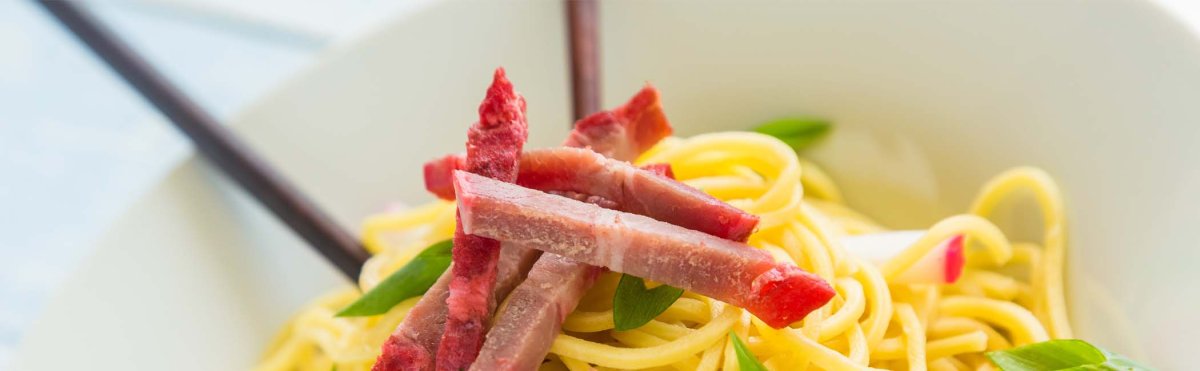
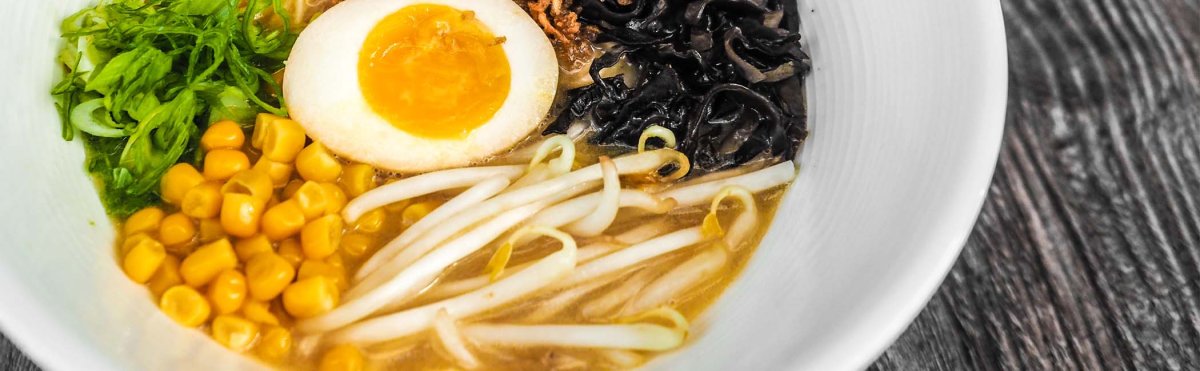
The defining bowl tops noodles and broth with Spam or char siu, kamaboko (the pink-and-white fish cake), a halved hard-boiled egg, and green onion. The recipe below is the classic home version. Skip to the venue list if you'd rather slurp someone else's.
At a glance
4
15 minutes
30 minutes
Easy
Ingredients
For the broth
- 8 cups water
- 1 piece dried kombu (about 4 by 4 inches)
- ¼ cup small dried shrimp
- 1 cup loosely packed bonito flakes (katsuobushi)
- 3 tablespoons soy sauce
- 1 teaspoon sugar
- 1 teaspoon kosher salt (adjust to taste)
- 2 stalks green onion (white parts only; save greens for garnish)
For the noodles
- 1 lb fresh saimin noodles (or substitute fresh thin wheat noodles, ramen, or Chinese egg noodles)
Toppings (per bowl)
- 2 thin slices Spam, pan-seared until edges crisp (or 2 slices char siu pork)
- 2 thin slices kamaboko (pink-and-white fish cake)
- 1 hard-boiled egg, halved
- 2 tablespoons thinly sliced green onion (the reserved greens)
- Optional: a few leaves of finely shredded napa cabbage, a sprinkle of toasted sesame seeds, or a smear of Chinese hot mustard
Method
- Cold-start the dashi. Combine the water, kombu, and dried shrimp in a stockpot. Heat slowly over medium-low. Just before the water reaches a full simmer (small bubbles forming on the bottom), pull out the kombu and discard. Boiling kombu makes the broth bitter and slimy.
- Add the bonito and aromatics. Bring the pot to a low simmer. Add the bonito flakes and the white parts of the green onion. Let it bubble gently for 5 minutes, then turn off the heat and steep another 5 minutes. Strain through a fine-mesh sieve into a clean pot. Discard the solids.
- Season the broth. Stir in the soy sauce, sugar, and salt. Taste. The broth should be salty enough to season the noodles but not so salty you'd drink it straight. Adjust. Keep warm over very low heat.
- Cook the toppings. Sear the Spam slices in a dry non-stick pan over medium-high until the edges crisp and the slices brown on both sides, about 1 minute per side. Set aside. Boil the eggs 8 minutes for a set-but-tender yolk, then ice-bath and peel. Slice the kamaboko thin.
- Cook the noodles. In a separate pot of boiling unsalted water, cook the fresh saimin noodles for 2 minutes (or follow package directions; fresh noodles cook fast). Drain immediately and divide between four wide bowls. Do NOT cook the noodles in the broth. They'll cloud it.
- Build the bowls. Ladle hot broth over the noodles. Arrange the Spam, kamaboko, and halved egg on top in a small overlapping fan. Shower with green onion and any optional toppings. Serve immediately with chopsticks and a soup spoon.
Notes from a local cook
Broth temperature is the whole game. Kombu dropped into rapidly boiling water turns the dashi cloudy and bitter, and that's the mistake home cooks make most. Pull it just before the boil. Cold-starting builds flavor slowly and keeps the broth clear, which is half the appeal.
Fresh saimin noodles show up refrigerated at Hawaiian and Asian grocers on the mainland. Sun Noodle is the brand you're most likely to find. If you strike out, fresh thin Chinese egg noodles or Japanese ramen noodles will work. Dried instant noodles get you something closer to ramen than saimin. Texture matters here.
Swap freely: char siu for the Spam, wun tun on top alongside the noodles, a piece of fried teriyaki chicken if you want it heartier. Hamura Saimin in Lihue serves theirs with a side of teriyaki beef stick. Order one if you go.
Where to try the real thing
Hamura Saimin Stand in Lihue, Kauai, opened in the early 1950s and was named an America's Classic by the James Beard Foundation in 2006. You sit at the U-shaped Formica counter and order. On Oahu, Shige's Saimin Stand in Wahiawa and Palace Saimin in Kalihi are the pilgrimages. On Maui, Sam Sato's in Wailuku is known for dry noodle (noodle with broth on the side) and serves a proper saimin too.
For island-by-island picks, see Oahu, Maui, Big Island, and Kauai, or the full state-wide best-of.
Where to Eat It on Your Trip
Our picks for Saimin across the islands — tap a spot for hours, photos, and directions.
 Photo: Shiro's Saimin HavenOʻahu
Shiro's Saimin Haven
 Photo: Sébastien HustacheMaui
Sam Sato's
 Photo: RAM BoneMaui
Tasty Crust
 Photo: Yusuke MatsuiBig Island
Teshima
 Photo: Miyo's RestaurantBig Island
Miyo’s
 Photo: Paul MartinKauaʻi
Hamura Saimin
 Photo: Kalaheo Cafe & Coffee CompanyKauaʻi