
Spam Musubi
The convenience-store snack that captures Hawaii's plantation past in one bite.
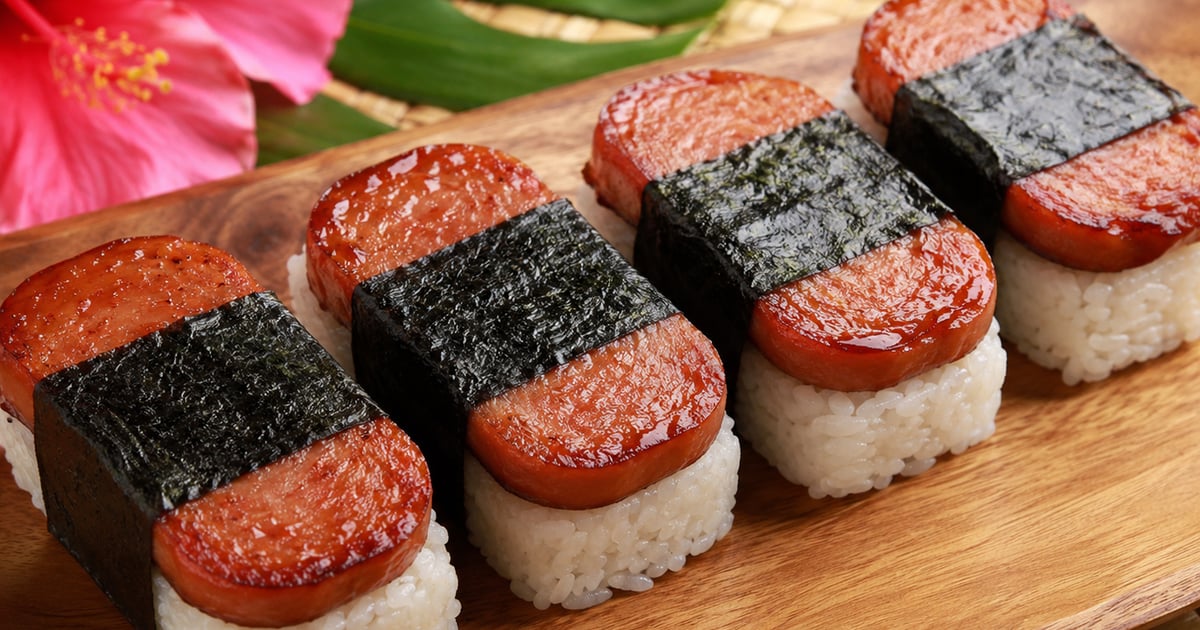
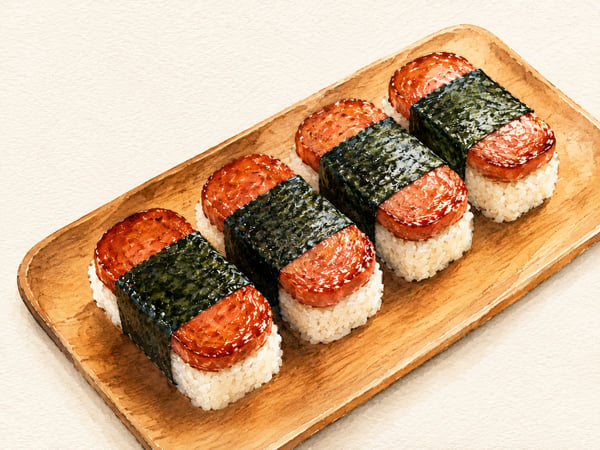
I make these in batches. A brick of warm rice, a slice of Spam crisped in a pan and lacquered in shoyu and sugar, a belt of nori to hold it together. About twenty minutes start to finish if your rice is already cooked. Recipe first, history and where-to-eat further down.
At a glance
8 musubi
15 minutes
15 minutes
Easy
Ingredients
- 1 can (12 oz) Spam — classic, less sodium, or teriyaki all work
- 3 cups short or medium-grain white rice, cooked (Calrose is the local standard)
- 4 sheets sushi nori, cut in half lengthwise (8 strips total)
- ¼ cup shoyu (soy sauce)
- 3 tablespoons sugar
- 2 tablespoons mirin (or 1 tablespoon rice vinegar + a pinch of sugar)
- 1 tablespoon water
- Optional: sesame seeds, furikake
Equipment shortcut: A plastic Spam musubi mold turns this into a ten-minute job. If you don't have one, the empty Spam can itself works — wash it, cut both ends off, and press the rice through it. It's how my aunty made them long before molds showed up in every island kitchen store.
Steps
- Slice the Spam. Open the can, slide the block onto a cutting board, and cut into 8 equal pieces, each about ⅜-inch thick. Aim for the thickness of a slice of sandwich bread.
- Make the glaze. Stir the shoyu, sugar, mirin, and water in a small bowl until the sugar dissolves.
- Cook the Spam. Heat a dry non-stick skillet over medium-high. Lay the slices in a single layer and cook 2 to 3 minutes per side, until both faces are deeply browned and crisp at the edges. Pour in the glaze. It will bubble hard — flip the slices quickly to coat both sides, then keep turning for about a minute until the sauce reduces to a sticky lacquer. Move the Spam to a plate.
- Set up your mold. Lay a strip of nori shiny-side down on the cutting board. Set the mold over the center of the strip. Wet the mold and the press on the inside. Rice is sticky; water is your friend.
- Press the rice. Scoop about ⅓ cup of warm rice into the mold. Press down firmly with the wet press until the rice is compact and about ¾ inch thick. If you want furikake, sprinkle a pinch on the rice before pressing.
- Add the Spam and wrap. Lay a slice of glazed Spam on top. Lift the mold straight up to release. Bring the two ends of the nori up and over the Spam to meet in the middle. Dab a finger in water and brush the underside of the nori where it overlaps. The moisture seals it shut.
- Serve warm, or pack for later. Eat them right away if you can — the rice is best while still warm. To take them on the road, wrap each musubi tightly in plastic wrap. Cooked rice shouldn't sit at room temperature for more than about two hours per USDA food-safety guidance (one hour if it's above 90°F), so eat them the day you make them. Cold storage works for food safety, but the rice turns chalky once refrigerated — I'd rather just make a fresh batch.
Notes from making this at home
The rice has to be warm when you press it. Day-old refrigerated rice will not hold its shape and the texture goes wrong. Cook fresh, or rewarm with a splash of water in the microwave under a damp paper towel.
For a richer version, slip a layer of furikake between the rice and the Spam, or top the Spam with a thin omelet folded to fit. Both are common in the islands. Once the press technique clicks, the variations open up: kalua pork, teriyaki chicken, fried egg with nori in place of the meat.
Where it comes from
Spam took hold in Hawaiʻi during World War II, when it was a shelf-stable protein for soldiers and civilians worried about mainland food shipments getting cut off. After the war it stayed — fresh beef and pork were expensive to ship, and locals had built a taste for it. The state now consumes more Spam per capita than anywhere else in the U.S. — about seven million cans a year, or roughly five cans per person.
The musubi format — a brick of rice topped with a slice of Spam and belted with nori — is widely credited to Barbara Funamura, a Kauaʻi nutritionist who began selling them in the early 1980s at Joni-Hana, her deli in the Kukui Grove Center. The shape came from onigiri, the rice ball Japanese immigrants brought to the plantations, and a slab of Spam fit the format perfectly. Today they sit warm by the register at most 7-Elevens, ABC Stores, and convenience counters around the islands.
While You're on the Islands
Eat it made by someone else. Musubi Cafe Iyasume, with several locations around Honolulu and Waikīkī, builds musubi to order in a long list of variations — the classic shoyu Spam is a good place to start. Mana Musubi in Honolulu is known for a smaller, denser, more rice-forward style, plus an ume (pickled plum) version alongside the standard Spam one. And don't skip a 7-Eleven Hawaiʻi musubi just because it's a convenience store — they're made daily in the islands and typically run $2 or so. See our island guides to Spam on Oahu, Maui, the Big Island, and Kauai.
Buy the ingredients fresh. Tamura's Fine Wine & Liquors locations across Oʻahu are better known for the poke counter, but most also run a fast musubi case — worth a stop if you're stocking a vacation rental kitchen and want Spam, rice, and nori in one errand alongside everything else.
Bring It Home
What you can substitute, what you can't: Spam, short-grain rice, and nori are all sold at any mainland grocery store, so nothing here strictly needs packing home. The one upgrade worth bringing back is a musubi mold — a cheap plastic press that turns this into a ten-minute job instead of a fussy one.
Where to try this in Hawaii