


03-25-2026
Top Places on Maui for Sea Turtles
We may earn a commission when you book or buy through links on this page.
Top Places on Maui for Sea Turtles
Our Best Maui Suggestions for seeing Sea Turtles

Co-authored by Hawaii Guide founders Tori C. Derrick and John C. Derrick.
We may earn a commission when you book or buy through links on this page.

Few things people seek out on Maui are as reliably spectacular as a sea turtle encounter.
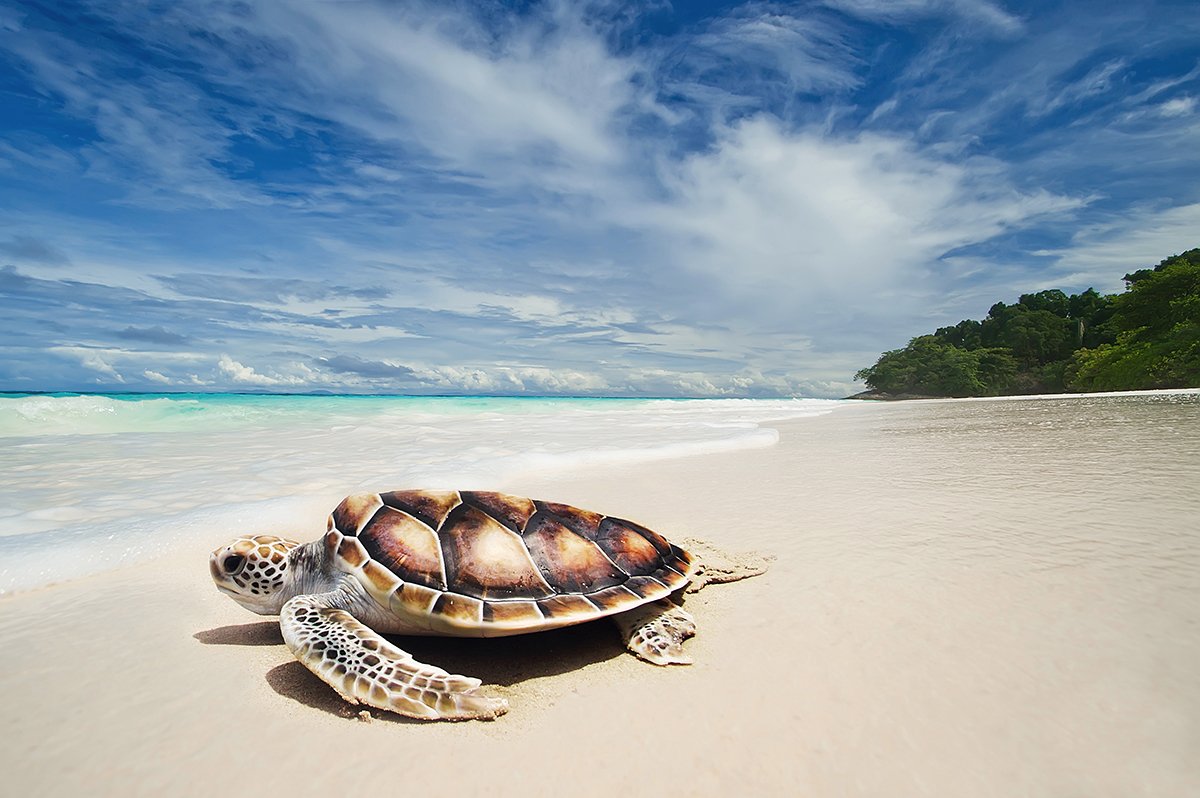
Sea turtles are incredibly distinctive and can be almost hypnotic to watch in person. Compared with their living-room-tank-dwelling relatives, their size seems almost prehistoric — and their lineage stretches back more than 100 million years. The species visitors most often see in Hawaii is the green sea turtle (honu), which remains protected under the Endangered Species Act.
Sea turtles are also quite interesting in that, according to the National Center for Biotechnology Information, except for green sea turtles, we don’t know how long their lifespan is. Sea turtles are so famous for long lifespans that in Finding Nemo, Crush the sea turtle claims he is “150, dude, and still young!” You can imagine why tracking the lifespan of a creature who tends to live longer than we do might be logistically challenging.
Beyond the visual spectacle, meeting a sea turtle means meeting one of the oldest living species on Earth — a lineage stretching back over 100 million years, and possibly an individual animal older than anyone you know. Hawaii makes a strong case for being the best place on the planet to encounter them in their natural habitat.
There are a few reasons for this.
One is that there are, quite simply, a lot of them - at least relatively so in terms of the global sea turtle population, which is sadly featured on the endangered species list. On a Hawaiian Island that you’ve probably never heard of (because it is uninhabited) called French Frigate Shoals, about 96% of all Hawaiian green sea turtle nesting occurs. Therefore, green turtles are the most common in Hawaii - however, there are also hawksbill turtles, leatherbacks, loggerheads, and olive ridleys.
Another reason Hawaii is a spectacular place to find sea turtles is that when you do, you will be in water that is not only comfortably cool but astonishingly clear. Sea turtles can be found in other snorkeling spots, from the Yucatán Peninsula to Australia. Still, there is probably no place anywhere that can claim to display these fascinating creatures in higher definition. Ask anybody who has snorkeled in Hawaii!
Last but surely not least is that in Hawaii - and Maui in particular - the accessibility of turtle sightings is unmatched. You can certainly book a snorkeling tour, and we’d encourage you to do so, but here you can snorkel among sea turtles for free - so long as you know where to go.
What follows is a guide to the best places on the island of Maui to spot sea turtles. Before we get into it, let’s be sure to clarify that this is indeed a guide to seeing sea turtles - not touching them, not interacting with them, and not interfering with their habitat. Doing so is not only abhorrent given their endangered status, but potentially one of the most expensive misdeeds you would ever commit. There are brand-new cars you could simply buy for your Hawaii visit that would cost less than getting fined for messing with sea turtles.
Sea turtles are protected under federal and state law. NOAA Fisheries recommends staying at least 10 feet (3 meters) away on land and in the water. That distance is a responsible-viewing guideline rather than a fixed legal boundary: never touch, chase, feed, surround, or otherwise disturb a turtle.
With that said, here are the best places to spot sea turtles on Maui.
You'll need a rental car to reach most turtle-watching spots on Maui. Discount Hawaii Car Rental compares rates across the major agencies and often beats booking directly with the brands.
Maluaka Beach (AKA Turtle Town)
Located in South Maui near Mākena, Maluaka Beach is one of the places commonly included in the broad area marketed as “Turtle Town.” A sighting is never guaranteed, so treat the beach as a good snorkeling stop rather than a wildlife appointment.
The beach is one of the nicest anywhere on Maui, even if you’re not there to see turtles. It epitomizes much of what visitors imagine when they crave an afternoon on a Hawaiian beach: a wide and smooth curve of soft, warm, white sand and crystal-clear waves gently inviting swimmers out into them.
A guided snorkel tour in the area will surely take you to the Turtle Town Dive Location off the coast nearby; but even if you simply wade into the water with a snorkel mask and fins, your chances of seeing a green sea turtle are relatively high.
Get Your Free Hawai'i Guide
Instant access — opens immediately
- Beaches, activities & top spots
- Restaurant & dining recommendations
- Maps, itineraries & insider tips
Want the full offline version? Get the Complete Hawai'i Guidebook →
Honolua Bay
In Northwest Maui, right on the crown of the island’s anthropomorphic “head,” a more secluded spot for snorkeling and turtle encounters is Honolua Bay.
This is actually a marine preserve, meaning you’ll see lots of fish and other marine life as well, such as spinner dolphins and manta rays. Being a preserve, no fishing is allowed here. We also recommend visiting Honolua Bay in the summer, when the tide is relatively calm. You can still visit in winter, but not for snorkeling; rather, due to the intense winds and high waves, winter is a great time to stand on the shore and watch pro surfers!

Black Rock Beach
Black Rock can be a productive place to snorkel and spot sea turtles when conditions are calm. Keep well clear of cliff jumpers and the rock itself, and do not follow or crowd a turtle if one passes through the snorkeling area.
Ho’okipa Beach
Ho’okipa Beach near Pāʻia is one of Maui's most reliable places to watch honu resting on shore, especially later in the day. View from outside any marked buffer and use a zoom lens. The water here is often rough and busy with experienced windsurfers, so this is primarily a shore-viewing stop unless current lifeguard guidance and your ability support entering the water.
Turtle Lagoon at Maui Ocean Center
For a more predictable educational stop, check the current Turtle Lagoon exhibit at Maui Ocean Center. It offers a close view of green sea turtles without asking wild animals to tolerate swimmers or cameras.
Sea turtles use many parts of Maui’s coastline, but every sighting depends on conditions and wildlife behavior. Choose a beach that fits the day’s ocean conditions, keep NOAA's recommended distance, and let the turtle decide where the encounter ends.
Related Reading
More on exploring Maui's coast and what to do while you're there.
Published by: Tori C. Derrick
President & certified Hawai'i travel expert with 15+ years of experience in Hawai'i tourism.

Published by: John C. Derrick
Founder & certified Hawai'i travel expert with 20+ years in Hawai'i tourism, University of South Carolina climate-research training, and NOAA weather-station experience.
Affiliate Disclosure: We may earn a commission when you book or buy through links on this page. See our Ad Disclosures & Standards.

Need help planning?
Search & Planning Chat →

Hawaiʻi Weather Forecast
Today’s Weather Brief · Audio · ~45s
0:00
0:54
Read the transcript
Trades are breezy right now with scattered showers on the windward side and mountains; the leeward coast stays mostly dry. Tomorrow stays breezy with the same pattern.
A tropical disturbance southeast of the islands is likely to become a tropical storm by mid-week and approach the state Thursday through Saturday. The exact track is still uncertain. If it comes closer, expect heavier rain over a longer stretch; if it stays farther out, impacts will be shorter and lighter. Winds will increase late this week, with potential gusts over 70 miles per hour on the highest summits.
Plan your leeward beach time and snorkeling for today through Tuesday. Save summit drives and offshore water sports for after Saturday, and check updates daily as this develops.
Created with AI from the official NWS forecast discussion · verify with NWS before heading out
Loading forecast…
Temperature
Weather data by Open-Meteo.com
Current Time in Hawaiʻi
--:----
Hawaiʻi Standard Time · UTC−10 · No Daylight Saving
You’re on Hawaiʻi timeMainland US
International
Aloha Today daily podcast →
Full HST breakdown, FAQ & DST schedule →

Get Your Free Hawaii Visitor Guide
Enter your email and we'll send you instant access to our free 2026 Hawaii Starter Guide + Summary Guidesheets.