

Seasickness ends more Hawaiʻi snorkel cruises, whale watches, and Nā Pali sails than most first-timers expect, and in my experience running visitors out on these boats for two decades, most of it is preventable with about twenty minutes of prep. Take an OTC meclizine tablet (Bonine or Dramamine Less Drowsy) about an hour before you board, eat something light and bland, skip alcohol the night before, sit in the middle of the boat on the open deck, keep your eyes on the horizon, and keep your phone in your bag once the boat starts moving. Book the earliest morning departure you can, because Hawaiʻi waters tend to be calmer before the trade winds NWS Honolulu tracks daily build through the day. Everything below is the detail — which medication options fit which travelers, what to ask a pharmacist before you buy, where to sit on which kind of boat, what to eat the night before, and which Hawaiʻi tours expose you to more motion than others. Get this right and the only thing you’ll think about out there is the water.
Why Hawaiʻi waters get more people than they expect
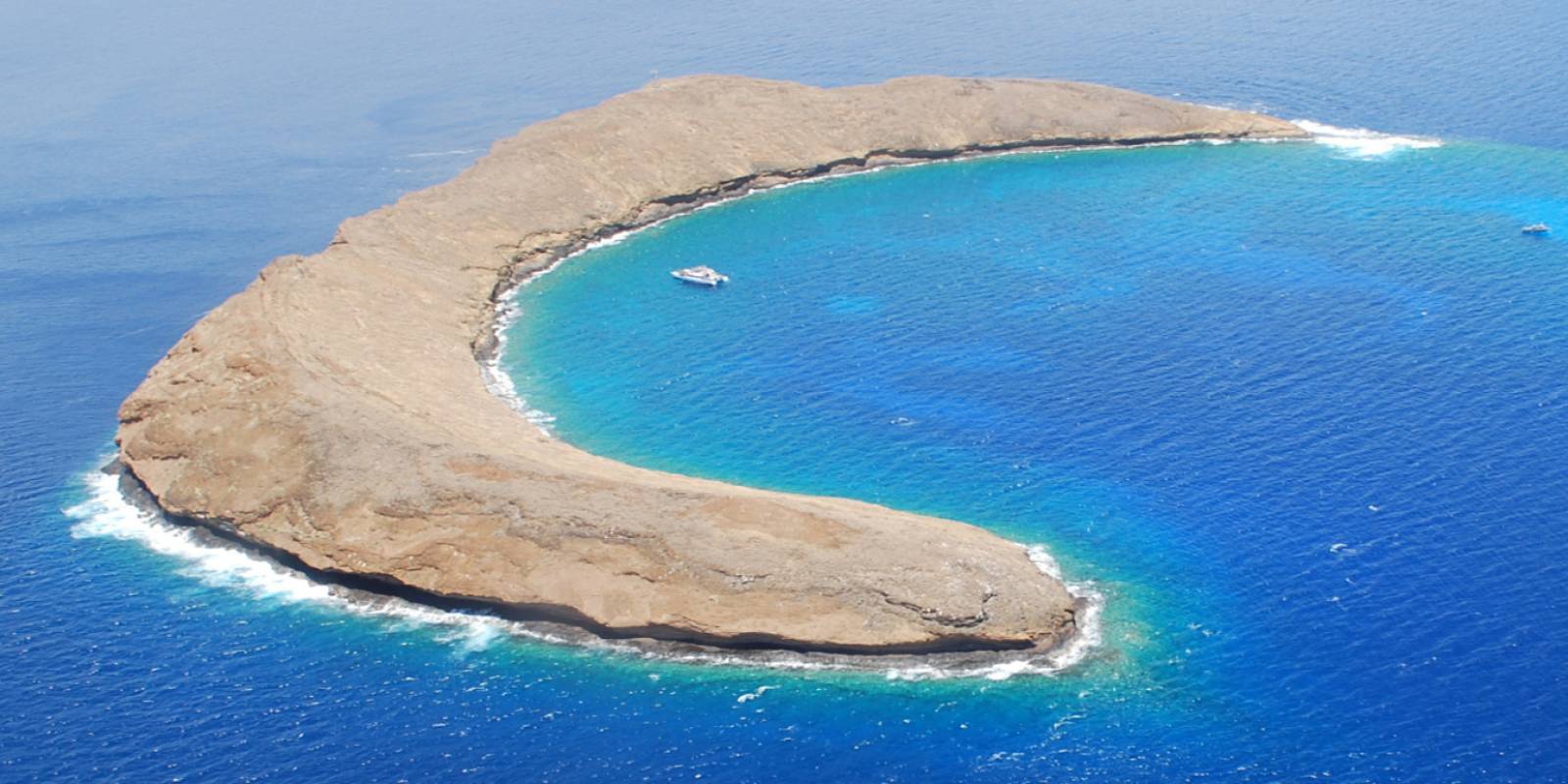
Most U.S. visitors who get seasick in Hawaiʻi don’t get sick because the ocean was unusually rough. They get sick because they’ve never been on a small tour boat in open ocean before, and Hawaiʻi tours go out into real water. The harbors are sheltered. The channels between islands are not. Take a typical visitor itinerary. A Molokini snorkel run off Maui. A Nā Pali Coast sail from Kauaʻi. A Kona-side morning out to Kealakekua Bay. A sunset catamaran off Waikīkī. Whale watching from Lahaina or Maʻalaea in winter. Every one of those crosses open ocean. The ʻAuʻau Channel between Maui and Lānaʻi can range from glassy at dawn to whitecap conditions by mid-afternoon when the trade winds build. The same pattern shows up on the run between Maʻalaea and Molokini Crater, the open-ocean ride out to Nā Pali on Kauaʻi, and the Big Island’s Kona coast once you get past the lava-bench shelter near Kealakekua. In my experience, mornings are the safer bet almost every time. Winter swell patterns put more energy in the water than summer on exposed coastlines, but summer trade winds can do plenty on their own. The other thing that catches people: a snorkel cruise has you transitioning between three different motion states in one trip. Under way is the smoothest. Anchored at the snorkel site is the most rolly — the boat is sitting beam-on to whatever swell is running. And then under way again on the ride back. A lot of travelers feel fine for the first hour and start to feel off only when the boat anchors for snorkeling. None of this is unusual or alarming. It is, however, exactly the conditions where preventive medication earns its money.
Medication options for boat tours
There are four medications most travelers consider for boat tours. Each has tradeoffs, and the right pick depends on how prone you are to motion sickness and how long the tour runs. All four work the same way in one important sense: they must be in your system before symptoms start. Taking Bonine after you already feel green at the gills is too late. The Cleveland Clinic’s motion sickness overview is one of the clearer plain-English explainers on why timing matters this much.
A few quick notes from twenty-plus years of taking visitors out on these tours: Bonine is a reasonable first pick for most travelers. It is less sedating than original Dramamine for many travelers, it covers the length of most half-day boat tours, and meclizine-based motion-sickness pills are widely stocked at Hawaiʻi pharmacies and visitor convenience stores. If you’ve never had motion sickness on a small boat and just want insurance, meclizine about an hour before the harbor briefing is the practical first move. The scopolamine patch is worth a doctor visit if you know you get seasick. Travelers who get sick on car drives over winding roads, get sick on small planes, or have ever vomited on a boat — that’s the group the patch was designed for. Ask your primary-care doctor before the trip and have it on hand from day one. Check the label and ask a pharmacist if you have medical complications. Antihistamine motion-sickness drugs can cause drowsiness and may be a poor fit with alcohol, sedating medications, some eye conditions, urinary retention problems, pregnancy, or a plan to drive immediately after the tour. A two-minute pharmacy-counter question beats guessing from the aisle. Ginger is a backup, not the plan. Ginger chews, candied ginger, and ginger tea are easy to carry and may settle your stomach a bit, but they are not a substitute for taking the right medication before the boat leaves. Sea-Bands wristbands are popular; results vary. They’re cheap and side-effect-free, so if they’ve worked for you before, wear them. Just don’t lean on them as your only defense.
Sunset and dinner cruises stay relatively close to shore — the smoothest category of Hawaiʻi boat tour for first-timers worried about motion.
What to eat and drink in the 24 hours before
The night before and the morning of the tour matter more than most people realize. Skip alcohol the night before. In two decades of watching visitors board boats, this is the pattern I see over and over: a passenger who took Bonine still ends up green after multi-mai-tai night. Alcohol the night before, especially the volume Hawaiʻi vacations tend to encourage, sets up a mild hangover plus dehydration. Both amplify motion sickness. Save the celebration for the night of the tour, not the night before. Eat something light and bland before boarding. Skipping breakfast doesn’t help — an empty stomach makes nausea worse, not better. The U.S. CDC’s traveler’s-health page on motion sickness recommends light, nongreasy, nonacidic food before travel. Plain toast, crackers, a banana, a small bowl of oatmeal, or a plain bagel are all reasonable. Skip greasy, spicy, very rich, or acidic foods. The breakfast buffet at the resort is a trap on tour mornings. Hydrate the day before and the morning of. Dehydration stacks the deck against you. Drink water steadily the day before. Drink one bottle of water with breakfast on tour morning. Skip the giant coffee until you see how the boat feels — caffeine is a mild diuretic, and coffee on a rough ocean is less fun than coffee at the resort. Don’t try to “tough it out” with a giant breakfast plus meds. Big breakfast + scopolamine + chop is the most common combination that ends a Molokini tour early. Eat light, take meds early, drink water, board the boat.
Where to sit, what to look at, what to avoid
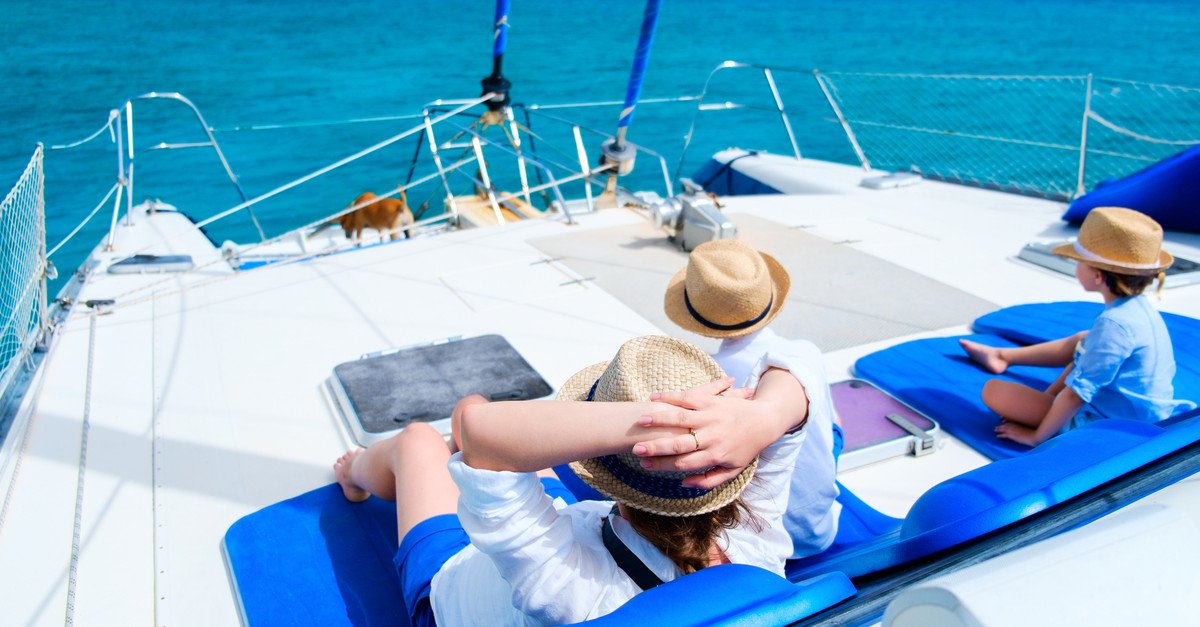
Once you’re on the boat, position and behavior matter almost as much as the medication. Pick a seat in the middle of the boat, as low as you can sit on deck, on the side that’s open to the breeze. The middle of the boat moves the least — the bow and stern both pitch and the bow especially slaps into oncoming swell. Lower is steadier than upper deck. The MedlinePlus page on motion sickness lists the same advice: face forward, sit in a stable spot, keep your eyes on a fixed point outside the vehicle. Stay on deck, not in the cabin, even if it’s a little cool. The enclosed cabin on a catamaran or motor yacht is where many passengers start feeling worse. No horizon to lock onto, no fresh air, often a faint engine-room smell, and your inner ear is feeding your brain motion data your eyes can’t confirm. That sensory mismatch is the textbook description of motion sickness. Fresh air on deck with your eyes on the horizon resolves the mismatch. Look at the horizon, not your phone. A boat under way is not where you read the tour brochure, scroll Instagram, check the snorkel-fish ID card, or text family back home. Eyes up, on a fixed point on the horizon or on the distant shoreline. If you wear sunglasses, polarized lenses cut glare and make it easier to keep your eyes on a steady point for an hour. If you feel it starting, move sooner not later. Get to the rail on the leeward (downwind) side, face into the breeze, and watch the horizon for ten minutes. Many mild cases resolve here. Don’t wait until you’re committed. And tell the crew. They know the steadiest spot on their specific boat, they know when the next sheltered section is coming, and they can usually help before a mild case turns into a miserable one.
Open-deck catamarans handle ocean motion better than enclosed cabins for most passengers — fresh air plus horizon makes the difference.
Which Hawaiʻi tours are smoother, which are bumpier
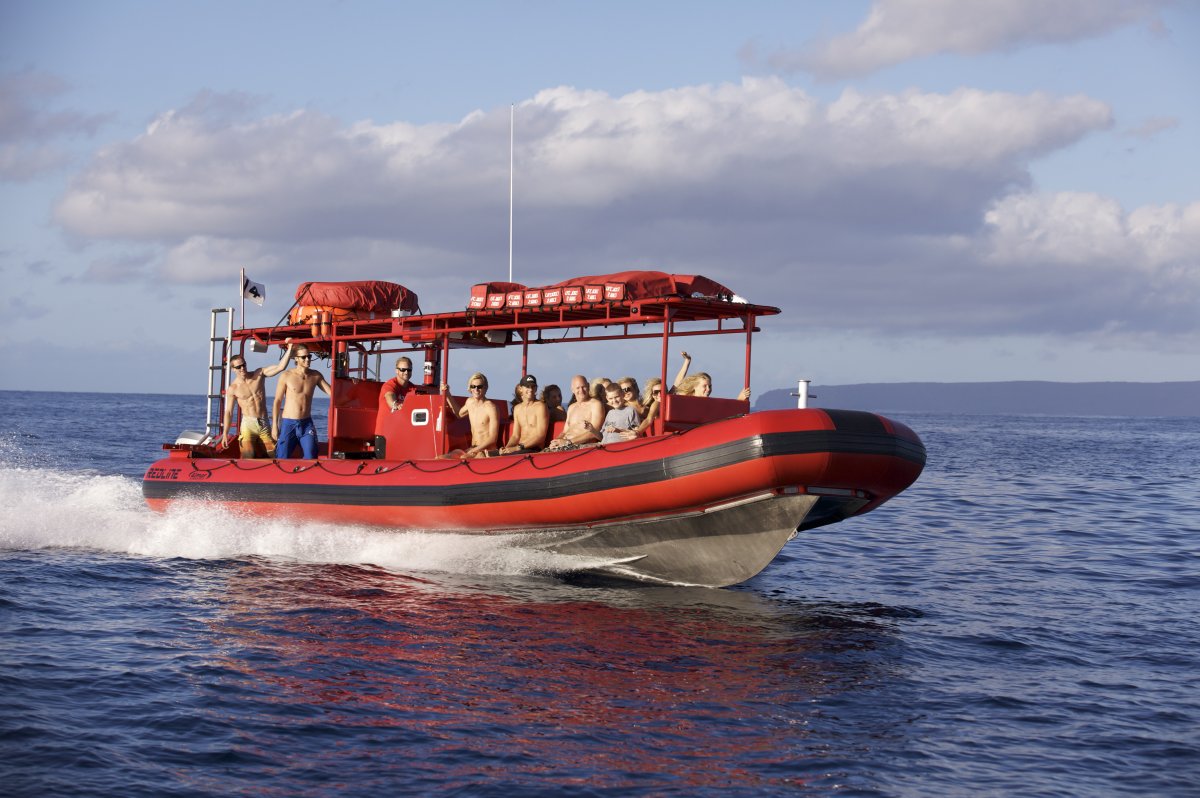
Not all Hawaiʻi boat tours expose you to the same conditions. If you know you’re prone to motion sickness and you have to pick one, here’s a rough ranking. Smoothest: Honolulu Harbor and Waikīkī sunset / dinner cruises stay in protected water close to shore and run on large stable vessels. The Star of Honolulu is a large Honolulu dinner-cruise vessel and moves far less than a small snorkel catamaran. A Waikīkī beach-catamaran sunset sail is another low-motion option because it stays close to shore. Mid-range: Molokini snorkel tours from Maʻalaea Harbor, Kona-side Kealakekua Bay snorkel tours on the Big Island, and Lānaʻi snorkel cruises from Lahaina or Maʻalaea. These are open-ocean crossings, but morning departures usually get you there and back before trade winds peak. Same for whale-watching trips out of Maʻalaea and Lahaina in winter. Most exposed: Nā Pali Coast tours from Kauaʻi — both the Port Allen / Kīkīʻaula southside departures and the Hanalei northside Zodiac trips — run along open Pacific coastline with no shelter. Major operators like Holo Holo Charters, Blue Dolphin Charters, and Captain Andy’s all monitor conditions closely and reschedule when weather or sea state makes a run impractical. Northshore winter Zodiac runs are the roughest, and many seasonal north-shore runs pause during the rougher winter ocean pattern. The Hawaiʻi DLNR’s Nā Pali Coast State Wilderness Park page is a good reference for the route. For full details on picking a tour, our Nā Pali Coast boat tour guide walks through operators and departure points. The pattern: smaller boats feel more motion than larger ones, exposed open-ocean routes feel more motion than sheltered ones, and afternoon departures usually feel more motion than morning ones. If you’re worried, book the earliest morning option of the smoothest tour category you’d enjoy. To compare boat options across all four islands, browse Hawaiʻi catamaran and sailing tours on Viator or filter snorkeling tours by island.
When to cancel and rebook
Sometimes the smart move is not getting on the boat. Cancellation flexibility depends on how you booked, but most Hawaiʻi operators will reschedule for free if they cancel the run themselves, and many will work with you on a voluntary reschedule if conditions are forecast to be rough. Always confirm the specific policy with your operator before assuming. Watch the marine forecast the night before. The NWS Honolulu marine forecast publishes wind and seas conditions in feet and knots for each Hawaiʻi marine zone. Operators don’t usually cancel unless conditions are unsafe, but “safe to run” and “fun for first-timers” are different bars. My personal rule of thumb after years of watching first-timers on these boats: once the forecast for your zone starts pushing into the higher end of what the operator normally runs — noticeably bigger seas or stronger sustained winds than a calm day — it’s worth a call before you commit. Call the operator the night before and ask. Most tour desks will tell you honestly whether tomorrow looks smooth or rough. A first-timer who is genuinely worried about motion is often better served by rescheduling to a calmer day later in the trip than by gritting it out on a forecast that the crew is privately calling “spicy.” If you’ve already paid through a third party, check the cancellation window. Viator, FareHarbor, and direct operator bookings all show cancellation rules in the confirmation details or listing terms. Read the specific tour you booked; the policy on your confirmation is the one that matters.
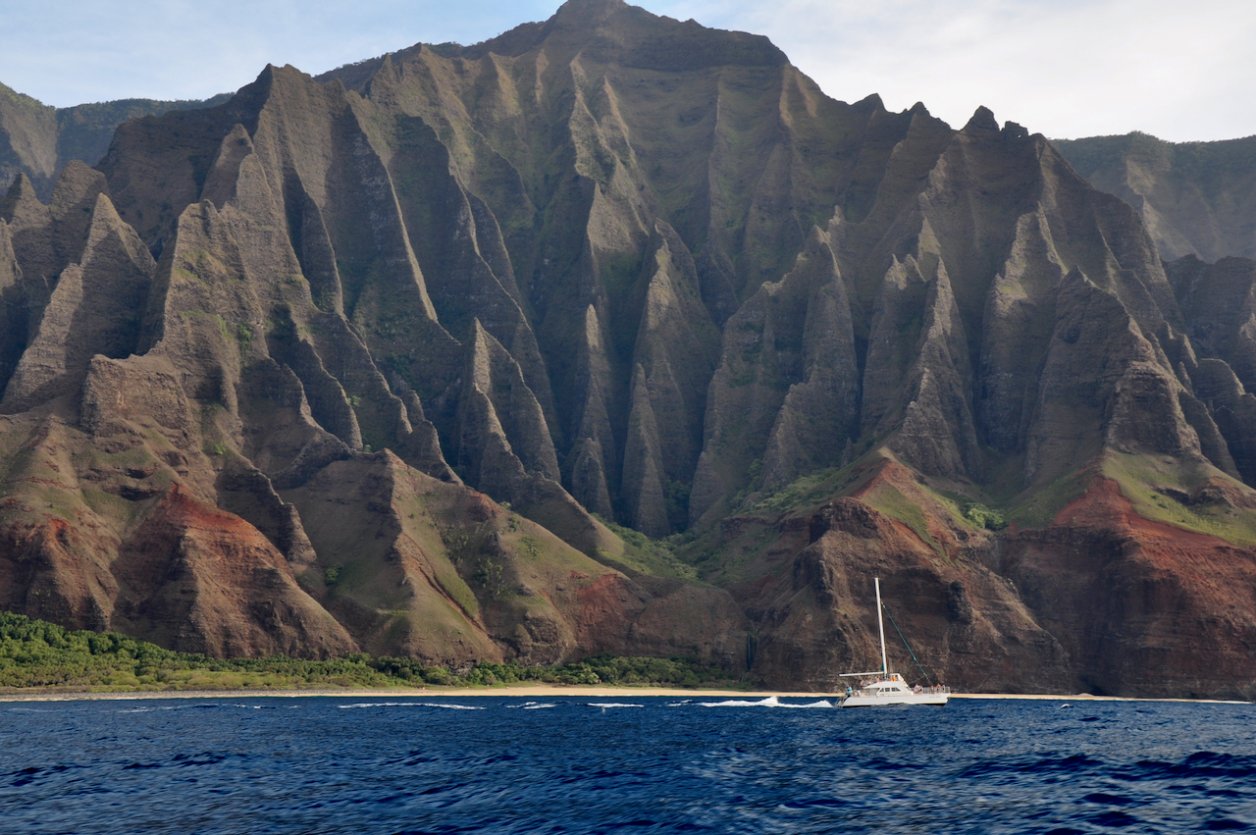
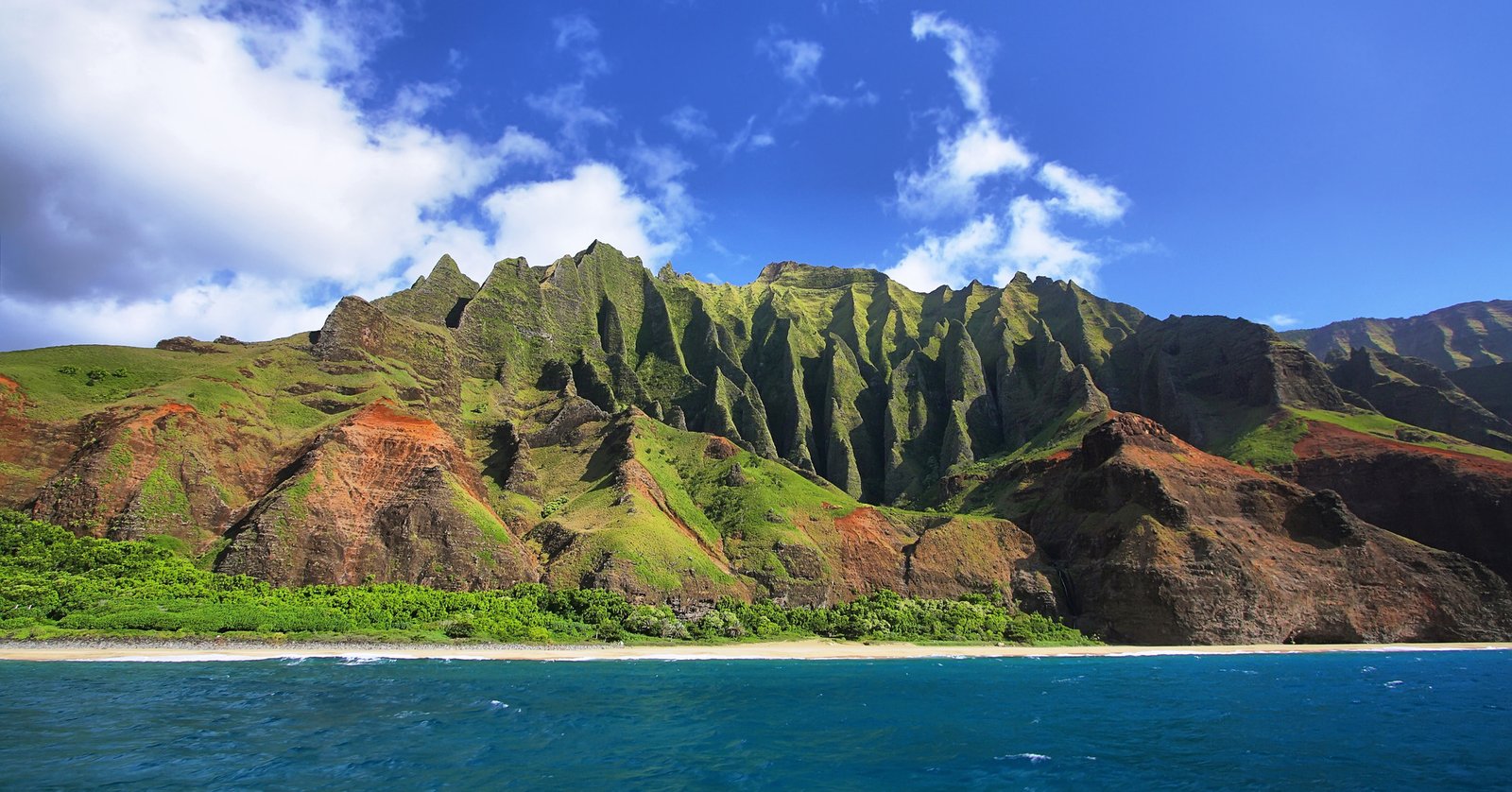
Nā Pali tours run along open ocean with no shelter — the most exposed category of Hawaiʻi boat tour. Morning departures and calm marine forecasts are your friends.
A simple pre-tour checklist
One more thing: kids on Hawaiʻi boat tours
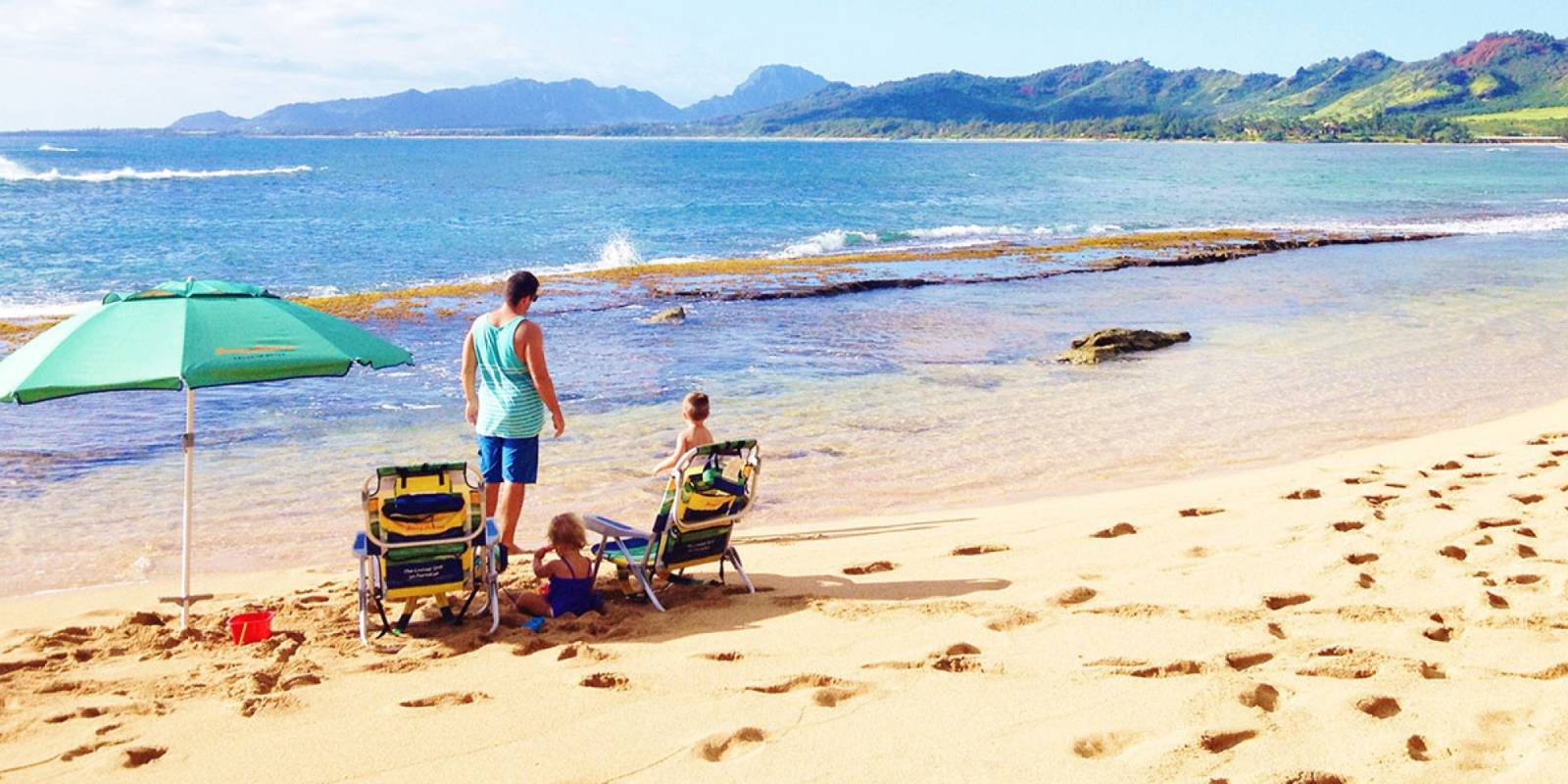
Children are often more susceptible to motion sickness than adults, not less. The CDC’s Yellow Book chapter on motion sickness notes that susceptibility peaks between roughly ages 2 and 12, while infants and toddlers under 2 are relatively immune and most kids grow out of it after 12. So the 5-year-old on your Molokini cruise is statistically more at risk than the adults sitting next to her. Do not improvise children’s medication dosing from an adult bottle. Ask the pharmacist or your pediatrician before giving a child any motion-sickness medication, especially meclizine products or scopolamine patches. If an age-appropriate dimenhydrinate chewable is the right fit, the pharmacist can point you to the correct product and label. Ginger chews are fine for older kids. If you’re taking small kids on a snorkel cruise, the same rules apply just more so: pick a morning departure, sit middle of the boat, keep them on deck, keep them looking at the horizon, and have a few crackers and ginger chews ready for the anchored-at-the-snorkel-site phase, which is the most rolly. Our Hawaiʻi with kids guide and the Hawaiʻi with a baby or toddler guide both have more on the family-on-the-water details. After twenty-plus years of watching travelers board boats here, one pattern holds: preparation changes the odds more than toughness does. Ten minutes at a pharmacy the afternoon before, a light breakfast, fresh air, and the horizon. That’s the whole list.