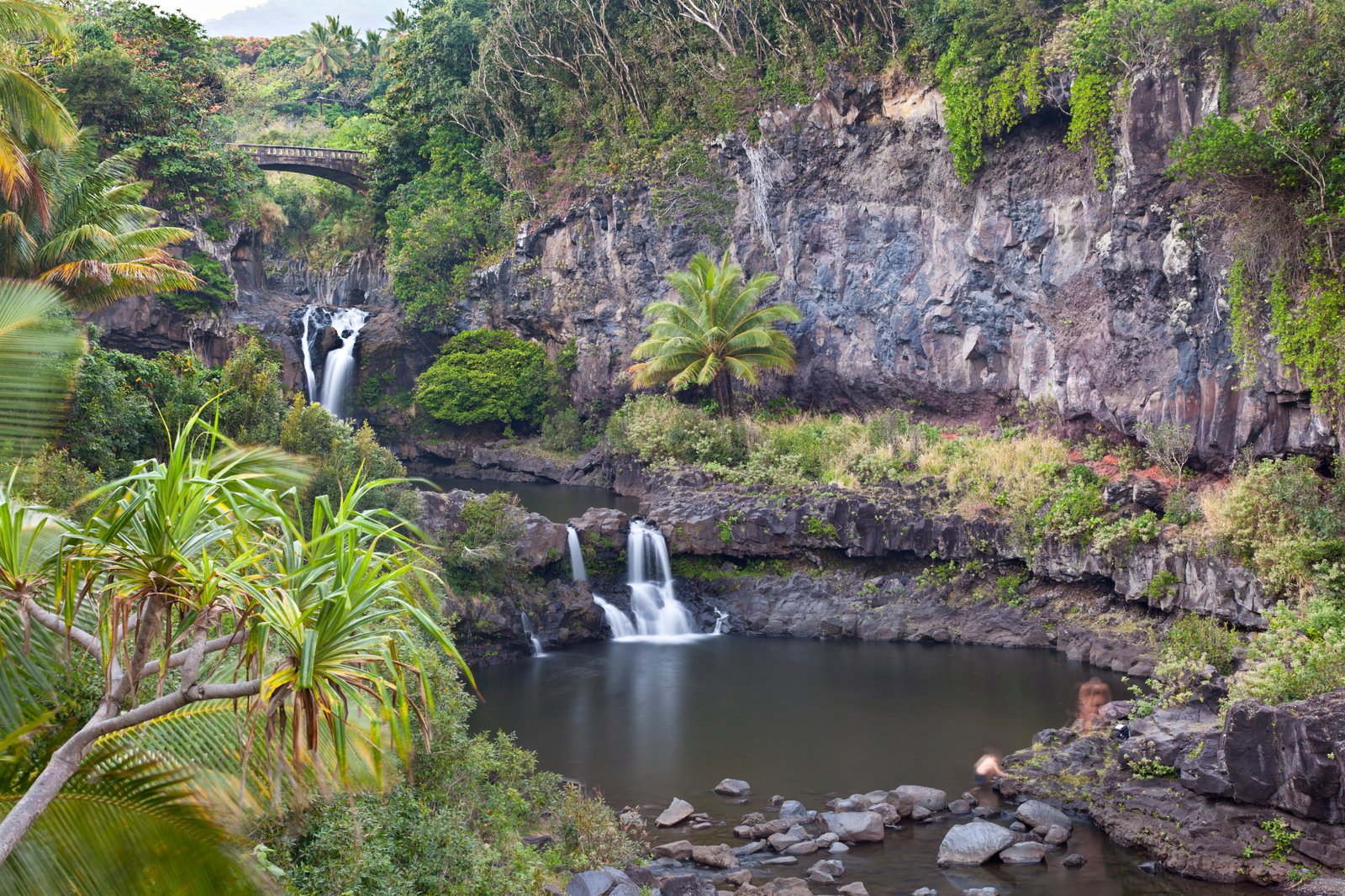

Swimming in Hawaii waterfall pools looks simple. The first time you see one, the impulse is obvious. Cool freshwater at the foot of a green cliff, no salt, no crowds, a rope swing already hung by someone who came before you. It’s the picture every visitor has in their head before they get on the plane. Most of the time the impulse is fine. Sometimes it gets people sick. Every year Hawaii’s news cycle carries stories of freshwater drownings or serious injuries at waterfalls. The risks are not the ones a visitor would guess from looking at the water. They’re mostly invisible, and they have very little to do with how strong a swimmer you are. Here’s what to know before you go in.
The Bacterial Risk: Leptospirosis
Hawaii’s freshwater streams and pools carry a bacterial infection called leptospirosis, spread through the urine of infected animals. Wild pigs, rats, mongooses, and cattle are the usual carriers. The bacteria can survive for weeks in cool, shaded water. According to the Hawaii Department of Health, Hawaii has the highest leptospirosis incidence rate in the United States. The infection enters through cuts, scrapes, mucous membranes (eyes, nose, mouth), or sometimes intact skin after prolonged exposure. Swallowing stream water is a common path. Symptoms appear anywhere from two days to four weeks later — fever, severe headache, muscle aches in the calves, sometimes red eyes, sometimes vomiting. Many cases look like a bad flu and resolve on their own. A smaller share progress to a serious second phase involving the liver and kidneys, and those cases need antibiotics quickly. The factors that actually move the risk: open cuts or abrasions on skin that contacts the water, dunking your head under a heavy fall where droplets get forced into your nose and mouth, a long soak rather than a quick swim, and water that’s muddy from recent rain. The CDC confirms there’s no human vaccine available in the United States. If you develop a fever within a month of swimming in a Hawaii stream and you’re back home, tell the doctor where you’ve been. Most mainland physicians won’t think of it.
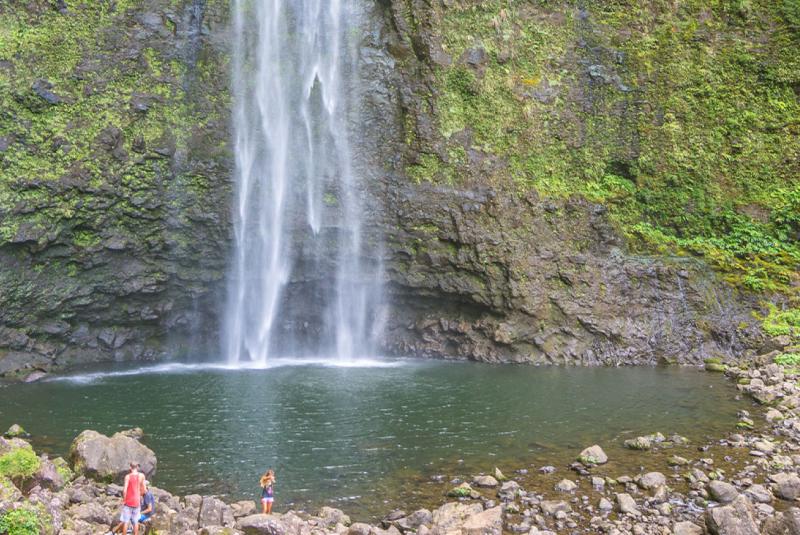
Hanakapiai Falls on Kauai's Na Pali Coast. The pool at the base is famous, the eight-mile round-trip hike is famous, and the two-mile stream-fed valley between the falls and the trailhead is famous for filling up fast after rain.
The Bigger Killer: Flash Floods
Leptospirosis makes people sick. Flash floods kill them. Hawaii’s mountain valleys funnel rain off thousands of feet of windward slope into narrow streams that drop fast to the ocean. A heavy cloudburst miles upstream can turn a calm ankle-deep crossing into a brown, debris-filled wall of water within minutes. The sky directly above you is often clear when it happens. The National Weather Service Honolulu office issues flash flood watches and warnings for Hawaii, and they’re common during the wet season, which NWS defines as roughly October through April, and after any tropical system. Hawaii’s steep, narrow valleys give less warning time than wider mainland drainages — sometimes only a few minutes between the first signs upstream and water at your feet. Hanakapiai Stream on Kauai, the streams crossed by Maui’s Pipiwai Trail above the Seven Pools, the gulches off the Hana Highway — these show up repeatedly in news coverage of stranded hikers and worse. The warning signs are worth memorizing. Water turning brown or muddy upstream of you. Floating leaves and sticks where the surface was clear ten minutes ago. A rising line on the rocks. A low rumble that sounds like distant trucks. Any one of these means leave the streambed immediately and climb to higher ground. Not back the way you came, which usually means crossing the stream again. Wait it out on the high side until the water visibly clears and drops.
Where You Can Swim, Where You Can't
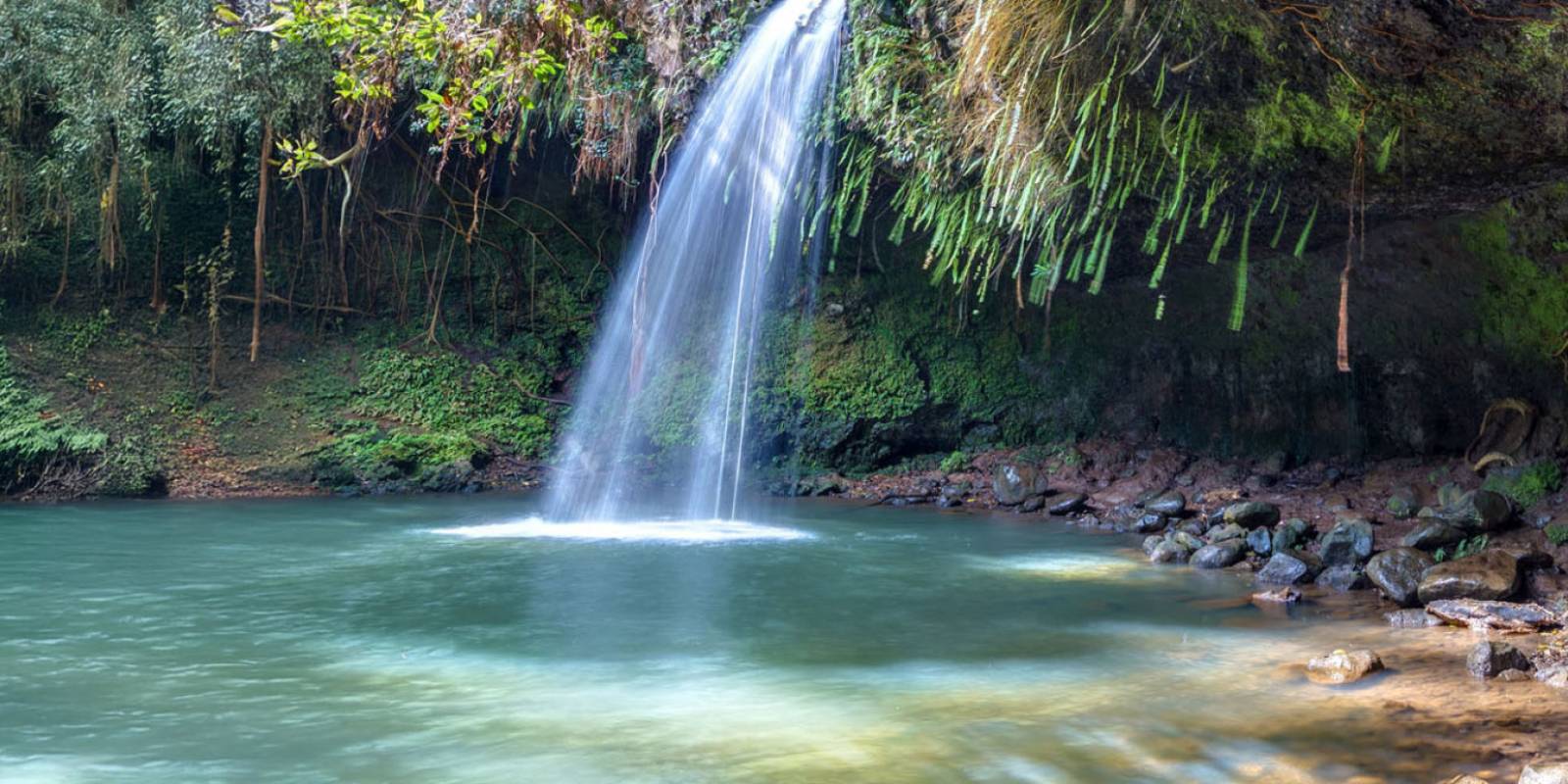
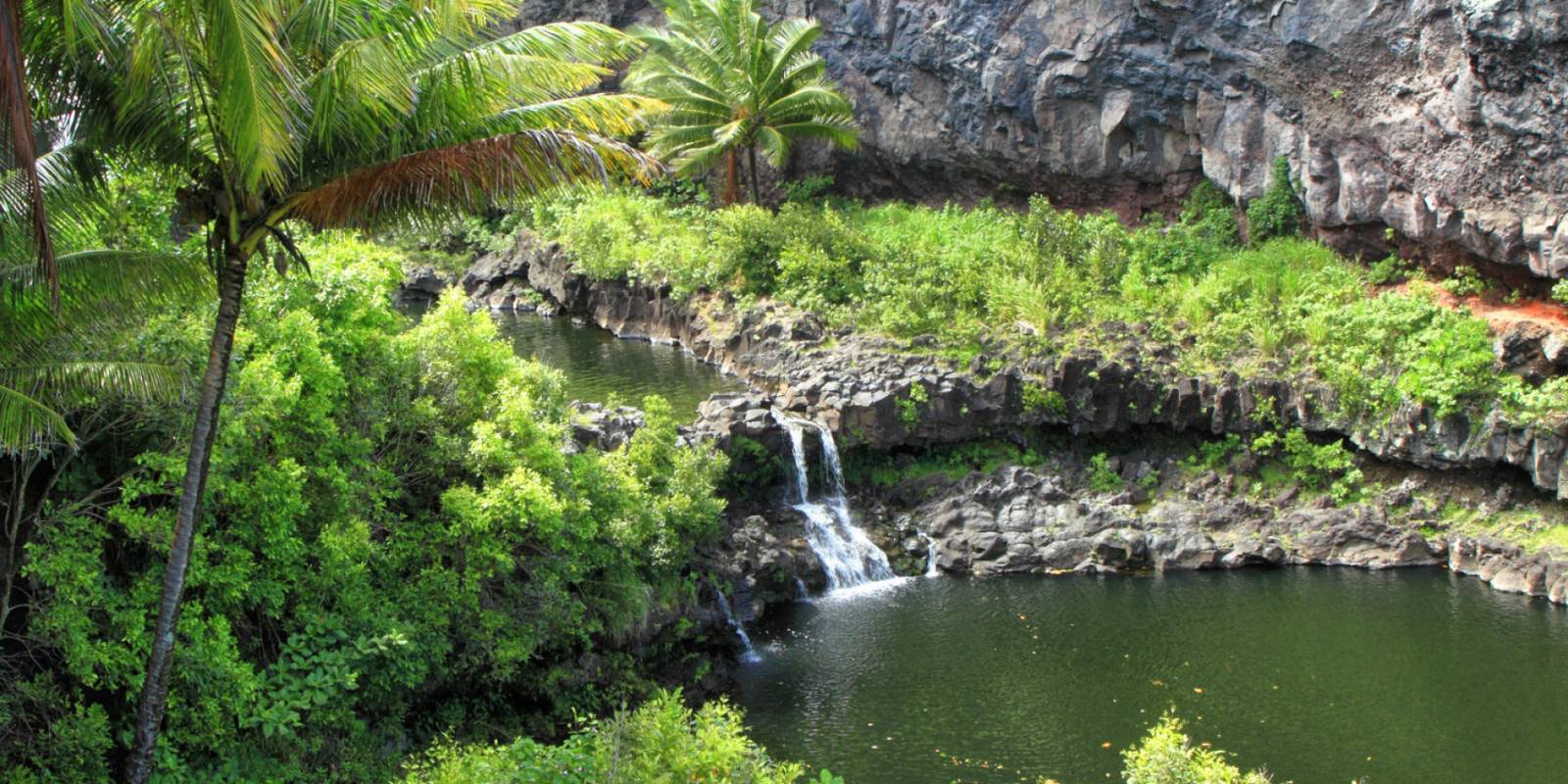
Hawaii has plenty of waterfalls visitors should look at but never enter. Akaka Falls on the Big Island is fenced and overlook-only; the state park is built around a paved loop with viewpoints, not water access. Manoa Falls on Oahu sits below a slope that has fallen before; the state’s trail page tells hikers plainly to stay out of the pool because of rockfall risk and leptospirosis in the water. Sacred Falls State Park on Oahu has been closed since a Mother’s Day 1999 rockfall killed eight hikers and injured dozens; the DLNR still enforces that closure. The Seven Pools at Oheo Gulch in Haleakalā National Park’s Kipahulu district are famous, and they are also closed to swimming by the National Park Service because of flash flood and rockfall history. Check the park’s current conditions page before driving the two-plus hours from central Maui. Going down to a posted-closed pool can earn you a citation, and people have been swept downstream doing it. For pools that aren’t closed, the better question isn’t “is this one safe” — it’s “how do I verify before I get in.” Look up the land manager. State parks have a current page for every park and trail. National parks have a conditions feed. Private trails like Twin Falls on Maui post on their own site. Check the NWS Honolulu forecast for flash flood watches or warnings on that island. Look at the water itself: clear means recent dry days; brown means recent runoff and higher bacterial load. Read every sign at the trailhead and pool. If you see a leptospirosis advisory or a closure notice, that wasn’t put up because someone at the office was bored.
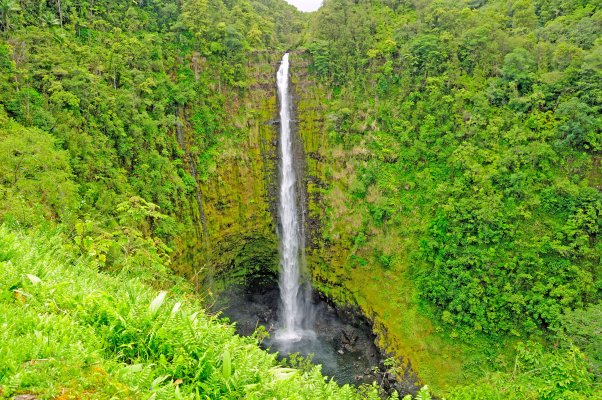
Akaka Falls drops 442 feet into a gorge the state has fenced off for good reason. Some Hawaii waterfalls are meant to be looked at, not swum in. The geology decides, not you.
The Jump Question
Every Hawaii waterfall pool with reachable rocks above it has had people jumping off them since the rocks existed. It looks fun in the Instagram clip. The problem with jumps into wild freshwater pools is what you can’t see from the rock: submerged debris from the last big rain, shifted boulders, depth that was twelve feet last year and is six feet this year because rocks and gravel moved in. Hawaii’s emergency rooms see serious spine and head injuries from waterfall jumps — the kind that turn a vacation into a medevac flight back to the mainland. If you’re going to jump, don’t jump anywhere you have not first swum and felt the bottom yourself, that day, after any recent rain. Jump feet-first. Treat every pool as shallower than it looks. Never dive head-first into a wild pool. Local kids know the safe pools by memory, by depth checks they update each visit, and by elders telling them what’s changed since last year. Visitors don’t have any of that information.
Practical Rules to Swim By
A handful of rules cover most of the actual risk. If a stream looks brown or muddy, don’t swim in it. Muddy water hides what’s underneath and signals recent runoff, which means a higher bacterial load. If you have open cuts, fresh scrapes, or healing wounds, skip natural-water swimming altogether for the day. Avoid putting your head under, and don’t swallow the water. Shower with soap as soon as you can after. Get any scratches cleaned and covered. Cross streams at the widest, shallowest point, not the narrowest. Moving water above mid-calf can knock down a strong adult because the force on the legs is harder to anticipate than people expect. Treat calf depth in moving water as the threshold to turn back, not knee or thigh depth. Never tie a rope around your waist for stream crossings. If rain starts upstream of you while you’re on a trail with multiple crossings, turn around before the second one rises, not after. The hike to Hanakapiai Falls on Kauai is the classic example. The trail follows Hanakapiai Stream up the valley, with several crossings between the beach and the pool. The fatalities and rescues on this stretch aren’t isolated. People get caught at the falls when the stream comes up and find themselves on the wrong side of chest-deep brown water that was knee-deep on the way in. The DLNR’s posted warnings aren’t bureaucratic throat-clearing. They’re written from incident reports.
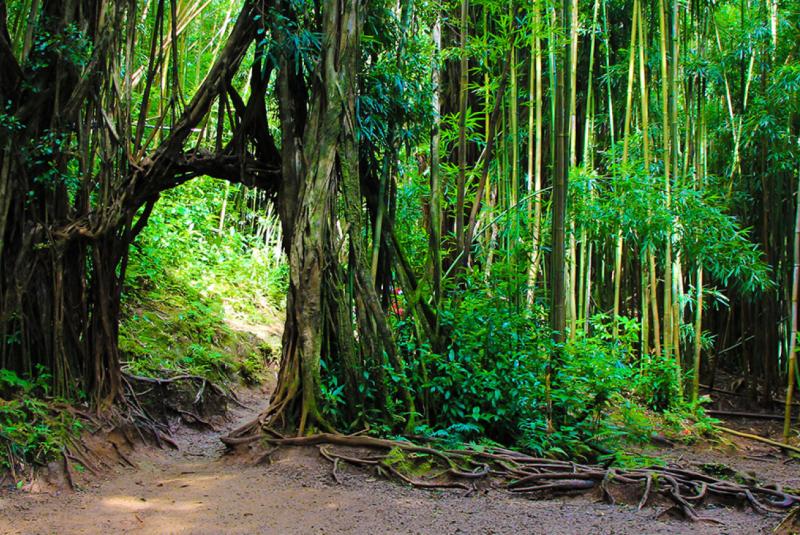
Manoa Falls on Oahu is the easiest waterfall hike near Honolulu. The trail is mud-slick, the falling-rock signage at the base is serious, and the pool itself is the kind of cloudy water where leptospirosis advisories show up regularly.
When to Skip the Swim Entirely
Some days the right answer is to take the picture and walk back to the car dry. Skip the swim if a flash flood watch or warning is posted anywhere on the island; the watch covers a wide area and your specific stream could be the unlucky one. Skip it if it rained more than briefly in the last twenty-four hours, especially up in the mountains where the water is coming from. Skip it if the pool is brown, muddy, or carrying floating debris. Skip it if there is signage you’d have to walk around to enter. Skip it if you have fresh cuts or you’re immunocompromised. Skip it if you are alone in a remote spot with no cell signal and no one knows exactly where you are. The ocean has its own risks, covered in our beach flag guide and our post-storm recovery roundup. Salt water at least lets you assess the swell and the rip visually, and many beaches have lifeguards. Freshwater swims in the back of a valley have neither. That is the trade-off worth understanding before you commit to the hike.
If You Get Sick After You Go Home
The leptospirosis incubation period is long enough that visitors are often back on the mainland before symptoms appear. If you swam in a Hawaii stream and develop a fever, severe headache, calf pain, or unusual fatigue within the next four weeks, tell your doctor where you’ve been and that you were in freshwater. Ask specifically about leptospirosis. According to the CDC, leptospirosis is diagnosed through laboratory testing and treated with antibiotics such as doxycycline, and earlier treatment works better, so don’t sit on symptoms hoping they pass. The CDC’s leptospirosis page is the right thing to forward to a doctor who’s never seen a case. Most visitors who swim in a Hawaii waterfall pool come home with nothing worse than a good picture. The few who don’t tend to share a pattern. They ignored a posted warning, swam in muddy water, dove head-first, or stayed in the stream when the rain started upstream. Knowing the pattern is most of the protection.