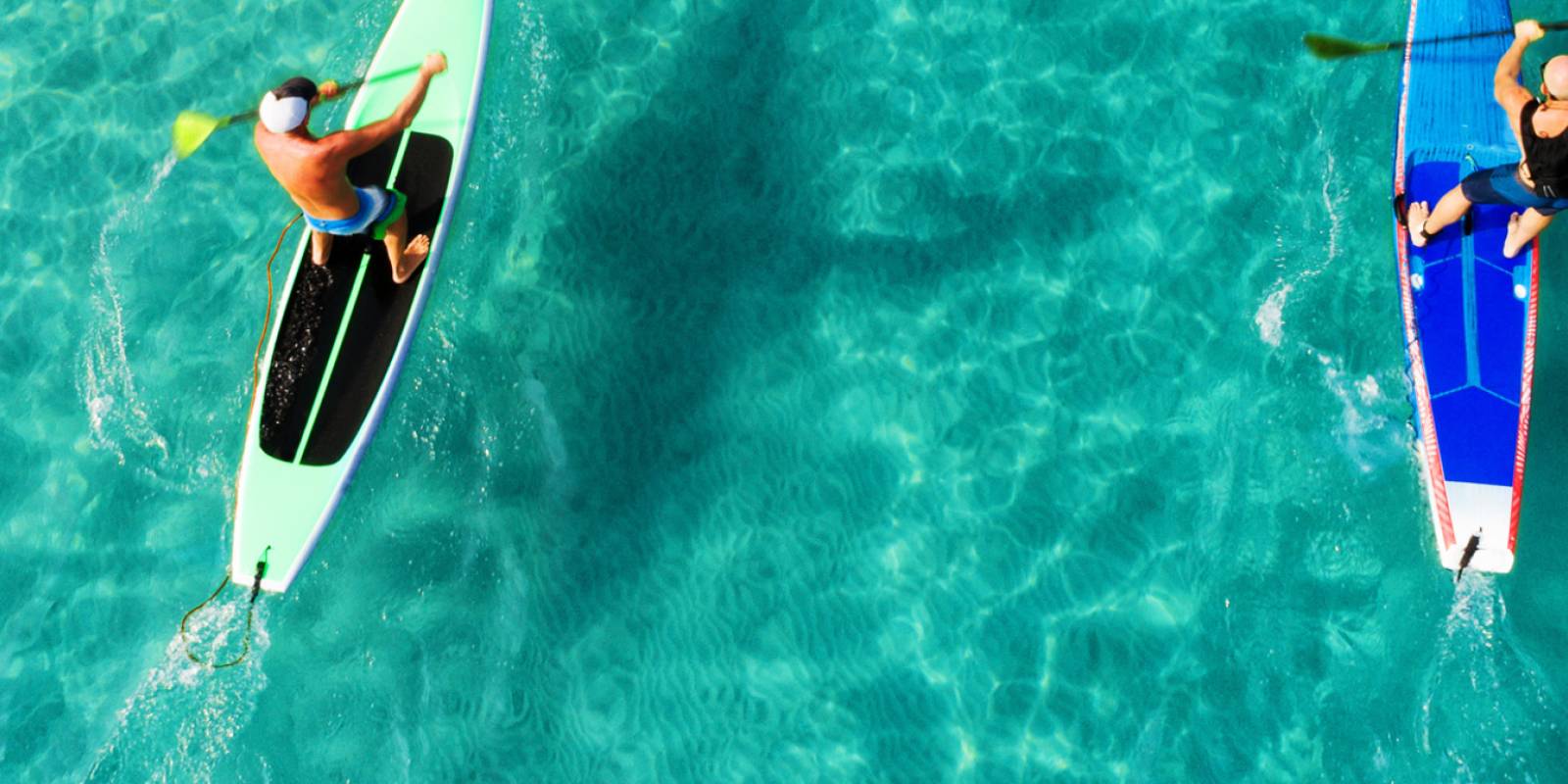
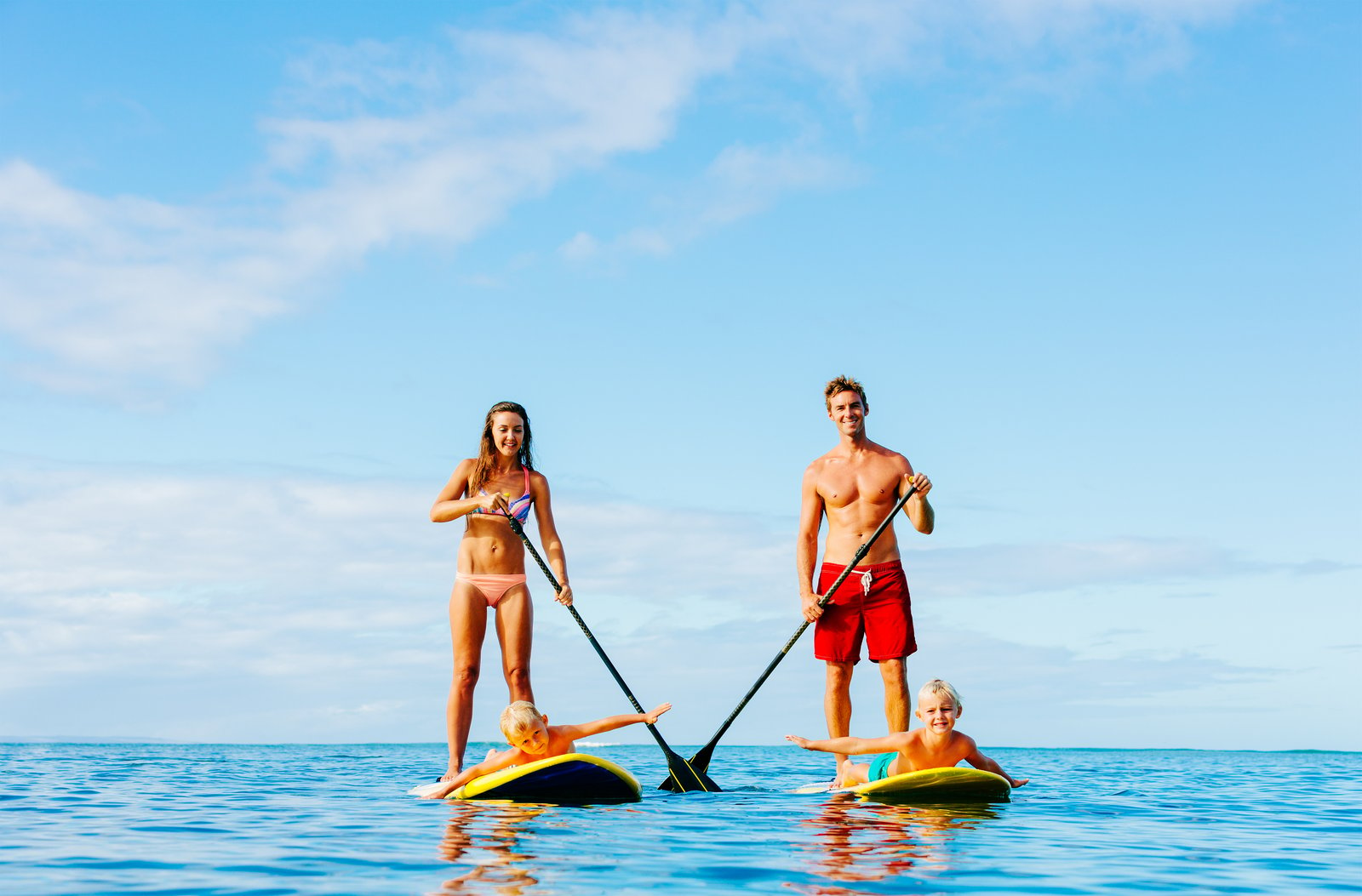

Hawaii stand-up paddleboarding tours are one of the easiest first-time water activities in the islands to actually enjoy. Many beginners stand up during their first lesson, and the muscle memory carries from there. The board is wide, the water in the right spots is glassy, and the view from a board is the one Hawaiʻi photo every traveler wants and almost nobody gets from the beach: turtle shadows over the reef and the back of the shoreline you’ve been walking on all week. Hawaiʻi is also where modern SUP grew up. Per Hawaiian Paddle Sports’ history of stand-up paddling, the modern revival traces back to two Hawaiʻi watermen, Dave Kalama and Laird Hamilton, who used paddles with their longboards in the early 2000s. The Waikīkī beach boys had stood up with paddles in the 1940s before that, and local instructors today still teach in those same Waikīkī breaks. Summer is the right window for most beginners. North-shore swells calm down, the trade winds back off in the afternoons in some lee-side spots, and the protected bays on the south and west sides of every island become almost lake-flat at first light. This guide walks through what summer SUP looks like in 2026, where to paddle on each island, what to expect to pay, and how to pick between a lesson, a rental, and a guided tour.
Lesson, rental, or guided tour: which one to book
The three options look similar from the operator’s website but solve different problems. A lesson is the right pick if no one in your group has paddled before, or if it’s been more than a few years. Most Hawaiʻi SUP lessons run 90 minutes to two hours, including board, paddle, and personal flotation device, with the start on flat water in a sheltered bay where falling off doesn’t cost you anything. By the end of one session, most adults can paddle a straight line and stand back up after a tip-over. Expect $99 to $150 per person for a private or semi-private first lesson on most islands, based on current rates published by Action Sports Maui, Kauaʻi Beach Boys, and Hilo Ocean Adventures. A rental is the right pick once one person in your group already knows how to paddle. Hourly and daily rentals are common on every island. Day rates run roughly $45 to $75 per board, based on published rates from Kailua Beach Adventures ($74/day) and Hilo Ocean Adventures ($65/24 hours). The shop lifts the board onto your rental car’s soft racks, you pay a deposit, and the time on the water is yours. The catch is that nobody is watching the conditions for you. Renting on a day with strong onshore wind is a memorable bad time. A guided tour is the right pick when there’s a specific place you want to paddle and the route involves more than one decision: a river paddle in Hilo, a sunset session at Magic Island, or a slow morning along Kalapaki Bay watching sea turtles surface. Guided tours typically run one to two and a half hours, include all gear, and add a safety briefing plus a route the guide picks based on the day’s conditions.
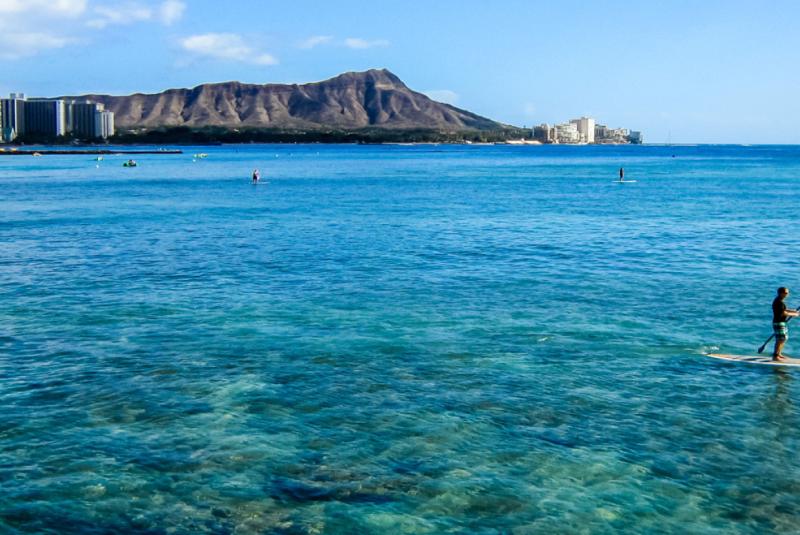
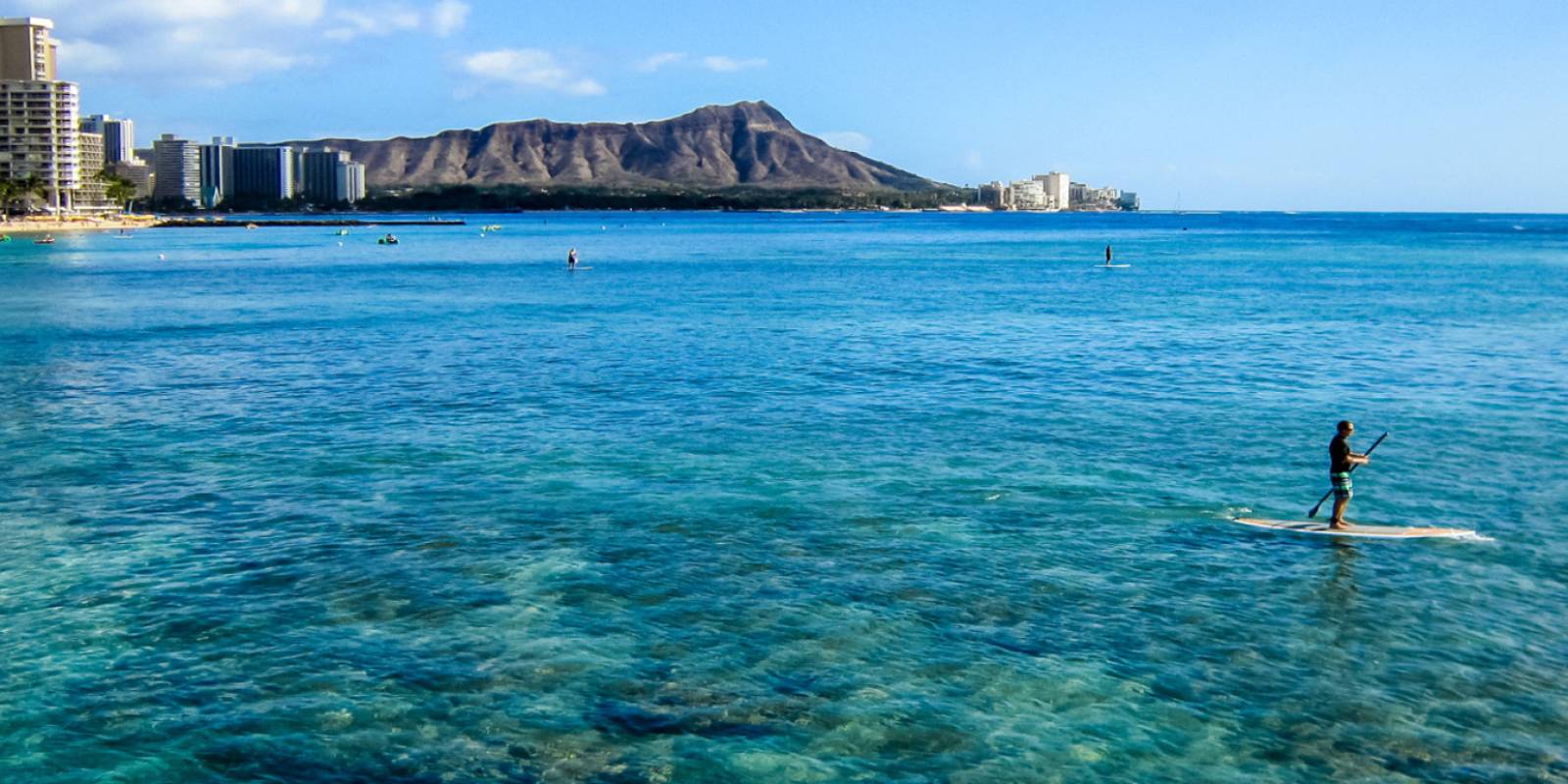
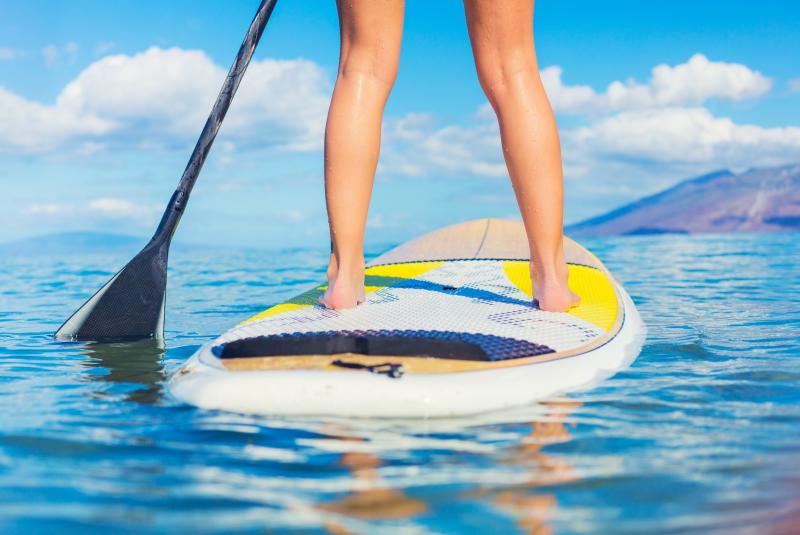
South-shore mornings in summer are the closest thing Hawaiʻi gets to mirror-flat. The right window for a first SUP lesson.
Oʻahu: Magic Island and Kailua Bay
Oʻahu has a wide range of SUP operators because it has the right combination of protected water and instructor depth. Three areas matter for visitors. Magic Island at Ala Moana Beach Park. A reef-protected lagoon about 1.5 miles from Waikīkī. The water is almost always flat at first light. This is also where Yoga Floats teaches SUP yoga from Magic Island. The Honolulu-based outfit lists Morning SUP Yoga and Sunset SUP Yoga from $44 for 1 hour 15 minutes, a “Light Up the Night” night-paddle session from $69, and a longer Yoga and Paddle Combo from $77 for 2 hours 15 minutes. Booking links for each option are on the Yoga Floats FareHarbor page. The Magic Island lagoon is also where many Honolulu instructors take first-timers for that initial stand-up. Kailua Bay. The postcard windward-side bay sits across from the Mokulua Islands and next to Lanikai Beach. Kailua’s commercial-permit system limits the number of outfits that can run rentals and lessons here, and Kailua Beach Adventures is one of the few permitted operators on the bay (per the DLNR Kailua commercial-use permit map). Their shop is at 130 Kailua Road in town. Guests pick up the board there and walk it down to the beach. SUP rentals start at $74 per board per day, and lessons are bookable on their FareHarbor page. A few rules worth knowing before booking: per the DLNR Mokulua landing system, a $3 per person per day permit is required to set foot on Moku Nui, and landings are not allowed on Sundays. Both Mokes are state seabird sanctuaries. Most rental customers paddle in the bay and circle back without landing. Waikīkī. The historical home of SUP and still where a lot of in-water instruction happens. Long, gentle waves at Canoes and Queen’s give intermediate paddlers a chance to actually catch a wave on a SUP without going over the falls. This is mostly for stronger first-timers and returning paddlers. For broader Oʻahu options, our best Oʻahu paddleboarding spots roundup walks through the rest of the bays.
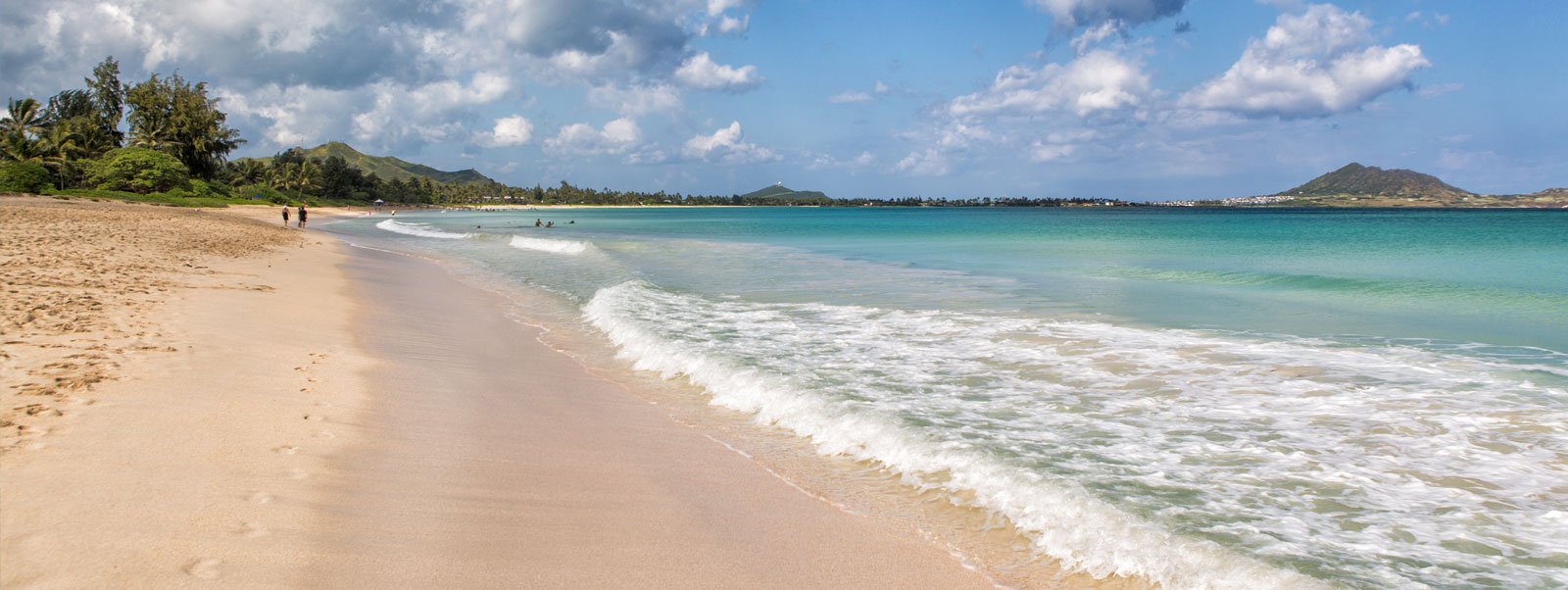
Kailua Bay's protected water and the Mokulua Islands on the horizon make it a popular paddle on Oʻahu.
Maui: Kīhei south shore
Maui’s calmest water for SUP is the Kīhei strip from Kalama Park down through Wailea. The south-facing coastline sees less wind and chop than the windward side, and the reef structure offshore filters most of the swell that does come through. Early mornings are often the calmest window. Action Sports Maui, based at 1900 South Kīhei Road, runs 1.5-hour SUP lessons in semi-private and private formats with all gear included. Their SUP page lists the lesson types and FareHarbor booking link in one place. Pricing shifts between summer and shoulder seasons, so use the booking page for current rates. Hawaiian Paddle Sports is the other Maui name to know. Per their About page, they focus on small-group, conservation-minded ocean tours. Worth a look if you’d rather paddle with a guide than rent a board and figure it out yourself. For a broader Maui activity comparison, the Viator Maui destination page groups SUP, kayak, and snorkel options on one page so you can sanity-check which morning works best for your travel days.
Big Island: Wailoa River, Hilo
The Big Island’s most distinctive paddle isn’t on the ocean. It’s on the Wailoa River in downtown Hilo, a short fresh-and-brackish waterway that loops past Liliʻuokalani Gardens and ends near the Kamehameha I statue at the river mouth. No ocean swell, though wind can still texture the surface. River current is light most of the day. Hilo Ocean Adventures runs the Wailoa River SUP guided tour from $99 per person for an hour on the water. They also rent SUPs starting at $45, with rental windows of 4 hours, 24 hours, 3 days, or a full week (per their rental booking page). The shop is open daily 9 a.m. to 5 p.m. HST. Beginners do well here because the river current is easy and there’s no wave to fall into. Kona-side ocean paddling is generally a better intermediate option than a true beginner one. The surface is mostly calm but there’s almost always some surface swell, and most Kona launch beaches don’t have the shallow flat-bottom recovery you want for a first lesson. Hilo is the better starting point on the Big Island.
Kauaʻi: Kalapaki Bay
Kalapaki Bay, in front of the Royal Sonesta Kauaʻi (formerly the Kauaʻi Marriott), is protected by a long breakwater and stays paddleable on most days when the rest of the island’s coastline is too windy. Da Life Outdoors / Kauaʻi Beach Boys meets on Kalapaki Beach in front of the Royal Sonesta for SUP lessons starting at $99 per person for 1.5 hours, ages 10 and up. The SUP Lessons FareHarbor page has the current rate and time-slot inventory. The other Kauaʻi paddle worth knowing about is the Hanalei River on the north shore: flat, scenic, and a good morning option in summer when the river mouth at Hanalei Bay is open and calm. Several Hanalei outfits rent SUPs by the hour or day, and many of the same companies that run Wailua River kayak tours also stock paddleboards. Coverage of the broader paddling inventory is in our summer 2026 kayaking guide. Most of the Kauaʻi rivers that work for kayaks also work for SUP at slow-water times of day.
Calm river paddles like Hilo's Wailoa give beginners a swell-free way to find their balance.
Safety: four things to actually pay attention to
Stand-up paddling looks like a low-consequence activity, and on the right morning it is. Per the U.S. Coast Guard’s paddle craft safety document, SUPs are classified as vessels whenever they’re outside a designated swim or surfing area. That means a Coast Guard–approved life jacket and a sound-producing device (a whistle) are required for paddlers 13 and over, and children 12 and under must wear a life jacket at all times. The U.S. Coast Guard Auxiliary’s Paddler’s Guide to Safety walks through the requirements in detail. Most lesson and rental outfits hand you a leash and a flotation device with the board. Clip in. Four things matter more than the rest. Wind direction. Paddling out with a tailwind is a fast, fun ride. Coming back into a headwind on a wide SUP is brutal, and it’s a common reason paddlers need help getting back. Check the morning forecast and paddle into the wind first. Surf size on south shores in summer. Summer is calmer than winter, but Hawaiʻi south swells from Southern Hemisphere storms can build sneaky long-period sets that make a flat-water bay look paddleable from the parking lot and unpaddleable an hour later. The National Weather Service Honolulu surf forecast is the right place to check before launching, and our live ocean conditions page pulls the same NOAA data into one screen. Sun exposure. You will be on a board with no shade for one to three hours. Reef-safe mineral sunscreen, a UPF-rated long-sleeve sun shirt, and a wide-brim hat or visor are not optional. Hawaiʻi’s Act 104 banned the sale of sunscreens containing oxybenzone or octinoxate effective January 1, 2021, and Maui and Hawaiʻi counties have since added stricter mineral-only rules. Our reef-safe sunscreen law explainer walks through the county-level differences. Any mineral (zinc oxide or titanium dioxide) sunscreen is fine. Leash and recovery. Wear the board leash whenever you’re on open water. A loose board in a stiff wind moves faster than you can swim. Before paddling out, practice climbing back on from a tip-over in waist-deep water. Once you’ve done it once on purpose, the first real fall stops being a problem.
What to wear and bring
You’ll get wet. The simplest packing list: Quick-dry swimsuit and a UPF rash guard. A long-sleeve sun shirt is worth more than a second sunscreen application. Most operators sell rash guards if you didn’t bring one, and a basic mineral reef-safe sunscreen with zinc oxide from Amazon ships before your trip if you don’t want to buy it on island. A water-strap hat or visor and polarized sunglasses with a strap. The water reflects a lot of glare, and a hat that blows off mid-paddle is gone. Reef-safe sunscreen, applied before launch. Reapply after extended water time, and follow the operator’s recommendation on timing. A small dry bag clipped to the board. Phone and car key. Most rental shops sell or rent these for a few dollars. Operators provide the board, paddle, and personal flotation device. Don’t bring your own paddle unless you brought it for surfing or are already a paddler. A wrong-length paddle is worse than the rental one.
Renting a car
SUP launch points cluster differently than the resort zones on each island. Approximate drive times (per Google Maps): On Oʻahu, Magic Island sits about 1.5 miles from Waikīkī, and Kailua Beach is roughly a 25- to 35-minute drive across the Pali Highway. On Maui, Action Sports Maui in Kīhei is about 10 minutes from a Wailea hotel and 35 to 45 minutes from West Maui resorts. On the Big Island, Hilo is about a two-hour drive from Kona via Saddle Road, and usually pairs naturally with a Volcanoes National Park visit. On Kauaʻi, Kalapaki Bay is right at the airport in Līhuʻe, and Hanalei is roughly an hour from Poʻipū depending on traffic through Kapaʻa. Almost any SUP day works better with your own rental car than with a hotel shuttle or rideshare. Boards launch at sunrise on the calmest mornings, and rideshares at 6 a.m. in lower-density areas like Kīhei or Hanalei aren’t reliable. We use Discount Hawaii Car Rental on our own Hawaiʻi trips. They aggregate quotes from the major brands at every Hawaiʻi airport, and per their FAQ reservations require no deposit and cancel free, which is the right shape for an early-morning tour day that might shift if the weather window does.
When to skip SUP and pick something else
A few cases where another activity is the better pick. Anyone in the group has trouble with balance or shoulder mobility. A sit-on-top kayak gives the same calm-water Hawaiʻi experience without the standing piece. Our summer 2026 kayaking guide walks through the same bays and rivers from the kayak side. You want to actually catch waves. SUP-surfing is its own discipline, and most beginner SUP lessons stay on flat water. If surfing is the goal, a real surf lesson is a faster path. Our summer 2026 surf-lessons guide has the operator and beach breakdown. Strong wind in the forecast. SUPs catch wind like a sail. If your operator’s wind cutoff is exceeded, or the morning forecast shows strong onshore trades in the bay you’re planning to paddle, swap the day for snorkel or beach time and reschedule to a calmer morning. Our live ocean conditions page shows the same NOAA wind and surf data the operators are checking. You only have one ocean morning the whole trip. Spend it snorkeling. Snorkel covers more reef in less time and gives you the turtle and reef-fish photos most people remember from Hawaiʻi. SUP is the right pick when you have a calm morning to spare and want to be on the water rather than under it.