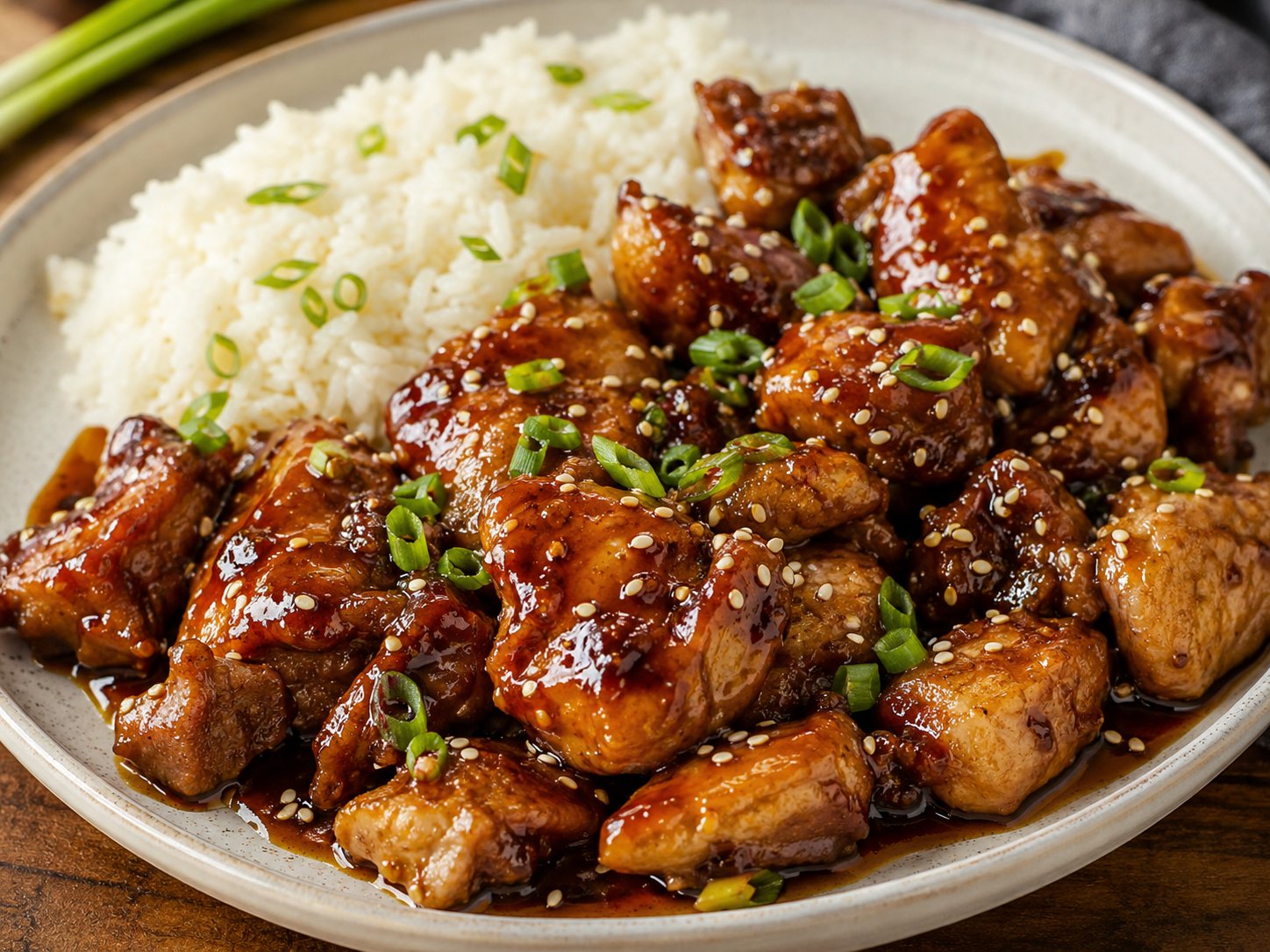
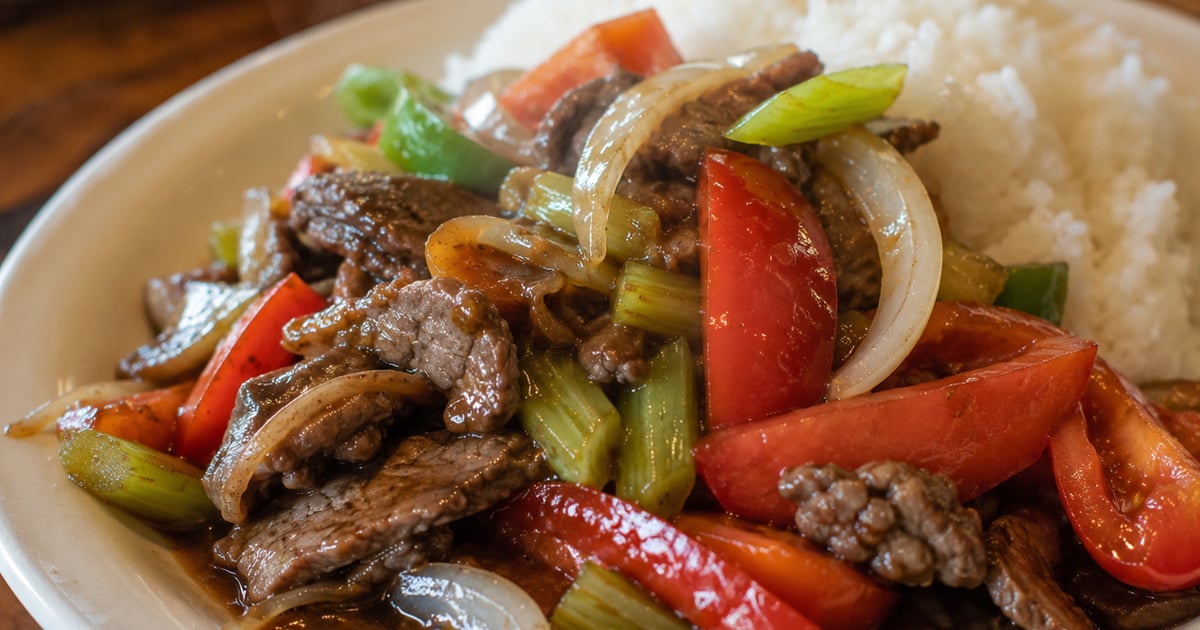

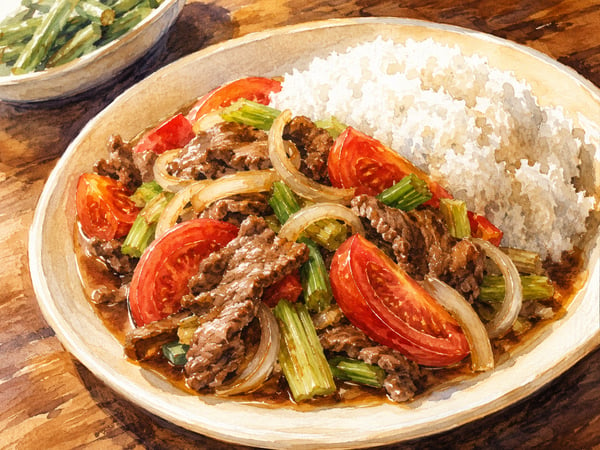
Beef tomato is one of those dishes that's everywhere and that almost nobody outside Hawaii has ever heard of. Strips of beef velvet-marinated in cornstarch and shoyu, stir-fried fast and hard in a screaming-hot pan, then tossed with sweet onion wedges and ripe tomato wedges in a glossy gravy of oyster sauce, ketchup, shoyu, and a slick of cornstarch slurry. It lands over white rice on a styrofoam plate at every Chinese plate-lunch counter in Honolulu, usually with mac salad on the side and a small bag of furikake. It's the easiest Hawaii dish to fall in love with on your first visit and the easiest one to make at home.
The dish is Cantonese — beef and tomato is a classic stir-fry across Guangzhou and Hong Kong — and arrived in Hawaii with Chinese plantation workers in the late 1800s. The Hawaii version distinguishes itself by being sweeter, glossier, and built with ketchup in the gravy (a riff that doesn't really exist in mainland China but is the Hawaii signature). It's a Saturday-night dinner I cook in 25 minutes flat after a long day. Plate lunch at home, no styrofoam required.
At a glance
4 (over rice)
20 minutes (plus 30 min marinade)
8 minutes
Easy (fast stir-fry)
Ingredients
For the beef and marinade
- 1.25 lb flank steak, sirloin tip, or chuck eye — sliced across the grain into thin (1/8 inch) strips, then cut to 2-inch lengths
- 2 tablespoons shoyu (soy sauce)
- 1 tablespoon Shaoxing wine (or dry sherry)
- 1 tablespoon cornstarch
- 1 teaspoon toasted sesame oil
- 1/2 teaspoon baking soda (the velveting trick)
For the stir-fry
- 3 medium ripe tomatoes (about 1.25 lb), cut into 8 wedges each
- 1 large sweet onion (Maui if you can find one), cut into 8 wedges and layers separated
- 3 cloves garlic, smashed and minced
- 1 thumb-sized knob of ginger, peeled and finely minced
- 3 stalks green onion, cut into 2-inch lengths, white and green parts separated
- 3 tablespoons neutral oil (peanut or avocado), divided
For the gravy
- 1/4 cup oyster sauce
- 3 tablespoons ketchup
- 2 tablespoons shoyu
- 1 tablespoon brown sugar
- 1 cup water or low-sodium chicken stock
- 1.5 tablespoons cornstarch dissolved in 3 tablespoons cold water (slurry)
- Pinch of white pepper
Equipment
- 14-inch carbon steel wok OR large heavy 12-inch skillet
- Sharp knife (a sharp knife is the difference between thin even slices and ragged chunks)
- Wok spatula or long wooden spoon
- Small bowl for the gravy mix
- Rice cooker with hot rice ready to serve
To serve
- Hot steamed white rice (Calrose or medium-grain)
- Optional mac salad on the side for a real plate-lunch presentation
- Furikake or chili pepper water for the table
- The Hawaii way is a tall mound of rice with the beef-tomato spooned generously on top so the gravy soaks down through
Method
- Marinate the beef. Combine the sliced beef with shoyu, Shaoxing wine, cornstarch, sesame oil, and baking soda in a bowl. Mix with your hands until every strip is coated. Let sit at least 30 minutes at room temperature, or up to 2 hours in the fridge. The baking soda is the secret to that tender, silky restaurant texture — don't skip it.
- Mix the gravy. In a small bowl, whisk together oyster sauce, ketchup, shoyu, brown sugar, water (or stock), and white pepper. Keep the cornstarch slurry separate, in its own little dish next to the stove. You'll add it at the end.
- Sear the beef. Heat your wok or heavy skillet over the highest flame you have until it smokes faintly. Add 2 tablespoons of oil and swirl. Add the marinated beef in a single layer and DON'T STIR for 60 seconds — let the bottom sear. Then stir-fry quickly for another 60 to 90 seconds until the beef is mostly browned and just barely cooked through. Scoop the beef out onto a plate, leaving any fond in the pan. Don't overcook — it finishes later.
- Stir-fry the aromatics and onion. Return the wok to the heat and add the remaining 1 tablespoon of oil. Add the white parts of green onion, garlic, and ginger; stir for 15 seconds until fragrant. Add the onion wedges and stir-fry for 1 minute — you want them to start to soften but stay crunchy.
- Add the tomato and gravy. Add the tomato wedges and stir gently for 30 seconds — you want the tomato to warm and barely soften, not collapse into sauce. Pour in the gravy mixture. Bring to a fast simmer.
- Thicken and return the beef. Give the cornstarch slurry a quick stir (it settles fast), then pour it into the simmering gravy while stirring. The sauce will go from cloudy to glossy in seconds. Return the beef and any juices to the pan and toss everything together for another 30 seconds to coat. Stir in the green parts of the green onion. Pull off the heat.
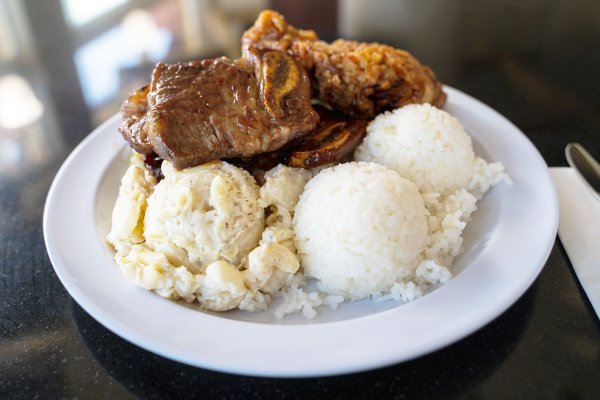
- Serve immediately, over rice. Mound hot rice on a plate, spoon the beef-tomato generously over the top, and eat while the steam is still rising. The plate-lunch presentation is rice on one half, beef-tomato over and beside it, and a scoop of mac salad on the side. A drizzle of chili pepper water on the meat is encouraged but optional.
Notes from a local cook
Velveting is the difference. The cornstarch + baking soda + shoyu marinade is the technique Chinese restaurants use to get that signature tender, silky-smooth beef texture even on a tougher cut. Baking soda raises the pH of the meat surface and prevents protein bonds from tightening as fast during searing — you get tender beef from a $7 piece of chuck. Don't increase the baking soda above 1/2 teaspoon for this much meat, or you'll get a soapy aftertaste.
Hot pan, fast cook, two stages. A good stir-fry is fast. Slice the beef thin, marinate, then cook in two stages — beef out first, aromatics and vegetables next, then beef back in at the end. Trying to do everything in one pan-load steams the beef and the vegetables instead of searing them, and the dish ends up watery and gray.
Don't murder the tomato. The tomato wedges need to hold their shape. They go in for under a minute before the gravy joins them, and they stop cooking the moment you serve. If you let them simmer in the sauce for 5 minutes they melt into pulp and the dish loses its texture — it should be plump tomato segments alongside snappy onion and tender beef, all coated in a glossy gravy.
Ketchup is the Hawaii signature. Mainland Chinese beef-tomato uses fresh tomato and a small amount of tomato paste at most. The Hawaii version is sweeter and more deeply red because of the ketchup in the gravy — a plantation-era frugality move that stuck because it tastes great. Don't apologize for it; don't sub it out for fancy tomato paste. The ketchup is the whole point.
While You're on the Islands
Eat it made by someone else. Beef tomato lives at virtually every Chinese plate-lunch counter on Oahu and is on the menu at many Chinese-Hawaiian sit-down spots across the islands. The classic Honolulu version turns up at long-running spots like Asahi Grill on Ward Avenue and at the Chinatown counters serving daily plate lunches. See our Oahu dining guide and the broader Hawaii plate lunch overview for the wider Chinese-Hawaiian counter scene.
Buy the ingredients fresh. Shaoxing wine and oyster sauce are both stocked at any island Asian grocery store — easy to grab a bottle of each if you want to cook this in a vacation rental.
Bring It Home
What you can substitute, what you can't: Shaoxing wine, oyster sauce, and sesame oil are all stocked at most mainland Asian grocery stores, so nothing here needs packing home. No Shaoxing wine on hand? Dry sherry is the standard substitute in a pinch.
Where to try this in Hawaii