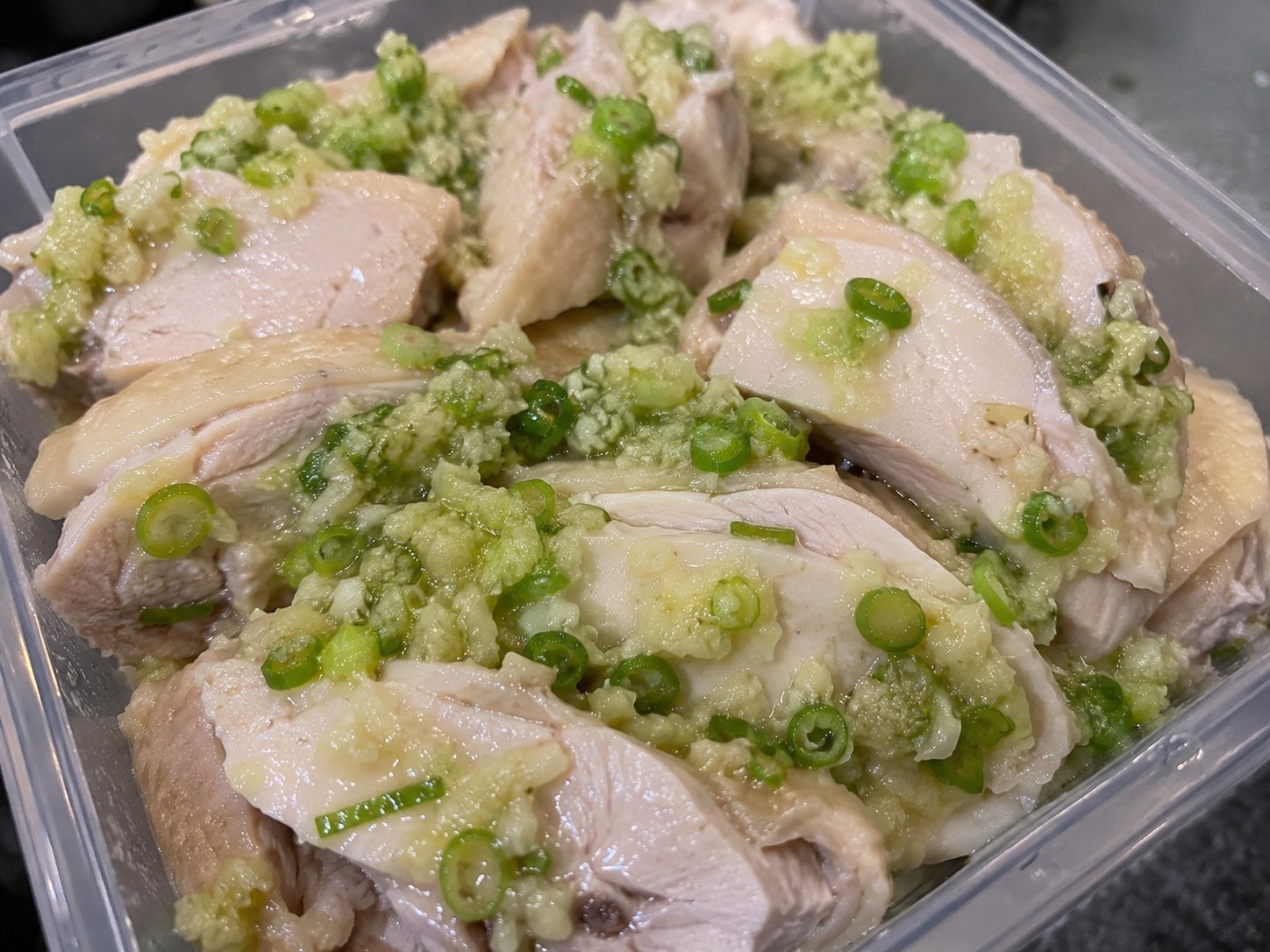

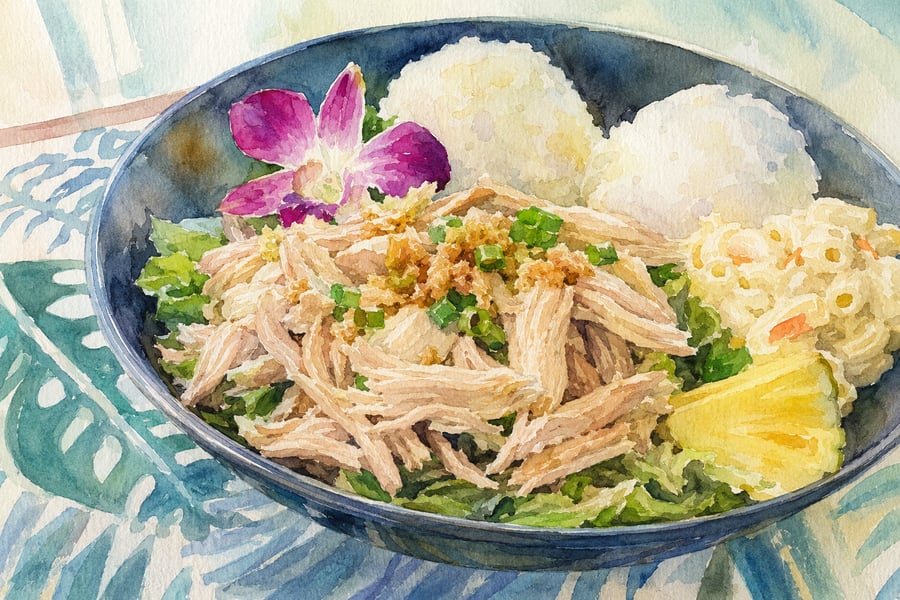
I have a soft spot for cold ginger chicken. It is the quiet workhorse of the Hawaii-Chinese plate lunch — bone-in chicken poached gently, chilled hard, sliced across the grain, and laid over rice. Nothing on the plate looks loud. The whole dish lives or dies on the dipping oil: fresh ginger and scallion bruised with salt in a heatproof bowl, hot oil poured straight over the top. It hisses for three seconds, blooms, and sets into a bright green slick you spoon over every bite.
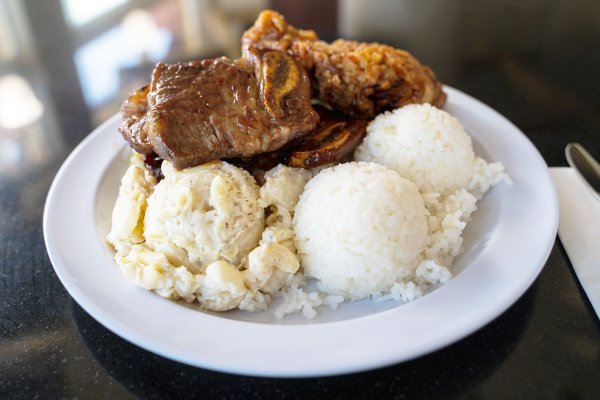
The technique is Cantonese. White-cut chicken — bai qie ji — came across the Pacific with the Chinese contract laborers who started arriving on the sugar plantations in 1852, the first major immigrant labor group brought in for the cane fields. In Chinatown Honolulu, and in the family kitchens of Hilo, Wailuku, and Lihue, the dish slotted into the plate-lunch format: rice on one side, sliced chicken in the middle, a ramekin of ginger-scallion oil on the side, and almost always a scoop of mac salad. Hot day or cold day, it eats the same. That is most of why it has stayed.
At a glance
4 to 6
15 minutes
40 minutes
30 minutes minimum
about 1 hour 25 minutes
Easy
Ingredients
For the chicken
- 1 whole chicken, 3 1/2 to 4 lb (or 4 bone-in skin-on thighs plus 2 breasts)
- 2 inches fresh ginger, sliced in coins
- 4 scallions, halved crosswise
- 2 tablespoons kosher salt
- Water to cover the chicken (about 12 cups)
For the ginger-scallion oil
- 1/2 cup peeled fresh ginger, very finely minced (about 3 oz)
- 1 cup thinly sliced scallions, white and green parts (about 6 scallions)
- 1 teaspoon kosher salt
- 1/2 cup neutral oil (canola, grapeseed, or peanut)
- 1 tablespoon Aloha shoyu or other light soy sauce (optional)
Equipment
- Large stockpot, at least 6 quarts
- Tongs and a large bowl of ice water for the cold shock
- Sharp cleaver or chef's knife
- Small heatproof bowl for the oil
To serve
- Steamed short-grain or jasmine rice
- Sliced cucumber on the side
- A scoop of local-style mac salad — full plate-lunch treatment
Method
- Build the poaching pot. Drop the chicken in the stockpot. Add the ginger coins, halved scallions, and salt. Cover with cold water by 1 inch. Bring it up to a slow simmer over medium heat. Do not boil hard. You want the water rippling at the edges, not rolling.
- Poach gently. Once it reaches that simmer, partially cover and cook 35 to 40 minutes for a whole 4 lb bird, or 25 to 30 minutes for bone-in pieces. Skim any foam off the top. Done is 165°F at the thickest part of the thigh, juices clear at the joint. Use the thermometer. Under-poached chicken is the only way this dish fails.
- Cold shock. Lift the chicken out with tongs and plunge it straight into the bowl of ice water for 5 minutes. The cooking stops. The skin tightens against the meat. That is the texture you are after.
- Drain and chill. Pat the chicken dry, set it on a rack, and refrigerate uncovered for at least 30 minutes — longer if you can swing it, up to overnight. Cold is non-negotiable. Warm cold ginger chicken is just plain poached chicken.
- Bruise the aromatics. While the chicken chills, drop the minced ginger, scallions, and salt into the heatproof bowl. Press and stir hard with a wooden spoon for 30 seconds. You are bruising them so they let go of their oil before the hot oil hits.
- Bloom with hot oil. Heat the neutral oil in a small skillet over medium-high until it shimmers and a test scallion dropped in sizzles on contact (about 350°F). Pour it carefully over the ginger-scallion mixture. It hisses, blooms, then settles. That is the dish. Stir, taste, add the soy sauce if you want a savorier edge.
- Slice and plate. Pull the chilled chicken out, separate the legs and breasts, slice across the grain into 1/4-inch pieces, skin on. Fan the slices over a bed of steamed rice. Spoon the ginger-scallion oil generously on top. Cucumber alongside. Eat cold.
Notes from a local cook
Bone-in, skin-on, always. Boneless skinless breast poached this way is rubbery and tastes like nothing. The bones flavor the broth, the skin keeps the meat moist through the cold shock, and the gelatin in the joints gives proper cold ginger chicken its silky bite. Boneless thighs will do in a pinch. Boneless breast is the one cut I won't use.
The poaching liquid is a free bonus. What is left in the pot after you pull the chicken is light chicken broth, already perfumed with ginger and scallion. Strain it, cool it, freeze it in pint containers. Next time you make saimin, oxtail soup, or chicken long rice, you are halfway done.
Minced, not grated. Microplaning the ginger turns it into wet pulp that fries instead of blooms when the hot oil hits. You want a very small dice — fine enough that it looks like paste at a glance, but the pieces are still discrete. That texture is the whole character of the dish.
Make ahead. The chicken keeps cold for up to 3 days. The ginger-scallion oil holds in the refrigerator for several days — give it a sniff before you use it on the second wave. Make a double batch. You will spoon it on noodles, eggs, fried rice, steamed fish, plain vegetables, leftover roast pork, plain rice at midnight. It earns its container space.
While You're on the Islands
Eat it made by someone else. Cold ginger chicken still anchors the menu at the old-school Hawaii-Chinese counters. On Oahu, the cluster of Chinatown dim sum and lunch spots around Maunakea and Hotel streets are the easiest entry point — Mei Sum Dim Sum on Nuuanu is where I usually point first-timers. For a sit-down version on the plate-lunch side, the coffee-shop room at Liliha Bakery keeps a Hawaii-Chinese plate-lunch rotation going most of the day. On the Big Island, the small family-run Chinese restaurants in downtown Hilo are the ones to ask after. The honest move is to ask whoever is pouring your coffee where their parents took them for plate lunch. That is the table you want.
Buy the ingredients fresh. Fresh ginger, scallions, and a whole chicken are sold at any island grocery store — no special sourcing trip required if you want to cook this one yourself.
Bring It Home
What you can substitute, what you can't: nothing here needs a Hawaii-specific sourcing trip — fresh ginger, scallions, and good sesame oil are sold everywhere. The technique (poaching the chicken gently, then shocking it in ice water) matters more than any single ingredient, and that travels in your head, not your suitcase.