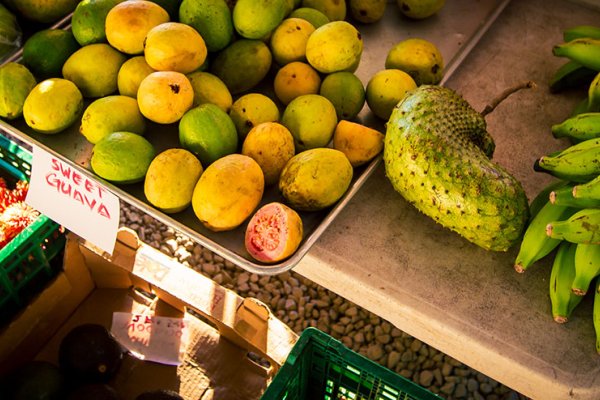

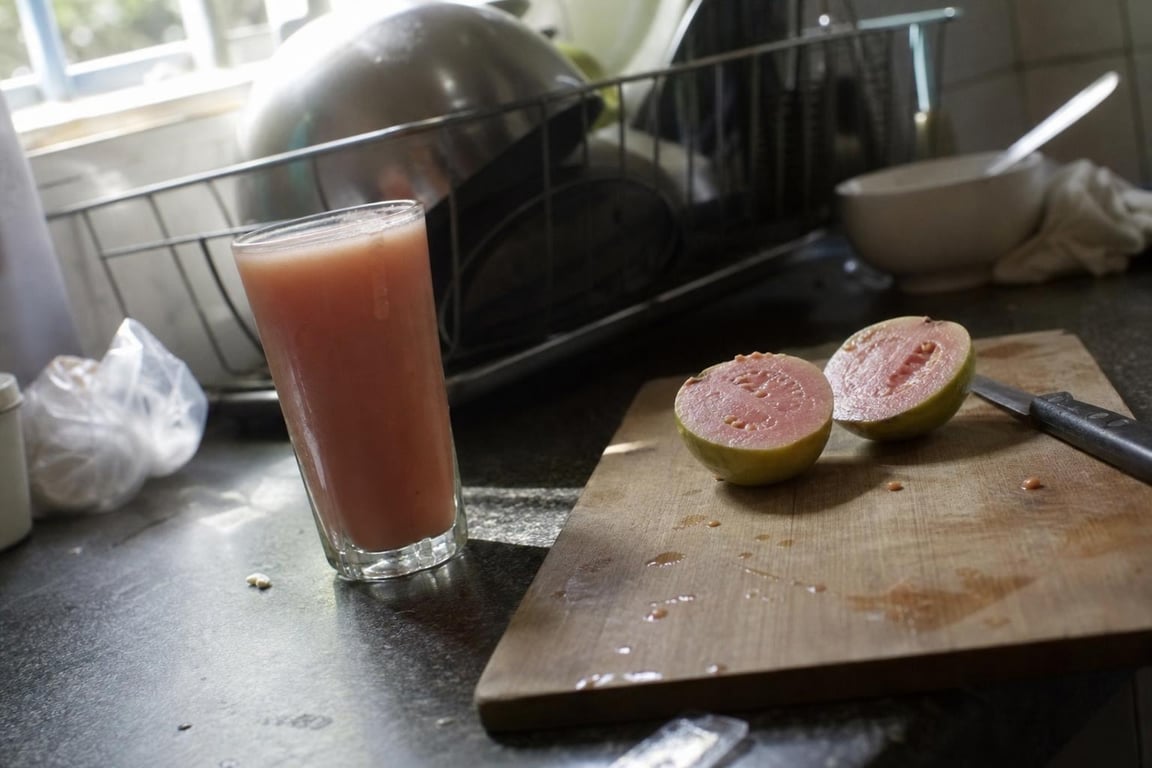
Guava isn't native to Hawaii. It arrived in the early 1800s, often credited to Don Francisco de Paula Marín, the Spaniard who advised King Kamehameha I and planted just about every fruit tree he could get his hands on. Two centuries later the tree grows wild across the islands, sometimes aggressively so — strawberry guava is listed as a serious invasive by DLNR. Hikers usually smell the overripe fruit on a trail before they ever learn what it is. The pink-fleshed common guava became the base of one of my favorite everyday drinks in Hawaii: a thick pink nectar that ends up in coolers, breakfast glasses, and cans of Hawaiian Sun all over the state.
Nectar is the right word, not juice. Guava pulp is too thick and seedy to press like an orange. You simmer the fruit, blend it, strain it, then loosen it with water and brighten it with lime. That's the whole recipe. If canned guava is all you've had, the from-scratch version is a real upgrade. More perfume, less sugar, a color that looks Photoshopped.
At a glance
About 5 cups
15 minutes
15 minutes + chilling
Easy
Ingredients
For the nectar
- 1 1/2 lb ripe guavas, ideally pink-fleshed (about 6 to 8 fruits), or 2 cups thawed frozen pink guava purée
- 4 cups water, divided
- 3 to 5 tablespoons sugar, to taste
- Juice of 1 lime
- Small pinch of salt
Equipment
- Saucepan
- Blender
- Fine-mesh strainer and a spatula to press with
- Pitcher or jar
To serve
- Over ice, well chilled, or as the guava third of POG
Method
- Prep the fruit. Wash the guavas, trim the blossom ends, and quarter them, skin on. The skin carries color and aroma and gets strained out later. (Using frozen purée? Skip to step 4.)
- Simmer soft. Put the quartered guavas in a saucepan with 2 cups of the water. Simmer gently for about 15 minutes, until the fruit has collapsed and the kitchen smells unmistakably tropical.
- Blend and strain. Cool slightly, blend the fruit and cooking liquid until smooth, then work the purée through a fine-mesh strainer with a spatula. Guava seeds are hard as buckshot and numerous (Specialty Produce). The strainer isn't optional. Discard the seeds and pulp left behind.
- Thin, sweeten, brighten. Stir in the remaining 2 cups water until it reaches nectar consistency: thicker than juice, thinner than smoothie. Sweeten to taste, then add the lime juice and the pinch of salt. The lime and salt are what make it taste like fruit instead of syrup.
- Chill hard. Refrigerate at least 2 hours. Guava nectar wants to be properly cold. Lukewarm nectar is oddly perfumey. Stir before pouring; it settles. Keeps 3 to 4 days in the fridge.
Notes from a local cook
Pink flesh is the prize. The common wild guava in Hawaii runs pink inside, and that blush is what you want in the glass. Mainland groceries more often stock white-fleshed guavas. They taste fine but pour beige. Latin markets are the most reliable source for pink ones, and frozen pink guava pulp is an honest shortcut.
Ripeness isn't negotiable. A ripe guava is fragrant from across the room and gives slightly when pressed. Rock-hard guavas simmer into something tannic and dull no matter how much sugar you add. Let them ripen on the counter for a few days if needed.
Don't toss the extra. Simmered down further with sugar, the same strained purée becomes guava syrup for pancakes. Keep reducing and you're most of the way to the guava glaze island bakeries put on chiffon cake.
Where to try the real thing
Canned island guava nectar from Hawaiian Sun is the version a lot of us grew up on. The company has been putting out its lineup of tropical nectars since 1952, and Hawaii publications regularly call it out as one of the state's most iconic canned drinks (Hawaii Magazine, Honolulu Magazine). It's easy to find in island grocery stores, and cases of it show up in checked luggage more often than not on the way home. Fresh guava turns up seasonally at farmers markets and roadside fruit stands. If a stand has cold fresh-blended guava juice, stop the car. See our guides to Hawaii's best smoothie and juice spots and what to eat in Hawaii.