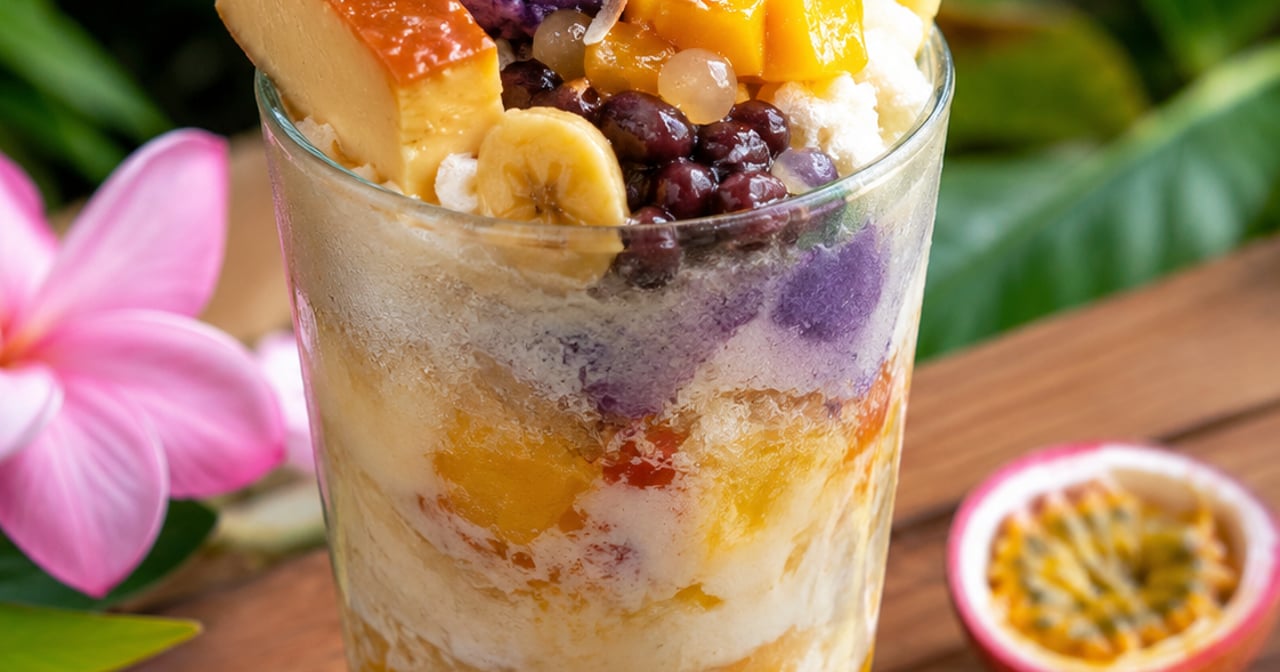

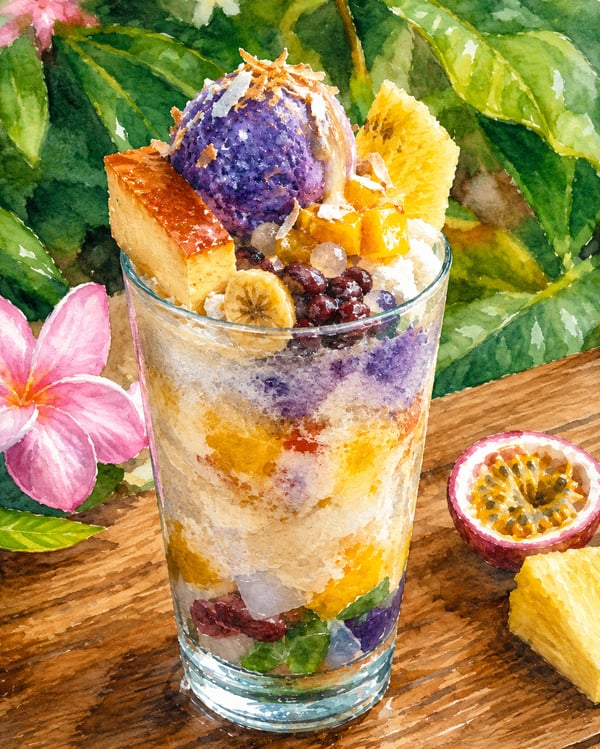
Halo halo is Tagalog for "mix mix," and the name is the instruction. You build a tall glass with sweet beans and tropical jellies and crisp pinipig at the bottom, mound shave ice on top, pour cold evaporated milk over the ice, and crown the whole thing with a scoop of ube ice cream and a wedge of leche flan. Then you stir it. Every spoonful is supposed to be a different mix of what's in the glass.
Filipino workers started arriving in Hawaii in 1906 to cut cane on the sugar plantations, and over the next four decades they became one of the largest immigrant communities the plantation system ever brought to the islands. Halo halo came along with the people who made it, and you can find a good one today at Valerio's Tropical Bake Shop inside Seafood City in Waipahu, at Filipino food trucks on Maui, and at Filipino restaurants tucked into strip malls around Honolulu. It's also one of the easier showpiece desserts to assemble at home in summer once you have the components on hand.
At a glance
4 tall glasses
15 minutes (assembly only, with jarred components)
None
Easy
Ingredients
For the base layers
- 1/2 cup sweetened red mung beans (sold in jars or cans at Filipino and Asian markets, labeled monggo or red mung)
- 1/2 cup sweetened white kidney beans or garbanzos (also jarred)
- 1/2 cup macapuno (sweetened shredded coconut in syrup)
- 1/2 cup nata de coco (coconut gel cubes, jarred)
- 1/2 cup kaong (sugar palm fruit, jarred, pale yellow or red)
- 1/4 cup pinipig (toasted pounded rice flakes, optional but traditional)
For the ice and milk
- 6 cups finely shaved ice (shave from a frozen block, or pulse ice cubes in a food processor until snow-fine)
- 1 can (12 oz) evaporated milk, cold
- 2 tablespoons granulated sugar dissolved into the milk, or 2 tablespoons sweetened condensed milk stirred in
For the toppings
- 1 pint ube ice cream (Magnolia or another Filipino-brand purple yam ice cream)
- 4 small wedges of leche flan (homemade or storebought from a Filipino bakery)
- 4 small slices of fresh ripe mango or banana (optional)
Equipment
- 4 tall glasses or sundae cups (at least 14 oz each)
- Long iced-tea spoons
- Ice shaver, snow cone machine, or food processor
- Ice cream scoop
To serve
- Right away, once assembled. Halo halo melts fast.
Method
- Sweeten the milk. Stir the sugar (or condensed milk) into the cold evaporated milk in a small pitcher and return it to the fridge. Cold-cold milk over the ice is what keeps the dessert from melting into a puddle in the first minute.
- Build the base. In each tall glass, layer 2 tablespoons each of the red beans, white beans, macapuno, nata de coco, and kaong. Keep the layers visible through the glass, but don't fuss about precision. Sprinkle a tablespoon of pinipig over each, if using.
- Add the shave ice. Mound shave ice into each glass, packing lightly so the glass holds a tall dome above the rim. The dome will collapse the moment milk hits it, so build it high.
- Pour the milk. Drizzle 1/3 to 1/2 cup of the sweetened evaporated milk over each glass of ice. The ice will compact and absorb a lot of it. Pour right at the table if you want to keep some drama.
- Crown it. Place a generous scoop of ube ice cream on top of each glass and tuck a wedge of leche flan beside it. Add the fresh mango slice if using. Serve immediately with a long spoon and the instruction to stir everything together before the first bite.
Notes from a local cook
Buy the jarred fixings. Cooking sweet beans, jellies, and macapuno from scratch is a full afternoon project per component. Filipino markets and most Asian grocery stores in Hawaii sell every component in jars or cans, which is how most home cooks I know build halo halo. Don Quijote and Marukai in Honolulu both carry the full lineup in the Filipino aisle.
Snow-fine ice or it doesn't work. Halo halo lives or dies on ice texture. If the ice is chunky, the milk runs straight through it and pools at the bottom. Snow-fine ice — the kind you get from a real ice shaver or from pulsing cubes in a food processor until they look like fresh powder — clings to the milk and turns into the cold cream texture the dessert is named for.
Ube ice cream is the modern scoop. Older halo halo often used plain vanilla. These days ube ice cream — that purple yam ice cream with a faint sweet earthy flavor — is what you'll see on top almost everywhere. If you can find Magnolia or Ramar brand at a Filipino market, those are the ones to grab. Vanilla isn't wrong; it's just the older style.
Leche flan is optional but transformative. A wedge of leche flan (Filipino caramel custard) melts into the milk and turns the puddle at the bottom of the glass into a caramelly soup. Skip it if you can't find it, but if you can, don't.
While You're on the Islands
Eat it made by someone else. On Oahu, Valerio's Tropical Bake Shop inside Seafood City in Waipahu serves a generous halo halo alongside their cassava and ube cakes, and it's a regular stop for the Filipino community out west. Max's Restaurant in Waipahu and Honolulu does a sit-down version at the table. On Maui, the Maui Mall food court in Kahului has a couple of Filipino vendors who scoop it to order in summer; ask for the one with the line out front. See our guides to Oahu dining and Maui dining.
Buy the ingredients fresh. Filipino grocery stores around Waipahu carry the full halo halo lineup — ube halaya, sweetened beans, leche flan mix, and saba bananas — in one aisle, which makes assembling your own version in a vacation rental much easier than hunting piece by piece.
Bring It Home
What you can substitute, what you can't: canned ube halaya, sweetened red beans, and leche flan are all sold at Filipino and Asian grocery stores on the mainland, so nothing here strictly needs packing home — just track down a Filipino market once you're back, since a regular supermarket usually won't carry these.
Where to try this in Hawaii