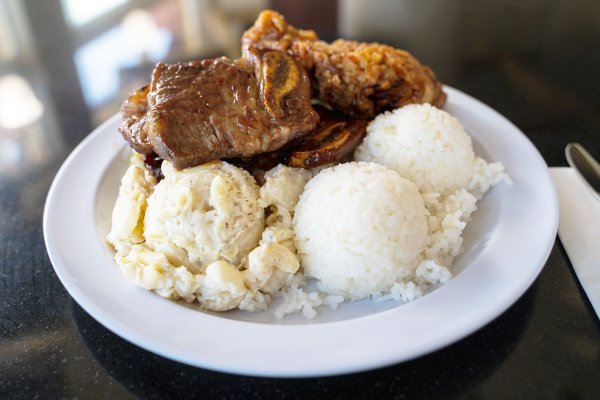
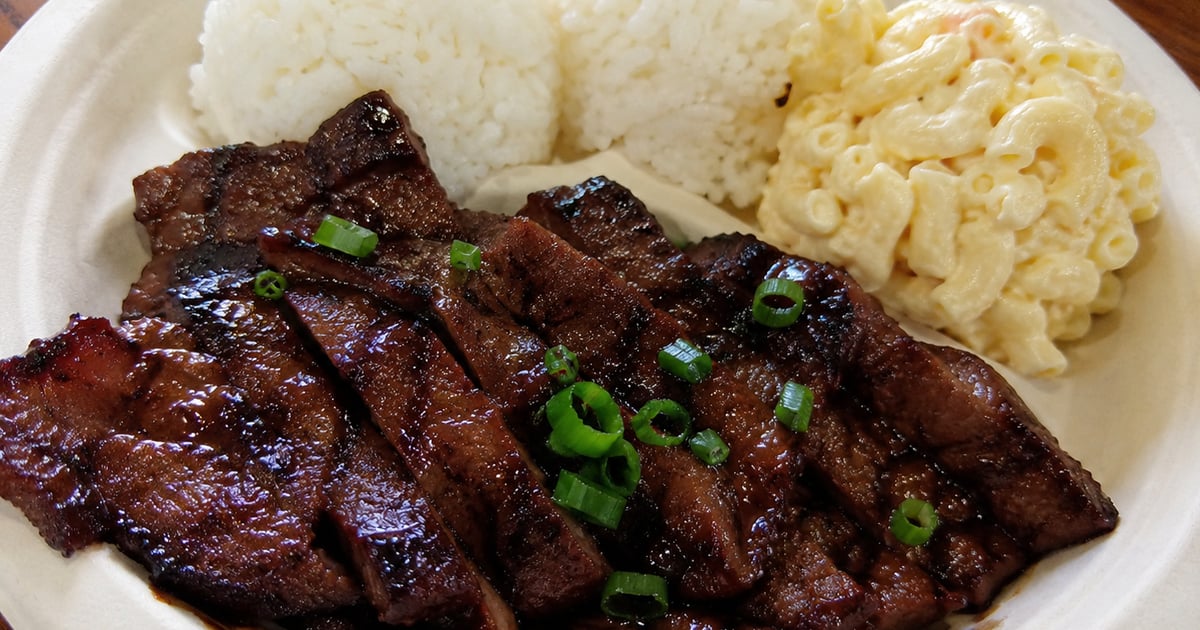

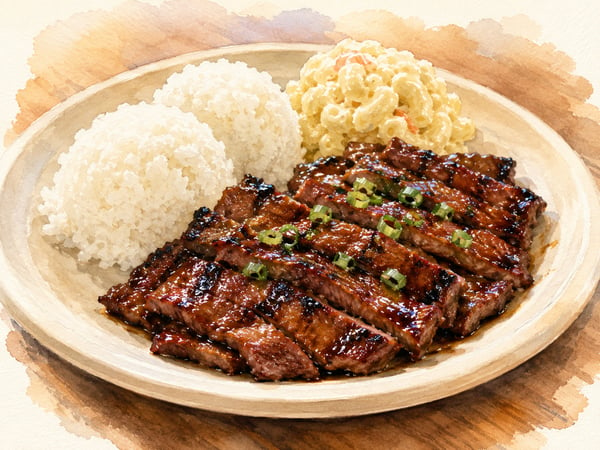
Local-style teriyaki beef is a different animal from the dish that shares its name in mainland Japanese restaurants. It's sweeter, saltier, and sliced thinner. The beef is usually a workaday cut — chuck flap, top sirloin, sometimes flank — marinated overnight in a soy-and-brown-sugar bath that pulls double duty as glaze when the meat hits a hot pan. The crust gets caramelized at the edges, the meat stays tender in the middle, and it lands on a styrofoam plate next to two scoops of rice and one scoop of mac salad. That's the plate-lunch teriyaki any local could draw from memory.
The dish traces back to Japanese immigrants who arrived to work the sugar plantations starting in 1868 and in larger waves from 1885 onward. The Japanese teriyaki technique — soy, sake, mirin, sugar, brushed onto fish or chicken at the end of cooking — got stretched and adapted into a long marinade for whatever cheap cut was on hand. Pineapple juice came in later as a tenderizer. The hybrid you'll get at Rainbow Drive-In or any plate-lunch counter descends from that plantation-camp kitchen.
At a glance
4 to 6 (plate-lunch portions)
15 minutes
6 to 24 hours
10 minutes
Ingredients
For the marinade
- 3/4 cup shoyu (soy sauce) — Aloha Shoyu if you can find it, Kikkoman otherwise
- 3/4 cup brown sugar, packed
- 1/2 cup water
- 1/4 cup mirin or dry sherry
- 2 tablespoons fresh ginger, grated
- 4 cloves garlic, minced or finely grated
- 3 tablespoons pineapple juice, fresh or canned (see the note below — fresh and canned behave differently)
- 1 teaspoon toasted sesame oil
- 1 teaspoon coarse black pepper
For the beef
- 2 lb chuck flap, top sirloin, or flank steak, sliced thin against the grain (1/4 inch thick)
- 1 tablespoon neutral oil for the pan
- 2 stalks green onion, thinly sliced (for finishing)
- 1 teaspoon toasted sesame seeds (for finishing)
Equipment
- Large zip-top bag or shallow glass dish for marinating
- Cast iron pan or carbon steel skillet — heavy and hot is the goal
- Tongs and a sharp slicing knife
To serve
- Two scoops of hot white rice — Calrose is the standard plate-lunch rice
- One scoop local-style macaroni salad
- Optional: a few slices of takuan (yellow pickled radish) on the side
Method
- Make the marinade. In a medium bowl, whisk together the shoyu, brown sugar, water, mirin, ginger, garlic, pineapple juice, sesame oil, and pepper. Whisk until the brown sugar dissolves completely. If you can still see crystals at the bottom, keep going. The marinade should taste sweeter than you expect; it gets balanced by the salt of the shoyu and the char of the pan.
- Slice the beef thin. Partially freeze the beef for 30 to 45 minutes, firm but not solid. Slice across the grain at 1/4-inch thickness. Thinner means faster cook time and more surface area for the marinade to grab, both of which matter here. If your butcher will slice it for you on a deli slicer, even better.
- Marinate. Combine the beef and marinade in a zip-top bag or shallow glass dish. Press out the air so every slice is bathed. Refrigerate at least 6 hours, ideally overnight. With fresh pineapple juice, cap it at 24 hours — the bromelain will turn the meat mealy beyond that. With canned juice (heat-treated, enzymes mostly dead), you can stretch to 36 hours if you need to. See the notes below for the why.
- Sear hot. Heat the cast iron pan over high heat until it's smoking. Add the oil. Working in batches so you don't crowd the pan, lay the beef out in a single layer. Sear 60 to 90 seconds per side. You want a dark caramelized crust at the edges; the brown sugar in the marinade will burn into a glaze. Don't move the meat around; let it sit. Pile finished batches on a plate while you cook the rest.
- Plate it like a local. Two scoops of rice on one side of the plate. One scoop of macaroni salad. Pile the teriyaki beef across the rest. Sprinkle with sliced green onion and toasted sesame seeds. Eat with a fork standing up at the kitchen counter, the proper local-style ceremony.
Notes from a local cook
Pineapple juice is the tenderizer. The bromelain enzyme in fresh pineapple juice breaks down the surface proteins of the beef. That's why even chuck flap comes out tender after an overnight soak. It's also why you can't marinate forever. Past 24 hours with fresh juice, the texture turns from tender to mushy. Canned pineapple juice has been heat-pasteurized, which kills most of the bromelain, so canned-juice marinades stay safe out to about 36 hours. Match your timing to which juice you're using and the matrix in step 3 holds.
Hot pan, thin meat, fast cook. The defining mistake in home teriyaki beef is a too-cool pan and too-thick slices. You're not braising. You're searing thin sliced beef hot enough that the brown sugar in the marinade caramelizes in seconds. If you see liquid pooling in the pan, the pan isn't hot enough. Pull the meat, crank the heat, wait, and start again.
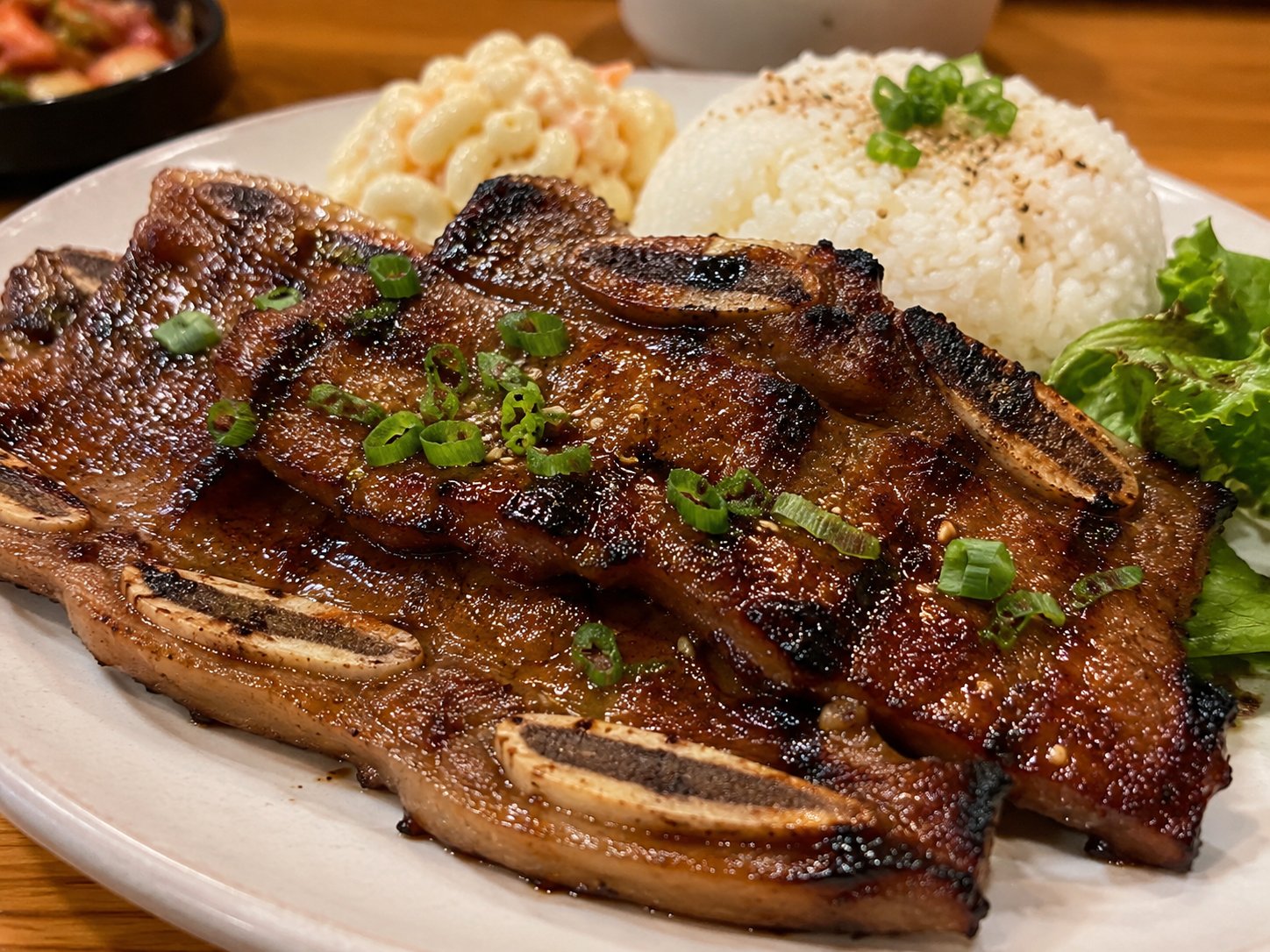
This is also kalbi territory. The same marinade with the addition of toasted sesame seeds and a splash more sesame oil, applied to bone-in short ribs (galbi), gets you Hawaii-style kalbi. See our kalbi short ribs recipe for that variation. The two dishes are siblings, and both live on the standard local plate-lunch menu.
While You're on the Islands
Eat it made by someone else. The plate-lunch teriyaki beef worth seeking out on Oahu lives at Rainbow Drive-In in Kapahulu and Helena's Hawaiian Food in Kalihi. Rainbow's is the diner-style version on the BBQ Mix Plate; Helena's pulls from a Native Hawaiian tradition more than a plantation one. Most neighborhood plate-lunch counters across the islands carry a version. See our guides to Oahu dining and best plate lunches in Hawaii for more pointers.
Buy the ingredients fresh. Thin-sliced flank or skirt steak is sold at any island grocery store — ask the meat counter to slice it thin for stir-fry if you don't have a sharp knife handy in a vacation rental.
Bring It Home
What you can substitute, what you can't: shoyu, brown sugar, garlic, and ginger are pantry-shelf items anywhere, so nothing here needs special sourcing. Same marinade plus sesame seeds and sesame oil on bone-in short ribs gets you our kalbi short ribs recipe — worth making both back to back.
Where to Eat It on Your Trip
Our picks for Local-Style Teriyaki Beef across the islands — tap a spot for hours, photos, and directions.
 Photo: Eddie KimOʻahu
Helena's Hawaiian Food
 Photo: Ramon MOʻahu
Yama’s Fish Market
 Photo: Al HarrisonMaui
Da Kitchen
 Photo: Benjamin HatoriBig Island
Blane's Drive In
 Photo: Larry CanonicaBig Island
Hawaiian Style Cafe
 Photo: Mark's PlaceKauaʻi
Mark's Place
 Photo: Jason ScofieldKauaʻi