
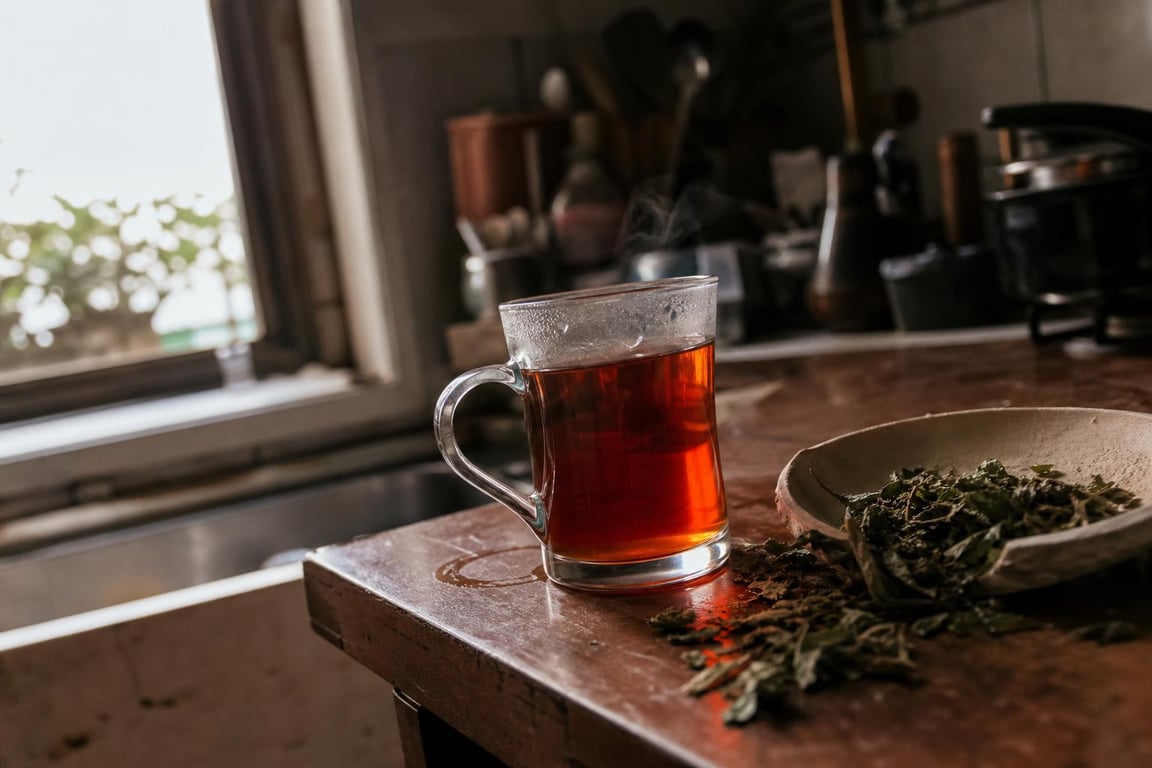
Most "Hawaiian" drinks are imports that the islands made their own. Māmaki is the exception: the plant itself (Pipturus albidus) is endemic to Hawaii — it evolved there and grows wild nowhere else on earth. It's a member of the nettle family that lost its sting somewhere along its evolutionary road, a shrub with green, red-veined leaves that Native Hawaiians have brewed into tea for generations. The cup it makes is smooth and mild, faintly earthy, with a color that lands somewhere between amber and rust.
For a long time māmaki was something you got from a family plant or a farmers market stall. It's now a small but real Hawaii crop, with a handful of farms — most of the commercial growers are on the Big Island — drying leaves for loose-leaf tea you can order from anywhere. Brewing it at home is as simple as herbal tea gets; the only trick is finding good leaves and giving them a proper steep.
At a glance
2 cups (1 pot)
2 minutes
8 to 10 minutes
Easy
Ingredients
For the tea
- 2 tablespoons dried māmaki leaves, crumbled (or 3 to 4 whole dried leaves)
- 2 cups water, just off the boil
Optional
- Honey to taste
- A squeeze of lemon or lime for iced māmaki
Equipment
- Teapot or heatproof jar
- Fine strainer or infuser basket
To serve
- Hot in a mug, or chilled over ice
Method
- Heat the water, then wait a beat. Bring the water to a boil and let it sit for about 30 seconds off the heat. Just-off-boil water pulls a fuller cup from the leaves without stewing them.
- Steep long. Pour the water over the crumbled leaves and steep 8 to 10 minutes, covered. Māmaki is more forgiving than green or black tea — there's no bitter tannin cliff — so err on the long side. The liquor should turn a clear reddish-amber.
- Strain and taste. Strain into mugs. Taste it plain first: the flavor is gentle, a little grassy-earthy, nothing like a supermarket herbal blend. Add honey only if you want it.
- For iced māmaki. Double the leaves, steep the same 8 to 10 minutes, then pour hot over a full glass of ice. A squeeze of lime turns it into a genuinely great hot-afternoon drink.
Notes from a local cook
Re-steep the leaves. Good whole-leaf māmaki gives a respectable second brew. Use the same leaves, add a couple of minutes to the steep, and you've doubled your supply. Worth doing — island-grown leaf isn't cheap once you've paid shipping.
Buy Hawaii-grown. This is one of the few crops where "grown in Hawaii" isn't marketing — the plant is Hawaiian in the strictest botanical sense. Big Island farms sell dried leaf online and at island farmers markets. If you're on-island, a bag of loose māmaki is one of the best light, legal, TSA-proof edible souvenirs you can pack.
On the traditional side. Māmaki holds a respected place in Native Hawaiian plant traditions, and you'll hear plenty of wellness claims attached to it. We'll leave the health talk to your doctor — the honest pitch is simpler: it's a caffeine-free cup with a real sense of place, from a plant that exists only in Hawaii.
Where to buy māmaki
Loose leaf is the way in, and Big Island growers ship it. Hawaii Forest Farms grows māmaki on the slopes of Mauna Loa in the Kaʻū district — adjacent to Volcano, at around 2,000 feet — and sells dried leaf by mail. Mountain Thunder, better known for Kona coffee, sells organic māmaki from its own farm. On-island, check the farmers markets — Big Island markets often have a grower's table with dried māmaki — or the shelves at an island natural-foods store. See our guides to Big Island dining and what to eat in Hawaii.