
From Cantonese char siu bao to Hawaii's manapua truck
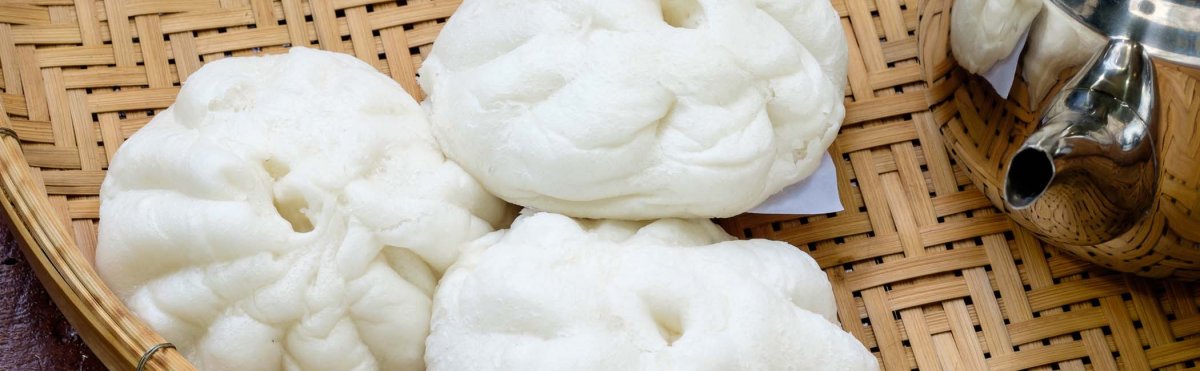
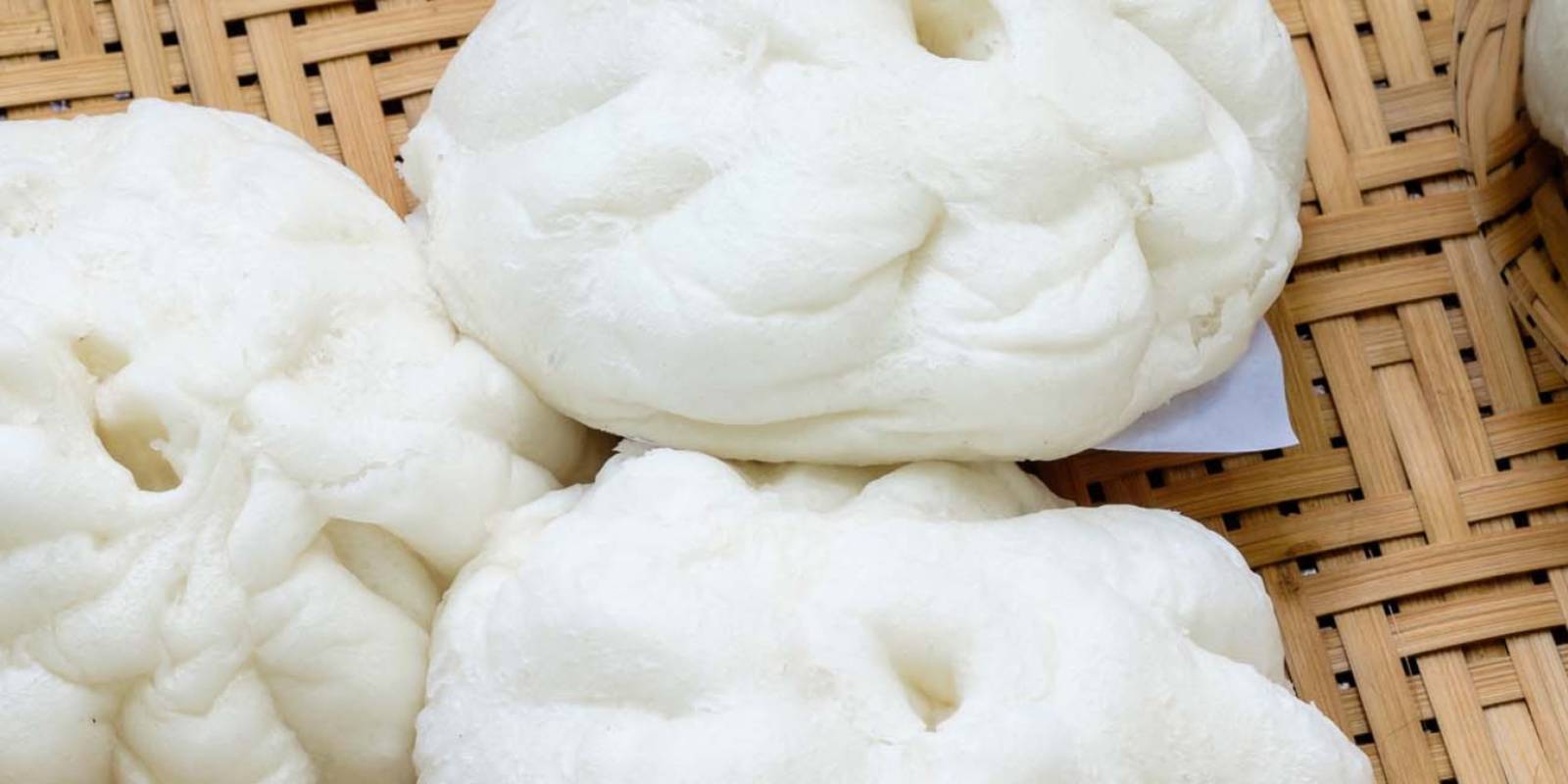
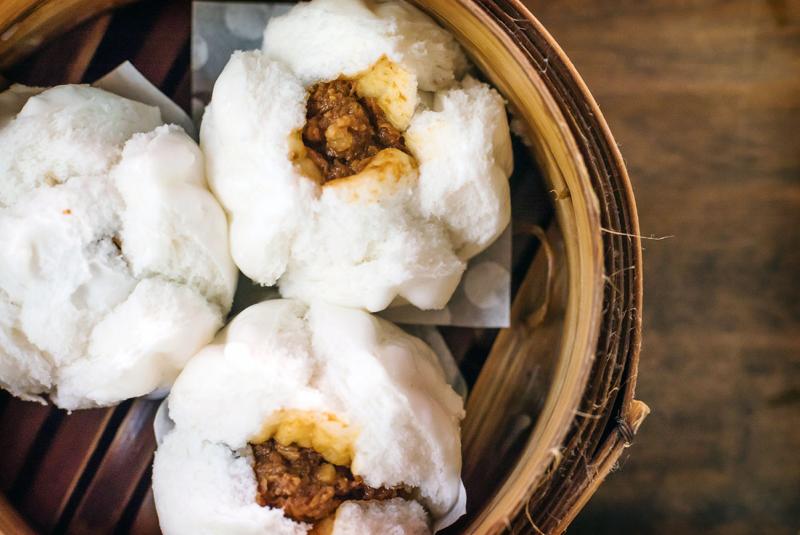
Manapua is the Hawaii name for char siu bao — the Cantonese steamed bun filled with sweet barbecued pork. The dish arrived with Chinese laborers who came to work the sugar plantations starting in the 1850s. The local name comes from "mea ono pua'a," Hawaiian for "delicious pork thing." Over time the name shortened to manapua and the bun got bigger — a Hawaiian manapua is roughly twice the size of a Cantonese char siu bao you'd order at dim sum.
The traveling manapua truck is a real Honolulu institution. Drivers run routes through residential neighborhoods and locals come out with cash to buy bags of hot manapua, pork hash, and other dim sum staples. The Chinatown bakery most often credited as the source of the modern local manapua is Royal Kitchen, which still draws lines today. The recipe below is the home version, scaled for a regular kitchen.
At a glance
12 manapua
45 minutes (plus 2 hours rising)
15 minutes per batch, 2 batches
Moderate
Ingredients
For the bun dough
- 4 cups all-purpose flour
- ⅓ cup granulated sugar
- 2 teaspoons active dry yeast
- 1 teaspoon baking powder
- 1 teaspoon kosher salt
- 1¼ cups whole milk, warmed to 110°F
- 3 tablespoons neutral oil
For the char siu filling
- 1 lb char siu (Chinese roast pork), small dice — buy from a Chinese deli OR substitute roasted pork shoulder seasoned with char siu sauce
- 3 stalks green onion, thinly sliced (whites and greens separated)
- 2 cloves garlic, minced
- 1 tablespoon neutral oil
For the sauce
- 3 tablespoons hoisin sauce
- 2 tablespoons oyster sauce
- 1 tablespoon soy sauce
- 1 tablespoon sugar
- 1 tablespoon Shaoxing wine (or dry sherry)
- 2 teaspoons cornstarch dissolved in 3 tablespoons cold water
- 1 teaspoon sesame oil
Equipment
- Bamboo or metal steamer (12-inch diameter ideal)
- 12 squares of parchment paper, about 3 by 3 inches
Method
- Make the dough. Stir the yeast into the warm milk with a pinch of the sugar and let bloom 5 minutes until foamy. In a large bowl, whisk the flour, remaining sugar, baking powder, and salt. Pour in the yeast mixture and the oil. Mix until shaggy, then knead 8 to 10 minutes until smooth and elastic. The dough should be slightly tacky but not sticky. Transfer to a lightly oiled bowl, cover, and let rise in a warm spot until doubled — about 90 minutes.
- Make the filling while the dough rises. Heat the oil in a wok or skillet over medium-high. Add the garlic and the white parts of the green onion. Stir-fry 30 seconds until fragrant. Add the diced char siu and toss to coat in the oil.
- Add the sauce. Stir the hoisin, oyster sauce, soy sauce, sugar, and Shaoxing wine together. Pour into the wok and bring to a simmer. Stir the cornstarch slurry and pour it in. Cook 1 minute, stirring constantly, until the sauce thickens and coats every piece of pork in a glossy sheen. Off heat, stir in the sesame oil and the green parts of the green onion. Cool to room temperature before filling. Hot filling steams the bun dough from the inside before you've sealed it.
- Shape the buns. Punch down the risen dough and divide into 12 equal pieces (roughly 60g each). Roll each into a smooth ball, then flatten with a rolling pin into a 4-inch round, slightly thicker in the center than at the edges. Hold one round in your non-dominant palm. Spoon 2 generous tablespoons of cooled filling into the center. Pleat the edges up around the filling, gathering the dough at the top, and twist to seal. Set each finished bun seal-side-down on a parchment square. Repeat with the rest.
- Final proof. A 12-inch steamer basket fits about 6 buns with the 2 inches of breathing room they need to puff. Place 6 buns (on their parchment squares) into the basket and cover. Hold the remaining 6 on a tray, loosely covered with a clean towel, in a warm spot. Let both proof another 20 to 30 minutes until visibly pillowy.
- Steam in two batches. Bring water to a rolling boil in your steamer pot. Set the loaded basket over the boiling water, cover, and steam for 15 minutes (or 18 for larger buns). The buns are done when they're pure white and the dough feels firm-yet-springy. Lift the lid carefully — sudden cold air on hot dough makes them wrinkle. Rest 2 minutes, transfer to a plate, then load the second batch and repeat. Top up the steamer water between batches if needed.
Notes from a local cook
The two failure modes for home manapua are (1) filling that's too wet, which makes the bun bottom soggy, and (2) under-pleated buns that burst open at the seam during steaming. Both are solved by the same technique: cool the filling completely before assembling, and pleat firmly. A proper Cantonese 18-fold pleat looks pretty, but a simple 6-fold gather-and-twist holds up just as well in the steamer.
For the dough, the optional baking powder is a Hawaii tweak. It's not in the traditional Cantonese recipe, but it gives the bun that puffier, cottony texture that defines a local-style manapua versus a dim-sum bao. Don't skip it.
Pre-made char siu from a Chinese deli is a perfectly legitimate shortcut and is how most Honolulu home cooks make manapua. If you can't find char siu where you live, roast a pork shoulder rubbed with char siu sauce at 350°F for 90 minutes, then dice. Other classic fillings: kalua pig, sweet potato, ham hash, hot dog (yes, really — the kid version). Royal Kitchen's lineup includes char siu, chicken, curry chicken, Portuguese sausage, lup chong, kalua pork, vegetarian, coconut, and Okinawan sweet potato — a fair sense of how far the bun has traveled from its char siu origins.
Where to try the real thing
If you're heading to Hawaii, Royal Kitchen in the Chinatown Cultural Plaza on Oahu is the headline stop. It's been there since 1974, baking the manapua instead of steaming them — char siu, Okinawan sweet potato, and curry chicken are the must-tries. The shop is takeout only with no indoor seating, opens early (typically 5:30 a.m. weekdays, 6:30 a.m. weekends), and is closed Wednesdays. Note that Char Hung Sut, the other longtime Chinatown manapua institution, closed unexpectedly in 2020 and has not reopened — don't make the trip to N. Pauahi Street expecting it to be there. See our island-by-island guides for the rest of the lineup: Oahu, Maui, Big Island, and Kauai.
Where to Eat It on Your Trip
Our picks for Manapua across the islands — tap a spot for hours, photos, and directions.