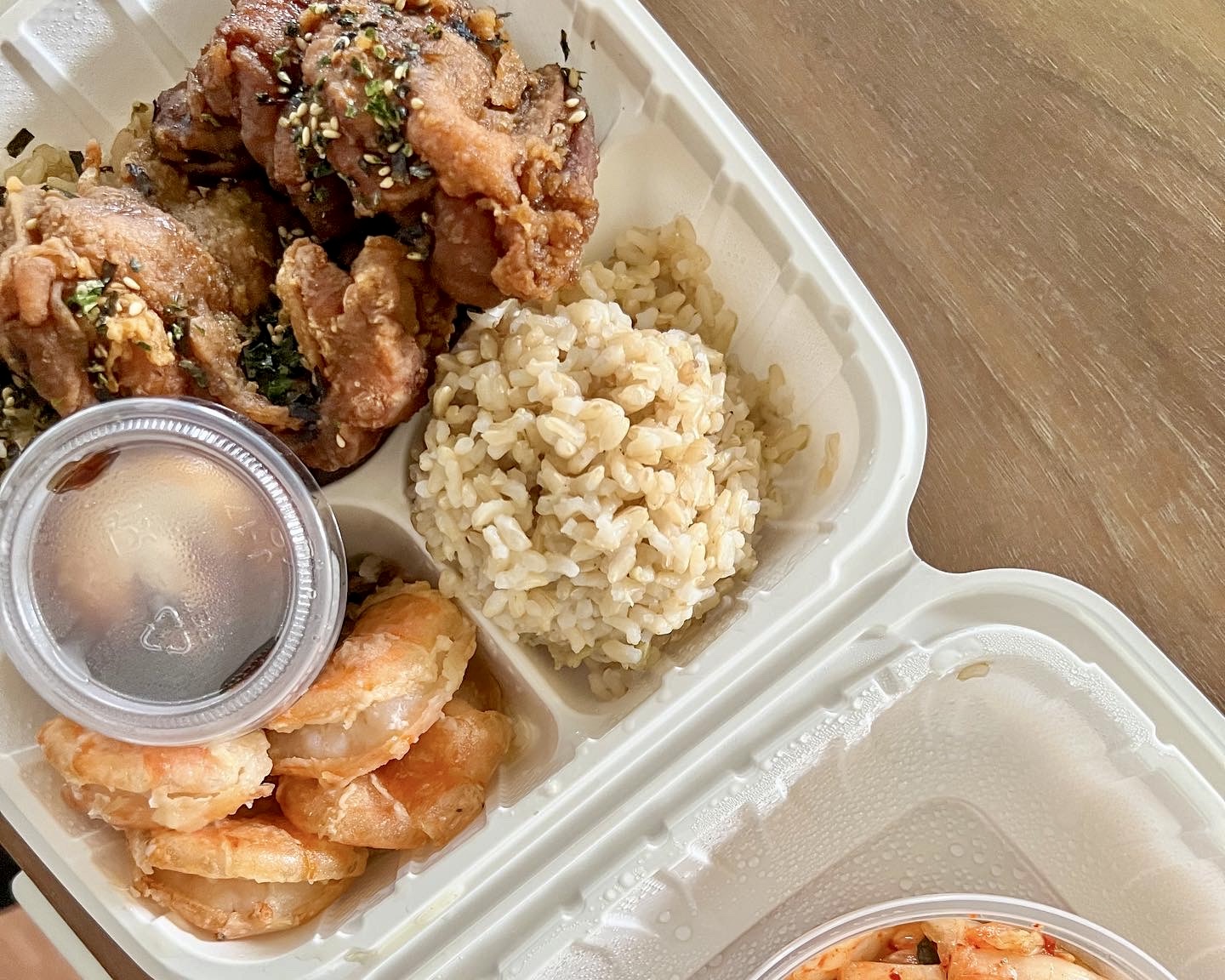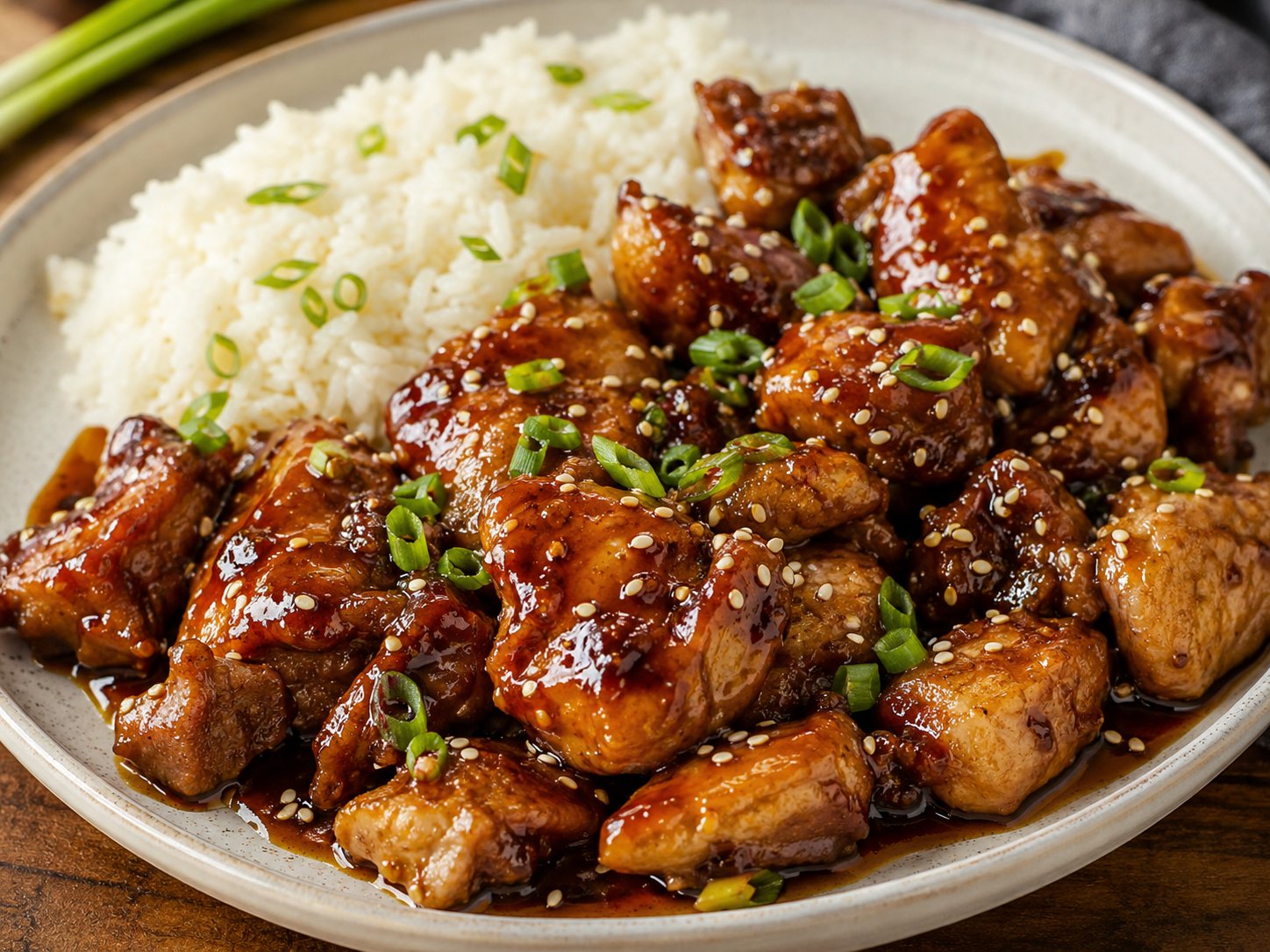
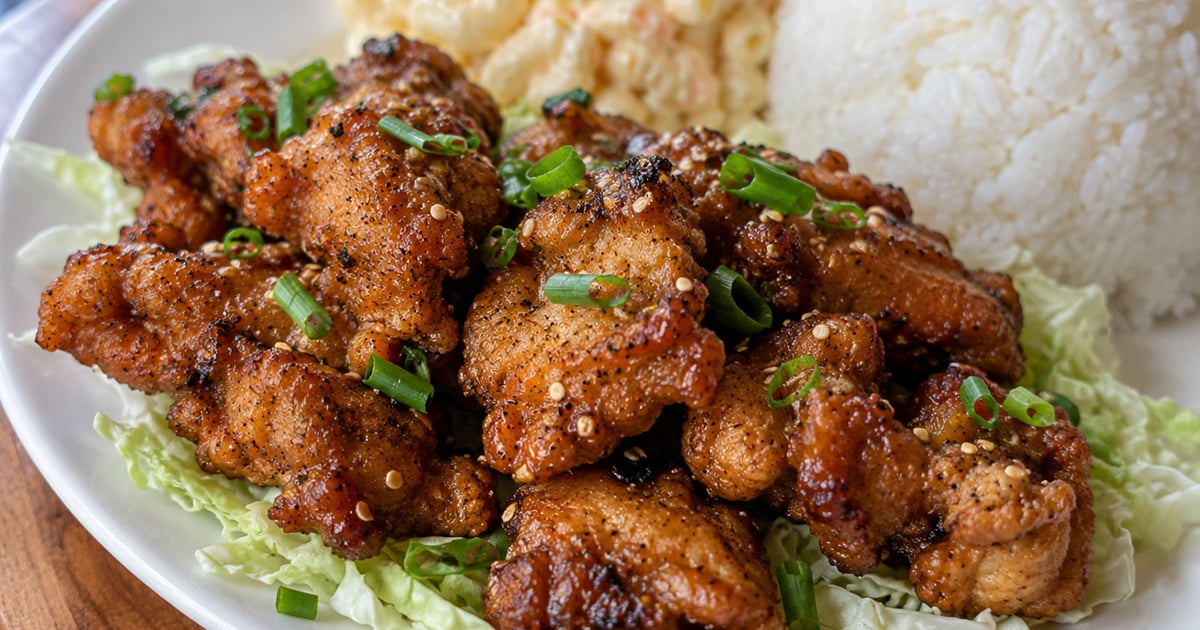

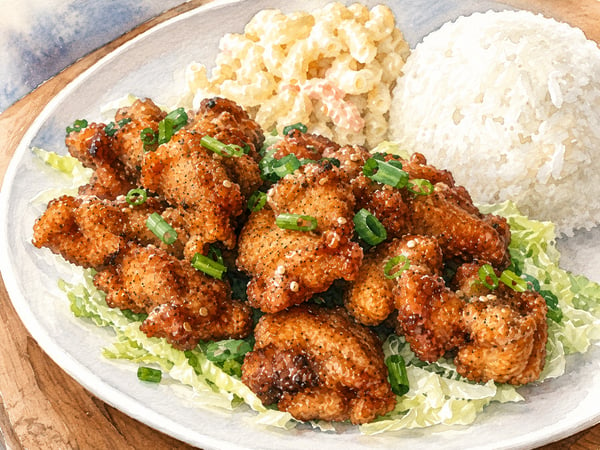
Mochiko chicken is a local-style dish that doesn't have an obvious mainland counterpart. Boneless chicken thighs sit overnight in a marinade built around mochiko, the Japanese sweet glutinous rice flour (Wikipedia: Mochiko), along with soy sauce, sugar, a generous amount of grated ginger, garlic, and green onion. The rice flour does double duty. It thickens the marinade into a clinging slurry, and when the chicken hits hot oil the coating crisps into a thin, lacquered shell that turns almost candy-like at the edges.
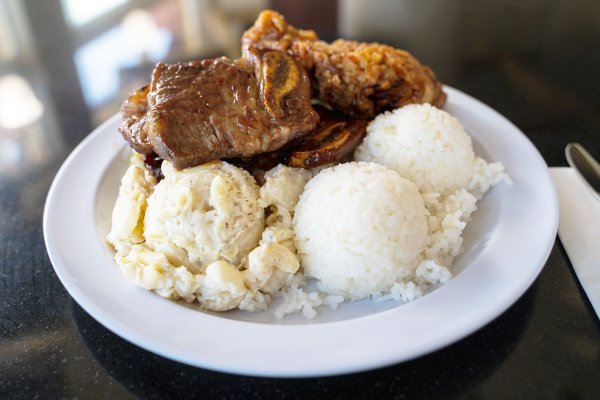
The dish belongs to the plate-lunch tradition (Wikipedia: Plate lunch), the two-scoop-rice and scoop-of-mac-salad architecture that grew out of sugar plantation lunch wagons. Japanese, Chinese, Filipino, Korean, and Portuguese cooks all left fingerprints on the local plate, and mochiko chicken is a Japanese-Hawaiian descendant of that mix. It shows up at family parties, drive-ins, and lunch counters across the islands, and many of the long-running plate-lunch spots have been making their own version for decades.
At a glance
4 as a main, 6 to 8 as part of a plate lunch
15 minutes
4 hours minimum, overnight ideal
20 minutes frying
Ingredients
For the chicken
- 2 lb boneless, skinless chicken thighs, cut into 1½-inch pieces
For the marinade
- 1/2 cup mochiko (sweet rice flour)
- 1/4 cup cornstarch
- 1/4 cup soy sauce (Aloha Shoyu if you can find it)
- 4 tablespoons sugar
- 4 large eggs, beaten
- 2 tablespoons grated fresh ginger
- 4 cloves garlic, minced
- 4 green onions, thinly sliced (whites and greens)
- 1 teaspoon salt
- 1/2 teaspoon black pepper
For frying
- Neutral oil (vegetable, canola, or peanut), for deep frying, about 4 cups
Equipment
- Large mixing bowl with lid (or a gallon zip-top bag)
- Heavy-bottomed pot or deep skillet for frying
- Slotted spoon or spider
- Wire rack set over a sheet pan
- Instant-read thermometer (helpful, not required)
To serve
- Two scoops of white rice
- Local-style macaroni salad
- Hot sauce or shoyu, optional
Method
- Make the marinade. Whisk the mochiko, cornstarch, soy sauce, sugar, eggs, ginger, garlic, green onion, salt, and pepper in a large bowl until it forms a thick, clinging slurry. It should look like loose pancake batter with bits of aromatics throughout.
- Marinate the chicken. Add the chicken thigh pieces and turn to coat every surface. Cover and refrigerate at least 4 hours, ideally overnight. The cornstarch-mochiko mix needs time to bind to the meat. In my experience, a short marinade is the most common reason home versions come out gummy instead of crispy.
- Heat the oil. Pour 2 inches of oil into a heavy-bottomed pot and heat over medium-high to 350°F. If you do not have a thermometer, a wooden chopstick dipped in should sizzle steadily with small bubbles.
- Fry in batches. Working in batches of 8 to 10 pieces, lift the chicken out of the marinade with tongs, letting excess drip off, and lower into the oil. Do not overcrowd. Too many pieces drop the oil temperature and the coating turns soggy. Fry 5 to 7 minutes, turning once, until deeply golden and the internal temperature reads 165°F.
- Drain and rest. Transfer the fried chicken to a wire rack set over a sheet pan. Resist the urge to drain on paper towels. They trap steam and soften the crust. Salt immediately while the pieces are still hot if you want extra seasoning.
- Plate it. Two scoops of rice, a generous mound of mac salad, and the chicken piled high. That is the plate.
Notes from a local cook
Use thighs, not breast. The dark meat stays tender through a long marinade and the higher fat content gives the coating something to latch onto. Breast meat tends to turn chalky no matter how careful you are with the timing. Boneless thighs are also less work to eat once they're cut into pieces, which matters for a dish that gets piled on a plate next to rice and mac salad.
Mochiko is not the same as regular rice flour. Sweet glutinous rice flour has a starch profile that gives the coating its signature chew-and-crunch. Regular rice flour or rice powder will not produce the same result. Koda Farms Blue Star Mochiko is the brand most commonly called for in Hawaii recipes, sold in a small white box. Look for the box, not a bag.
The marinade IS the batter. There is no separate dredging step. The cornstarch and mochiko in the marinade thicken as the chicken sits, and when you lift each piece out it carries enough slurry to crisp into its own coating. Do not flour or panko the chicken before frying. That dulls the flavor of the marinade and makes the coating heavy.
Make extra. Mochiko chicken holds up well at room temperature for a couple of hours, which is part of why it shows up at potlucks, beach picnics, and tailgates. Toss the cooled pieces in a paper bag and they will stay reasonably crisp for the drive.
While You're on the Islands
Eat it made by someone else. On Oahu, Mitsu-Ken Catering and Okazu-Ya in Kalihi-Pālama is widely loved for its garlic mochiko chicken plate. On Maui, Tin Roof Maui, Sheldon Simeon's takeout window in Kahului, has carried mochiko chicken as a rotating bowl special. Mochiko chicken also turns up at Foodland deli counters across the islands, often as a mini bento on the prepared-foods shelf. For more of the local-style fried-chicken landscape, see Oahu dining and Hawaii Eats.
Buy the ingredients fresh. Look for Koda Farms Blue Star Mochiko (the small white box, not a bag) at any island grocery store's Japanese-foods aisle — easy to pick up while you're shopping for produce.
Bring It Home
What you can substitute, what you can't: mochiko (sweet glutinous rice flour) is the one ingredient that genuinely matters here — regular rice flour won't give you the same chew-and-crunch coating. Koda Farms Blue Star Mochiko ships well if your local store doesn't carry it.
Where to try this in Hawaii