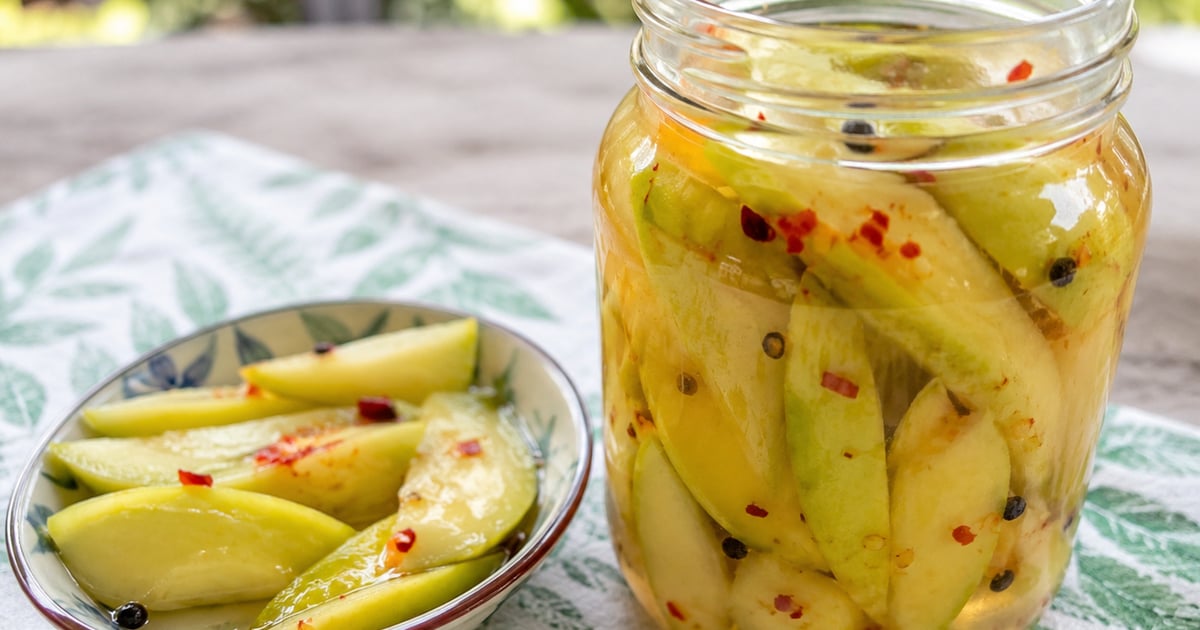

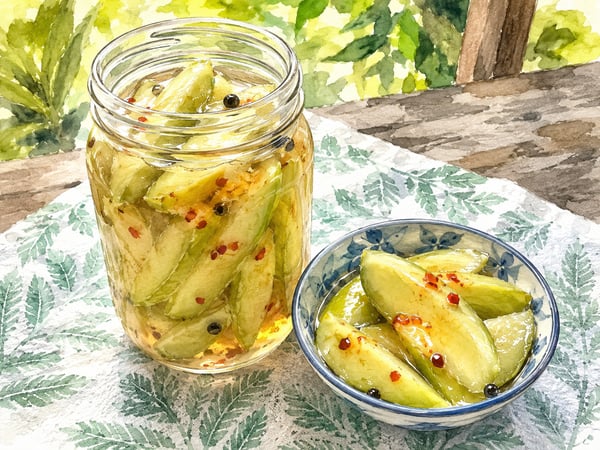
Pickled mango is the snack that taught a generation of Hawaii kids that salt, sugar, and vinegar do their best work on a piece of unripe fruit. Take a hard, green mango — picked weeks before it would have softened on the tree — slice it into thick spears, and submerge it in a brine of rice vinegar, sugar, Hawaiian salt, and (sometimes) a pinch of li hing mui powder. After a few days in the refrigerator, the spears go translucent at the edges, the brine turns syrupy, and you have a jar of crunch that fits in the door of the fridge and disappears one piece at a time.
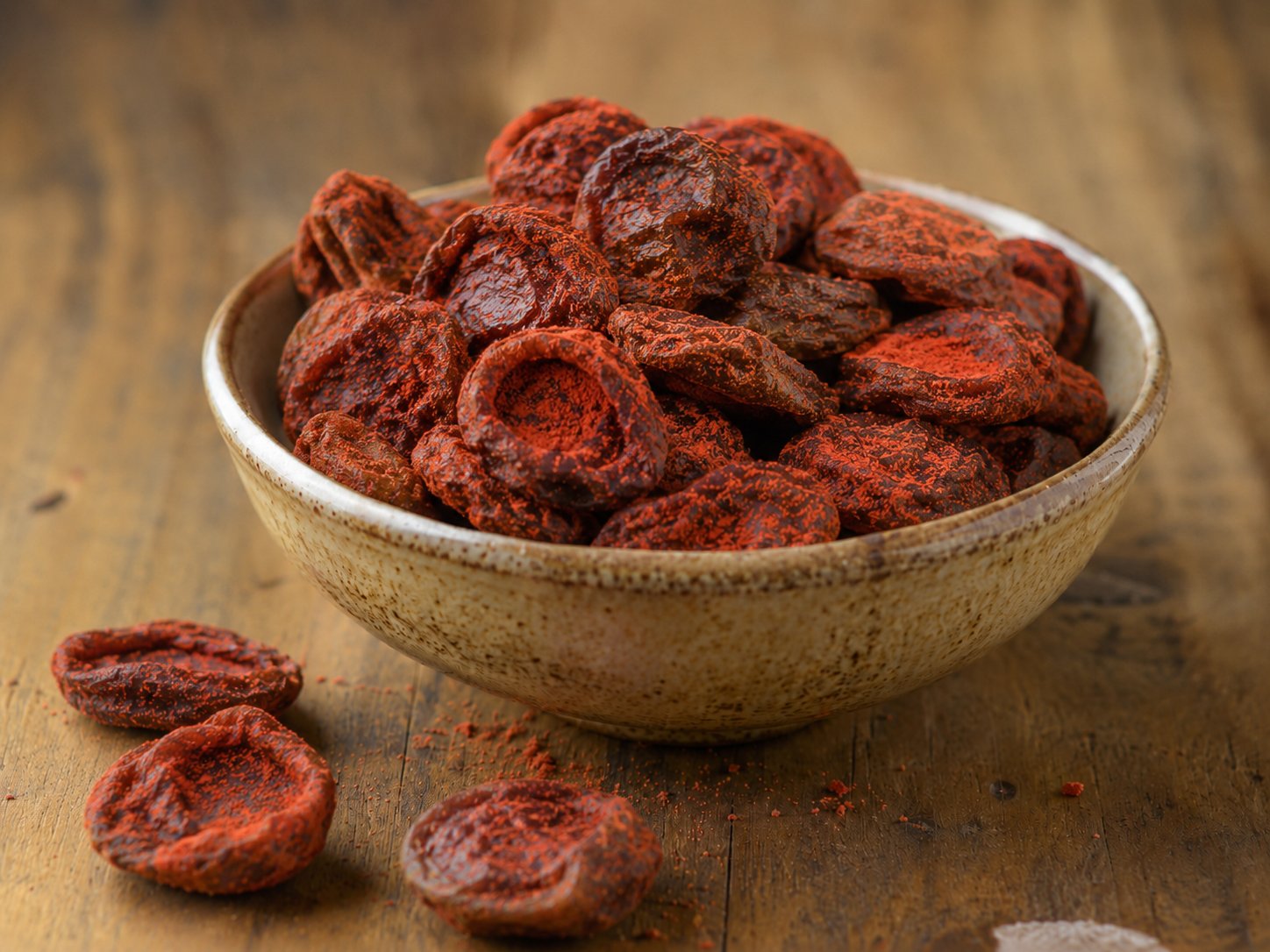
Every island family has a slightly different version. Some use white sugar and white vinegar for a cleaner snap. Some use brown sugar for a deeper, almost soy-adjacent finish. Some stir in li hing mui (powder made from dried, salt-cured plums) for the dusty pink color and that sticky, tongue-grabbing finish you get from a Hawaii crack-seed counter. There is no wrong way as long as the mango stays crunchy.
At a glance
1 quart jar
20 minutes
3 to 5 days in the fridge
Easy
Ingredients
For the mango
- 3 to 4 hard, green (unripe) mangoes — about 2 lb total
- 1 teaspoon Hawaiian alaea sea salt for the initial draw
For the brine
- 1 cup rice vinegar (or distilled white vinegar)
- ¾ to 1 cup granulated sugar (start at ¾, taste at day three)
- 1 teaspoon Hawaiian sea salt
- 1 cup water
Optional finishing
- 1 to 2 teaspoons li hing mui powder stirred into the brine (or dust it on at serving)
- 1 small Hawaiian chili pepper, halved (for a slow heat build)
Equipment
- 1 quart glass jar with a tight lid (Mason or pickle jar)
- Sharp paring knife and Y-peeler
- Small saucepan
- Colander
To serve
- On its own, straight from the jar, as an after-school or beach-cooler snack
- Alongside saimin, plate lunch, or shave ice
- Chopped and stirred into ahi poke as a sour-crunch counterpoint
Method
- Pick green mangoes. The whole recipe depends on this. You want fruit so unripe it is firm enough to bounce off the counter. The flesh should be pale, almost white-green, and taste sharply sour when you nibble a sliver. In Hawaii, common, Haden, and Pirie are popular local varieties that work well; on the mainland, a Filipino or Latin market is usually your best bet for green Florida or Mexican mangoes. Ripe (yellow, soft) mangoes will not work — they turn to slush in the brine.
- Peel and slice. Peel each mango with a Y-peeler. Cut the flesh away from the seed in two large cheeks, then slice each cheek into thick spears about ½-inch wide. You should have crunchy, finger-length sticks. Trim off any seed bits — they will turn bitter in brine.
- Draw out the water. Toss the spears with the 1 teaspoon of Hawaiian salt in a colander and set the colander over a bowl. Let it sit for 30 minutes. Salt pulls out excess water and concentrates the mango flavor. Rinse briefly under cold water and pat dry. Skip this step and your brine ends up watery.
- Make the brine. Combine the vinegar, sugar, sea salt, and water in a small saucepan. Heat over medium just until the sugar dissolves — about 2 minutes. Do not boil. Remove from heat and let cool to room temperature. If using li hing mui powder, stir it in once the brine is warm but not hot.
- Pack the jar. Pack the mango spears tightly into the clean quart jar. Tuck the chili pepper down the side if using. Pour the cooled brine over the mango until it covers the top spear by at least ½ inch. If you run short, top off with equal parts vinegar and water.
- Cure in the fridge. Cap the jar and refrigerate. After 24 hours the mango will taste sharp and pickly but the brine has not penetrated all the way through. Wait the full 3 to 5 days. At day three the spears go semi-translucent around the edges, the brine turns syrupy, and the salt-sour-sweet balance settles into something you cannot stop eating.
- Serve and store. Keep the jar in the fridge. Pickled mango holds for about 2 weeks before the texture starts to soften. For a li hing finish, dust each spear with a pinch of powder right before serving rather than leaving it in the brine — the powder stays brighter that way.
Notes from a local cook
Crunch is everything. The single biggest mistake people make is using mangoes that are not green enough. If the flesh has any yellow tint, find another mango. The texture of the finished pickle should snap when you bite it — that crunch is the whole reason this snack exists.
Sugar is a dial, not a fixed number. Start at ¾ cup of sugar and taste at day three. If you want the sticky-sweet candy-shop version that mainland kids associate with li hing mango, push it to 1 cup. If you grew up on the Filipino-style sour version (closer to atchara), keep it at ¾ or less. The recipe is forgiving.
Hawaiian salt does matter here. Alaea or paʻakai (Hawaiian sea salt) brings a mineral edge that table salt cannot. You can find it at many Hawaii farmers markets, at ABC Stores, and at Foodland; on the mainland, look for it on Amazon or at a well-stocked specialty grocer. If you have to substitute, use kosher salt — never iodized table salt, which makes the brine cloudy and metallic.
Li hing mui is optional but iconic. The reddish-pink powder made from dried, salt-cured plums is what gives Hawaii pickled mango its distinctly local edge. A teaspoon in the brine tints the whole jar pink. If you prefer the cleaner, more vinegary profile, leave it out and offer the powder on the side.
While You're on the Islands
Eat it made by someone else. If you want to taste a solid version before making your own jar, plan a stop at The Crack Seed Store on Koko Head Avenue in Kaimukī (Oahu) — a long-running snack-counter shop with shelves of preserved fruit. On most islands, the deli case at Foodland tends to stock pickled mango during the spring and summer mango glut, and Filipino plate-lunch counters and corner stores will often have it in clear deli cups.
Buy the fruit fresh. If you spot a green-mango pyramid at a roadside fruit stand on Hawaii Island or Kauai during May through August, that is peak season — exactly when home cooks are buying green mangoes by the bag to fill jars.
Bring It Home
What you can substitute, what you can't: firm, unripe green mangoes (look for them at Asian or Latin grocery stores) work the same way wherever you live — the key is unripe, tart fruit, not a specific Hawaii-grown variety. Li hing mui powder, if you want the tangy-salty version, ships well and is the one ingredient worth ordering online if your local store doesn't carry it.
Where to try this in Hawaii