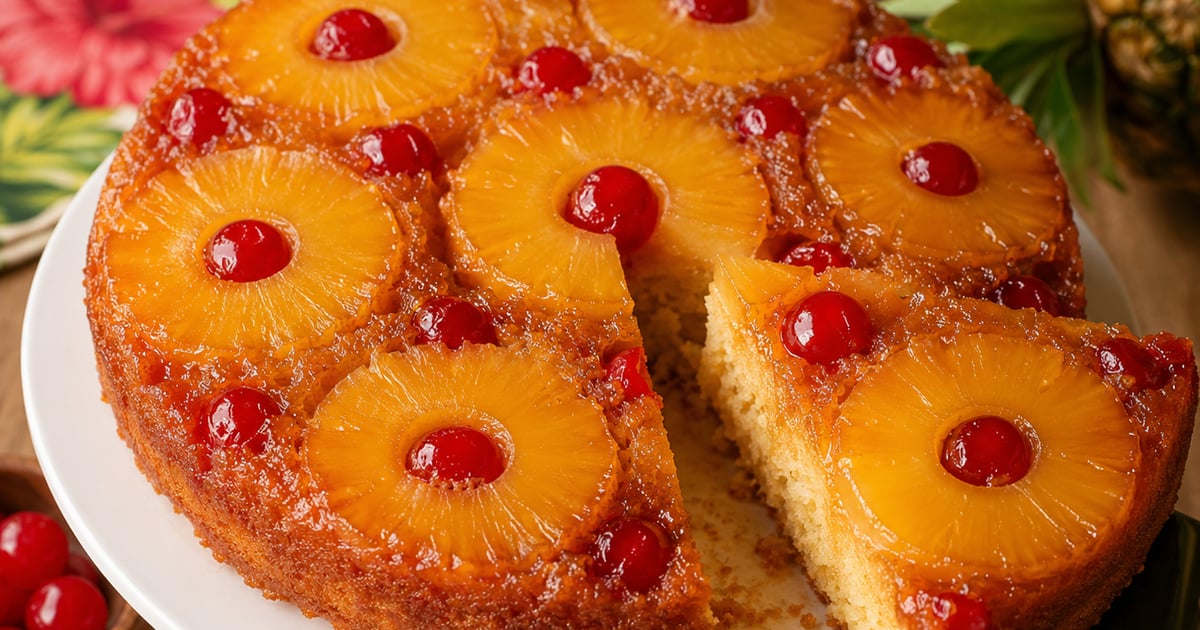

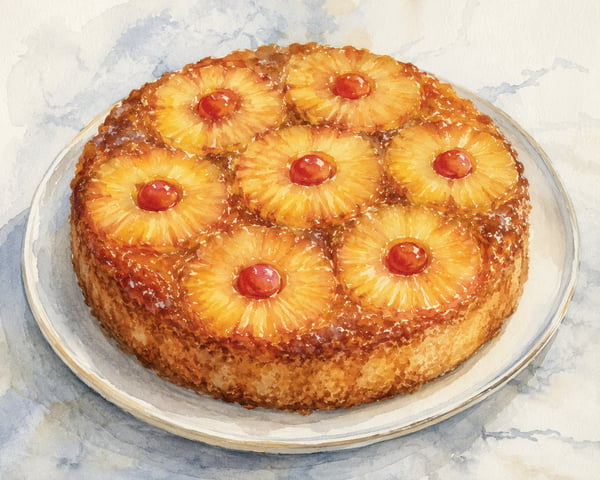
Pineapple upside-down cake is a 1920s dessert with Hawaii baked into it. The recipe took off after the Hawaiian Pineapple Company — later Dole — ran a national contest for its canned rings in 1925 and got back thousands of submissions for the same cake. This is the classic home version: cast-iron skillet, butter and brown sugar in the bottom, canned rings with a maraschino cherry in each hole, butter cake batter on top. Flipped onto a plate while the caramel is still gleaming.
At a glance
10 to 12
20 minutes
40 to 45 minutes
Easy
Ingredients
For the caramel topping
- 1/2 cup (1 stick) unsalted butter
- 1 cup packed light brown sugar
- 1 can (20 oz) pineapple rings in juice, drained, juice reserved (you will need 8 to 10 rings)
- 8 to 10 maraschino cherries, drained and patted dry (one per ring)
For the cake
- 1 1/2 cups all-purpose flour
- 1 1/2 teaspoons baking powder
- 1/2 teaspoon kosher salt
- 1/2 cup (1 stick) unsalted butter, softened
- 3/4 cup granulated sugar
- 2 large eggs, room temperature
- 1 teaspoon vanilla extract
- 1/2 cup reserved pineapple juice (top up with milk if short)
Equipment
- 10-inch cast-iron skillet, OR a 9-inch round cake pan with at least 2-inch sides
- Stand mixer or hand mixer
- Rubber spatula
- Large flat plate or cake stand bigger than the pan
To serve
- Lightly whipped cream (optional)
- Vanilla ice cream, the classic plantation-era pairing
Method
- Make the caramel in the skillet. Set the cast-iron skillet over medium-low heat and melt the 1/2 cup butter directly in it. Once the butter is melted, sprinkle the brown sugar evenly over the bottom and stir with a wooden spoon for about 2 minutes until the sugar has dissolved into the butter and the mixture starts to bubble. Remove from the heat. Do not cook past a light caramel; it will keep cooking in the oven.
- Arrange the pineapple. Lay the pineapple rings in a single layer over the caramel, fitting them tightly. One ring in the center, the rest around it. Place a maraschino cherry into the hole of each ring. Set the skillet aside while you make the batter. Heat the oven to 350F.
- Mix the cake batter. Whisk the flour, baking powder, and salt in a bowl. In the stand mixer, beat the softened butter and granulated sugar on medium until pale and fluffy, about 3 minutes. Add the eggs one at a time, beating until each is absorbed, then beat in the vanilla. Scrape the bowl. Add the flour mixture in three additions, alternating with the pineapple juice in two additions: flour, juice, flour, juice, flour. Mix on low until just combined. The batter should be thick and smooth.
- Top the pineapple. Spoon the batter over the pineapple rings in dollops, then carefully spread it level with an offset spatula. Try not to disturb the cherries or the rings underneath.
- Bake. Bake at 350F for 40 to 45 minutes until the top is deep golden brown and a toothpick inserted in the center comes out clean. The caramel will be bubbling up around the edges.
- Invert while hot. Let the cake rest in the skillet for exactly 5 minutes, no longer; the caramel will set if you wait. Run a thin knife around the edge to loosen. Place a large flat plate face-down over the skillet, hold the plate firmly against the pan, and flip the whole thing in one confident motion. Lift the skillet off. If any pineapple or cherry sticks to the pan, peel it off and patch it back into place.
- Serve warm. Slice and serve while still warm with a scoop of vanilla ice cream. The cake is best the day it's made; leftovers keep one more day, covered at room temperature.
Notes from a local cook
Cast iron makes the caramel. The cast-iron skillet is the right pan because it conducts heat evenly and holds it long enough to caramelize the sugar properly without scorching. A 9-inch cake pan works in a pinch (melt the butter and sugar separately on the stove, pour into the cake pan, arrange the pineapple, then proceed), but you sacrifice the deep, even browning that cast iron gives the caramel.
Canned pineapple matches the Dole-era recipe. The 1920s version was built around the canned rings the Hawaiian Pineapple Company was selling, and that's still the easiest, most consistent version. Fresh pineapple is wetter and more fibrous; if you go that route, slice 3/8-inch rings, core them, and pat dry with paper towels before laying them in the caramel. The texture is slightly less plush than canned but the flavor is more vivid.
About the maraschino cherries. The bright-red sugar-cured cherry in each ring is what makes the cake look like the picture in everybody's mind; it became the standard look in the mid-century home-baking version. You can leave them off. A drained, pitted fresh dark sweet cherry in each hole is the upgrade if you want the classic silhouette with better fruit.
Flip while warm. The single make-or-break step is timing the flip. Five minutes is the sweet spot: long enough that the cake is set and structurally sound, short enough that the caramel is still pourable instead of frozen to the pan. Wait 15 minutes and you'll be peeling caramel off the skillet with a spatula and patching it onto the cake.
The Hawaii backstory, briefly
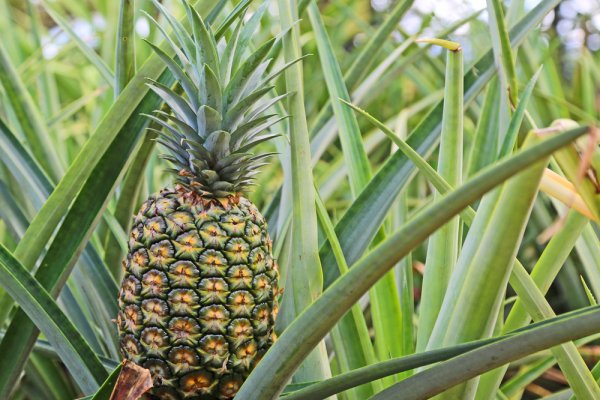
Pineapple has been cultivated commercially in Hawaii since the late 1800s. James Dole bought land in Wahiawa on Oahu around the turn of the century and founded the Hawaiian Pineapple Company in 1901. By the early 1920s his company was the largest pineapple packer in the world, and the marketing arm spent the next decade pushing canned rings into mainland kitchens — the 1925 recipe contest was part of that push. The big plantations are gone now. Del Monte shut its Oahu fields in 2008, ending large-scale commercial pineapple on the island (Honolulu Star-Bulletin). The cake outlived the industry that gave it the fruit.
While You're on the Islands
Eat it made by someone else. Pineapple upside-down cake isn't really a restaurant dish in Hawaii. It lives in home kitchens and at potlucks. The closest you'll come at a bakery counter is the pineapple-and-coconut "Piña Colada" cake at Cake Works on South King Street in Honolulu.
Buy the fruit fresh. For the pineapple history itself, the Dole Plantation in Wahiawa on Oahu is the high-traffic stop: train tour, garden maze, pineapple soft-serve. For a smaller, working-farm version, the Maui Pineapple Tour at the Hali'imaile plantation on Maui runs field tours with tastings and a pineapple to take home — Maui Gold is one of the last commercial pineapple operations in Hawaii. See also our piece on Hawaii pineapple farm tours.
Bring It Home
What you can substitute, what you can't: a fresh Maui Gold pineapple doesn't travel home easily, but canned pineapple rings (Dole brand, fittingly) work fine in this recipe — they're actually the classic choice for upside-down cake, fresh or not.
Where to try this in Hawaii