
Hawaiian Poke Bowl
The traditional preparation — and why what the mainland calls poke isn't quite the same dish
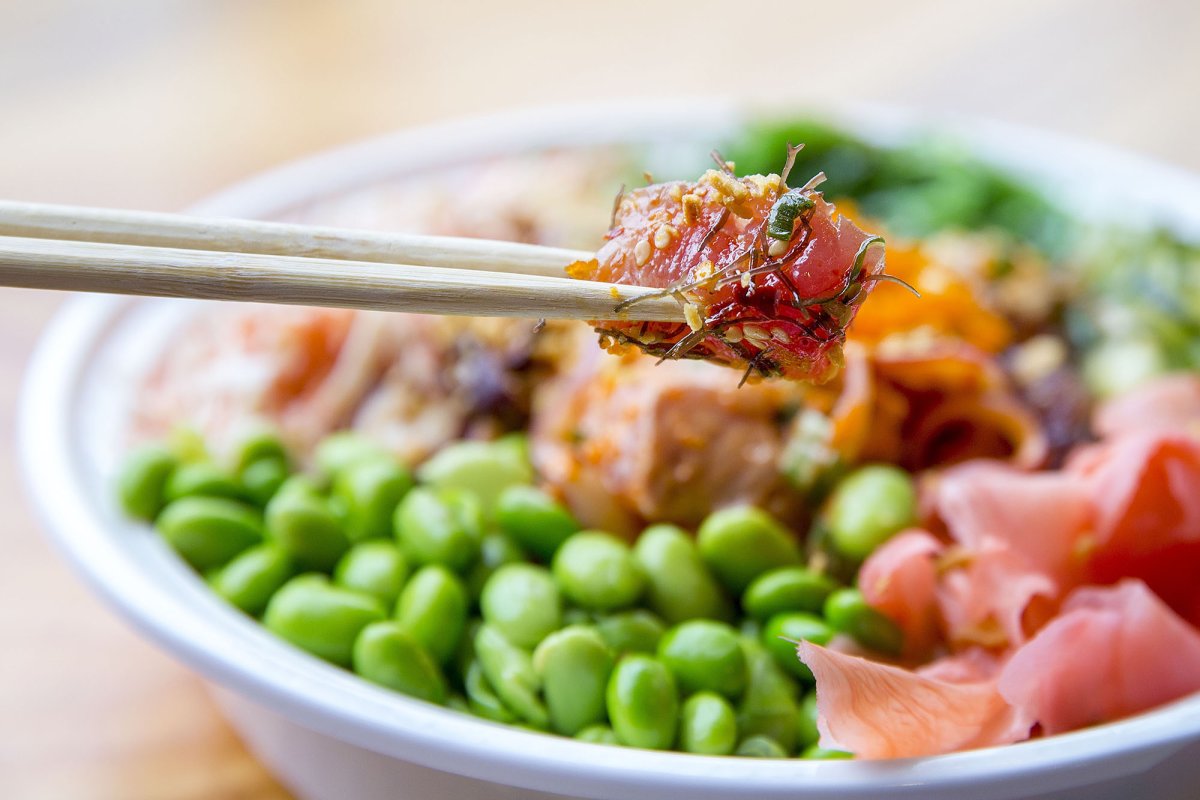
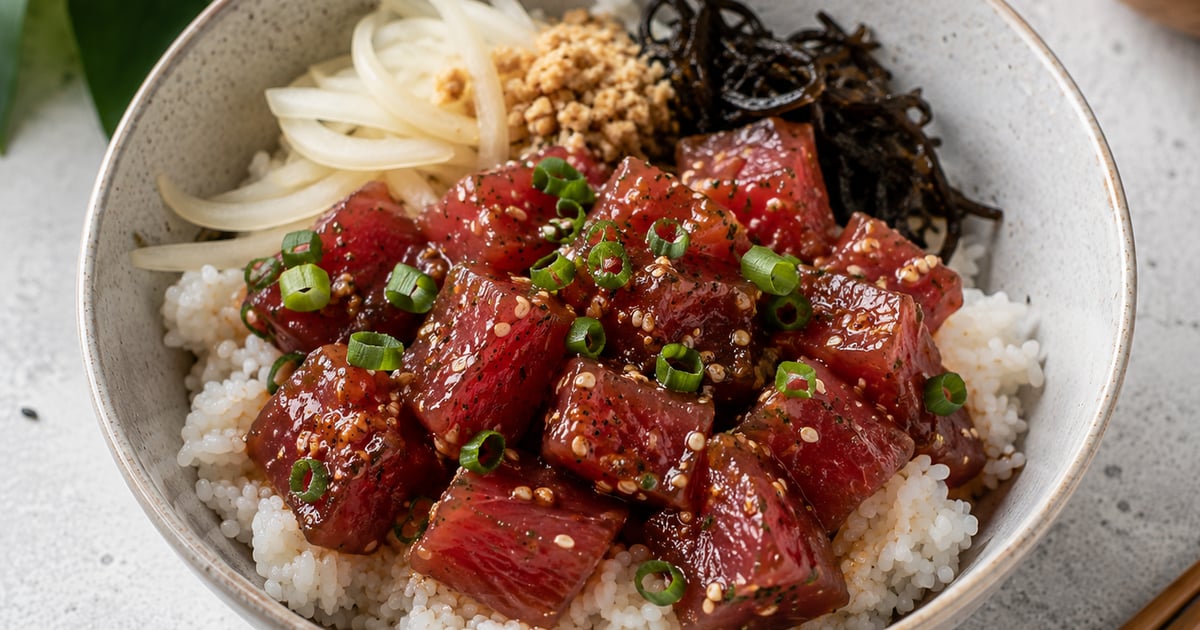
Real Hawaiian poke is five ingredients: sashimi-grade ahi, shoyu, sesame oil, sweet onion, sea salt. Maybe a pinch of limu or chili flakes. That's it. The mainland "poke bowl" — marinated, sauced, mango-and-edamame-loaded — is a different dish that borrowed the name. The traditional version is much simpler and much better, and if you can source good ahi, it takes fifteen minutes.
Recipe first. History and notes after.
At a glance
2
15 minutes
15–30 minutes
Easy
Ingredients
Poke
- ¾ lb sashimi-grade ahi (yellowfin or bigeye tuna), well chilled
- 2 tablespoons shoyu (soy sauce — Aloha brand or Yamasa is what local cooks use)
- 1 tablespoon toasted sesame oil
- ¼ cup sweet Maui or Vidalia onion, very finely diced
- 2 stalks green onion, thinly sliced
- 1 teaspoon toasted sesame seeds
- ¼ teaspoon Hawaiian sea salt (or coarse flake salt)
- 1 small piece dried limu (Hawaiian seaweed), rehydrated and chopped — or 1 tablespoon roasted nori, crumbled
- Pinch of red chili flakes (optional, standard in spicy ahi poke)
Bowl
- 1½ cups warm cooked white rice (short or medium grain)
- ½ cucumber, sliced thin
- ½ avocado, sliced (optional but very common)
- Furikake or extra nori for the top
- Lemon or lime wedge for serving
Sashimi-grade is non-negotiable for raw fish. Tell your fishmonger the fish is for poke; if they look unsure, don't buy it. Frozen-at-sea sashimi-grade ahi is widely available and works well — most "fresh" sashimi-grade fish was flash-frozen at some point in handling anyway.
Method
- Chill everything. Cold fish cuts cleaner. Twenty minutes before you start, put your cutting board and a sharp knife in the freezer. Pull the ahi out of the fridge just before cutting.
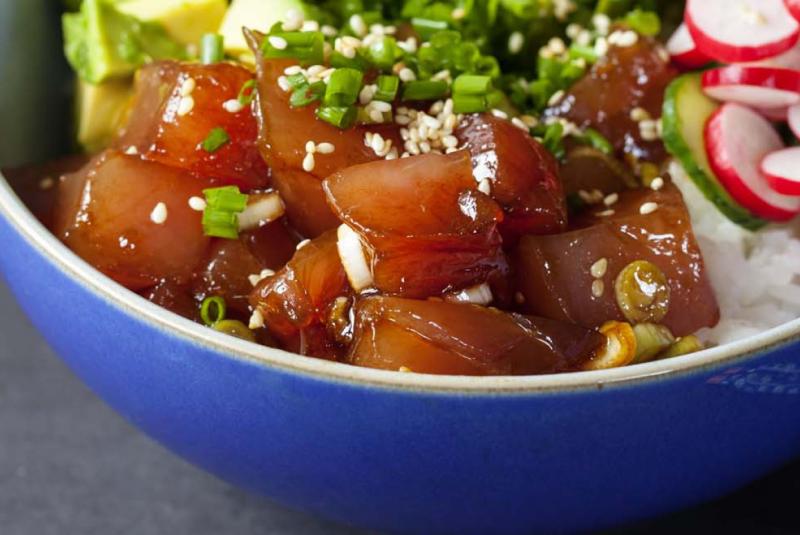
- Cube the fish. Slice the ahi into ½-inch thick planks, then cut each plank into ½-inch strips, then cross-cut into clean ½-inch cubes. The cubes should hold their shape, not flake. If the fish is flaking, your knife isn't sharp enough.
- Mix the poke. In a non-reactive bowl (glass or ceramic), combine the ahi cubes with the shoyu, sesame oil, sweet onion, green onion, sesame seeds, sea salt, limu or nori, and chili flakes if using. Stir gently with a spoon — don't bruise the fish.
- Rest. Cover and refrigerate for 15 to 30 minutes. Just long enough for the shoyu and sesame to season the fish. Anything beyond 45 minutes and the texture starts to break down.
- Build the bowl. Warm rice goes in the bottom of a wide bowl. Spoon the poke over one side of the rice — don't drown it; you want a couple bites of plain rice in the bowl too. Add cucumber and avocado on the side. Sprinkle furikake or nori over the top. Lime or lemon wedge on the edge of the bowl.
- Eat right away. Poke is best within an hour of mixing. Leftover poke is fine to eat the next day but the texture softens.
Where the dish comes from
The word poke (pronounced poh-kay) is the Hawaiian verb "to slice or cut into pieces". For most of Hawaiian history it meant raw reef fish tossed with sea salt, limu (seaweed), and inamona — roasted and crushed kukui nut. A fisherman's snack made on the boat, documented well before contact with the West.
The version most people know now — shoyu, sesame oil, sweet onion — came together in the mid-20th century after Japanese and other Asian immigrants brought shoyu and sesame into Hawaii's kitchens. Chef Sam Choy is widely credited with pushing poke out of the local-only category and into a state-wide signature dish; he launched the first major poke festival and recipe contest in 1991.
Notes from a local cook
The fish quality is the recipe. A great poke made with mediocre tuna is mediocre poke. A simple poke made with truly fresh sashimi-grade ahi is one of the best things you can eat. If you can't source good ahi where you live, salmon poke is a legitimate substitute — skin-off, pin-bones removed, same proportions. Octopus (tako) poke is another traditional version found at almost every fish counter in Hawaii.
Hawaiian sea salt — alaea salt, colored red with iron-oxide-rich volcanic clay — is the traditional finishing salt. Coarse flake sea salt works fine if you can't find alaea. Avoid table salt; the texture is wrong.
If you want to lean traditional, skip the rice. Old-school Hawaiian poke is eaten on its own, often as pupu (an appetizer) with a beer. The rice-bowl format is newer — it became the standard presentation as dedicated poke shops took off in the 2000s and 2010s.
While You're on the Islands
Eat it made by someone else. Honolulu has more legitimate poke counters than anywhere else on earth. Look for places that sell poke by the pound out of refrigerated cases — that's the local format. Fresh Catch and Maguro Brothers are two standouts. Foodland supermarkets across all four islands have surprisingly excellent poke counters — locals shop there for parties. See our island-by-island guides to poke on Oahu, Maui, the Big Island, and Kauai, plus our state-wide guide to the best poke in Hawaii.
Buy the fish fresh. The same Foodland counters and standalone poke shops above sell raw sushi-grade fish by the pound for cutting your own bowl in a vacation rental — ask specifically for "poke-grade" or "sashimi-grade," not the standard fish-case cuts.
Bring It Home
What you can substitute, what you can't: sushi-grade ahi doesn't travel home in a suitcase — buy it fresh from a trusted fishmonger wherever you live, the same way you would on island. What does travel well is a bottle of good shoyu and a bag of furikake, which get the dressing most of the way to the real thing.
Where to Eat It on Your Trip
Our picks for Hawaiian Poke Bowl across the islands — tap a spot for hours, photos, and directions.
 Photo: 守井嘉朗Oʻahu
Ono Seafood
 Photo: KANGHAN LEEOʻahu
Fresh Catch
 Photo: D DalbyMaui
Honokowai Okazuya & Deli
 Photo: Umekes Fish Market Bar & GrillBig Island
Umekes Fish Market Bar & Grill
 Photo: Jason ScofieldKauaʻi
Koloa Fish Market
 Photo: The Fish ExpressKauaʻi