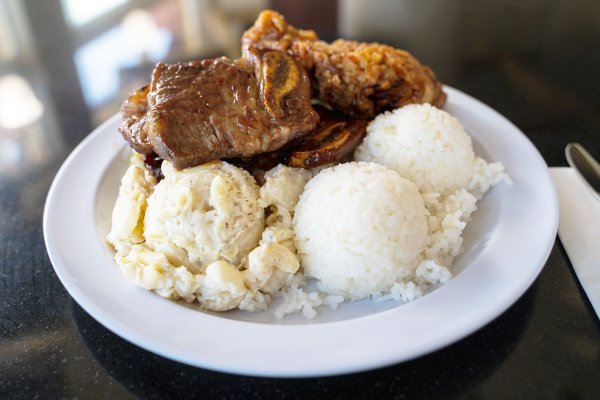
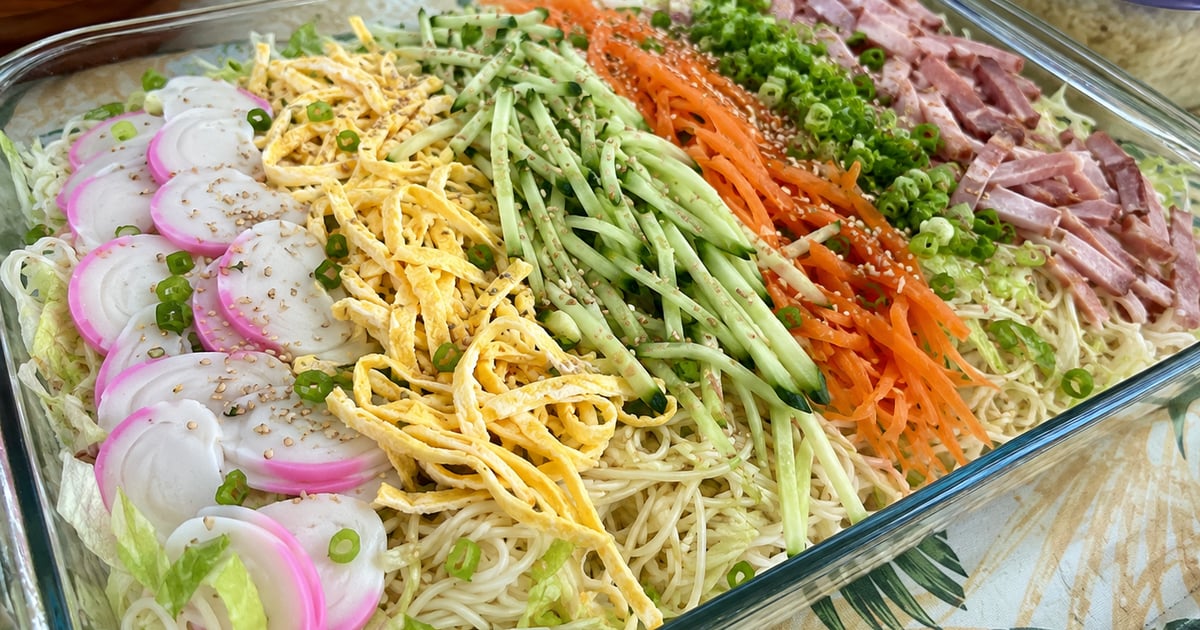

Somen salad is the plate every Hawaii potluck has. Cold wheat noodles, shredded char siu and kamaboko, paper-thin egg ribbons, scallions and nori on top, and a shoyu-sesame dressing that pools at the bottom of the bowl. It eats like a meal and like a side at the same time. On a hot August afternoon at a beach park in Waimanalo, this is what shows up alongside the rice and the kalbi and the macaroni salad. People go back for seconds.
Somen (sōmen) noodles arrived in Hawaii with the wave of Japanese immigration that brought plantation workers starting in the late 1800s — thin, dried wheat noodles eaten cold in summer in Japan with a light dipping broth. The Hawaii version turned the dipping broth into a tossed dressing, piled the noodles with everything in the icebox, and made it a one-bowl dish. Cooks here generally treat it as a plantation-era invention, and today you'll find it in the deli case at Foodland, in the prepared-foods section at Times Supermarket, and probably in someone's Tupperware in your in-laws' refrigerator. There is no single canonical recipe. This is how I make it.
At a glance
8 as a side, 4 as a main
30 minutes
5 minutes (boiling noodles)
Easy
Ingredients
For the salad
- 1 lb dried somen noodles (about 4 to 5 bundles)
- 4 oz char siu (Chinese roast pork), thinly sliced and then shredded
- 4 oz red-edged kamaboko (Japanese fish cake), thinly sliced into matchsticks
- 3 large eggs, beaten with a pinch of salt
- 1 small head iceberg or romaine lettuce, shredded
- 2 stalks green onion, thinly sliced (both white and green parts)
- 2 sheets nori, cut or torn into thin strips
- 1 tablespoon toasted sesame seeds
- 1 tablespoon neutral oil (for the egg crepe pan)
For the dressing
- 1/3 cup shoyu (soy sauce)
- 1/3 cup rice vinegar
- 1/3 cup sugar
- 2 tablespoons toasted sesame oil
- 1 tablespoon neutral oil (canola or grapeseed)
- 1 teaspoon Hawaiian salt or kosher salt
- 1/2 teaspoon Hawaiian chili pepper flakes or red pepper flakes (optional, for heat)
Equipment
- Large pot for boiling noodles
- Colander
- Medium nonstick skillet (for the egg crepe)
- Sharp knife
- Wide shallow serving bowl or platter
- Whisk and small bowl for the dressing
To serve
- Cold from the refrigerator, within an hour or two of dressing
- Alongside rice, kalbi, kalua pig, or any potluck spread
- A little extra shoyu and sesame oil on the side for anyone who wants more dressing
Method
- Whisk the dressing first. Combine shoyu, rice vinegar, sugar, sesame oil, neutral oil, salt, and chili flakes in a small bowl. Whisk until the sugar dissolves. Set aside. The dressing wants to sit for at least 15 minutes so the flavors round out and the sugar fully integrates.
- Make the egg crepe. Heat 1 tablespoon of neutral oil in a medium nonstick pan over medium heat. Pour the beaten eggs in to coat the bottom of the pan in a thin layer, like a crepe. Cook for about 1 minute until set, then flip and cook 30 seconds more. Slide onto a cutting board and let cool. Roll the egg crepe up like a cigar and slice it into thin ribbons. This is the proper Hawaii way, not scrambled chunks.
- Boil the noodles. Bring a large pot of water to a rolling boil. Add the somen and stir gently. Boil for 2 to 3 minutes; somen cooks fast. Taste at 2 minutes. You want al dente. Overcooked somen turns gummy and the salad goes south. Drain into the colander and immediately rinse under cold running water for a full minute, swishing with your hands to wash off the surface starch. Drain very well. Wet noodles dilute the dressing.
- Toss with half the dressing. Tip the cold drained noodles into a wide serving bowl. Pour about half the dressing over and toss with chopsticks or tongs until every noodle is coated. The noodles will absorb dressing in the refrigerator, so it's fine if the salad looks a little wet at this stage.
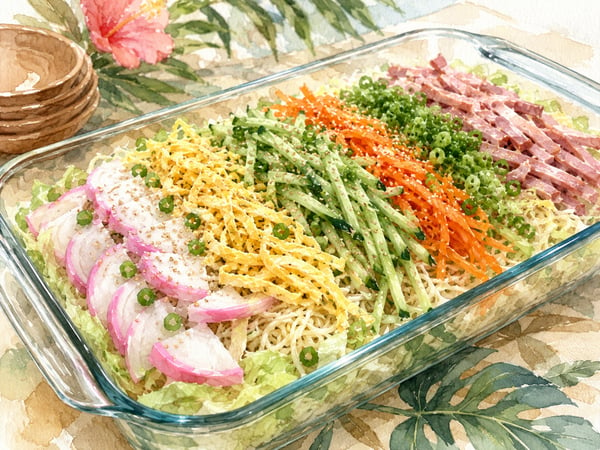
- Layer the toppings. Spread the shredded lettuce over the noodles in an even layer. Then scatter the shredded char siu, kamaboko matchsticks, and egg ribbons in stripes or quadrants. It should look like a flag. Top with green onion, nori strips, and toasted sesame seeds.
- Chill, then dress again. Cover and refrigerate for at least 30 minutes (or up to 3 hours). Right before serving, pour the remaining dressing over the top and toss everything together at the table. Tossing too early makes the lettuce wilt and the nori go soggy. Eat cold.
Notes from a local cook
The dressing is the dish. The shoyu-vinegar-sugar-sesame-oil ratio is the soul of somen salad. The classic Hawaii ratio is roughly equal parts shoyu, rice vinegar, and sugar by volume, with sesame oil layered on top. Some families add a splash of mirin, some skip the sugar and use mirin instead, some add a tablespoon of dashi powder for extra umami. The version above is the unfussy potluck standard. Adjust the sugar down by a tablespoon if you want it sharper, up by a tablespoon if you grew up eating Foodland deli somen salad and that's the sweetness you remember.
The substitutions that actually work. No char siu? Shredded rotisserie chicken or thinly sliced ham works. No kamaboko? Skip it; crab stick (kani kama) is a passable substitute. No nori? Add an extra sprinkle of sesame seeds. The one thing you cannot skip is the egg crepe. The ribbons add texture and color and the dish reads incomplete without them.
Make-ahead. The dressing keeps in the fridge for a week. The cooked, rinsed, very-well-drained noodles keep tossed in just a teaspoon of sesame oil for up to a day. The egg ribbons can be made the morning of. Assemble the salad and dress lightly within 3 hours of serving — beyond that the noodles soak up too much and the salad turns claggy.
Why the noodles get rinsed. Somen has a lot of surface starch from the dried noodle. Without a thorough cold rinse, the strands clump and the dressing sits on the surface in a slick instead of coating the noodles. Treat this step like you would for cold soba: wash the starch off until the water runs clear.
While You're on the Islands
Eat it made by someone else. The easiest place to grab somen salad on any given day is the deli case at a Foodland supermarket — most stores keep it in the prepared-foods cooler. Times Supermarket delis carry it regularly as well; check the prepared-foods case at any Times Supermarket location. See our guides to Oahu dining and the wider Hawaii plate lunch overview.
Buy the ingredients fresh. Somen noodles, char siu, and kamaboko (fish cake) are all sold at any island grocery store's Japanese-foods aisle and deli counter — easy to grab everything in one stop.
Bring It Home
What you can substitute, what you can't: somen noodles are stocked at most mainland Japanese and Asian grocery stores. No char siu? Shredded rotisserie chicken or thinly sliced ham works. No kamaboko? Crab stick (kani kama) is a passable substitute — none of it requires special sourcing from Hawaii.
Where to try this in Hawaii