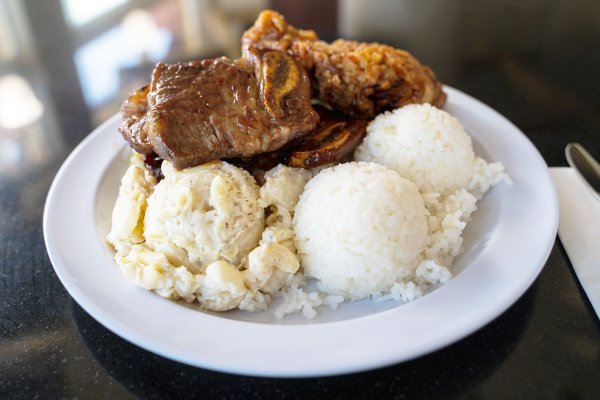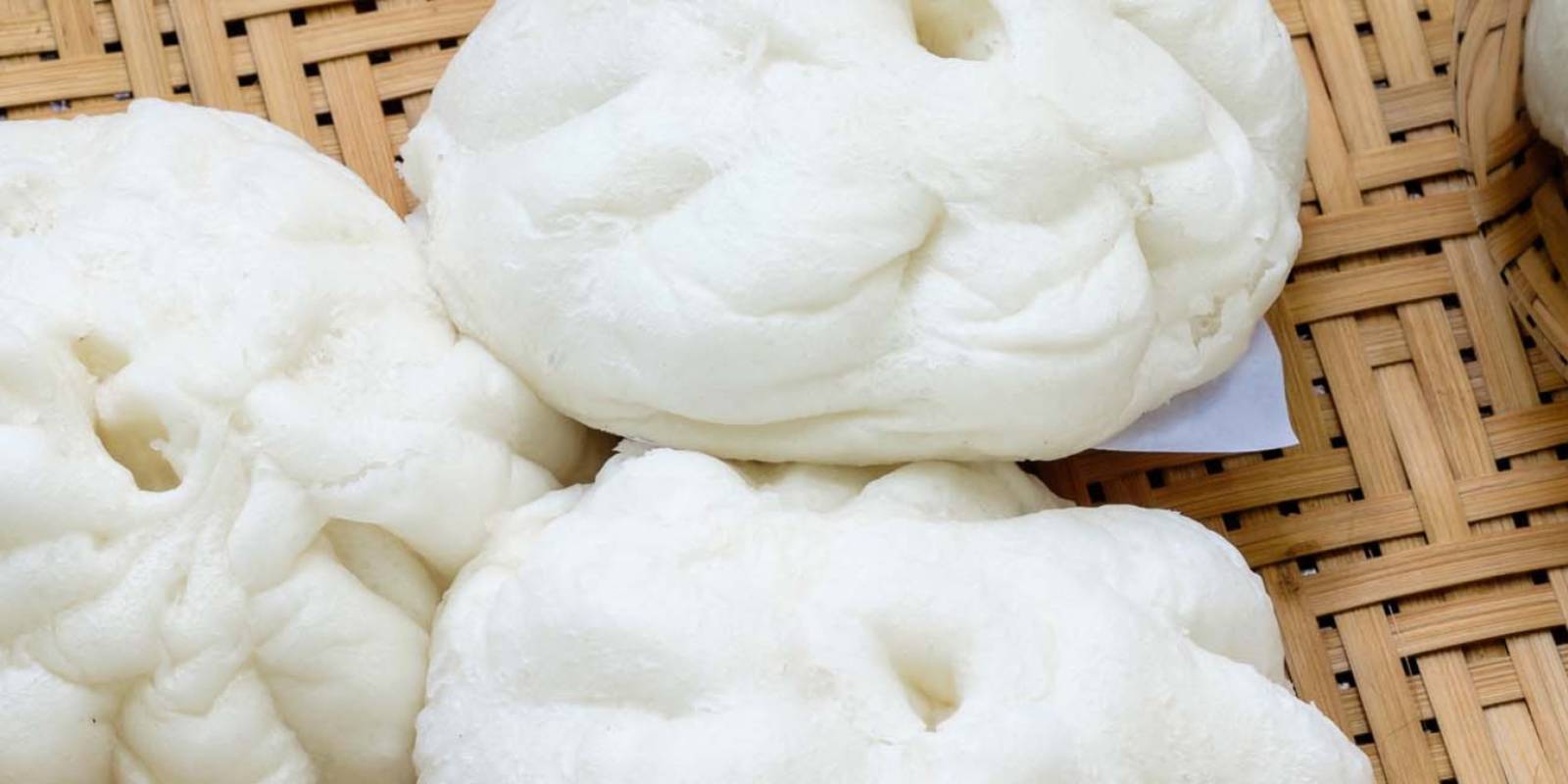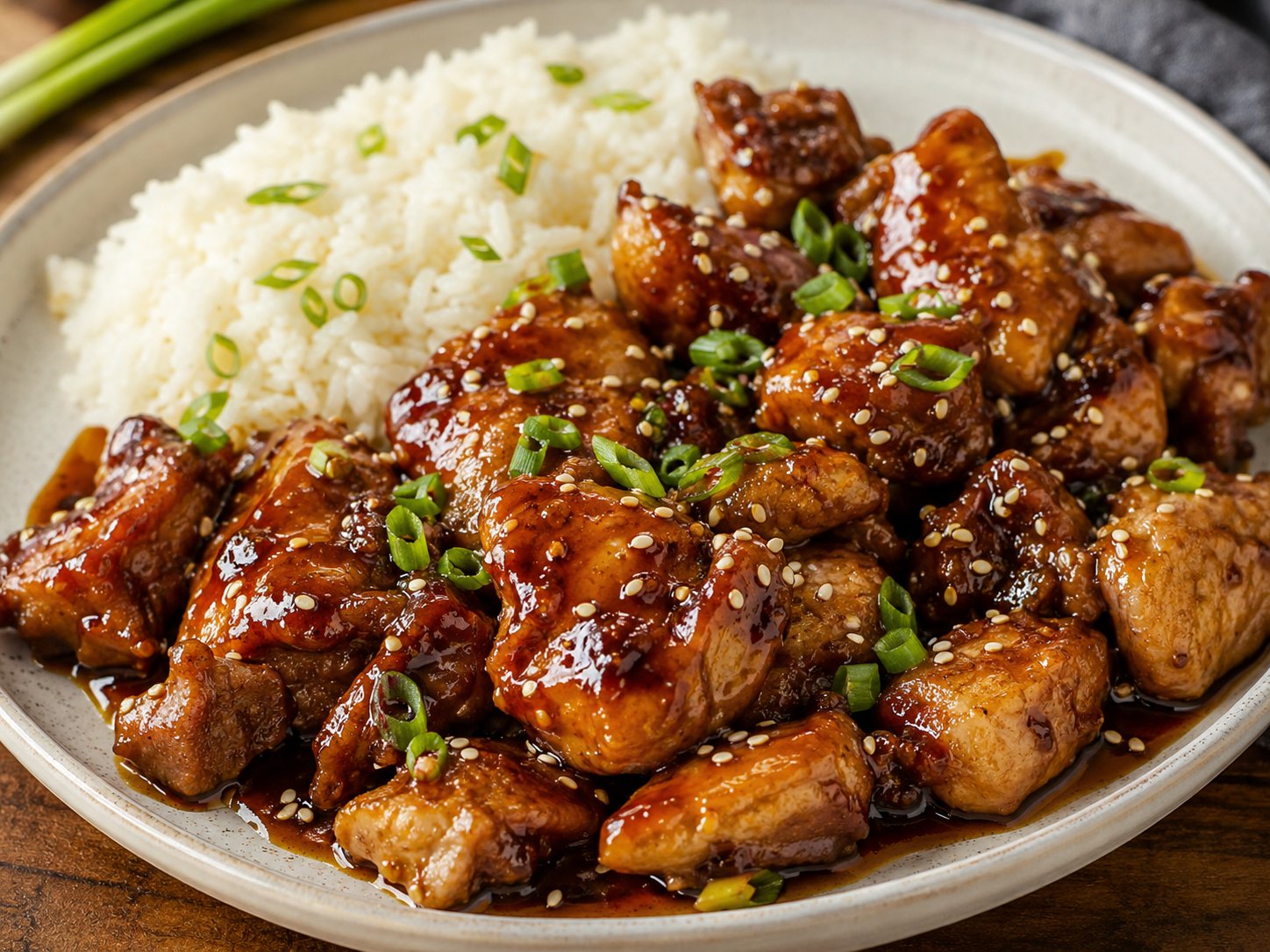
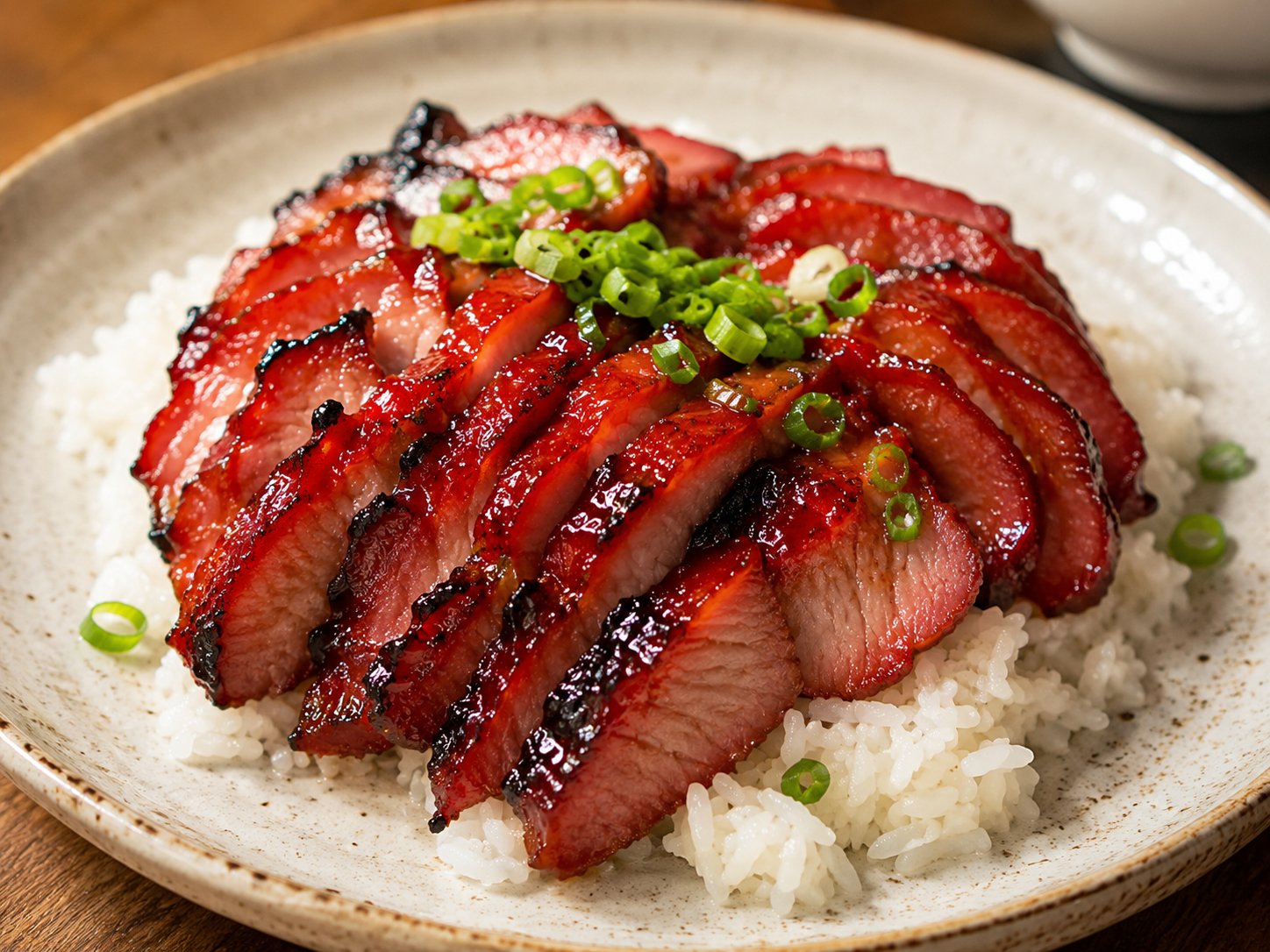

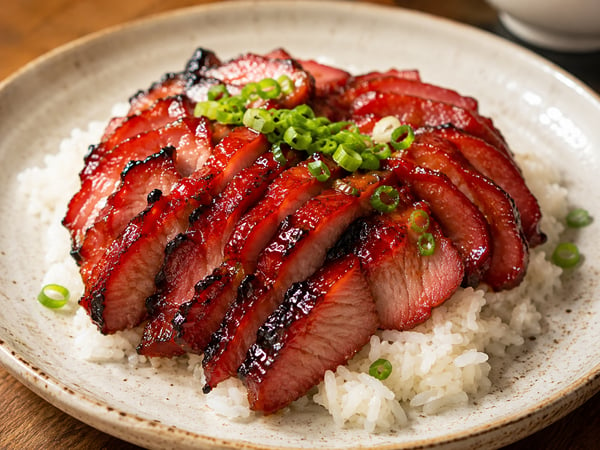
Char siu is the glossy, red-rimmed, sweet-savory roast pork hiding inside every manapua and stacked thin on the rice in a Chinese plate lunch. The name is Cantonese — cha siu, literally "fork roast," for the long iron forks the meat was traditionally hung on inside a domed clay oven. Chinese immigrants brought it to Hawaii during the plantation era, and it stuck.
The Hawaii version skews sweet and glossy. Local cooks lean on honey or maltose for the glaze, and the recipe drifts toward what manapua bakeries and plate-lunch counters want — pork that holds up at a steam table, with enough sugar to caramelize hard at the edges. You see it sliced on rice with shoyu and hot mustard, chopped into fried rice, tucked into bao, and sometimes just eaten cold the next morning.
At a glance
6 to 8
15 minutes + 12-hour marinade
45 minutes
Easy
Ingredients
For the pork
- 3 lb boneless pork shoulder (or pork butt), cut lengthwise into 4 long strips about 2 inches thick
For the marinade
- 1/3 cup hoisin sauce
- 1/4 cup soy sauce
- 1/4 cup honey (divided — half for the marinade, half for the glaze)
- 3 tablespoons Chinese rice wine (Shaoxing) or dry sherry
- 2 tablespoons brown sugar
- 1 tablespoon five-spice powder
- 1 tablespoon grated fresh ginger
- 4 cloves garlic, finely grated
- 1 teaspoon white pepper
- 1 teaspoon sesame oil
- 1/2 teaspoon red food coloring or 1 tablespoon red yeast rice powder, optional
Equipment
- Rimmed sheet pan and a wire rack that fits inside
- Roasting pan with about 1/2 inch of water (to catch drippings and keep the oven moist)
- Resealable bag or shallow glass dish for the marinade
- Basting brush
To serve
- Steamed white rice
- Chinese hot mustard and a small dish of soy sauce
- Sliced cucumber or pickled mustard cabbage
Method
- Mix the marinade. Whisk hoisin, soy sauce, half the honey (about 2 tablespoons), rice wine, brown sugar, five-spice, ginger, garlic, white pepper, sesame oil, and the optional red food coloring or red yeast rice in a bowl. Hold back the rest of the honey — that's the glaze.
- Marinate the pork. Put the pork strips and the marinade in a resealable bag. Squeeze out the air, seal, and refrigerate at least 12 hours and up to 24. Flip the bag once or twice along the way so the marinade reaches every surface.
- Set up the oven. Heat the oven to 475 F (246 C). Set a wire rack over a rimmed sheet pan, and put a separate roasting pan with about a half inch of water on the bottom rack of the oven. The water keeps the pork from drying out and catches drips so the kitchen doesn't smoke up.
- Roast. Lift the pork from the marinade and lay the strips on the wire rack with about an inch of space between them. Roast for 15 minutes, flip the strips, and roast another 15 minutes. The edges should be dark, sticky, and starting to char in spots.
- Glaze and finish. Warm the remaining honey for about 10 seconds in the microwave so it brushes on easily. Brush the strips on all sides. Return to the oven for 5 to 10 more minutes until the glaze sets into a glossy, lacquered finish and an instant-read thermometer hits 145 F (63 C) at the thickest point.
- Rest and slice. Let the pork rest on a cutting board for 10 minutes. Slice across the grain into thin pieces, the way it would land on a plate-lunch tray. Serve with rice, hot mustard, and soy sauce on the side.
Notes from a local cook
Pork shoulder, not loin. Tenderloin will get you a dry, sad version of this. You want the marbling in shoulder or butt. The fat is what bastes the meat during the high-heat roast and what makes the slices taste rich at room temperature the next day.
The red color is optional. Bakery char siu gets that bright red ring from either red food coloring or red yeast rice — also called hong qu. Skipping it changes the look but not the flavor. Red yeast rice powder shows up at Chinese groceries and online if you want the color without the dye.
Maltose for a firmer glaze. If you find maltose syrup at a Chinese grocery or online, swap it 1:1 for the glaze honey. Some cooks prefer it — it sets harder and produces a stickier, deeper-amber finish. Honey works fine; maltose just nudges you closer to bakery texture.
Leftover game plan. Slice cold the next day for char siu fried rice (toss with day-old rice, scrambled egg, peas, green onion, and a splash of soy). Or chop into 1/4-inch dice and fold into a quick filling for steamed bao. Char siu freezes well — slice first, then freeze flat.
While You're on the Islands
Eat it made by someone else. For the bakery version sliced into manapua, Royal Kitchen in the Chinatown Cultural Plaza opened in 1974 and was one of the early shops doing baked manapua, char siu included. Chun Wah Kam Noodle Factory runs five Oahu locations (Ala Moana, Waimalu, Kapolei, Kalihi, and Pearl City) and turns out steamed and baked char siu manapua plus plate lunches. Sing Cheong Yuan Bakery on Maunakea Street is the other Chinatown stop worth a detour — char siu shows up in their manapua, alongside almond cookies and the crack seed counter. If you want a sit-down version, Mei Sum Dim Sum on Nuʻuanu Avenue serves baked and steamed char siu bao alongside a full dim sum lineup. For a wider per-island roundup, see our best manapua guide.
Buy the ingredients fresh. Chinatown's market stalls (around Maunakea and King Streets) sell fresh maltose, char siu sauce, and five-spice by the jar — worth a stop if you want to cook this in a vacation rental kitchen.
Bring It Home
What to stock up on before you fly home: a jar of maltose syrup is the one ingredient most mainland grocery stores don't carry — it's what gives the glaze its glossy, slightly chewy lacquer instead of a thinner honey-based shine. Five-spice powder and hoisin are both easy to find anywhere.
Where to try this in Hawaii