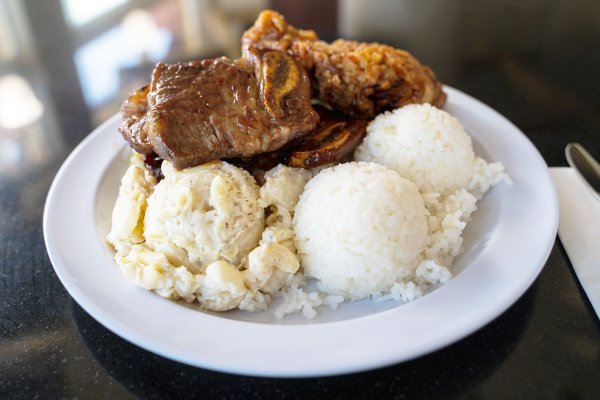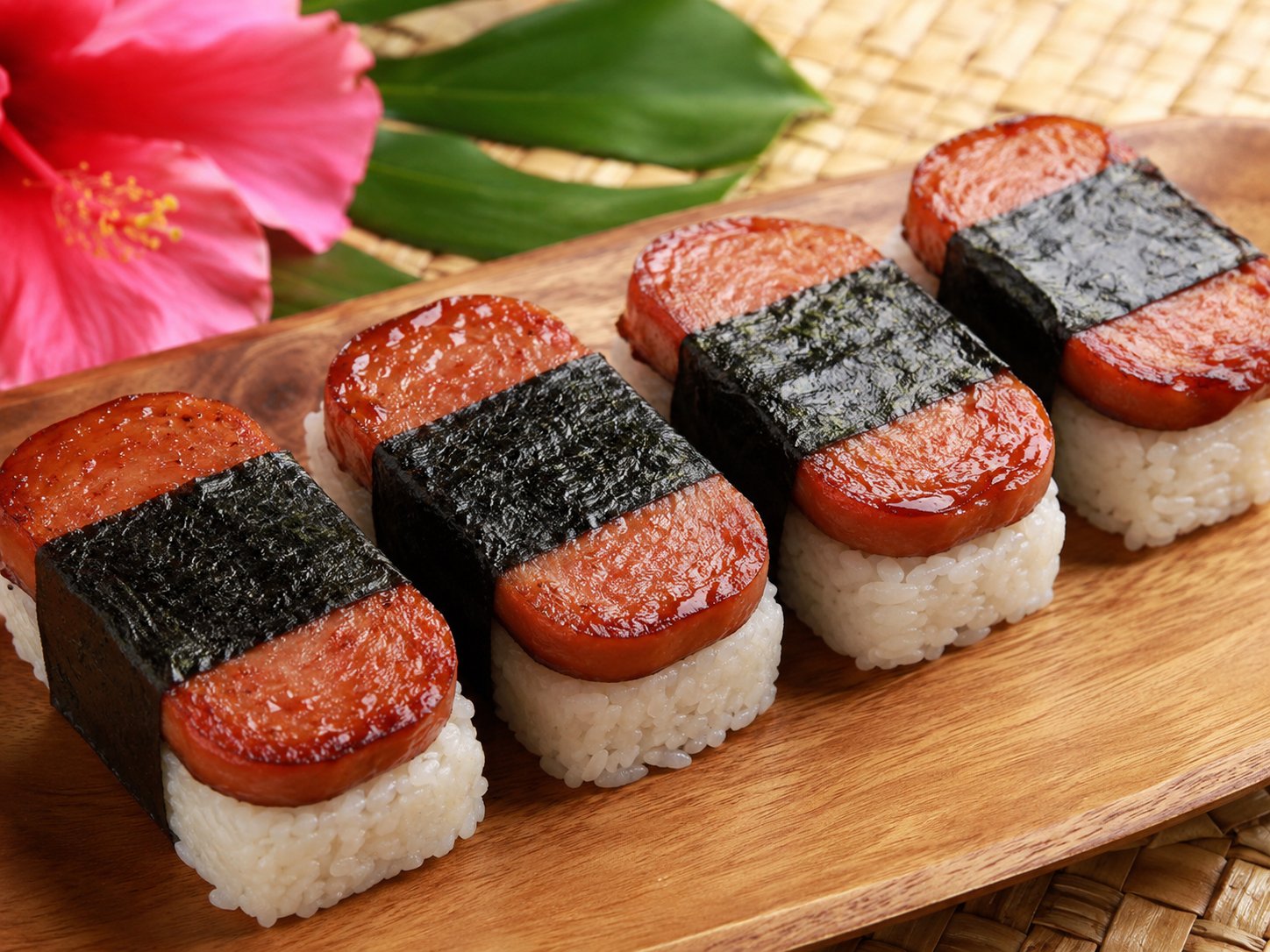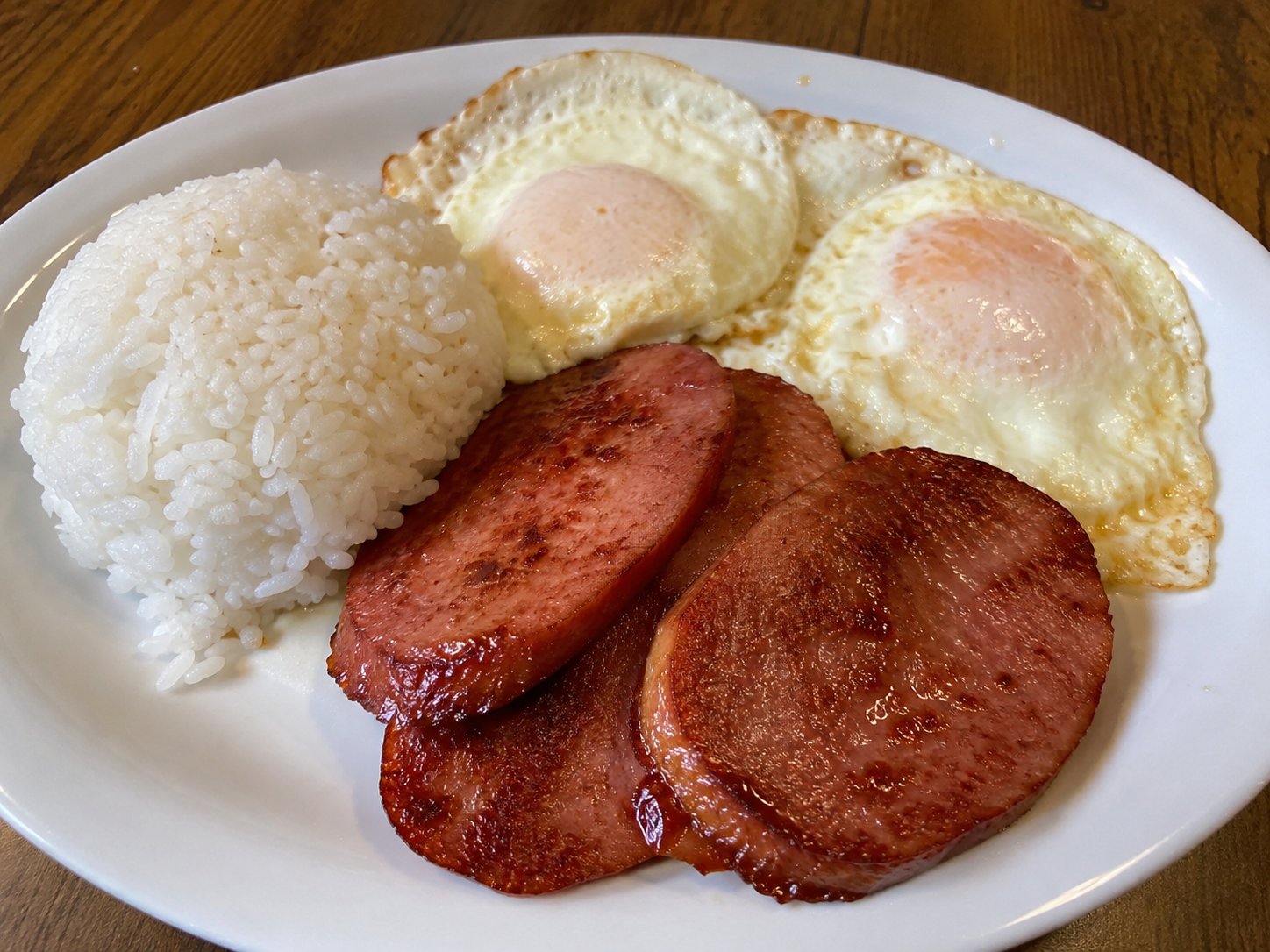
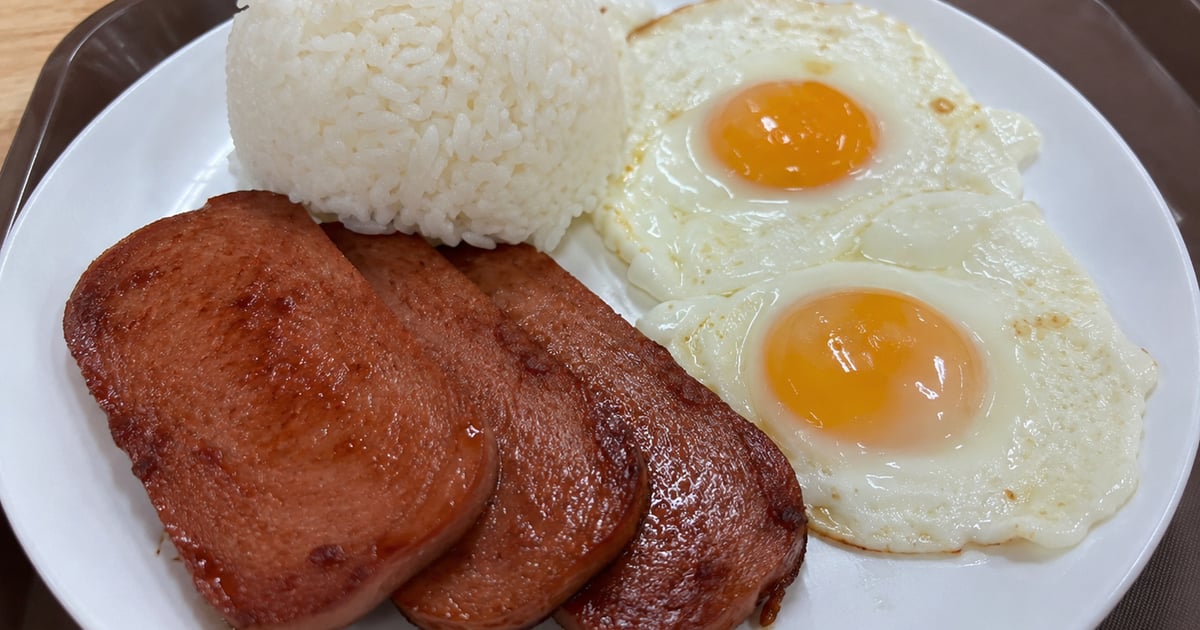

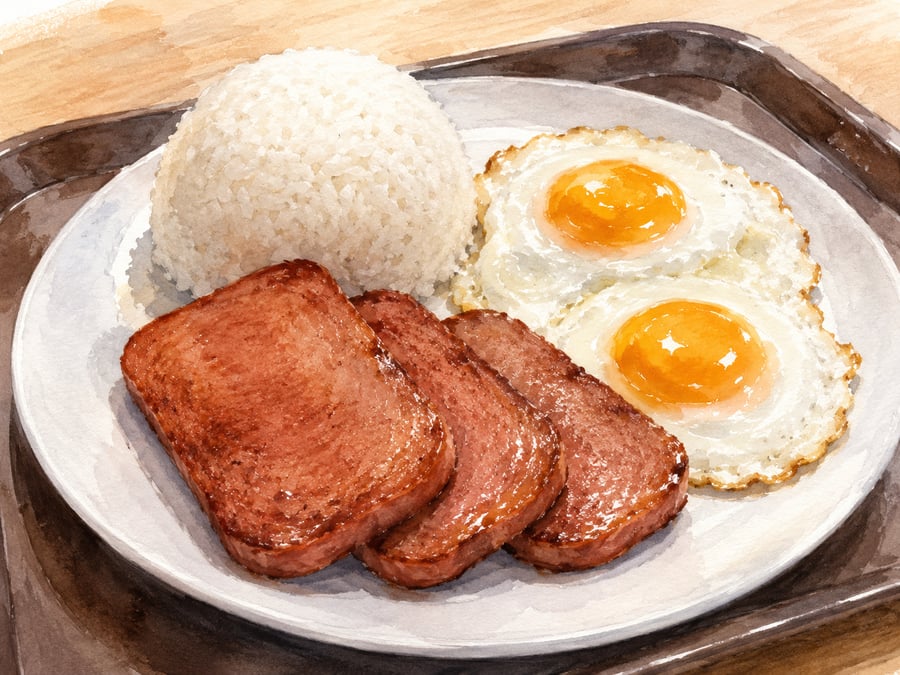
Spam, eggs, and rice is the three-line Hawaii breakfast. Pan-fried slices of Spam with crackly browned edges, soft-scrambled eggs, and a scoop of hot white rice on the same plate. Nori sheets on the side, a small dish of shoyu for dipping, and a glass of guava juice if you are a child or a tourist. That is the whole thing.
The dish is Hawaii's adaptation of plantation breakfast logic: cheap protein, eggs, and rice that travels well in a lunch tin and refuels a body that has been awake since dawn. Spam took hold in Hawaii during World War II, when fresh meat was scarce and canned pork shoulder kept indefinitely. The taste stuck. Hawaii still leads the country in per-capita Spam consumption by a wide margin — millions of cans a year on a state population under 1.5 million. The breakfast plate is where that loyalty starts.
At a glance
2 (one per plate)
5 minutes
10 minutes
Easy
Ingredients
For the plate
- 1 can (12 oz) Spam. The original blue can is the Hawaii standard.
- 4 large eggs
- 2 cups hot cooked white rice (Calrose or other medium-grain)
- 1 tablespoon neutral oil (for the eggs)
- Pinch of salt for the eggs
Optional glaze (highly recommended)
- 1 tablespoon shoyu
- 1 tablespoon brown sugar
- 1 teaspoon water
Equipment
- Nonstick or cast-iron skillet
- Sharp knife and cutting board
- Small bowl for whisking eggs
To serve
- Small dish of shoyu for dipping
- A few sheets of nori (toasted seaweed), torn
- Furikake (rice seasoning) for the rice
- Glass of guava or POG juice if you're doing it right
Method
- Slice the Spam thin. Open the can, slide the block out, and cut into 8 slices about a quarter-inch thick. Thinner slices crisp better. Thick slices stay rubbery. Set the slices on a paper towel to blot any surface moisture.
- Sear the Spam. Heat a dry skillet over medium-high. No oil. Spam renders its own fat. Lay the slices down in a single layer and cook 2 to 3 minutes per side until the edges are deeply browned and the surface crackles when you press it with a spatula. For the diner-style glaze, whisk the shoyu, brown sugar, and water in a small bowl, pour it into the pan once the Spam is browned, and turn the slices in the syrup for 30 seconds until it goes glossy. Pull the Spam out.
- Cook the eggs your way. Wipe out the skillet, drop the heat to medium, and add the neutral oil. Beat the eggs with a pinch of salt and pour them in. Stir slowly with a spatula, pulling the curds in from the edges, until the eggs are just set but still glossy. About 90 seconds. Fried sunny-side-up eggs work too, if that's the house preference. Soft is the goal, not bouncy.
- Plate it. Scoop the hot rice onto two plates. Lay 4 slices of Spam on each plate next to the rice. Slide the eggs alongside the Spam. Tear a sheet or two of nori over the rice, or shake a fat pinch of furikake on top.
- Eat with shoyu close at hand. A small dish of shoyu is non-negotiable. Dip the Spam, drag a piece of nori across the rice with a few grains stuck to it, and rotate. That is the rhythm.
Notes from a local cook
Use the original blue can. Hormel makes a long list of Spam varieties, from Lite and Less Sodium to with Bacon, Teriyaki, Tocino, and Portuguese Sausage Seasoned (the full lineup is on the Spam site). They all have their fans. For everyday breakfast, the original is the right answer. The Teriyaki version is good but the sweetness fights the eggs. Lite browns oddly and never gets the same crackle.
The glaze is the upgrade. A two-line shoyu-and-brown-sugar reduction painted on the Spam in the last 30 seconds turns a fine breakfast into the version you'd order at a Hawaii diner. Do not skip it the second time you make the dish. To lean further into the Hawaii idiom, swap the brown sugar for a tablespoon of mirin and a half-teaspoon of grated ginger. That pushes it toward teriyaki territory.
Day-old rice cooks differently than fresh. If you are using leftover rice (the Hawaii household default), reheat it with a splash of water in the microwave first or fry it briefly in the Spam pan after the slices come out. Fresh-cooked rice is fluffier. Leftover rice gets crispier patches if you let it sit in the pan a minute. Both are legitimate.
Furikake is the cheat code. A shake of furikake (the Japanese rice seasoning of sesame seeds, nori flakes, and salt) over the white rice is what separates a Hawaii breakfast from a mainland one trying. My default jar is JFC Nori Komi Furikake, which is easy to find on Amazon and stocked in plenty of Hawaii pantries. The Nori Tamago variety (the red label) is sweeter. Nori Komi is more savory.
While You're on the Islands
Eat it made by someone else. Spam and eggs shows up on most diner and drive-in breakfast menus across the islands, and even McDonald's runs it. The diner version worth tracking down is at Zippy's, the Honolulu-born local chain, which lists Spam and eggs on its breakfast menu (served until late morning, so don't show up at noon expecting it). On Maui, Tin Roof in Kahului runs a rotating local-plate menu worth a stop if you want a chef-driven take on this style of breakfast. See our full guides to Oahu dining and Hawaii Eats.
Buy the ingredients fresh. Spam and furikake are stocked at any island grocery store — Hawaii Foodland stores often carry Spam flavors not common on the mainland, worth a look while you're shopping.
Bring It Home
What you can substitute, what you can't: Spam is sold nationwide, so nothing here needs special sourcing. Furikake is the one ingredient that genuinely makes this taste like a Hawaii breakfast — see the furikake link above if your local store doesn't stock it.
Where to try this in Hawaii